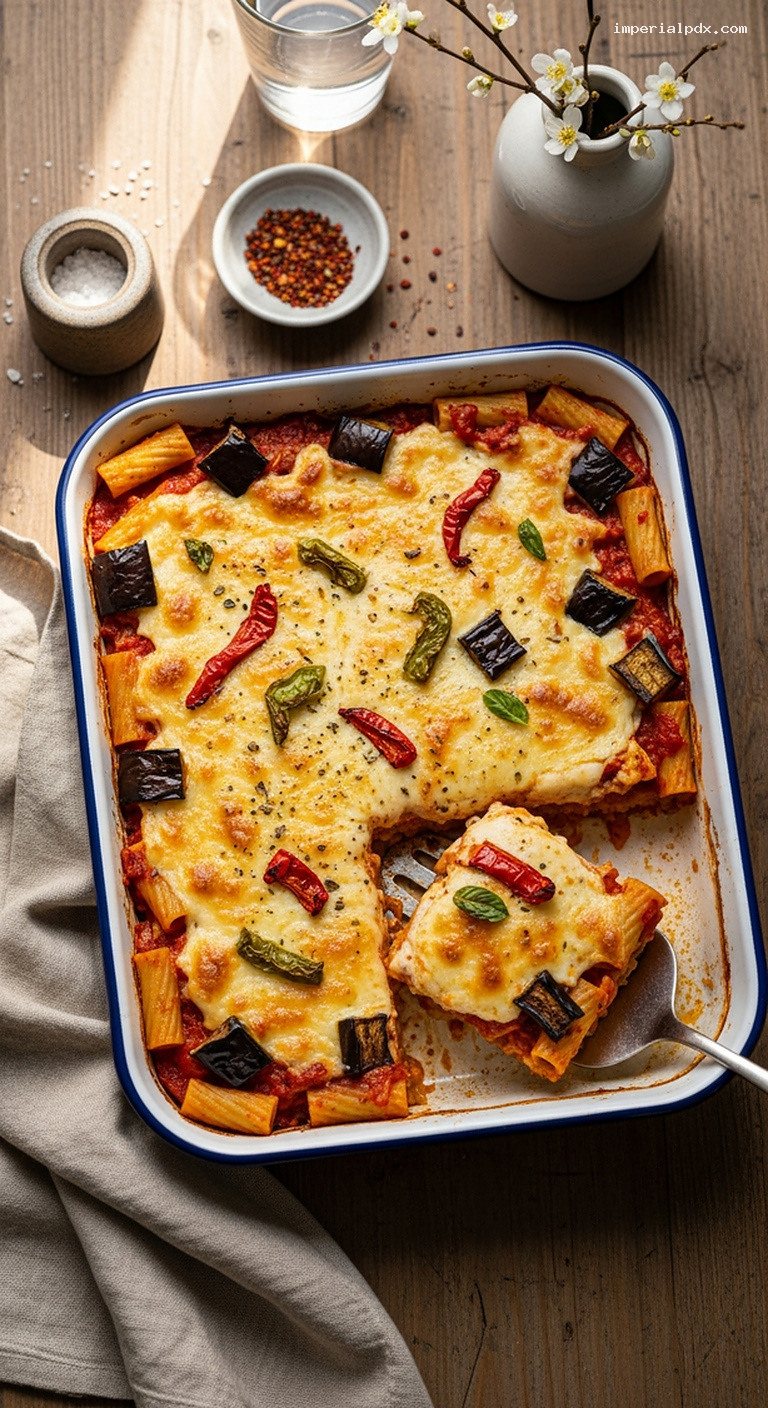
Quick Recipe Version (TL;DR)
Quick Ingredients
- 2 medium eggplants (about 700 g), cubed
- 2 bell peppers, chopped
- 3 tbsp + 2 tbsp olive oil (divided)
- 400 g short pasta (penne, fusilli, or burgu makarna)
- 1 small onion, 3 cloves garlic
- 1 tbsp tomato paste, 400 g crushed tomatoes or passata
- Salt, black pepper, 1 tsp sugar, oregano/thyme, pul biber (or chili flakes)
- 250 g grated kaşar cheese, 30 g grated aged kaşar or Parmesan
- Fresh parsley or basil for serving (optional)
Do This
- 1. Toss cubed eggplant with salt and let drain 20 minutes. Pat dry. Toss eggplant and peppers with olive oil, salt, and pepper; roast at 220°C (425°F) for about 25 minutes until soft and lightly browned.
- 2. Boil pasta in salted water until just shy of al dente. Drain and set aside.
- 3. For the sauce, sauté onion in olive oil, add garlic, tomato paste, crushed tomatoes, water, sugar, oregano, pul biber, salt, and pepper. Simmer 10 to 15 minutes.
- 4. Heat oven to 190°C (375°F). Lightly oil a 23 x 33 cm (9 x 13 inch) baking dish.
- 5. Mix pasta with most of the sauce and roasted vegetables. Spread half into the dish, sprinkle with half the kaşar. Add remaining pasta mixture and top with remaining kaşar and aged kaşar/Parmesan.
- 6. Bake 20 to 25 minutes until bubbly and golden on top.
- 7. Rest 10 minutes, garnish with herbs and extra pul biber if you like, then serve warm.
Why You’ll Love This Recipe
- A cozy, Turkish-leaning pasta bake: roasted eggplant, peppers, and tomato sauce tucked under bubbly, golden kaşar cheese.
- Roasting the vegetables adds deep, smoky flavor without any complicated techniques.
- Perfect for feeding a family or a small crowd; it reheats beautifully for next-day lunches.
- Flexible and forgiving: easy to make vegetarian, spicier, or cheesier to suit your taste.
Grocery List
- Produce: Eggplants, bell peppers, onion, garlic, fresh parsley or basil (optional).
- Dairy: Kaşar cheese, aged kaşar or Parmesan (or similar hard cheese).
- Pantry: Short pasta, olive oil, tomato paste, canned crushed tomatoes or passata, sugar, dried oregano or thyme, pul biber or chili flakes, salt, black pepper.
Full Ingredients
For the roasted vegetables
- 2 medium eggplants (about 700 g), cut into 2 cm cubes
- 2 medium bell peppers (red, green, or mixed), seeded and cut into bite-sized pieces
- 3 tbsp olive oil
- 1 tsp fine sea salt, for salting the eggplant
- 1/2 tsp fine sea salt, for seasoning before roasting
- 1/2 tsp freshly ground black pepper
For the pasta
- 400 g short pasta (penne, fusilli, rigatoni, or Turkish burgu makarna)
- 2 tsp fine sea salt, for the pasta water
For the tomato sauce
- 2 tbsp olive oil
- 1 small onion, finely chopped
- 3 cloves garlic, finely minced
- 1 tbsp tomato paste (domates veya biber salçası)
- 400 g canned crushed tomatoes or smooth tomato passata
- 120 ml water (1/2 cup)
- 1 tsp granulated sugar (to balance acidity)
- 1 tsp dried oregano or thyme
- 1/2 tsp pul biber (Aleppo pepper flakes) or red pepper flakes, plus more to taste
- 1/2 tsp fine sea salt, plus more to taste
- 1/4 tsp freshly ground black pepper
For assembly and topping
- 1 tbsp olive oil, for greasing the baking dish
- 250 g kaşar cheese, coarsely grated (about 2 1/2 cups loosely packed)
- 30 g grated aged kaşar or Parmesan, finely grated (about 1/3 cup)
Optional garnishes
- 2 tbsp finely chopped fresh parsley or basil
- Extra pul biber or chili flakes
- A drizzle of good-quality olive oil
Step-by-Step Instructions
Step 1: Prep and salt the eggplant
Trim the eggplants and cut them into roughly 2 cm cubes. Place them in a large colander set over the sink or a bowl. Sprinkle with 1 tsp fine sea salt and toss well so the salt is evenly distributed. Let the eggplant sit for about 20 minutes. This step helps draw out some of the bitterness and excess moisture, giving you sweeter, creamier eggplant that roasts better.
After 20 minutes, rinse the eggplant briefly under cool water to remove excess salt. Spread the cubes on a clean kitchen towel or paper towels and pat them very dry. Dry eggplant will absorb less oil and roast more nicely.
Step 2: Roast the eggplant and peppers
Preheat your oven to 220°C (425°F). Line a large baking tray (or two smaller ones) with baking parchment for easier cleanup. Add the drained, dried eggplant cubes and the chopped bell peppers to the tray. Drizzle with 3 tbsp olive oil, then sprinkle with 1/2 tsp salt and 1/2 tsp black pepper. Toss everything well to coat evenly, then spread into a single layer; crowded vegetables will steam instead of roast.
Roast for 20 to 25 minutes, stirring once halfway through, until the eggplant is soft and lightly caramelized and the peppers have some charred edges. Remove from the oven and set aside. Reduce the oven temperature to 190°C (375°F) for baking the casserole later.
Step 3: Cook the pasta until just shy of al dente
While the vegetables roast, bring a large pot of water to a rolling boil. Add 2 tsp salt, then stir in the pasta. Cook according to the package instructions, but stop 1 to 2 minutes before it reaches full al dente. The pasta will continue cooking in the oven, so you want it slightly underdone at this stage to avoid a mushy casserole.
Drain the pasta well. You do not need to rinse it. If your sauce or roasted vegetables are not ready yet, you can toss the pasta with a teaspoon of olive oil to keep it from sticking.
Step 4: Make the tomato-garlic sauce
In a medium saucepan, heat 2 tbsp olive oil over medium heat. Add the finely chopped onion and cook, stirring occasionally, for 4 to 5 minutes until softened and translucent but not browned. Add the minced garlic and cook for another 30 to 60 seconds, just until fragrant.
Stir in the tomato paste and cook it for 1 minute to deepen its flavor. Add the crushed tomatoes (or passata), 120 ml water, sugar, dried oregano or thyme, pul biber, 1/2 tsp salt, and 1/4 tsp black pepper. Stir well, bring to a gentle simmer, then reduce the heat to low and cook for 10 to 15 minutes, stirring occasionally. You want a slightly thick but spoonable sauce. Taste and adjust seasoning with more salt, pepper, or pul biber as needed.
Step 5: Combine pasta, sauce, and roasted vegetables
Lightly oil a 23 x 33 cm (9 x 13 inch) baking dish with 1 tbsp olive oil. In a large mixing bowl, add the drained pasta, roasted eggplant and peppers, and about two-thirds of the tomato sauce. Gently toss until everything is evenly coated, being careful not to break up the roasted vegetables too much.
If the mixture looks a bit dry, add more of the remaining sauce. You want the pasta to be generously sauced but not swimming; some moisture will evaporate in the oven, and the cheese will also melt into the sauce.
Step 6: Layer with kaşar and bake
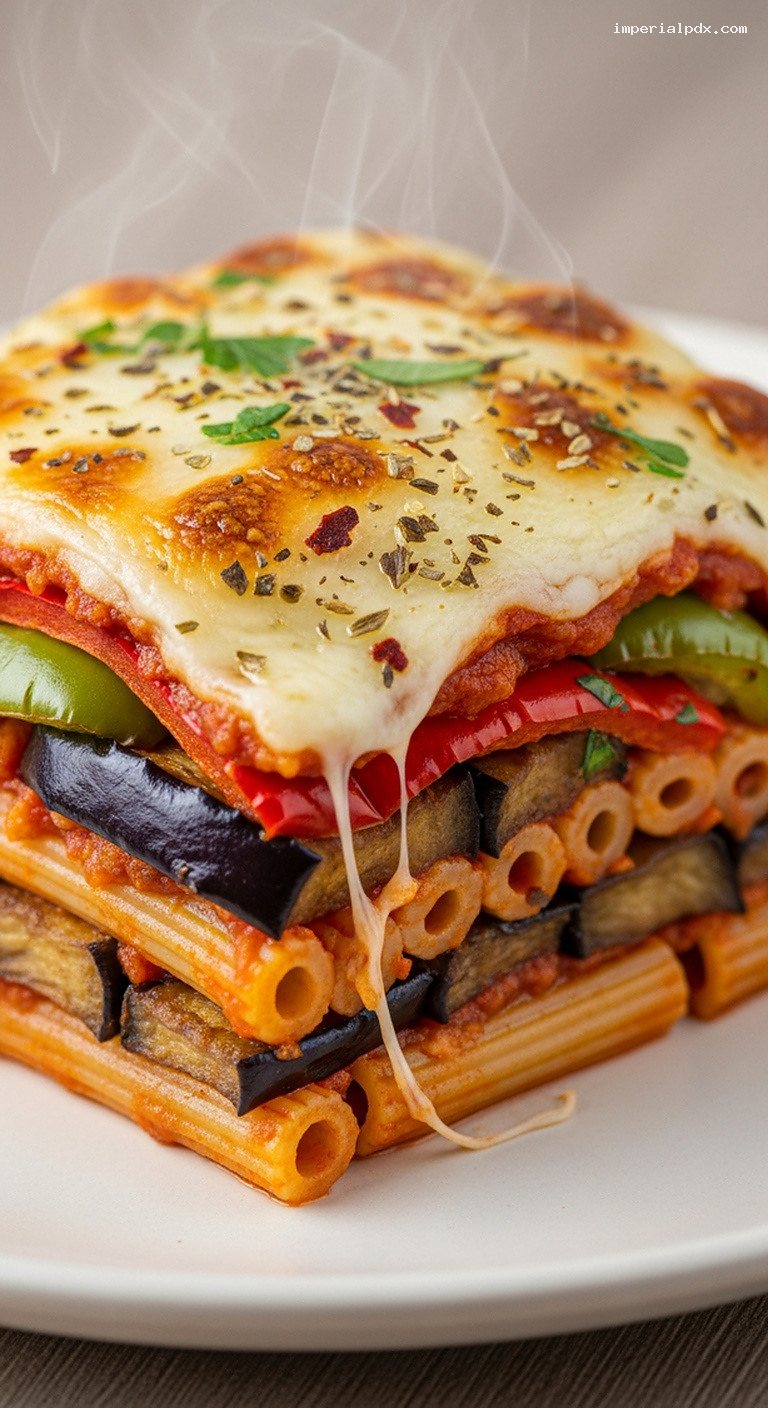
Spread about half of the pasta mixture into the prepared baking dish, smoothing it into an even layer. Sprinkle half of the grated kaşar cheese evenly over the top. Add the remaining pasta mixture on top and gently spread it out. Spoon any remaining tomato sauce over the surface in small dollops if you reserved some.
Top with the remaining kaşar cheese, then sprinkle the grated aged kaşar or Parmesan evenly over everything. Place the dish in the preheated 190°C (375°F) oven and bake for 20 to 25 minutes, until the cheese is fully melted, bubbling around the edges, and golden in spots.
Step 7: Rest, garnish, and serve
Remove the fırında patlıcanlı makarna from the oven and let it rest for at least 10 minutes before cutting. This short rest helps the layers settle, making it much easier to slice clean portions instead of having everything slide apart.
Just before serving, sprinkle with chopped fresh parsley or basil and a pinch of extra pul biber if you enjoy a bit of heat. Add a light drizzle of good olive oil for extra richness if you like. Serve warm, ideally with a simple green salad or a bowl of plain yogurt on the side.
Pro Tips
- Do not skip drying the eggplant. Salting and drying the cubes is the key to creamy, non-spongy eggplant that browns nicely instead of turning soggy.
- Undercook the pasta slightly. Pull it from the water 1 to 2 minutes early; it will finish cooking in the oven and keep a satisfying bite.
- Use a wide baking dish. A 23 x 33 cm dish spreads the layers out enough to get good cheese browning. A very deep, small dish may leave the center too saucy and the top underbrowned.
- Let it rest before slicing. Those 10 minutes after baking make a big difference in structure and flavor; the cheese sets slightly and the sauce thickens.
- Adjust the spice level. Pul biber is gently smoky and mild; add more if you like heat, or reduce it for a kid-friendly version.
Variations
- Extra-vegetable version: Add sliced zucchini or mushrooms to the roasting tray with the eggplant and peppers. Just toss them in the same oil and seasoning and roast until tender.
- Meaty version: Brown 250 to 300 g of ground beef or lamb with the onions when starting the sauce. Drain excess fat if needed, then continue with the tomato sauce as written for a heartier, Turkish-style meat pasta bake.
- Cheese blend twist: If kaşar is unavailable, use a mix of low-moisture mozzarella (for melt) and mild cheddar or provolone (for flavor), keeping the total cheese weight the same.
Storage & Make-Ahead
Leftovers keep well. Let the casserole cool completely, then cover the dish tightly or transfer portions to airtight containers. Refrigerate for up to 3 days. Reheat individual servings in the microwave until hot, or warm larger portions in a 180°C (350°F) oven, covered with foil, for 15 to 20 minutes. To make ahead, you can assemble the entire dish up to the baking step, cover tightly, and refrigerate for up to 24 hours. When ready to bake, let it sit at room temperature for 20 to 30 minutes, then bake at 190°C (375°F) for 25 to 30 minutes, until hot and bubbly. This dish also freezes well: wrap the unbaked, assembled casserole tightly and freeze for up to 2 months; thaw overnight in the fridge before baking.
Nutrition (per serving)
Approximate values per serving (1/6 of the recipe): about 570 kcal; 26 g fat; 58 g carbohydrates; 23 g protein; 7 g fiber; 850 mg sodium. These numbers will vary slightly based on the exact brands of cheese, pasta, and tomatoes you use and how much salt you add.