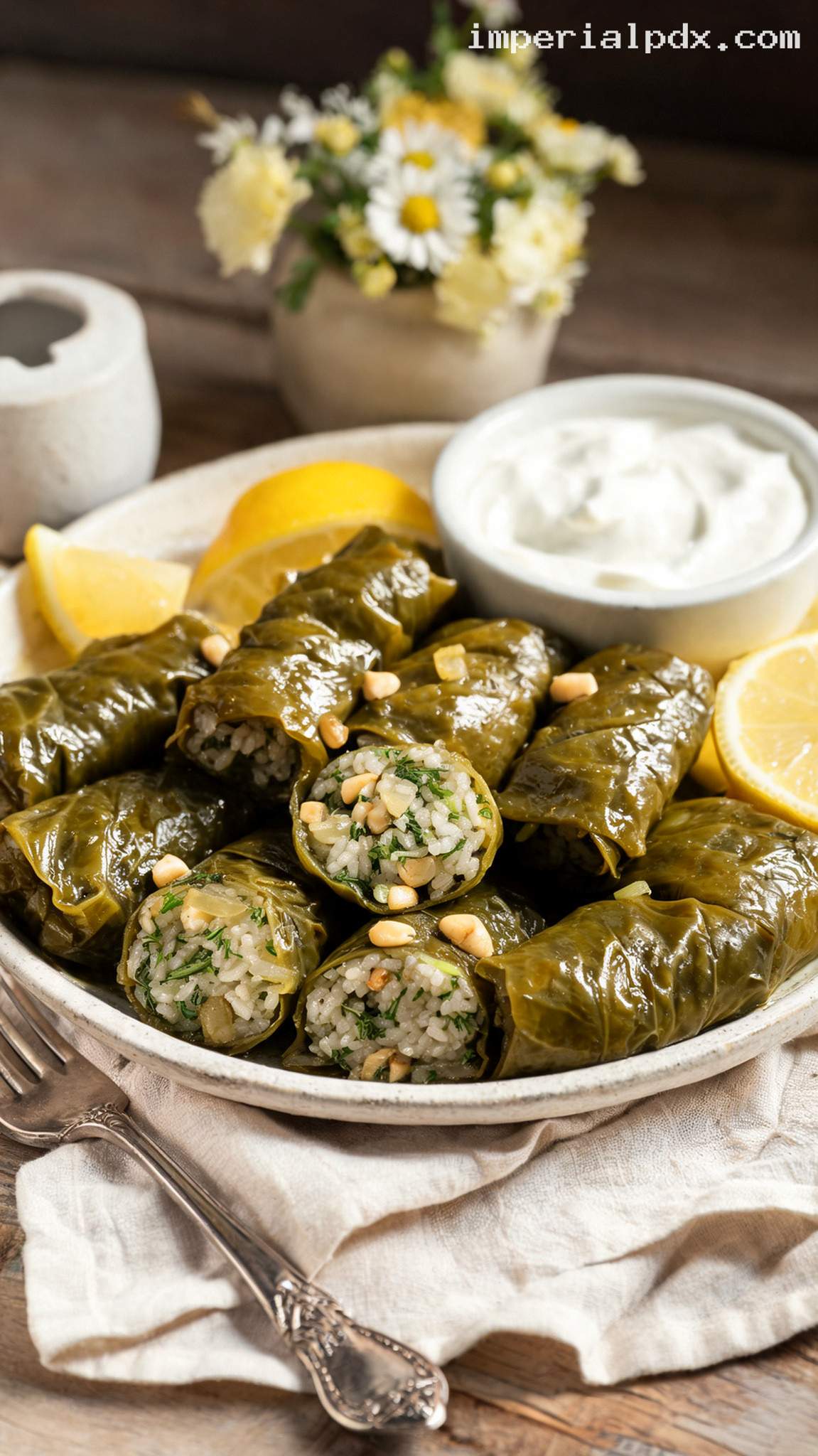
Quick Recipe Version (TL;DR)
Quick Ingredients
- 1 jar brined grape leaves, 16 ounces, about 50 to 60 leaves, rinsed well
- 1 1/4 cups short-grain or medium-grain white rice, rinsed and drained
- 1/3 cup extra-virgin olive oil, divided
- 1 large yellow onion, finely diced
- 4 scallions, thinly sliced
- 1/3 cup pine nuts
- 1/2 cup chopped fresh dill
- 1/2 cup chopped fresh parsley
- 1/4 cup chopped fresh mint
- 2 tablespoons fresh lemon juice, plus 1 lemon sliced for the pot
- 1 1/2 teaspoons kosher salt, plus more to taste
- 1/2 teaspoon ground black pepper
- 2 cups low-sodium vegetable broth or water, heated
- Lemon wedges and 1 cup plain Greek yogurt, for serving
Do This
- 1. Rinse the grape leaves thoroughly, then blanch them in simmering water for 2 minutes if they seem tough or very salty.
- 2. Cook onion, scallions, and pine nuts in olive oil over medium heat for 6 to 8 minutes, until fragrant and lightly golden.
- 3. Stir in rinsed rice, herbs, lemon juice, salt, and pepper; cook for 2 minutes, then cool slightly.
- 4. Line a wide pot with torn grape leaves and lemon slices. Roll 36 grape leaves with about 1 tablespoon filling each.
- 5. Arrange rolls seam-side down in tight layers, drizzle with olive oil, and add 2 cups hot broth or water.
- 6. Weigh down with a plate, cover, and gently simmer on low heat for 45 to 50 minutes.
- 7. Rest for 20 minutes, then serve warm or room temperature with lemon wedges and yogurt.
Why You’ll Love This Recipe
- Fresh, fragrant, and satisfying: Dill, mint, parsley, lemon, and olive oil make every bite bright and aromatic.
- Perfect for sharing: These stuffed grape leaves are lovely as an appetizer, mezze plate, lunch, or side dish.
- Make-ahead friendly: The flavors deepen as they rest, so they are excellent for preparing the day before.
- Approachable technique: Rolling grape leaves is simple once you do the first few, and the recipe walks you through it clearly.
Grocery List
- Produce: 1 large yellow onion, 4 scallions, fresh dill, fresh parsley, fresh mint, 2 to 3 lemons
- Dairy: Plain Greek yogurt for serving
- Pantry: Jarred brined grape leaves, short-grain or medium-grain white rice, extra-virgin olive oil, pine nuts, kosher salt, black pepper, low-sodium vegetable broth or water
Full Ingredients
For the Stuffed Grape Leaves
- 1 jar brined grape leaves, 16 ounces, about 50 to 60 leaves
- 1 1/4 cups short-grain or medium-grain white rice, rinsed under cool water until the water runs mostly clear, then drained well
- 3 tablespoons extra-virgin olive oil, for the filling
- 1 large yellow onion, finely diced, about 1 1/2 cups
- 4 scallions, thinly sliced, white and green parts
- 1/3 cup pine nuts
- 1/2 cup finely chopped fresh dill
- 1/2 cup finely chopped fresh flat-leaf parsley
- 1/4 cup finely chopped fresh mint
- 2 tablespoons fresh lemon juice
- 1 1/2 teaspoons kosher salt, plus more to taste depending on the saltiness of the leaves
- 1/2 teaspoon freshly ground black pepper
For Simmering
- 1 lemon, thinly sliced into rounds, seeds removed
- 2 tablespoons extra-virgin olive oil, for drizzling over the rolls
- 2 cups low-sodium vegetable broth or water, heated until hot but not boiling
For Serving
- 1 lemon, cut into wedges
- 1 cup plain Greek yogurt
- 1 tablespoon chopped fresh dill or mint, optional, for garnish
- 1 tablespoon extra-virgin olive oil, optional, for finishing
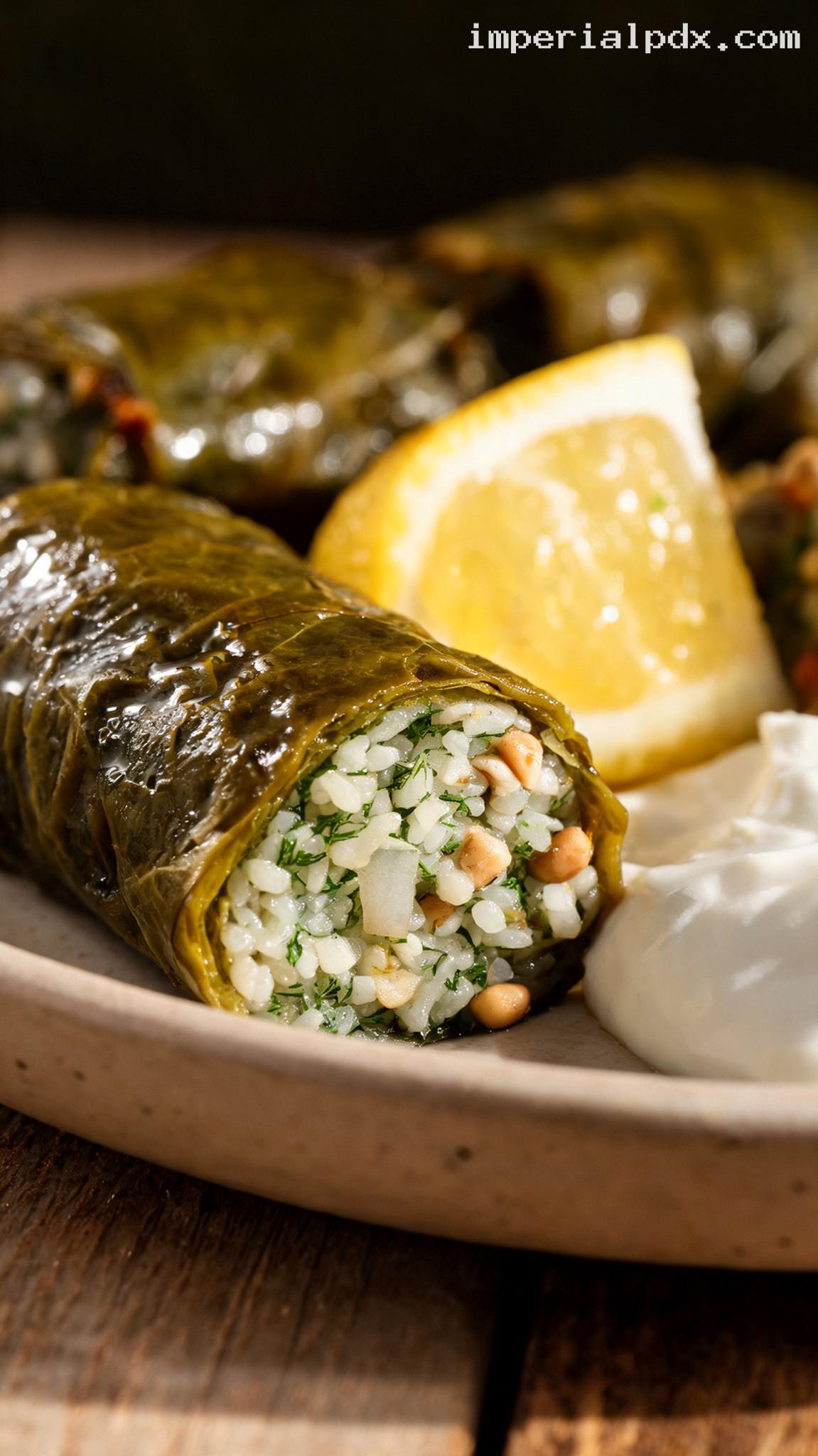
Step-by-Step Instructions
Step 1: Rinse and soften the grape leaves
Remove the grape leaves from the jar and gently separate them. They can tear if pulled apart too quickly, so work patiently and unfold them one at a time. Rinse the leaves very well under cool running water to remove excess brine. Taste a small piece of one leaf; if it is pleasantly salty and tender, you can use the leaves as they are.
If the leaves taste very salty or feel tough, bring a large pot of water to a gentle simmer over medium heat, about 180°F to 190°F. Add the grape leaves and simmer for 2 minutes. Drain, rinse briefly with cool water, and pat dry with a clean kitchen towel. Set aside about 36 large, whole leaves for rolling. Reserve torn, tiny, or imperfect leaves for lining the pot.
Step 2: Toast the pine nuts and soften the aromatics
Set a large skillet over medium heat and add 3 tablespoons extra-virgin olive oil. When the oil is shimmering, add the diced onion, sliced scallions, and pine nuts. Cook for 6 to 8 minutes, stirring often, until the onion is soft and translucent and the pine nuts are lightly golden. Keep the heat moderate so the nuts toast gently without burning.
Step 3: Make the herbed rice filling
Add the rinsed and drained rice to the skillet with the onion mixture. Stir well for 2 minutes so the grains are coated in the fragrant oil. The rice will not be fully cooked at this stage; it will finish cooking inside the grape leaves.
Remove the skillet from the heat. Stir in the dill, parsley, mint, 2 tablespoons lemon juice, 1 1/2 teaspoons kosher salt, and 1/2 teaspoon black pepper. The filling should smell bright, fresh, and savory. Let it cool for 5 to 10 minutes, just until comfortable to handle.
Step 4: Prepare the pot for gentle cooking
Choose a wide, heavy-bottomed pot or Dutch oven, about 10 to 12 inches wide. Line the bottom with the reserved torn or small grape leaves; this helps protect the rolls from direct heat. Lay the lemon slices over the leaves in a single layer. This adds a soft citrus aroma as the stuffed leaves simmer.
Step 5: Roll the grape leaves
Place one grape leaf on a cutting board with the veined side facing up and the stem end closest to you. If the stem is thick or still attached, trim it away with a small knife. Spoon about 1 tablespoon of rice filling near the base of the leaf. For very large leaves, you may use 1 1/2 tablespoons; for small leaves, use 2 teaspoons. Do not overfill, because the rice expands as it cooks.
Fold the bottom of the leaf up over the filling, fold in the left and right sides, then roll upward into a snug little cylinder. The roll should be firm enough to hold its shape but not packed too tightly. Repeat until you have about 36 stuffed grape leaves or until the filling is used.
Step 6: Arrange the rolls in the pot
Place the stuffed grape leaves seam-side down in the prepared pot. Pack them close together in a single tight layer, then make a second layer if needed. Keeping the rolls snug helps them stay closed while they simmer. Drizzle the rolls evenly with 2 tablespoons olive oil.
Step 7: Simmer gently until the rice is tender
Pour 2 cups hot low-sodium vegetable broth or water over the stuffed leaves. The liquid should come about three-quarters of the way up the rolls; add 2 to 4 tablespoons more water if your pot is very wide. Place a heatproof plate directly on top of the rolls to weigh them down and prevent floating or unrolling.
Cover the pot and bring the liquid to a very gentle simmer over medium heat, about 200°F to 205°F. Once you see small bubbles, reduce the heat to low. Cook for 45 to 50 minutes, until the grape leaves are tender and the rice is fully cooked. Avoid a hard boil, which can split the leaves and make the rolls loosen.
Step 8: Rest, serve, and garnish
Remove the pot from the heat and keep it covered for 20 minutes. This resting time helps the rice finish absorbing the aromatic cooking liquid and makes the rolls easier to transfer. Carefully lift out the stuffed grape leaves with tongs or a small spatula, arranging them on a platter.
Serve warm, at room temperature, or lightly chilled. Finish with a small drizzle of olive oil and a sprinkle of chopped dill or mint if you like. Offer lemon wedges on the side for squeezing and plain Greek yogurt for dipping or spooning alongside.
Pro Tips
- Rinse the leaves well: Jarred grape leaves vary widely in saltiness. Rinsing, tasting, and blanching if needed gives you better control over the final flavor.
- Do not overfill: Rice expands as it cooks. A slightly loose roll is better than a tightly packed one that may burst.
- Keep the simmer gentle: Low, steady heat is the secret to tender leaves and intact rolls.
- Use imperfect leaves wisely: Torn leaves are perfect for lining the pot, patching small tears, or covering the top layer before simmering.
- Let them rest: The 20-minute rest is not optional if you want neat rolls and a well-seasoned filling.
Variations
- Lemony garlic yogurt: Stir 1 small grated garlic clove, 1 teaspoon lemon zest, and a pinch of salt into the Greek yogurt before serving.
- Sweet-savory filling: Add 1/4 cup finely chopped dried currants or golden raisins to the rice mixture for a classic sweet contrast with the herbs and lemon.
- Heartier version: Add 8 ounces finely minced lean ground lamb or beef to the onion mixture and cook until no longer pink before adding the rice. Increase the simmering time to 60 minutes and make sure the filling reaches 165°F.
Storage & Make-Ahead
Stuffed grape leaves are excellent make-ahead food. Let cooked rolls cool completely, then transfer them to an airtight container with a few spoonfuls of their cooking liquid to keep them moist. Refrigerate for up to 4 days. Serve chilled, at room temperature, or gently warmed in a covered skillet over low heat with 2 tablespoons water for 8 to 10 minutes. For make-ahead prep, you can roll the stuffed grape leaves up to 24 hours before cooking; arrange them in the pot, cover tightly, and refrigerate. Add the hot broth or water just before simmering. Freezing is possible, but the rice texture may soften; freeze cooked rolls in a single layer, then store airtight for up to 2 months and thaw overnight in the refrigerator.
Nutrition (per serving)
Calories: 285 kcal | Carbs: 34g | Protein: 7g | Fat: 15g | Saturated Fat: 3g | Fiber: 4g | Sugar: 4g | Sodium: 620mg | Cholesterol: 2mg