Quick Recipe Version (TL;DR)
Quick Ingredients
- 2 racks St. Louis–cut pork spare ribs (about 2.5–3 lb / 1.1–1.4 kg each)
- 2 tbsp yellow mustard (binder)
- 3 tbsp kosher salt
- 3 tbsp coarsely ground black pepper
- 2 tbsp smoked paprika
- 1 tbsp light brown sugar
- 2 tsp garlic powder
- 2 tsp onion powder
- 1 tsp cayenne pepper
- Mustard mop: 1/2 cup yellow mustard, 1/2 cup apple cider vinegar, 1/2 cup water, 1 tbsp Worcestershire sauce, 1 tsp coarsely ground black pepper
- Wood for smoking: 3–4 oz (85–115 g) apple wood + 3–4 oz (85–115 g) hickory (or use all apple/all hickory)
Do This
- 1) Preheat smoker to 250°F (121°C); set up for indirect heat and add wood.
- 2) Remove rib membrane; pat dry. Lightly coat with 2 tbsp mustard.
- 3) Mix rub; season ribs heavily on all sides.
- 4) Smoke ribs at 250°F for 2 hours without mopping (let bark set).
- 5) Mix mustard mop; begin mopping every 45 minutes until done (about 3–4 more hours).
- 6) Cook until ribs are tender and bend easily, and thickest meat reads 195–203°F (90–95°C).
- 7) Rest 45 minutes (uncovered 10 minutes, then loosely tented). Slice and serve with optional light sauce.
Why You’ll Love This Recipe
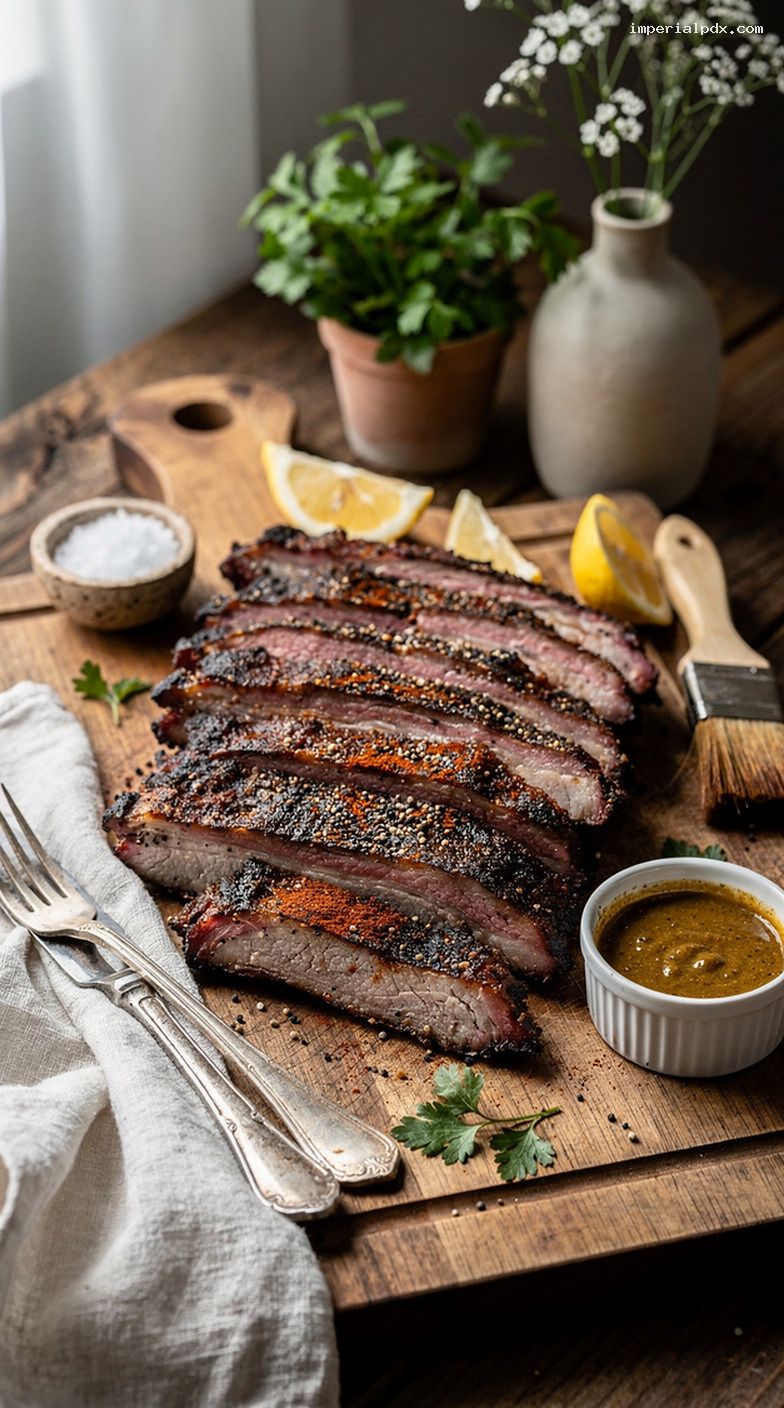
- Pepper-forward bark: Bold black pepper and paprika build a crust that stays punchy, not candy-sweet.
- Layered tang: A thin mustard-vinegar mop adds brightness without washing off the bark.
- Tender, not mushy: Cooked to true barbecue tenderness with a satisfying bite.
- Sauce optional: Delicious with no sauce, or finished with a very light brush for sheen.
Grocery List
- Produce: None required (optional: lemon wedges, chopped parsley for serving)
- Dairy: None
- Pantry: Yellow mustard, apple cider vinegar, Worcestershire sauce, kosher salt, coarsely ground black pepper, smoked paprika, light brown sugar, garlic powder, onion powder, cayenne pepper
Full Ingredients
For the ribs
- 2 racks St. Louis–cut pork spare ribs (about 2.5–3 lb / 1.1–1.4 kg each)
- 2 tbsp yellow mustard (for binding the rub)
Peppery dry rub
- 3 tbsp kosher salt (Diamond Crystal; if using Morton, use 2 tbsp)
- 3 tbsp coarsely ground black pepper
- 2 tbsp smoked paprika
- 1 tbsp light brown sugar
- 2 tsp garlic powder
- 2 tsp onion powder
- 1 tsp cayenne pepper
Mustard-vinegar mop (thin baste)
- 1/2 cup (120 g) yellow mustard
- 1/2 cup (120 ml) apple cider vinegar
- 1/2 cup (120 ml) water
- 1 tbsp Worcestershire sauce
- 1 tsp coarsely ground black pepper
Wood and fuel
- 3–4 oz (85–115 g) apple wood chunks (or a full hopper of apple pellets)
- 3–4 oz (85–115 g) hickory wood chunks (or hickory pellets)
Optional light finishing sauce (very thin, brush-on only)
- 1/4 cup (60 ml) mustard mop (from above)
- 2 tbsp (30 ml) classic BBQ sauce (your favorite)
Optional for serving
- Lemon wedges
- 1–2 tbsp chopped parsley
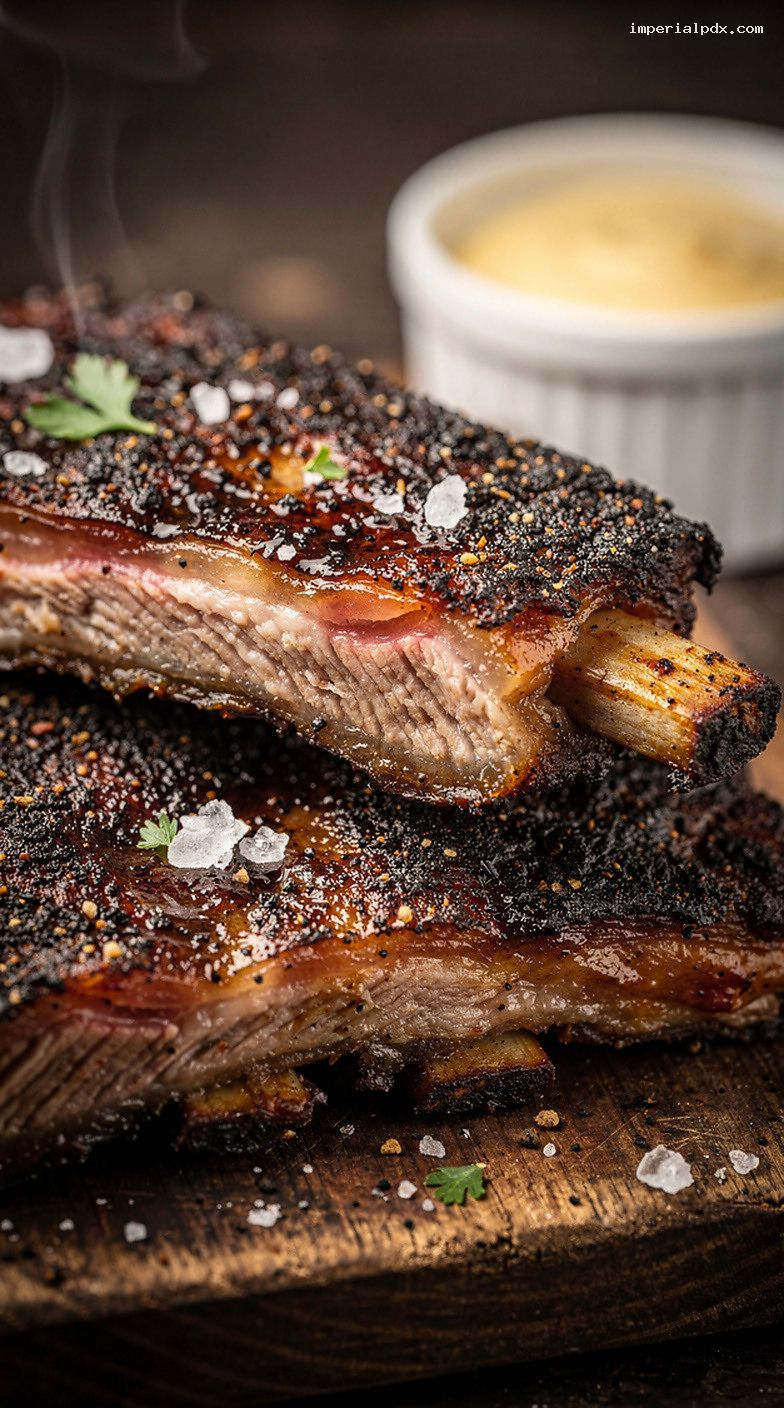
Step-by-Step Instructions
Step 1: Preheat the smoker and set up for steady heat
Preheat your smoker to 250°F (121°C). Set it up for indirect heat. Add your wood (a mix of apple + hickory is great here: apple for a slightly sweet smoke, hickory for a deeper barbecue backbone).
If your smoker runs dry, place a small pan of hot water in the cook chamber to help stabilize temps, but keep airflow open enough to maintain clean smoke (thin, bluish smoke is ideal).
Step 2: Prep the ribs (trim and remove the membrane)
Unwrap the ribs and pat them dry with paper towels. Trim any loose flaps of meat or excess fat that will burn.
Flip each rack bone-side up. Slide a butter knife under the membrane (the thin, papery layer) near the center bones, then grab it with a paper towel and pull it off. Removing it helps smoke, seasoning, and mop penetrate—and improves bite-through texture.
Step 3: Mix the peppery rub
In a bowl, combine: 3 tbsp kosher salt, 3 tbsp coarsely ground black pepper, 2 tbsp smoked paprika, 1 tbsp brown sugar, 2 tsp garlic powder, 2 tsp onion powder, and 1 tsp cayenne.
This rub is intentionally pepper-forward. The small amount of brown sugar helps browning and bark formation without turning the ribs sweet.
Step 4: Bind, season, and let the rub “melt in”
Lightly coat each rack with yellow mustard (2 tbsp total). You’re not trying to taste mustard here—this is just a tacky layer so the rub sticks evenly.
Season both sides generously with the rub, pressing it in so it adheres. Let the ribs sit at room temperature for 15 minutes while the smoker finishes stabilizing. (This brief rest helps the rub hydrate and cling.)
Step 5: Smoke to set the bark (no mopping yet)
Place the ribs in the smoker, bone-side down. Maintain 250°F (121°C) and smoke for 2 hours without opening the lid much.
This first stretch is when your bark starts to form. If you mop too early, you can smear or soften the developing crust.
Step 6: Make the mustard-vinegar mop and start layering it on
While the ribs smoke, whisk together the mop: 1/2 cup yellow mustard, 1/2 cup apple cider vinegar, 1/2 cup water, 1 tbsp Worcestershire, and 1 tsp black pepper.
After the first 2 hours, quickly mop the ribs with a thin coat (use a silicone brush or a small mop brush). Close the smoker and continue cooking.
Repeat mopping every 45 minutes. Keep the coats light and even—think “lacquer,” not “soak.” This builds tangy layers and keeps the surface from drying out while still preserving bark texture.
Step 7: Cook until truly tender (target 195–203°F), using a foil boat only if needed
Continue smoking at 250°F, mopping every 45 minutes, until the ribs are tender. Total cook time is usually 5 to 6 hours depending on rack thickness and how steady your pit runs.
Use these doneness checks:
- Temperature: Probe the thickest meat between bones; aim for 195–203°F (90–95°C).
- Bend test: Lift the rack with tongs from the middle—if it bends easily and the surface begins to crack slightly, you’re close.
- Toothpick test: A toothpick should slide into the meat with little resistance.
Optional “foil boat”: If the bark looks great but tenderness is lagging, place each rack in a loose “boat” of foil (foil only up the sides, top exposed) for the final 60–90 minutes. This speeds tenderness without steaming the bark the way a tight wrap can.
Step 8: Optional light finish, then rest and slice
If you want a barely-there sheen, mix 1/4 cup mop with 2 tbsp BBQ sauce and brush a very thin layer over the ribs during the last 10 minutes of cooking. (Keep it light so the peppery bark stays the star.)
Remove ribs from the smoker and rest for 45 minutes. For the best bark texture, rest 10 minutes uncovered, then loosely tent with foil for the remaining time.
Slice between the bones with a sharp knife. Serve as-is (highly recommended for bark lovers) or with extra mop/sauce on the side.
Pro Tips
- Don’t chase time—chase tenderness: Ribs are done when they feel right (bend/toothpick), with 195–203°F as a helpful guide.
- Keep the mop thin: The added water makes it brushable and prevents a thick mustard layer that can dull the bark.
- Wait to mop: Give the rub at least 2 hours to set into a crust before you start brushing on liquid.
- Clean smoke matters: If your smoke is thick and white, your ribs can taste bitter. Aim for a gentle, steady flow.
- Slice after resting: Resting keeps juices in the meat and helps the bark firm back up.
Variations
- Carolina-style heat: Add 1 tsp crushed red pepper flakes to the mop and increase cayenne in the rub to 1 1/2 tsp.
- No-sugar bark: Omit the brown sugar entirely for an even more savory, pepper-driven crust.
- Extra-smoky profile: Use all hickory wood and add 1 tsp ground cumin to the rub for a deeper, darker bark.
Storage & Make-Ahead
Cool leftover ribs, then refrigerate in an airtight container for up to 4 days. For best texture, reheat gently: wrap loosely in foil with 1–2 tbsp water and warm in a 275°F (135°C) oven for 25–35 minutes, then unwrap and heat 5 minutes more to re-tighten the bark. Ribs can be frozen for up to 2 months; thaw overnight in the fridge before reheating.
Nutrition (per serving)
Approximate, based on 5 servings and typical spare rib yield: Calories: 650 kcal; Protein: 42 g; Fat: 48 g; Carbohydrates: 10 g; Sugar: 6 g; Sodium: 1250 mg.