Quick Recipe Version (TL;DR)
Quick Ingredients
- 2 tbsp olive oil
- 1 tbsp unsalted butter
- 1 medium onion, finely diced
- 2 carrots, finely diced
- 2 celery ribs, finely diced
- 3 cloves garlic, minced
- 1 lb (450 g) ground beef
- 1 tsp kosher salt, 1/2 tsp black pepper (plus more to taste)
- 2 tbsp tomato paste
- 1/2 cup (120 ml) dry red wine
- 1 can (28 oz / 800 g) crushed tomatoes
- 1 cup (240 ml) beef broth or water
- 1 tsp dried oregano, 1 bay leaf
- 1/2 cup (120 ml) whole milk or half-and-half
- 1/4 cup fresh basil, chopped (plus extra for garnish)
- 12 oz (340 g) dried spaghetti
- 1 tbsp kosher salt for pasta water
- 1/2 cup freshly grated Parmesan (plus more for serving)
Do This
- 1. Soften onion, carrot, and celery in olive oil and butter over medium heat for 8–10 minutes; add garlic and cook 1 minute.
- 2. Crumble in ground beef, season with salt and pepper, and cook until well browned, 8–10 minutes; stir in tomato paste and cook 2 minutes.
- 3. Deglaze with red wine, simmer 2–3 minutes, then add crushed tomatoes, broth, oregano, and bay leaf.
- 4. Bring to a gentle simmer (about 190–200°F / 88–93°C), then cook uncovered on low heat for 60–75 minutes, stirring occasionally.
- 5. Stir in milk and basil; simmer 5–10 minutes more. Taste and adjust seasoning.
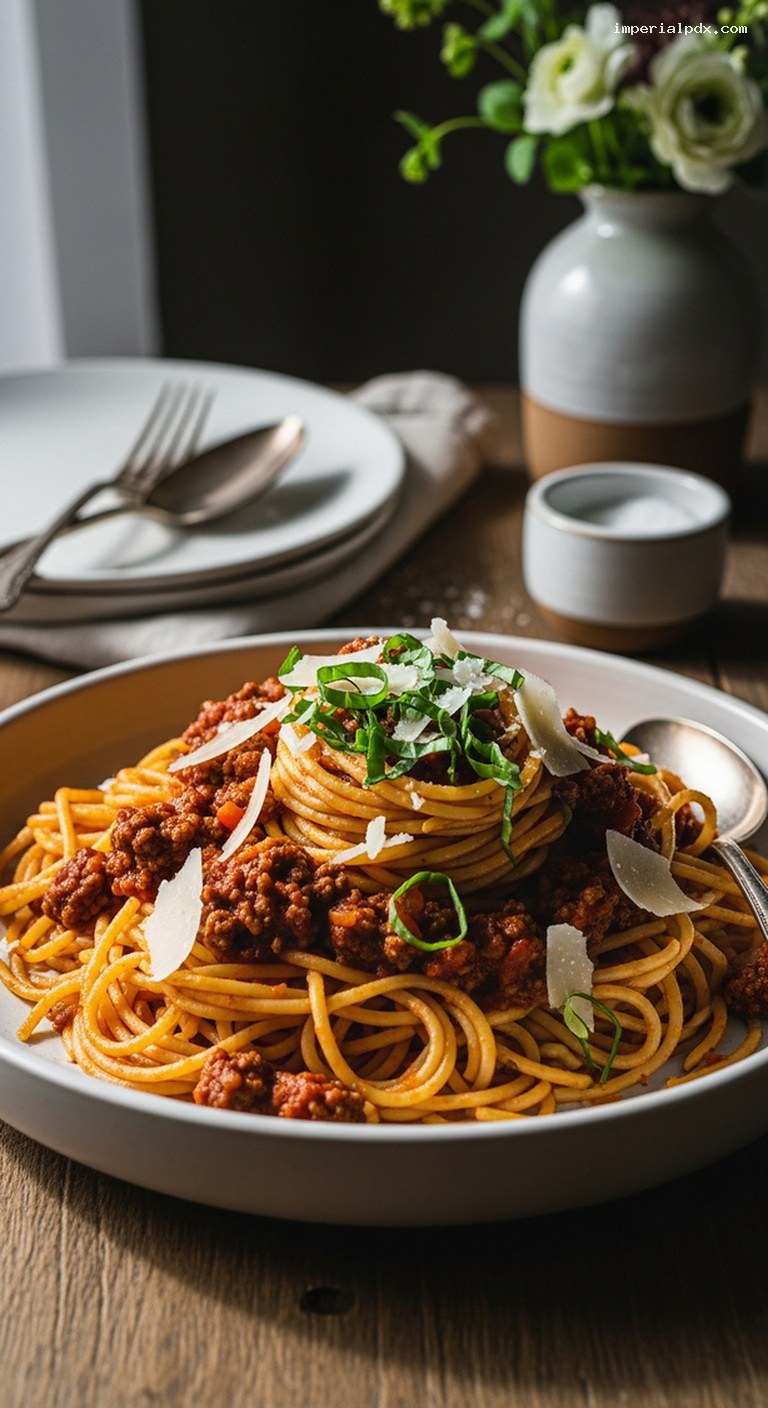
- 6. Cook spaghetti in salted boiling water until al dente; toss with ragù and Parmesan. Serve hot with extra basil and cheese.
Why You’ll Love This Recipe
- Slow-simmered beef ragù develops deep, rich flavor that tastes like it took all day.
- Classic soffritto (onion, carrot, celery) gives natural sweetness and aroma without being fussy.
- Red wine, milk, and fresh basil add restaurant-level complexity with simple ingredients.
- Makes a comforting, crowd-pleasing dinner that reheats beautifully for busy nights.
Grocery List
- Produce: Yellow onion, carrots, celery, garlic, fresh basil
- Dairy: Unsalted butter, whole milk or half-and-half, Parmesan cheese
- Pantry: Olive oil, ground beef, tomato paste, crushed tomatoes, beef broth (or water), dried oregano, bay leaf, kosher salt, black pepper, dry red wine, dried spaghetti
Full Ingredients
For the Bolognese Ragù
- 2 tbsp olive oil
- 1 tbsp unsalted butter
- 1 medium yellow onion, finely diced (about 1 cup)
- 2 medium carrots, finely diced (about 2/3 cup)
- 2 celery ribs, finely diced (about 2/3 cup)
- 3 cloves garlic, minced
- 1 lb (450 g) ground beef, 80–90% lean
- 1 tsp kosher salt, plus more to taste
- 1/2 tsp freshly ground black pepper, plus more to taste
- 2 tbsp tomato paste
- 1/2 cup (120 ml) dry red wine (such as Chianti, Sangiovese, or Cabernet Sauvignon)
- 1 can (28 oz / 800 g) crushed tomatoes
- 1 cup (240 ml) beef broth or water
- 1 tsp dried oregano
- 1 bay leaf
- 1/2 cup (120 ml) whole milk or half-and-half
- 1/4 cup fresh basil leaves, finely chopped, plus extra for garnish
- 1/2–1 tsp sugar (optional, only if needed to balance acidity)
For the Pasta and Serving
- 12 oz (340 g) dried spaghetti
- 1 tbsp kosher salt (for the boiling water)
- 1/2 cup freshly grated Parmesan cheese, plus more for serving
- Fresh basil leaves, torn or sliced, for garnish (optional)
- Extra-virgin olive oil, for drizzling at the table (optional)
Step-by-Step Instructions
Step 1: Prepare and chop the vegetables
Peel and finely dice the onion and carrots. Trim and finely dice the celery ribs. The goal is a small, even dice so the vegetables melt into the sauce instead of standing out as big chunks. Mince the garlic. Finely chop the fresh basil and set it aside for later. Having everything prepped before you start cooking makes the recipe flow smoothly.
Step 2: Build the soffritto base
In a large, heavy-bottomed pot or Dutch oven, heat the olive oil and butter over medium heat until the butter is melted and foamy. Add the diced onion, carrot, and celery. Cook, stirring occasionally, until the vegetables are very soft and lightly golden around the edges, about 8–10 minutes. Adjust the heat as needed so they soften slowly without burning. Add the minced garlic and cook for 1 minute more, stirring constantly, until fragrant.
Step 3: Brown the ground beef and toast the tomato paste
Add the ground beef to the pot, breaking it up with a wooden spoon into small crumbles. Season with 1 tsp kosher salt and 1/2 tsp black pepper. Cook over medium to medium-high heat until the beef is no longer pink and is nicely browned in spots, about 8–10 minutes. Let it sit undisturbed for a minute at a time so it can brown rather than steam, stirring occasionally. If you see a lot of excess fat, you can spoon off a bit, but leave enough for flavor. Stir in the tomato paste and cook for 2 minutes, stirring, to caramelize it slightly; it should darken in color and smell sweet and concentrated.
Step 4: Deglaze with wine and add tomatoes and seasonings
Pour in the red wine. Stir, scraping up any browned bits from the bottom of the pot with your spoon. Let the wine simmer for 2–3 minutes until slightly reduced and the sharp alcohol smell has mellowed. Add the crushed tomatoes, beef broth (or water), dried oregano, and bay leaf. Stir well to combine and bring the mixture up to a gentle simmer over medium heat. Once simmering, you should see small, lazy bubbles across the surface.
Step 5: Slow-simmer the ragù
Reduce the heat to low to maintain a gentle simmer, about 190–200°F (88–93°C) if you are checking with a thermometer. Partially cover the pot with a lid, leaving it slightly ajar to let steam escape. Simmer the sauce for 60–75 minutes, stirring every 10–15 minutes to prevent sticking, until thick, rich, and deeply flavored. If the sauce ever looks too thick or starts to catch on the bottom, stir in a splash of water or broth. If it seems thin near the end, remove the lid and let it simmer uncovered for the last 10–15 minutes to reduce. Taste and add a pinch of sugar if the sauce tastes too acidic.
Step 6: Finish with milk and basil
Stir in the milk (or half-and-half) and the chopped fresh basil. Simmer gently on low heat for another 5–10 minutes. The milk will soften the acidity of the tomatoes and give the sauce a silky texture, while the basil adds a fresh, aromatic note. Taste and adjust seasoning with more salt and pepper as needed. Remove and discard the bay leaf. Keep the sauce warm over very low heat while you cook the pasta.
Step 7: Cook the spaghetti and bring it all together
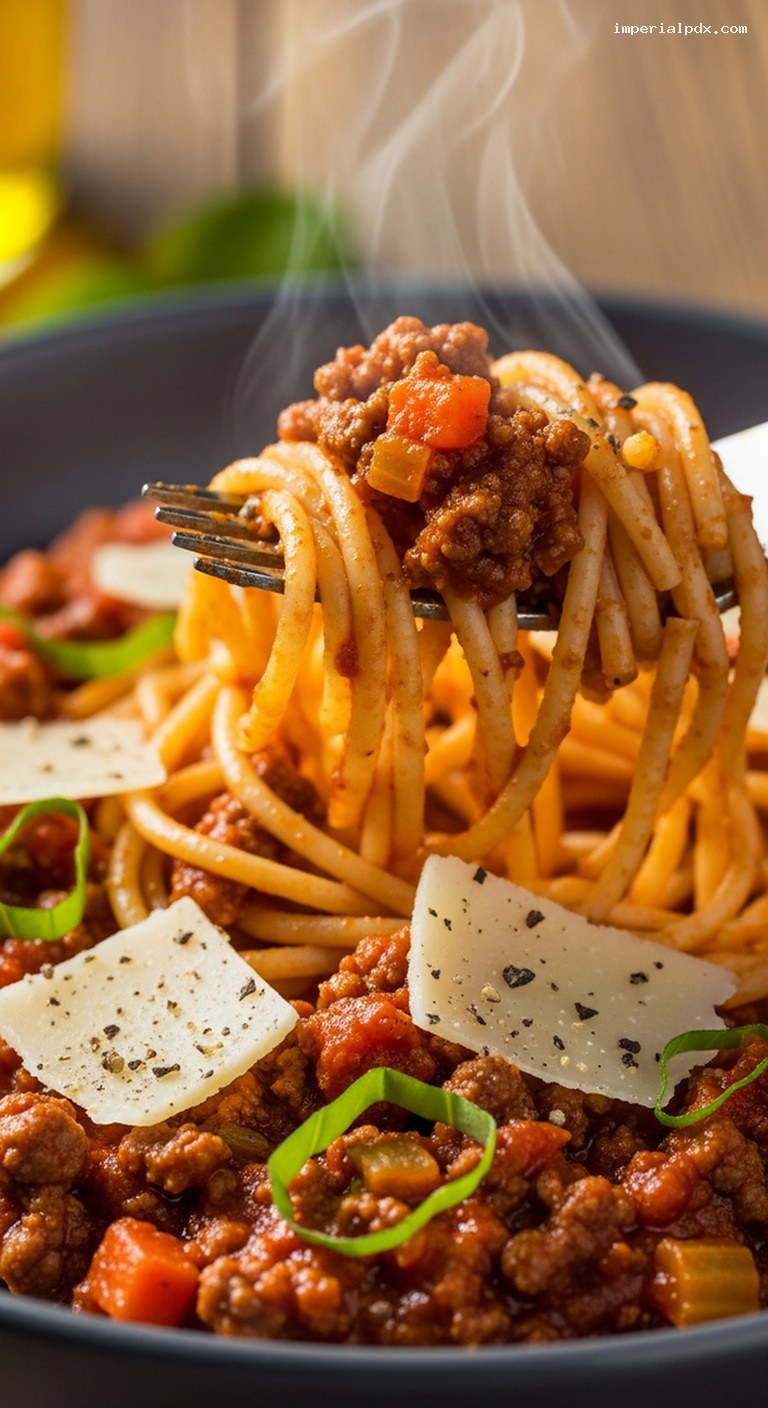
Bring a large pot of water to a rolling boil. Add 1 tbsp kosher salt. Add the spaghetti and cook according to package directions until al dente, usually 8–10 minutes. Before draining, scoop out about 1 cup of the starchy pasta cooking water and set it aside. Drain the spaghetti well. Add the hot spaghetti directly to the pot of ragù (or combine both in a large serving bowl). Toss gently to coat every strand, adding a splash of reserved pasta water if needed to loosen the sauce so it clings nicely. Sprinkle in the grated Parmesan and toss again. Serve immediately, topped with extra Parmesan, more fresh basil, and a light drizzle of extra-virgin olive oil if you like.
Pro Tips
- Take your time with browning the meat and softening the vegetables; this slow cooking at the start is where a lot of flavor develops.
- Keep the simmer gentle, not vigorous, so the sauce slowly reduces and the flavors concentrate without drying out.
- Salt in layers: season the meat, then taste and adjust the sauce at the end, and remember your pasta water should be well salted too.
- Use a wine you would enjoy drinking; the flavor carries through to the finished sauce.
- Cook the pasta just to al dente, then finish it in the sauce for 1–2 minutes so the spaghetti absorbs some of the ragù.
Variations
- Pork and beef blend: Replace half of the ground beef with ground pork for a slightly sweeter, richer ragù.
- Vegetable-boosted: Add finely chopped mushrooms (about 1 cup) with the beef for extra savoriness and more veggies.
- Lighter version: Use 93% lean ground beef, swap milk for whole or 2% milk, and serve with extra basil and less cheese.
Storage & Make-Ahead
The ragù actually tastes even better the next day, making it perfect for meal prep. Let the sauce cool to room temperature, then transfer to airtight containers and refrigerate for up to 4 days. Reheat gently on the stove over low heat, adding a splash of water if it has thickened too much. For longer storage, freeze the sauce (without the pasta) in freezer-safe containers or bags for up to 3 months. Thaw overnight in the refrigerator before reheating. Cook fresh spaghetti just before serving and toss with the hot, reheated ragù. Leftover combined pasta and sauce can be refrigerated for up to 2 days; reheat in a skillet with a splash of water or broth to loosen.
Nutrition (per serving)
Approximate values per serving (1/4 of the recipe, including sauce, pasta, and Parmesan): about 650–700 calories; 32–35 g protein; 24–28 g fat; 70–75 g carbohydrates; 4–6 g fiber; 8–10 g sugar. Values will vary based on exact ingredients, brands, and how much cheese you add at the table.