Quick Recipe Version (TL;DR)
Quick Ingredients
- 8 pork cheeks (about 900 g / 2 lb), trimmed
- 2 tbsp kosher salt
- 1 tbsp granulated sugar
- 1 tsp freshly ground black pepper
- 1 tsp crushed fennel seeds
- 1 tsp smoked paprika (optional)
- 3 cloves garlic, smashed
- 3 sprigs fresh thyme
- 2 bay leaves
- 1 strip orange zest (optional)
- 4 cups (about 900 g) duck fat, lard, or neutral oil (enough to fully cover)
- 1 tbsp butter (optional, for searing)
- Flaky salt and fresh herbs, to finish
Do This
- 1. Trim pork cheeks and pat very dry. Mix salt, sugar, pepper, fennel, and smoked paprika. Rub all over cheeks and place in a snug dish with garlic, thyme, bay, and orange zest. Cover and refrigerate 12–24 hours.
- 2. Rinse off excess cure under cool water and pat dry thoroughly. Discard the aromatics.
- 3. Arrange cheeks in a small ovenproof dish in a single layer. Cover completely with melted duck fat, lard, or oil.
- 4. Confit at 120°C / 250°F for 3–3½ hours until cheeks are completely tender and can be cut with a spoon but still hold their shape.
- 5. Transfer cheeks to a loaf pan, spoon a thin layer of fat and juices over, cover with parchment and a weight, and chill 4 hours or overnight until very firm. Slice into 2–2.5 cm (¾–1 inch) medallions.
- 6. Sear medallions in a hot pan with a spoonful of confit fat (and butter, if using) until deeply golden on both sides. Season with flaky salt, garnish with herbs, and serve warm.
Why You’ll Love This Recipe
- Restaurant-level dish at home: melt-in-your-mouth pork with crisp, golden edges and a rich, silky interior.
- Mostly hands-off: once the cheeks are curing and slowly confiting, the oven does almost all the work.
- Perfect for make-ahead entertaining: cure, confit, and chill in advance; just slice and sear before serving.
- Flexible and forgiving: works with duck fat, lard, or neutral oil, and pairs beautifully with many sides.
Grocery List
- Produce: Garlic, fresh thyme, bay leaves, orange (for zest, optional), fresh parsley or chives (for garnish, optional).
- Dairy: Butter (for searing and richness, optional).
- Pantry: Pork cheeks, kosher salt, granulated sugar, black pepper, fennel seeds, smoked paprika, duck fat or lard or neutral oil, flaky salt.
Full Ingredients
For the Cured Pork Cheeks
- 8 pork cheeks, trimmed of excess silver skin and surface fat (about 900 g / 2 lb total)
- 2 tbsp kosher salt (Diamond Crystal; if using Morton, use 1 tbsp + 2 tsp)
- 1 tbsp granulated sugar
- 1 tsp freshly ground black pepper
- 1 tsp fennel seeds, lightly crushed
- 1 tsp smoked paprika (optional, for a subtle smoky note)
- 3 cloves garlic, smashed
- 3 sprigs fresh thyme
- 2 bay leaves, torn slightly to release aroma
- 1 strip orange zest, about 10 cm / 4 inches long (optional, but lovely)
For the Confit
- 4 cups (about 900 g) duck fat, lard, or neutral oil (such as grapeseed or canola), or a mixture, enough to fully submerge the cheeks
- 4 additional sprigs fresh thyme (optional)
- 4 whole black peppercorns (optional)
For Searing and Serving
- 2–3 tbsp reserved confit fat (from the cooking dish)
- 1 tbsp unsalted butter (optional, for extra browning and flavor)
- Flaky sea salt, to finish
- Fresh herbs such as chopped parsley, chives, or thyme leaves, for garnish
- Lemon wedges or a few drops of good vinegar, for brightness (optional)
- Suggested sides (optional): creamy mashed potatoes, polenta, crusty bread, or a simple green salad
Step-by-Step Instructions
Step 1: Trim and Dry the Pork Cheeks
Lay the pork cheeks on a cutting board. Using a sharp knife, trim away any thick surface fat and silvery membrane so the meat is mostly lean and smooth. Work carefully so you do not remove too much meat.
Pat the cheeks very dry on all sides with paper towels. This helps the cure adhere evenly and prevents excess moisture in the confit later.
Step 2: Make the Cure and Season the Cheeks
In a small bowl, combine the kosher salt, sugar, black pepper, crushed fennel seeds, and smoked paprika (if using). Mix well to create an even seasoning mixture.
Place the pork cheeks in a shallow dish or small baking pan in a single layer. Sprinkle the cure mixture evenly over all sides, gently massaging it into the meat. Add the smashed garlic cloves, thyme sprigs, bay leaves, and orange zest strip, tucking them around and between the cheeks.
Cover the dish tightly with plastic wrap or a lid and refrigerate for at least 12 hours and up to 24 hours. Turn the cheeks once halfway through if you remember, to help the cure distribute evenly.
Step 3: Rinse, Dry, and Preheat the Oven
When you are ready to cook, set your oven to 120°C / 250°F.
Remove the cheeks from the refrigerator. Lift out each piece and quickly rinse under cool running water to remove excess cure on the surface. Discard the garlic, herbs, bay, and orange zest. Pat the cheeks extremely dry with paper towels. This step is important; water left on the meat can cause spluttering in the hot fat and will dilute the confit.
Step 4: Submerge in Fat and Confit Slowly
Place the dried pork cheeks in a small, snug ovenproof dish or Dutch oven in a single layer. The pan should be just large enough to hold them without much extra space; this helps keep the fat level high while using less overall.
Gently warm your duck fat, lard, or oil just until liquid, then pour it over the cheeks until they are completely submerged by at least 1–2 cm (½ inch) of fat. If using, tuck in a few extra thyme sprigs and peppercorns.
Cover the dish with a lid or tightly with foil. Transfer to the preheated oven and cook for 3–3½ hours. The fat should be at a gentle shimmer, not a boil. The cheeks are done when a fork or spoon slides in with almost no resistance and the meat feels plush and custardy, yet still holds together.
Step 5: Cool, Press, and Chill Until Firm
Let the dish cool at room temperature for about 20–30 minutes so the fat is warm but not scorching. Using tongs or a slotted spoon, carefully transfer the cheeks to a small loaf pan or other compact container, arranging them in an even layer. You can overlap slightly if needed, but an even thickness is ideal.
Spoon a thin layer of the fragrant confit fat and juices over the top to just cover the meat. Place a piece of parchment paper directly on the surface, then set a flat object (such as a smaller pan or a piece of cardboard wrapped in foil) on top to act as a press. Weigh it down with cans or a small weight to gently compress the cheeks into a uniform block.
Refrigerate for at least 4 hours, or overnight, until fully chilled and very firm. During this time, the fat will set and the meat will hold together nicely for slicing into medallions.
Step 6: Slice into Medallions
Once the cheeks are fully cold and compacted, remove the weight and parchment. Run a thin knife around the edges to loosen the block, then gently lift it out or invert it onto a cutting board if needed.
Using a sharp chef’s knife, slice the pressed pork into thick rounds, about 2–2.5 cm (¾–1 inch) each. Work slowly to avoid crumbling; the fat will soften as you handle it, so return the block to the fridge briefly if it becomes too soft to slice cleanly. You should have 2–3 medallions per serving, depending on size and appetite.
Step 7: Sear the Medallions and Serve
Just before serving, heat a large skillet (cast iron works beautifully) over medium-high heat. Add 2–3 tablespoons of the reserved confit fat. When the fat is hot and shimmering, add the pork cheek medallions in a single layer without crowding. Cook in batches if necessary.
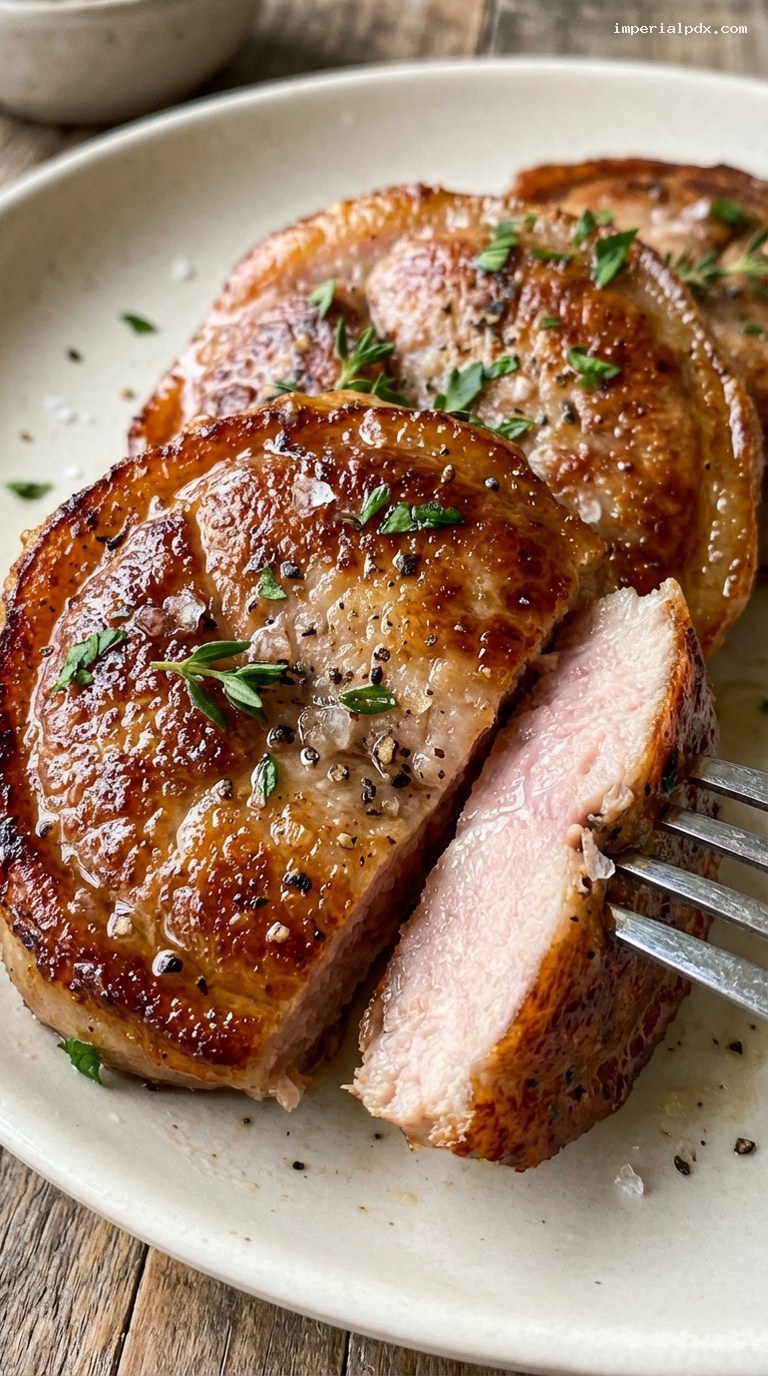
Sear for 2–3 minutes per side, undisturbed, until each side forms a deep golden-brown crust. Add a tablespoon of butter to the pan in the last minute if you want extra richness and browning, basting the tops of the medallions with the foaming fat.
Transfer to warm plates. Sprinkle lightly with flaky sea salt and garnish with chopped fresh herbs. Serve immediately, ideally over a bed of creamy mashed potatoes, polenta, or alongside a simple green salad, with any pan juices spooned over the top for a glossy finish.
Pro Tips
- Choose the right pan size: Use the smallest oven-safe dish that fits the cheeks in a snug single layer. This minimizes the amount of fat needed and ensures gentle, even cooking.
- Temperature control is key: The fat should never boil. If you see vigorous bubbles, reduce the oven temperature slightly. A gentle shimmer gives the best, most tender texture.
- Do not skip the chilling step: Pressing and chilling are what allow you to slice clean, tidy medallions that hold together when seared.
- Brown boldly: The cheeks are already cooked through from the confit, so the final sear is only for color and texture. Do not be shy about getting a deep, even crust.
- Re-use the fat: Strain the confit fat once cool and store it in the fridge. It is fantastic for roasting potatoes or vegetables and carries wonderful flavor.
Variations
- Citrus and herb version: Add extra orange or lemon zest, a few sprigs of rosemary, and a pinch of chili flakes to the cure for a brighter, slightly spicy profile.
- Red wine finish: After searing the medallions, deglaze the pan with 120 ml (½ cup) red wine and a splash of stock, then reduce to a glossy sauce to spoon over the top.
- Garlic and sage: Swap thyme for sage in both the cure and the confit, and add extra garlic cloves to evoke classic roasted pork flavors.
Storage & Make-Ahead
This recipe is ideal for making ahead. The cured but uncooked cheeks can rest in the refrigerator for up to 24 hours before confiting. Once confited and pressed, the chilled block of pork cheek can be stored in its fat, tightly covered, in the refrigerator for up to 5 days. Slice and sear directly from cold; the interior will warm as the exterior browns. For longer storage, keep the cheeks fully submerged in fat in an airtight container and freeze for up to 2 months; thaw overnight in the fridge before slicing and searing. Leftover seared medallions can be refrigerated for up to 3 days and gently reheated in a covered pan over low heat with a spoonful of confit fat.
Nutrition (per serving)
Approximate values per serving (assuming 4 servings and that not all of the confit fat is consumed): about 650 calories; 45 g fat; 18 g saturated fat; 3 g carbohydrates; 0 g fiber; 1 g sugar; 45 g protein; 900 mg sodium. These numbers are estimates and will vary based on the exact amount of fat used and how much is left on the plate.