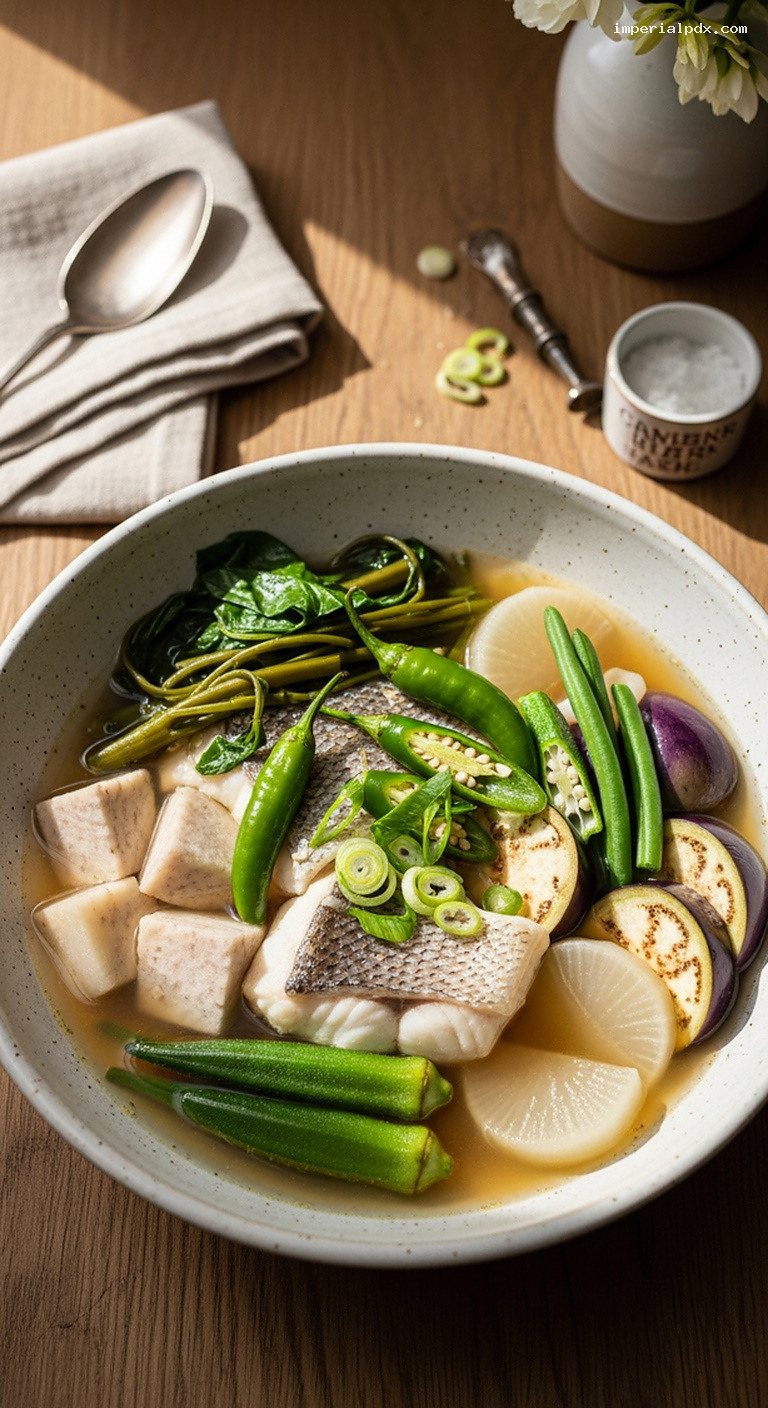
Quick Recipe Version (TL;DR)
Quick Ingredients
- 3 oz (90 g) tamarind pulp block or 1/3 cup tamarind concentrate
- 6 cups (1.4 L) water, divided
- 1 tbsp neutral oil
- 1 medium red onion, sliced
- 3 medium tomatoes, wedges
- 1 cup daikon radish or white radish, 1/2 in slices
- 1 cup taro (gabi), 1 in cubes (optional but traditional)
- 8–10 okra pods, whole or halved
- 1 small Asian eggplant, 1/2 in thick half-moons
- 1 cup green beans or long beans, 2 in pieces
- 800 g (about 1 3/4 lb) firm white fish, cut into 2 in chunks
- 2–3 green finger chilies (siling pangsigang), whole
- 3 cups loosely packed water spinach (kangkong) or baby spinach
- 2–3 tbsp fish sauce (patis), plus more to taste
- 1 1/2 tsp fine salt, plus more to taste
- Freshly ground black pepper, to taste
Do This
- 1. Soak tamarind pulp in 1 1/2 cups hot water 10–15 minutes, mash, and strain to get sour liquid (or measure tamarind concentrate).
- 2. Sauté onion in oil over medium heat 2–3 minutes, then add tomatoes and cook until soft and juicy.
- 3. Pour in remaining water, add radish and taro, bring to a boil, then simmer 10 minutes.
- 4. Stir in tamarind liquid, okra, eggplant, beans, and chilies; simmer 8–10 minutes until vegetables are just tender.
- 5. Gently add fish pieces in a single layer; simmer 6–8 minutes until opaque and just cooked through.
- 6. Add greens and fish sauce; simmer 1–2 minutes until greens wilt. Season with salt, pepper, and extra tamarind or fish sauce to taste.
- 7. Serve hot with steamed rice, making sure each bowl gets broth, fish, and vegetables.
Why You'll Love This Recipe
- Classic Filipino comfort food: tangy, savory broth that is refreshing yet deeply satisfying.
- Light but filling: lots of vegetables and fish, with a clean, bright flavor profile.
- Flexible and forgiving: use your favorite firm fish and whatever greens and vegetables you have.
- One-pot weeknight friendly: simple prep, straightforward steps, and about 50 minutes from start to table.
Grocery List
- Produce: Red onion, tomatoes, daikon or white radish, taro (gabi, optional), okra, Asian eggplant, green beans or long beans, green finger chilies, water spinach (kangkong) or baby spinach, optional green onions for garnish.
- Dairy: None.
- Pantry: Tamarind pulp or concentrate, neutral oil, fish sauce (patis), fine salt, black pepper, jasmine rice (for serving, optional).
Full Ingredients
For the Tamarind Base
- 3 oz (90 g) wet tamarind pulp block, seedless, broken into chunks
- 1 1/2 cups (360 ml) just-boiled water
- Shortcut option: Instead of pulp, use 1/3 cup (80 ml) tamarind concentrate and skip the soaking/straining step.
For the Soup
- 1 tbsp neutral oil (canola, vegetable, or sunflower)
- 1 medium red onion, thinly sliced
- 3 medium ripe tomatoes, cut into wedges
- 4 1/2 cups (1.06 L) water (in addition to the 1 1/2 cups used for tamarind)
- 1 cup (about 120 g) daikon radish or white radish, peeled and sliced 1/2 in (1.25 cm) thick
- 1 cup (about 140 g) taro (gabi), peeled and cut into 1 in (2.5 cm) cubes (optional but adds body)
- 8–10 medium okra pods, trimmed, left whole or sliced in half lengthwise
- 1 small Asian eggplant (about 150 g), sliced into 1/2 in (1.25 cm) thick half-moons
- 1 cup (about 100 g) green beans or long beans, cut into 2 in (5 cm) pieces
- 2–3 green finger chilies (siling pangsigang), left whole
- 800 g (about 1 3/4 lb) firm white fish, skin-on preferred, cut into 2 in (5 cm) chunks
- Good choices: milkfish (bangus), red snapper, sea bass, grouper, or tilapia.
- 3 cups (about 90 g) loosely packed water spinach (kangkong) or baby spinach, large stems removed
- 2–3 tbsp fish sauce (patis), or to taste
- 1 1/2 tsp fine sea salt, plus more to taste
- 1/4 tsp freshly ground black pepper, plus more to taste
To Serve (Optional)
- Steamed jasmine rice
- Sliced green onions or extra water spinach leaves, for garnish
- Extra fish sauce or calamansi/lemon wedges on the side
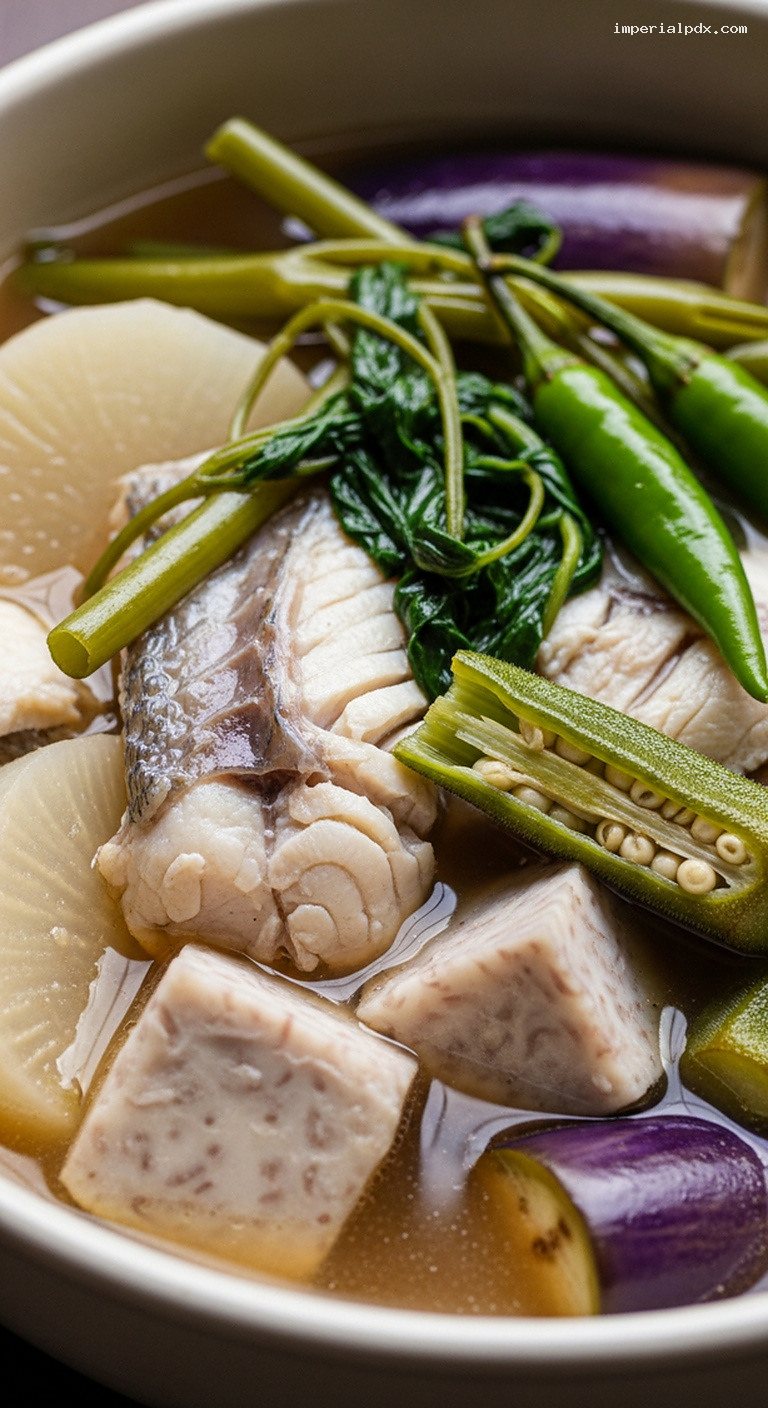
Step-by-Step Instructions
Step 1: Prepare the Tamarind Base
Place the tamarind pulp in a heatproof bowl. Pour the 1 1/2 cups (360 ml) just-boiled water over it and let it sit for 10–15 minutes to soften.
Using a fork or spoon, mash and stir the tamarind in the water until the pulp breaks down and the liquid turns cloudy and deep brown.
Set a fine-mesh strainer over another bowl or large measuring cup. Pour the tamarind mixture through the strainer, pressing firmly with the back of a spoon to extract as much liquid as possible. Discard the solids. You should get about 1 to 1 1/4 cups of tamarind liquid. Set aside.
If you are using tamarind concentrate instead, simply measure 1/3 cup (80 ml) and set aside; you will add it directly later.
Step 2: Prep and Sauté the Aromatics
While the tamarind is soaking, prepare all the vegetables: slice the onion, cut the tomatoes into wedges, peel and slice the radish, cube the taro, trim the okra, slice the eggplant, and cut the green beans. Rinse and roughly chop the water spinach (or baby spinach) and set aside for later.
In a large, heavy-bottomed pot (at least 4.5 liters), heat the 1 tbsp neutral oil over medium heat. Add the sliced onion and cook, stirring occasionally, for 2–3 minutes until softened and translucent. Add the tomato wedges and cook for another 3–4 minutes, gently pressing them with a spoon until they start to break down and release their juices. This creates a sweet, savory base for the broth.
Step 3: Build the Base Broth with Root Vegetables
Pour in the 4 1/2 cups (1.06 L) water. Add the sliced radish and taro cubes (if using). Increase the heat to medium-high and bring the pot to a gentle boil. Skim off any foam that rises to the surface for a clearer broth.
Once boiling, reduce the heat to a medium-low simmer. Cover the pot partially and cook for 10 minutes, or until the radish is beginning to turn slightly translucent and the taro is just starting to soften. The roots will sweeten the broth and give it a nice body.
Step 4: Add Tamarind and Tender Vegetables
Stir in the reserved tamarind liquid (or tamarind concentrate, if using) and mix well. Add the okra, eggplant, green beans, and whole green finger chilies. Season with 1 1/2 tsp fine salt and 1/4 tsp black pepper. Stir gently to distribute the vegetables without breaking them up.
Return the soup to a gentle boil over medium heat, then lower to a simmer. Cook uncovered for 8–10 minutes, or until the vegetables are just tender but not mushy. Taste the broth at this point: it should be pleasantly sour, lightly sweet from the vegetables, and lightly seasoned. You will adjust fully after adding the fish and greens.
Step 5: Gently Poach the Fish
Carefully lower the fish pieces into the simmering broth in a single layer, skin-side down if they have skin. Try not to stack the pieces on top of each other so they cook evenly and do not break apart. Keep the heat at a gentle simmer (small, steady bubbles) rather than a rolling boil to avoid overcooking the fish.
Cover the pot partially and cook for 6–8 minutes, depending on the thickness of the fish, just until the flesh turns opaque and flakes easily with a fork. Avoid stirring vigorously; instead, gently nudge the pieces if you need to redistribute them.
Step 6: Add Greens and Season the Broth
Once the fish is just cooked, add the water spinach (kangkong) or baby spinach on top. Pour in 2 tbsp of fish sauce (patis) to start. Gently push the greens down into the hot broth using a spoon. Simmer for 1–2 minutes, just until the greens are wilted and bright.
Taste the broth and adjust: add more fish sauce 1 tsp at a time for extra savoriness, a pinch of salt if needed, and more tamarind concentrate or a squeeze of lemon/calamansi, if you like it more sour. The flavor should be distinctly tangy, balanced by a gentle saltiness and sweetness from the vegetables.
Step 7: Serve Your Sinigang na Isda
Turn off the heat and let the soup sit for 2–3 minutes to settle. Carefully ladle the broth, vegetables, and fish into warm bowls, making sure each serving gets a good mix of fish, radish, okra, eggplant, and greens. Avoid breaking the fish by using a wide ladle or spoon.
Serve immediately while hot, ideally with steamed jasmine rice on the side. You can garnish with sliced green onions or extra fresh water spinach leaves and offer additional fish sauce or calamansi/lemon wedges at the table so everyone can adjust sourness and saltiness to their own taste.
Pro Tips
- Choose the right fish: Use firm, meaty fish like milkfish, snapper, grouper, or sea bass. Delicate fillets can fall apart; bone-in cuts hold up better and add more flavor to the broth.
- Control the sourness: Tamarind intensity varies. Start with the amount in the recipe, then add more tamarind concentrate or a squeeze of citrus at the end if you want a sharper, more puckery broth.
- Layer vegetables by cooking time: Hard vegetables (radish, taro) go in first, then medium-tender ones (okra, eggplant, beans), and finally delicate greens. This keeps everything perfectly cooked.
- Do not boil the fish hard: Keep the soup at a gentle simmer after adding fish. A rolling boil can make the flesh tough and cause the pieces to break apart.
- Use bones for deeper flavor: If you have fish heads or bones, simmer them with the initial water for 15–20 minutes, strain, then use that liquid as your base for an extra-rich broth.
Variations
- Sinigang na Hipon (Shrimp Sinigang): Replace the fish with 700 g (1 1/2 lb) shell-on shrimp. Add them in Step 5 and cook just 3–4 minutes until pink and opaque.
- Salmon Belly Sinigang: Use salmon belly or steaks instead of white fish for a richer, more luxurious soup. Reduce added oil and skim some fat if desired.
- Vegetarian Sinigang: Omit fish and fish sauce. Use vegetable stock, extra mushrooms or firm tofu cubes, and season with soy sauce and salt instead of patis.
Storage & Make-Ahead
Sinigang na isda is best enjoyed freshly cooked, as fish can become dry and overcooked when reheated. However, leftovers can be stored in an airtight container in the refrigerator for up to 2 days. Reheat gently over low heat until just steaming; avoid boiling to keep the fish tender.
For the best results when planning ahead, you can prepare the broth and vegetables up to Step 4 a day in advance. Cool completely, refrigerate, and then bring back to a gentle simmer before adding the fish and greens right before serving. This way, the fish is freshly cooked and the vegetables retain a better texture.
Nutrition (per serving)
Approximate values per serving (assuming 4 servings): 360 calories, 38 g protein, 11 g fat, 24 g carbohydrates, 4 g fiber, 1,000–1,200 mg sodium. Actual values will vary based on the type of fish used, exact amounts of fish sauce and salt, and portion sizes.