Quick Recipe Version (TL;DR)
Quick Ingredients
- 3/4 cup (150 g) granulated sugar, for caramel
- 1/4 cup (60 ml) water, for caramel
- 2 cups (480 ml) whole milk
- 1 cup (240 ml) heavy cream
- 3/4 cup (150 g) granulated sugar, for custard
- 4 large eggs + 2 large egg yolks
- 2 tsp (10 ml) pure vanilla extract
- 1/8 tsp fine salt
- Optional: fresh berries or mint for serving
Do This
- 1. Heat oven to 300°F (150°C). Arrange 6 (6-oz / 175-ml) ramekins in a deep baking dish; boil a kettle of water.
- 2. Cook 3/4 cup sugar with 1/4 cup water until deep amber; quickly divide caramel among ramekins and tilt to coat bottoms.
- 3. Gently heat milk, cream, and 3/4 cup sugar until steaming and sugar dissolves.
- 4. Whisk eggs, yolks, salt, and vanilla. Slowly whisk in warm milk mixture to temper, then strain into a jug.
- 5. Pour custard over set caramel. Place baking dish in oven and pour hot water around ramekins halfway up sides.
- 6. Bake 35–45 minutes until just set with a slight wobble in the center. Cool, then chill at least 4 hours or overnight.
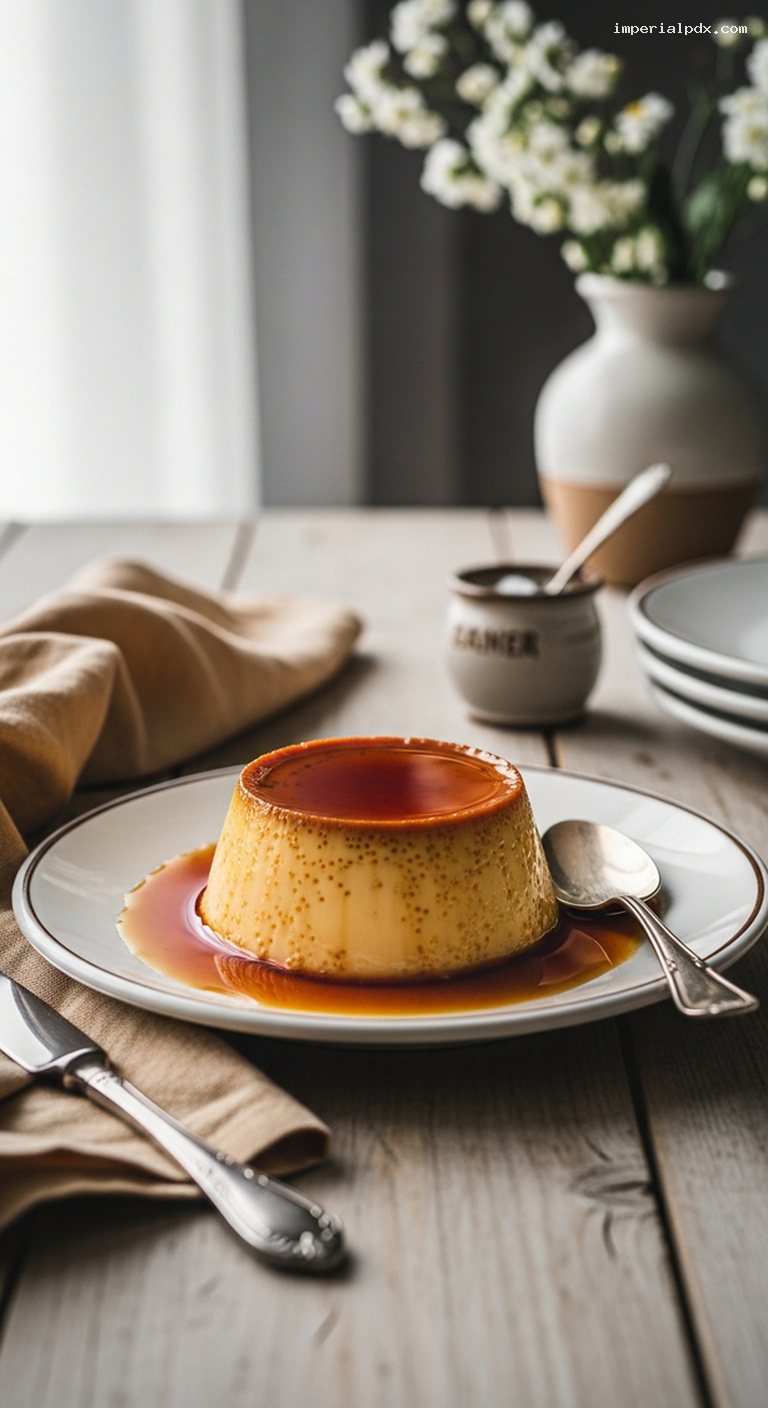
- 7. To serve, run a knife around edges, invert onto plates, and let the caramel sauce cascade over the custards.
Why You’ll Love This Recipe
- Silky-smooth baked custard with a rich vanilla flavor and no fuss ingredients.
- Showstopping presentation: flip it out and watch the glossy amber caramel flow over the sides.
- Perfect make-ahead dessert that actually tastes better after a long chill.
- Gentle, step-by-step method designed for home cooks, not pastry chefs.
Grocery List
- Produce: Fresh berries and/or mint leaves for garnish (optional)
- Dairy: Whole milk, heavy cream, large eggs
- Pantry: Granulated sugar, pure vanilla extract, fine salt, water
Full Ingredients
For the Caramel
- 3/4 cup (150 g) granulated sugar
- 1/4 cup (60 ml) water
For the Custard
- 2 cups (480 ml) whole milk
- 1 cup (240 ml) heavy cream
- 3/4 cup (150 g) granulated sugar
- 4 large eggs
- 2 large egg yolks
- 2 tsp (10 ml) pure vanilla extract
- 1/8 tsp fine salt
To Serve (Optional)
- Fresh berries (such as raspberries or sliced strawberries)
- Small mint leaves
Step-by-Step Instructions
Step 1: Prepare the oven and ramekins
Preheat your oven to 300°F (150°C) with a rack in the middle. Place 6 oven-safe ramekins (about 6 oz / 175 ml each) into a deep roasting pan or a 9 x 13 inch (23 x 33 cm) baking dish. This pan will become your water bath, which helps the custards bake gently and stay silky.
Put a kettle or large pot of water on to boil; you will need enough hot water to come about halfway up the sides of the ramekins in the pan. Have a clean kitchen towel nearby to wipe spills, and a heatproof jug or measuring cup ready for pouring the custard later.
Step 2: Make the amber caramel
In a medium, light-colored saucepan, combine 3/4 cup (150 g) sugar and 1/4 cup (60 ml) water. Swirl gently to moisten all the sugar; do not stir once the pan is on the heat. Place over medium heat and cook, occasionally swirling the pan, until the sugar melts, turns golden, and then a deep amber color, about 8–12 minutes. Watch closely near the end to avoid burning; the color should be a rich amber, not dark brown or black.
As soon as the caramel reaches the desired color, immediately remove the pan from the heat. Working quickly but carefully (the caramel is extremely hot), divide the caramel evenly among the ramekins, pouring a thin layer into each. Tilt each ramekin so the caramel coats the bottom. Set aside to cool and harden while you prepare the custard. The caramel may crack as it cools; that is normal and will dissolve into sauce during baking.
Step 3: Warm the milk and cream
In a clean medium saucepan, add 2 cups (480 ml) whole milk, 1 cup (240 ml) heavy cream, and 3/4 cup (150 g) sugar. Place over medium-low heat and warm gently, stirring occasionally, just until the sugar dissolves and the mixture is steaming but not boiling, about 5–7 minutes. If you have a thermometer, aim for around 120–140°F (50–60°C).
Once the sugar is fully dissolved and the mixture is warm, remove the pan from the heat and let it sit for a minute or two to cool slightly while you prepare the egg mixture. This small cool-down helps prevent scrambling the eggs when you combine them.
Step 4: Whisk and temper the eggs
In a medium bowl, whisk together 4 large eggs, 2 large egg yolks, 1/8 tsp fine salt, and 2 tsp (10 ml) vanilla extract until thoroughly combined but not frothy. You want a smooth mixture with no streaks of egg white.
To temper the eggs, slowly pour about 1 cup (240 ml) of the warm milk mixture into the eggs in a thin stream, whisking constantly. This gently warms the eggs without cooking them. Once that is incorporated, gradually whisk in the rest of the warm milk mixture. Go slowly and keep whisking so the eggs stay smooth and silky.
Step 5: Strain and pour the custard
For the smoothest texture, set a fine-mesh sieve over a large measuring jug or bowl with a spout. Pour the custard mixture through the sieve, pressing lightly with a spatula to help it pass through. Discard any egg bits left in the sieve.
Carefully pour the strained custard into the caramel-lined ramekins, dividing it evenly. To reduce bubbles, you can pour down the side of each ramekin rather than directly into the center. If you see many bubbles on the surface, gently skim them off with a spoon.
Step 6: Bake in a gentle water bath
Place the roasting pan with the filled ramekins on the middle oven rack. Carefully pour hot tap water or recently boiled water into the pan, avoiding splashing into the custard, until it reaches about halfway up the sides of the ramekins.
Bake at 300°F (150°C) for 35–45 minutes. Start checking at 30 minutes: the custards are done when the edges are set but the centers still have a gentle wobble when you jiggle a ramekin. A thin knife inserted near the center should come out mostly clean, with just a bit of creamy custard clinging. If they look liquid in the center, bake a little longer, checking every 5 minutes.
When done, carefully remove the pan from the oven. Using tongs or oven mitts, lift the ramekins out of the water and place them on a cooling rack. Let cool to room temperature, about 45–60 minutes.
Step 7: Chill, unmold, and serve
Once the ramekins are at room temperature, cover each one with plastic wrap or a small plate. Refrigerate for at least 4 hours, or overnight. This chilling time allows the custard to fully set and the caramel to dissolve into a glossy sauce.
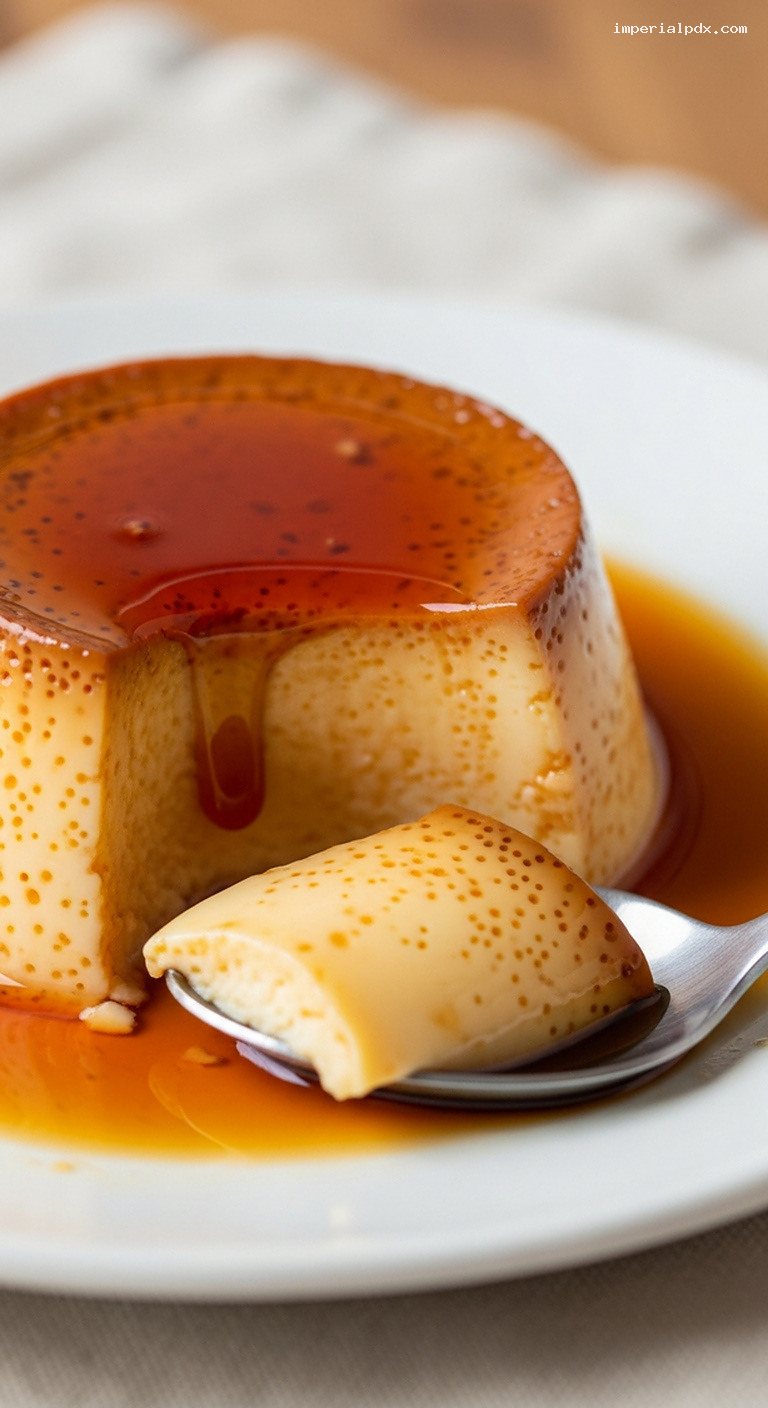
To unmold, run a thin knife around the inside edge of each ramekin to loosen the custard. Place a dessert plate (with a slight rim to catch the sauce) upside down on top of the ramekin. Firmly hold the ramekin and plate together and quickly invert. Give the ramekin a gentle shake; you should hear the custard release. Lift off the ramekin to reveal the crème caramel with a pool of amber sauce cascading over the edges.
Garnish with a few fresh berries and a small mint leaf if you like. Serve well chilled.
Pro Tips
- Use gentle heat for caramel: A light-colored saucepan makes it easier to see the color change. Swirl instead of stirring once it starts boiling to prevent crystallization.
- Do not overbake: Creme caramel should have a soft wobble in the center when you remove it from the oven. It will continue to set as it cools and chills.
- Always strain the custard: This quick step removes any bits of cooked egg and ensures that ultra-smooth, restaurant-style texture.
- Avoid boiling in the water bath: If the water boils vigorously, the custard can become rubbery. If your oven runs hot, you can lower the temperature to 285–290°F (140–145°C) and bake a little longer.
- For easy unmolding: If a custard seems stuck, dip the bottom of the ramekin in hot water for 10–15 seconds before inverting to loosen the caramel.
Variations
- Orange-scented crème caramel: Add 1 tsp finely grated orange zest to the warm milk and cream mixture, then strain before tempering into the eggs. Garnish with thin strips of candied orange peel.
- Coffee crème caramel: Stir 2 tsp instant espresso powder into the hot milk and cream until dissolved. Proceed as directed for a subtle mocha note.
- Coconut twist: Replace 1 cup (240 ml) of the whole milk with full-fat coconut milk. Add 1–2 tbsp shredded toasted coconut on top just before serving.
Storage & Make-Ahead
Crème caramel is an ideal make-ahead dessert. Once cooled and covered, the individual custards can be stored in the refrigerator for up to 3 days before serving. Keep them in their ramekins, tightly covered, so they do not absorb fridge odors. Unmold just before serving for the cleanest shape and glossiest caramel sauce. Leftover unmolded portions can be refrigerated for 1–2 days in an airtight container, though the custard may weep slightly; it will still taste delicious. This dessert does not freeze well, as freezing tends to break the smooth custard texture.
Nutrition (per serving)
Approximate values per serving (1 ramekin, with caramel): about 310 calories, 15 g fat (9 g saturated), 37 g carbohydrates (36 g sugar), 9 g protein, 120 mg sodium. These numbers are estimates and will vary based on the exact ingredients and portion sizes you use.