Quick Recipe Version (TL;DR)
Quick Ingredients
- 1 cup (190 g) jasmine rice, rinsed
- 10 cups (2.4 L) water (or 8 cups water + 2 cups low-sodium chicken stock)
- 1 1/2 tsp kosher salt, plus more to taste
- 12 oz (340 g) skinless white fish fillet (cod, haddock, sole, or tilapia), thinly sliced
- 1 tsp Shaoxing wine (or dry sherry), optional
- 1 tsp cornstarch, optional (for extra-tender fish)
- 1/2 tsp toasted sesame oil, plus 1–2 tsp to finish
- 1 1/2 tsp fresh ginger, finely julienned (plus 3 (1/8-inch) slices for simmering)
- 3 scallions, thinly sliced (white and green parts)
- 1/2 tsp ground white pepper, plus more to taste
Do This
- 1) Rinse rice until water runs mostly clear; drain well.
- 2) In a pot, bring 10 cups water to a boil (212°F / 100°C). Stir in rice + 3 ginger slices.
- 3) Reduce to a gentle simmer (185–195°F / 85–90°C). Cook 60–70 minutes, stirring every 10 minutes, until creamy.
- 4) Meanwhile, slice fish thin; toss with salt, optional wine + cornstarch, and 1/2 tsp sesame oil. Rest 10 minutes.
- 5) Stir salt into congee; adjust thickness with hot water if needed. Turn heat to low.
- 6) Add fish slices; gently stir once. Cover and poach off the heat 3–5 minutes (until just opaque, 130–140°F / 54–60°C).
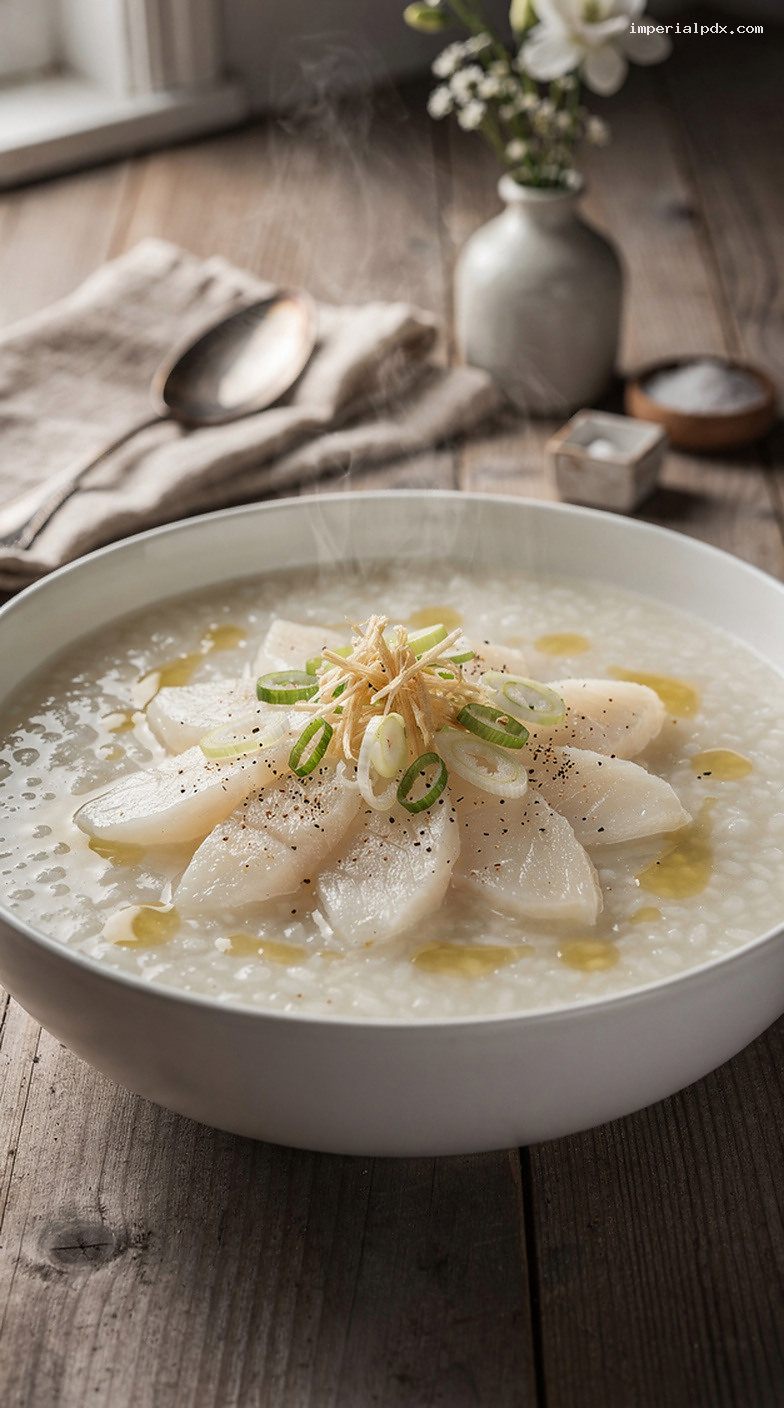
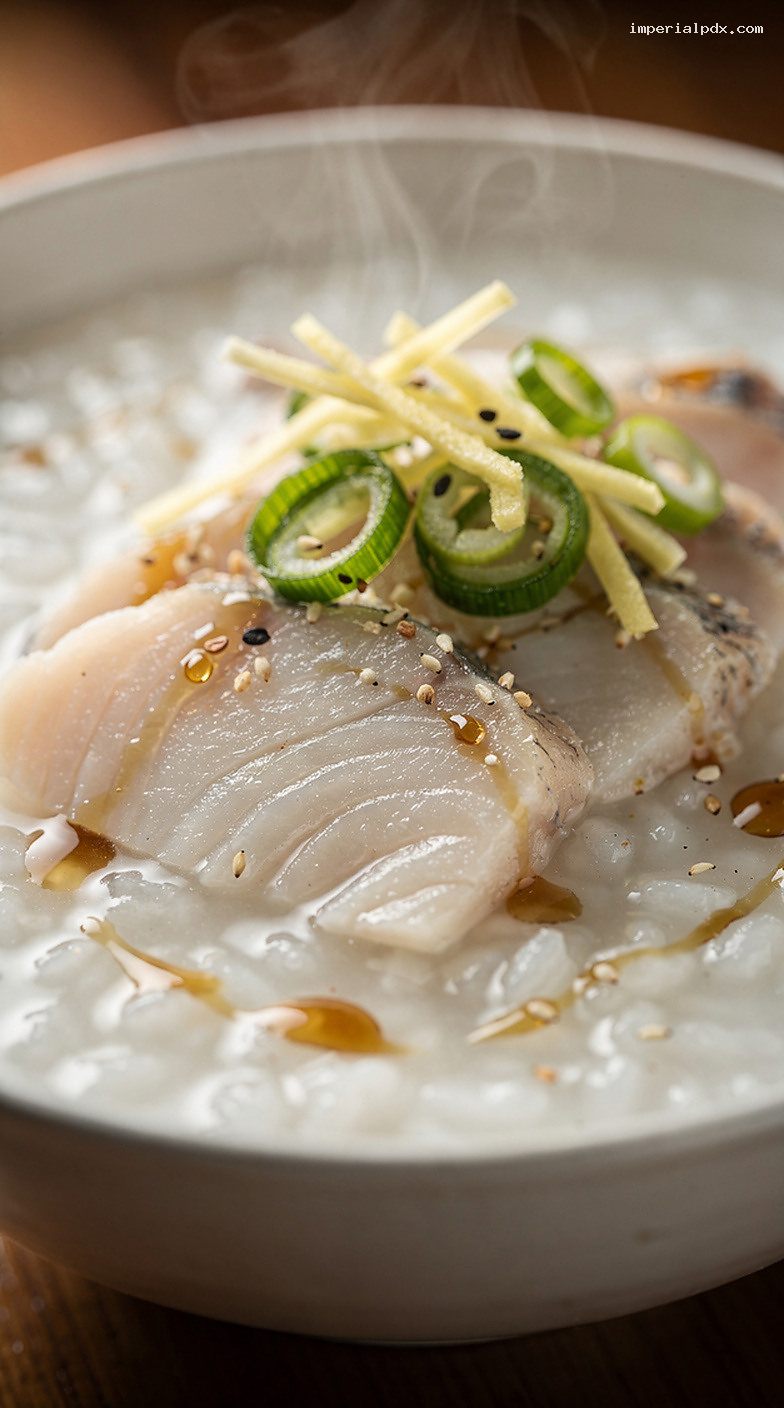
- 7) Ladle into bowls; top with julienned ginger, scallions, white pepper, and a drizzle of sesame oil.
Why You’ll Love This Recipe
- Silky and comforting: slow-simmered rice breaks down into a creamy, soothing porridge.
- Delicate fish, never dry: the fish gently poaches in the hot congee (no hard boiling).
- Simple ingredients, big flavor: ginger, scallion, white pepper, and sesame oil do the heavy lifting.
- Easy to customize: make it thicker or thinner, and adjust seasoning bowl-by-bowl.
Grocery List
- Produce: fresh ginger, scallions
- Dairy: none
- Pantry: jasmine rice, kosher salt, ground white pepper, toasted sesame oil, cornstarch (optional), Shaoxing wine or dry sherry (optional)
- Seafood/Protein: skinless white fish fillet (cod, haddock, sole, or tilapia)
Full Ingredients
Congee Base
- 1 cup (190 g) jasmine rice
- 10 cups (2.4 L) water, divided as needed (or use 8 cups water + 2 cups (480 ml) low-sodium chicken stock)
- 3 slices fresh ginger (about 10 g total), sliced 1/8-inch (3 mm) thick
- 1 1/2 tsp kosher salt, plus more to taste
Fish (Tender Poached Slices)
- 12 oz (340 g) skinless white fish fillet (cod, haddock, sole, or tilapia)
- 1 tsp Shaoxing wine or dry sherry (optional, but very nice)
- 1 tsp cornstarch (optional, helps protect the fish and keeps it velvety)
- 1/4 tsp kosher salt
- 1/8 tsp ground white pepper
- 1/2 tsp toasted sesame oil
Finish and Serve
- 1 1/2 tsp fresh ginger, finely julienned (matchsticks), for topping
- 3 scallions, thinly sliced
- 1/2 tsp ground white pepper, plus more to taste
- 1 to 2 tsp toasted sesame oil, to drizzle (to taste)
- Optional add-ons: crispy fried shallots, chopped cilantro, chili oil, youtiao (Chinese crullers)
Step-by-Step Instructions
Step 1: Rinse (and optionally soak) the rice
Place 1 cup (190 g) jasmine rice in a fine-mesh sieve. Rinse under cool running water, stirring the rice with your fingers, until the water runs mostly clear (about 45–60 seconds). Drain well.
Optional for slightly faster breakdown: soak the drained rice in clean water for 20 minutes, then drain again.
Step 2: Start the congee with a strong boil
In a large heavy-bottomed pot (at least 4–5 quarts), combine the rinsed rice with 10 cups (2.4 L) water (or your water/stock combination) and 3 slices of ginger.
Bring to a boil over high heat to 212°F (100°C), stirring once or twice to prevent sticking on the bottom.
Step 3: Simmer slowly until creamy and silky
Immediately reduce the heat to maintain a gentle simmer at 185–195°F (85–90°C). The surface should bubble lazily, not aggressively.
Simmer uncovered for 60–70 minutes, stirring well every 10 minutes (and more often during the last 15 minutes) to prevent scorching and to help the rice break down into a creamy porridge.
If the congee gets thicker than you like at any point, stir in 1/4 to 1/2 cup (60–120 ml) hot water at a time. A classic Cantonese texture is fluid and spoonable, not gluey.
Step 4: Slice and gently season the fish
While the congee simmers, pat the fish dry. Slice it across the grain into thin pieces about 1/8-inch (3 mm) thick and roughly 1 1/2-inch (4 cm) long. Thin slices are key so they poach quickly and stay delicate.
In a bowl, toss the fish with:
- 1 tsp Shaoxing wine (optional)
- 1 tsp cornstarch (optional)
- 1/4 tsp kosher salt
- 1/8 tsp ground white pepper
- 1/2 tsp toasted sesame oil
Let stand for 10 minutes at room temperature while you finish the congee.
Step 5: Season the congee and set the poaching conditions
When the congee is creamy and the grains have mostly broken down, remove and discard the ginger slices (or leave them if you like a stronger ginger presence).
Stir in 1 1/2 tsp kosher salt. Taste and adjust with more salt if needed.
Bring the congee back to a very gentle simmer at 185–195°F (85–90°C), then reduce the heat to low for 1 minute to stabilize (this helps prevent the fish from breaking up).
Step 6: Poach the fish in the hot congee (no hard boiling)
Turn the heat off. Immediately slide the fish slices into the hot congee, separating pieces with chopsticks or a spoon so they don’t clump. Give just one gentle stir—too much stirring can flake the fish into bits.
Cover the pot and let the fish poach in the residual heat for 3 to 5 minutes, until the fish is just opaque and flakes easily. If you’re using an instant-read thermometer, aim for 130–140°F (54–60°C) in the thickest piece for tender, silky fish.
Step 7: Finish with ginger, scallions, white pepper, and sesame oil
Ladle the congee into warm bowls. Top each bowl with a pinch of julienned ginger and a generous sprinkle of sliced scallions.
Finish with ground white pepper to taste and a small drizzle of toasted sesame oil (about 1/4 to 1/2 tsp per bowl). Serve immediately while steaming hot.
Pro Tips
- Stir more near the end: the last 15 minutes is when congee is most likely to catch on the bottom. Stir every 2–3 minutes then.
- Control thickness on purpose: congee thickens as it sits. Keep a kettle of hot water nearby and thin with 1/4 cup (60 ml) at a time.
- Don’t boil after adding fish: boiling can make delicate white fish tighten and turn dry. Residual heat poaching keeps it tender.
- Slice fish thin and evenly: 1/8-inch (3 mm) slices cook in minutes and stay silky.
- White pepper goes on at the end: it’s most fragrant when sprinkled right before eating.
Variations
- Ginger-scallion oil finish: instead of plain sesame oil, heat 2 tbsp neutral oil to 325°F (163°C) and pour over the scallions and ginger in each bowl, then finish with sesame oil.
- Add a little depth: replace 2 cups (480 ml) of the water with low-sodium chicken stock for a slightly richer base.
- Spicy option: top with 1/2 tsp chili oil per bowl (keep the sesame oil drizzle smaller so it doesn’t get too heavy).
Storage & Make-Ahead
Refrigerate: Store leftover congee in an airtight container for up to 4 days. It will thicken considerably as it chills.
Reheat: Reheat on the stovetop over medium-low until steaming hot, stirring often, and thin with 1/4 to 1/2 cup (60–120 ml) water at a time until silky again. Heat to at least 165°F (74°C).
Best make-ahead strategy: Cook the congee base ahead, then reheat and poach fresh fish slices right before serving for the most delicate texture. Already-poached fish can be refrigerated, but it may flake more when reheated.
Freezing: The plain congee base freezes well for up to 2 months. Thaw overnight in the fridge and reheat with added water. Avoid freezing congee with fish mixed in (fish texture can become crumbly).
Nutrition (per serving)
Approximate, based on 4 servings and water (not stock), including sesame oil and fish marinade: 320 calories, 24 g protein, 45 g carbohydrates, 5 g fat, 1 g saturated fat, 1 g fiber, 780 mg sodium.