Quick Recipe Version (TL;DR)
Quick Ingredients
- 400 g dried spaghetti
- 450 g fresh sardines, cleaned and filleted (or 2 x 120 g cans sardines in olive oil, drained)
- 30 g wild fennel fronds (or 1/2 cup chopped fennel fronds/dill)
- 60 ml extra-virgin olive oil, plus more as needed
- 1 small yellow onion, finely diced (about 150 g)
- 3 anchovy fillets, minced (optional but traditional)
- 2 garlic cloves, thinly sliced
- 30 g raisins (about 3 tbsp)
- 30 g pine nuts (about 3 tbsp)
- 1/8 tsp saffron threads + 60 ml warm water
- 60 ml dry white wine (or water)
- 1 tbsp tomato paste
- 80 g fine breadcrumbs (about 1 cup), for pangrattato
- 1 tbsp chopped parsley, plus more to serve
- Kosher salt and black pepper
- Optional: 1/2 lemon (zest or wedges) and a pinch of crushed red pepper
Do This
- 1. Toast pine nuts in a dry skillet 2–3 minutes; set aside. Plump raisins in hot water 10 minutes; drain.
- 2. Make pangrattato: sauté breadcrumbs in olive oil with a pinch of salt until deep golden, 4–6 minutes; set aside.
- 3. Boil pasta in well-salted water until just al dente; reserve 360 ml pasta water before draining.
- 4. Sauté onion in olive oil 6–8 minutes; add anchovy and garlic 1 minute. Stir in tomato paste 30 seconds.
- 5. Add sardines, wine, fennel, raisins, and saffron water; gently simmer 3–5 minutes, breaking sardines into chunks.
- 6. Toss pasta with sauce, pine nuts, and enough reserved pasta water to gloss; cook together 1–2 minutes.
- 7. Serve hot with pangrattato and parsley (and lemon if you like).
Why You’ll Love This Recipe
- It’s a classic sweet-savory Sicilian flavor combo: raisins, pine nuts, saffron, and briny sardines.
- Pangrattato (toasted breadcrumbs) adds a crunchy contrast that makes every bite more interesting.
- The sauce comes together quickly, mostly in one pan, while the pasta water does the heavy lifting.
- Flexible options for fresh or canned sardines, and easy swaps if wild fennel is hard to find.
Grocery List
- Produce: 1 small yellow onion, 2 garlic cloves, wild fennel fronds (or fennel fronds/dill), parsley, optional lemon
- Seafood: 450 g fresh sardines (or 2 x 120 g cans sardines), optional anchovy fillets
- Dairy: None
- Pantry: spaghetti, extra-virgin olive oil, raisins, pine nuts, saffron threads, dry white wine (or extra water), tomato paste, fine breadcrumbs, kosher salt, black pepper, optional crushed red pepper
Full Ingredients
For the Pasta and Sauce
- Spaghetti: 400 g dried spaghetti
- Sardines: 450 g fresh sardines, cleaned and filleted (see note), or 2 x 120 g cans sardines in olive oil, drained
- Wild fennel: 30 g wild fennel fronds, roughly chopped (about 1 packed cup); or substitute 1/2 cup chopped fennel fronds or dill
- Extra-virgin olive oil: 60 ml (4 tbsp), plus more as needed
- Onion: 1 small yellow onion (about 150 g), finely diced
- Anchovy fillets (optional but traditional): 3, minced
- Garlic: 2 cloves, thinly sliced
- Raisins: 30 g (about 3 tbsp)
- Pine nuts: 30 g (about 3 tbsp)
- Dry white wine: 60 ml (1/4 cup), or replace with water
- Tomato paste: 1 tbsp
- Kosher salt: for pasta water and seasoning (start with 1 1/2 tsp kosher salt for the sauce, added gradually to taste)
- Black pepper: 1/4 tsp, plus more to taste
- Reserved pasta water: up to 360 ml (1 1/2 cups)
For the Saffron
- Saffron threads: 1/8 tsp
- Warm water: 60 ml (1/4 cup), about 50–60°C (122–140°F)
For the Pangrattato (Toasted Breadcrumb Topping)
- Fine breadcrumbs: 80 g (about 1 cup)
- Extra-virgin olive oil: 30 ml (2 tbsp)
- Kosher salt: 1/4 tsp
- Optional: 1/4 tsp crushed red pepper or a small pinch of fennel seeds
To Finish
- Parsley: 1 tbsp chopped, plus more for serving
- Optional lemon: 1/2 lemon (zest for brightness, or wedges for the table)
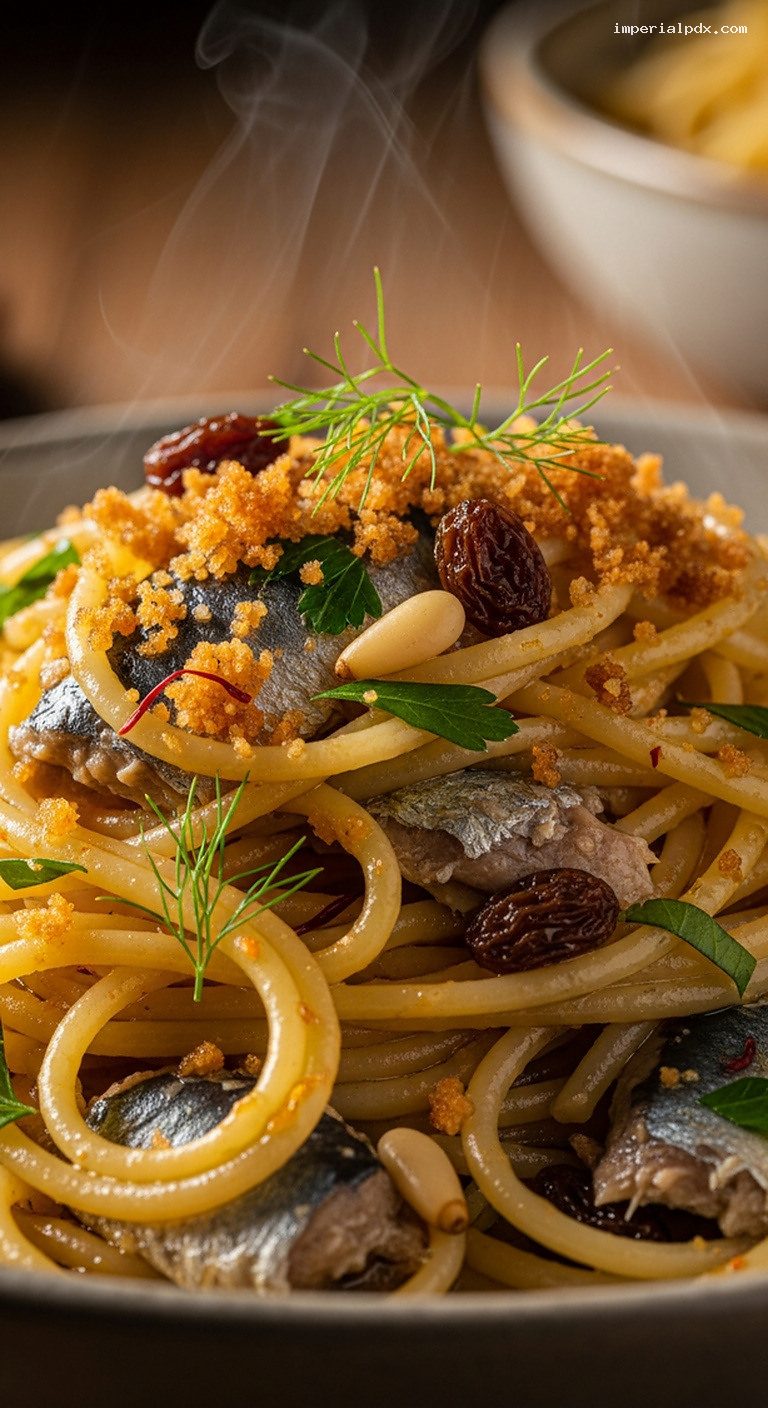
Step-by-Step Instructions
Step 1: Plump the raisins and bloom the saffron
Put the raisins in a small bowl and cover with very hot water. Let soak for 10 minutes, then drain well.
In another small bowl, combine the saffron threads with 60 ml (1/4 cup) warm water (about 50–60°C / 122–140°F). Let stand while you cook so the color and aroma fully infuse.
Step 2: Toast the pine nuts
Place a dry skillet over medium heat. Add the pine nuts and toast, shaking the pan often, until golden and fragrant, 2–3 minutes. Immediately transfer to a plate so they don’t keep browning in the hot pan.
Step 3: Make the pangrattato (crunchy breadcrumb topping)
In the same skillet (wipe out any pine nut dust if needed), warm 30 ml (2 tbsp) olive oil over medium heat. Add the breadcrumbs and 1/4 tsp kosher salt (and optional crushed red pepper or fennel seeds).
Cook, stirring constantly, until the crumbs are deep golden and evenly toasted, 4–6 minutes. Transfer to a bowl to stop the cooking. Set aside.
Step 4: Boil the pasta and reserve pasta water
Bring a large pot of water to a rolling boil. Add enough salt that it tastes pleasantly salty (a good guideline is 1 1/2 tbsp kosher salt per 4 liters / 1 gallon of water).
Add the spaghetti and cook until just al dente, typically 9–11 minutes (check your package and taste early).
Before draining, reserve 360 ml (1 1/2 cups) pasta water. Drain the pasta, but do not rinse.
Step 5: Start the sauce base (onion, anchovy, garlic, tomato paste)
While the pasta cooks, start the sauce in a wide sauté pan over medium heat. Add 60 ml (4 tbsp) olive oil and the diced onion. Cook, stirring often, until soft and translucent, 6–8 minutes.
Add the minced anchovy (if using) and stir until it melts into the oil, 30–60 seconds. Add the sliced garlic and cook until fragrant, 30–60 seconds (don’t let it brown).
Stir in the tomato paste and cook, stirring, for 30 seconds to take away the raw edge.
Step 6: Add sardines, fennel, raisins, wine, and saffron
Add the sardine fillets to the pan. Pour in the white wine and simmer for 1 minute to reduce slightly.
Add the chopped wild fennel, drained raisins, and the saffron water (including all the golden liquid). Season with 1/4 tsp black pepper and start with 1/2 tsp kosher salt (you can add more later; sardines and anchovies vary in saltiness).
Gently simmer until the sardines are just cooked through and begin to break into tender chunks, 3–5 minutes. Use a wooden spoon to lightly break them up; you want a rustic, chunky sauce rather than a perfectly smooth one.
Step 7: Toss pasta with the sauce and adjust texture
Add the drained spaghetti directly to the pan with the sauce. Add about 120 ml (1/2 cup) reserved pasta water and toss well over medium heat for 1–2 minutes, until the sauce clings and looks glossy.
If it seems dry, add more pasta water a splash at a time (up to the full 360 ml / 1 1/2 cups reserved). Taste and adjust salt and pepper. Stir in the toasted pine nuts and 1 tbsp chopped parsley.
If you like a brighter finish, add a little lemon zest or serve with lemon wedges.
Step 8: Serve with pangrattato
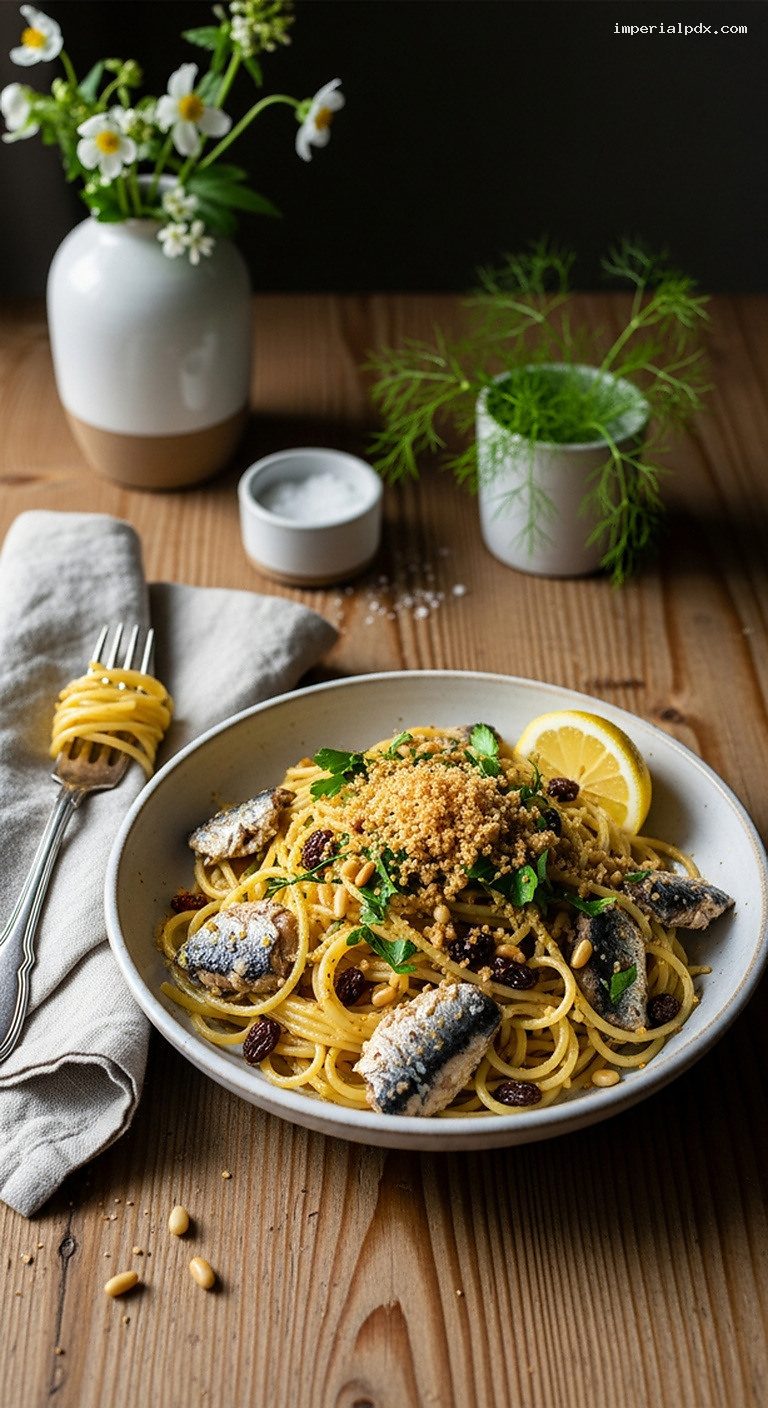
Divide the pasta among warm bowls. Spoon generous pangrattato over each portion for crunch. Finish with more parsley. Serve immediately while hot.
Pro Tips
- Don’t overcook the sardines. They only need a few minutes; overcooking can make them dry and strong.
- Pasta water is your sauce insurance. Add it gradually while tossing; it helps emulsify the olive oil into a silky coating.
- Toast pangrattato darker than you think. Aim for deep golden, not pale—this is where the nutty flavor comes from.
- Fresh vs canned sardines: Fresh gives a cleaner flavor; canned is convenient and still delicious. If using canned, add them at the end of Step 6 and warm for only 1–2 minutes.
- Wild fennel substitute: If you can’t find it, use fennel fronds or dill, and add a tiny pinch of crushed fennel seed for a more “wild” aroma.
Variations
- With toasted breadcrumbs and orange zest: Swap lemon for 1/2 tsp finely grated orange zest for a classic Sicilian citrus note.
- Spicy version: Add 1/4 tsp crushed red pepper with the garlic, and finish with extra black pepper.
- More tomato-forward: Add 120 ml (1/2 cup) crushed tomatoes after the tomato paste; simmer 5 minutes before adding sardines.
Storage & Make-Ahead
Spaghetti con le sarde is best eaten right away, when the pangrattato is crisp and the pasta is glossy. If you have leftovers, cool promptly and refrigerate in an airtight container for up to 2 days. Reheat gently in a skillet over medium-low heat with a splash of water until hot, about 4–6 minutes. Store pangrattato separately at room temperature in a sealed container for up to 3 days, and re-toast briefly in a dry pan for 1–2 minutes if needed. You can chop the onion, clean the sardines, and toast the pine nuts and breadcrumbs up to 1 day ahead.
Nutrition (per serving)
Approximate (based on 4 servings): 680 calories, 28 g protein, 82 g carbohydrates, 26 g fat, 4 g saturated fat, 5 g fiber, 10 g sugars, 780 mg sodium. Values vary with sardine type and added salt.