Quick Recipe Version (TL;DR)
Quick Ingredients
- 1 rack beef plate ribs (3 bones), 6 to 8 lb
- 2 tbsp Diamond Crystal kosher salt (or 1 tbsp Morton kosher salt)
- 2 tbsp coarse black pepper (16-mesh)
- 1 tsp garlic powder (optional)
- 2 tsp yellow mustard or neutral oil (optional binder)
- 4 to 6 oz beef tallow (optional, for wrapping moisture)
- Optional thin mop: 1/2 cup low-sodium beef broth + 1/4 cup apple cider vinegar + 1 tbsp Worcestershire sauce + 1 tsp coarse black pepper
Do This
- 1. Heat smoker to 250°F with steady clean smoke (oak/pecan/hickory).
- 2. Trim only loose bits; season all over with salt + pepper (and garlic powder if using).
- 3. Smoke ribs meat-side up at 250°F until bark is set and dark, about 4 hours.
- 4. (Optional) Mop lightly every 45 minutes after the first 2 hours.
- 5. Wrap in butcher paper with 2–3 tbsp tallow; cook until probe-tender and 200–205°F internal, about 3 to 4.5 hours more.
- 6. Rest wrapped in a warm cooler or turned-off oven at 150–170°F for 90 minutes; slice between bones and serve.
Why You’ll Love This Recipe
- Big results with simple seasoning: just salt and pepper for a bold, classic Texas-style bark.
- Show-stopping presentation: huge “dino bones” that slice cleanly and look dramatic on a platter.
- Home-cook friendly: straightforward temperatures and visual cues so you’re not guessing.
- Flexible: go pure salt-and-pepper, or add a light mop for extra shine and edge.
Grocery List
- Produce: none (optional: parsley for garnish)
- Dairy: none
- Pantry: kosher salt, coarse black pepper, garlic powder (optional), yellow mustard (optional), low-sodium beef broth (optional mop), apple cider vinegar (optional mop), Worcestershire sauce (optional mop)
Full Ingredients
Beef
- 1 rack beef plate ribs (3 bones), 6 to 8 lb (often labeled “plate short ribs” or “123A”)
Salt-and-Pepper Bark
- 2 tbsp Diamond Crystal kosher salt (or 1 tbsp Morton kosher salt)
- 2 tbsp coarse black pepper (16-mesh “butcher grind” preferred)
- 1 tsp garlic powder (optional, for a slightly more savory bark)
- 2 tsp yellow mustard or 2 tsp neutral oil (optional binder; helps rub stick, doesn’t make it taste like mustard)
Optional Thin Mop (Peppery and Light)
- 1/2 cup low-sodium beef broth
- 1/4 cup apple cider vinegar
- 1 tbsp Worcestershire sauce
- 1 tsp coarse black pepper
Wrapping (Optional but Recommended for Tenderness)
- 1 large sheet pink butcher paper (about 24 x 30 inches)
- 4 to 6 oz beef tallow (optional, melted; adds moisture and richness inside the wrap)
Step-by-Step Instructions
Step 1: Choose and prep your ribs
Start with a 6 to 8 lb rack of beef plate ribs (3 bones). Keep trimming minimal: remove only loose flaps or thin, dangling pieces that would burn. If there’s a thick hard fat cap on top, you can shave it down slightly, but don’t try to “clean it up” like a steak—this cut needs fat to protect it during the long smoke.
If the underside has a membrane, score it in a few places with a knife so seasoning and smoke can work in. (Some racks come already cleaned up.)
Step 2: Season for a classic salt-and-pepper bark
Optional binder: lightly coat the ribs with 2 tsp yellow mustard (or 2 tsp neutral oil). This is mainly glue for the seasoning.
In a small bowl, mix:
2 tbsp Diamond Crystal kosher salt (or 1 tbsp Morton kosher salt) + 2 tbsp coarse black pepper (+ 1 tsp garlic powder, optional).
Season generously and evenly on all sides, pressing it in so it adheres. Let the rack sit at room temperature for 30 minutes while you preheat the smoker. (If you want to dry-brine for deeper seasoning, you can refrigerate uncovered for 8 to 24 hours, but it’s optional.)
Step 3: Preheat the smoker to steady, clean heat
Preheat your smoker to 250°F. Add wood for a medium-strong smoke (classic choices: post oak or white oak; great alternatives: pecan or a small amount of hickory).
Aim for clean smoke (thin and light, not billowy white). If your smoker runs dry, set a small pan of hot water inside to help stabilize temperature, but don’t worry about chasing high humidity.
Step 4: Smoke until the bark is set
Place ribs on the grate meat-side up (bone-side down). Smoke at 250°F for about 4 hours, or until:
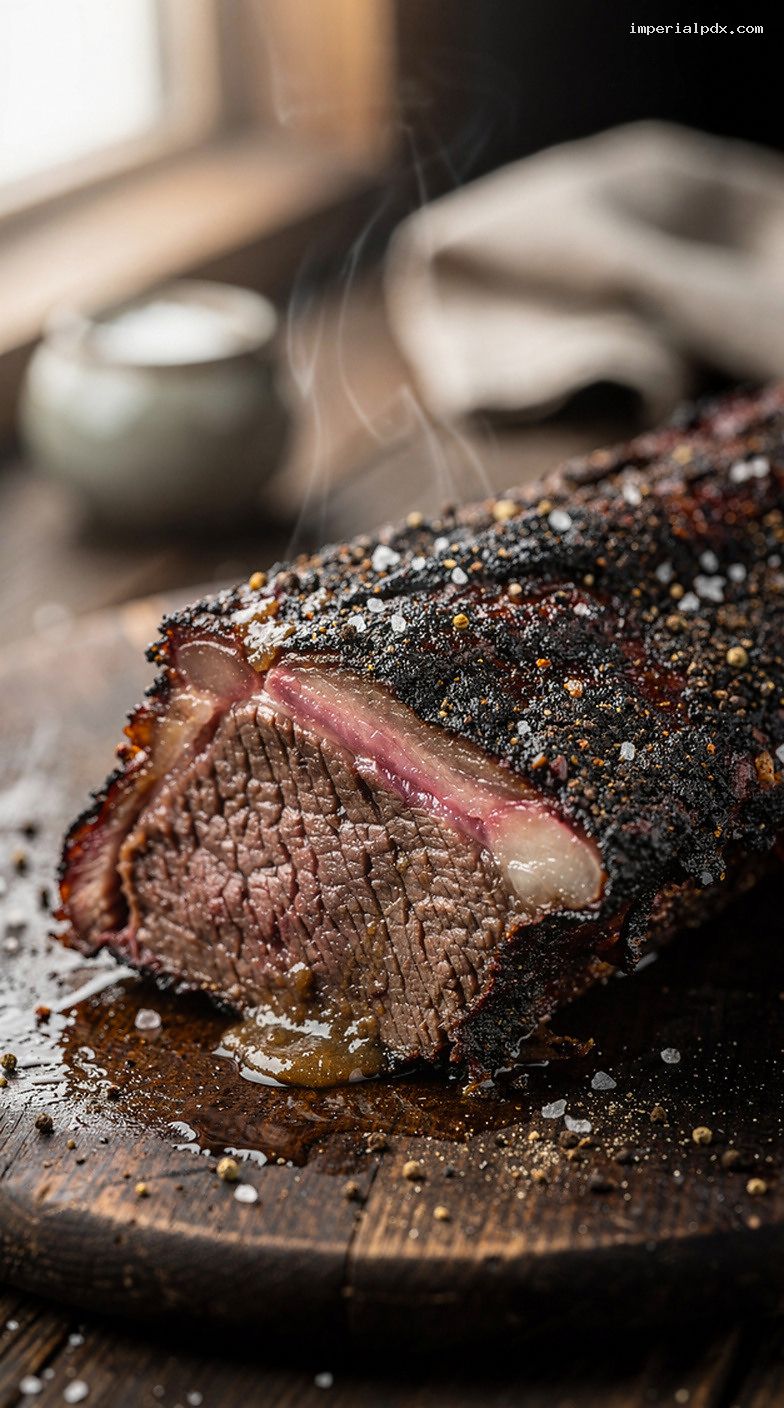
- the bark looks dark and dry (not wet or smeary),
- the fat on top begins to render and glisten,
- and a probe or toothpick meets a little resistance but doesn’t feel raw.
Don’t rush this stage—this is where the peppery crust becomes the star.
Step 5: Optional mop for a thin, peppery sheen
If you want a traditional, minimal mop (not a sweet sauce), stir together:
1/2 cup beef broth + 1/4 cup apple cider vinegar + 1 tbsp Worcestershire + 1 tsp coarse black pepper.
After the first 2 hours of smoking, lightly brush or spritz the surface every 45 minutes. Keep it thin—your goal is a gentle tangy sheen that helps smoke cling, not a wet surface that washes off the rub.
Step 6: Wrap and cook until sliceable-tender
When the bark is set (typically around 4 hours), wrap the ribs in pink butcher paper. For extra moisture and rich beefy flavor, drizzle 2 to 3 tbsp melted beef tallow onto the paper before sealing the wrap.
Return to the smoker at 250°F and cook until:
- internal temperature in the thickest part reads 200 to 205°F, and
- a thermometer probe slides in with butter-like resistance (this matters more than the exact number).
This typically takes 3 to 4 hours 30 minutes after wrapping, but always cook to tenderness.
Step 7: Rest properly, then slice into “dino bones”
Keep the ribs wrapped and rest them for 90 minutes. Best options:
- Warm cooler rest: place the wrapped ribs in a cooler (no ice), fill empty space with towels, and close the lid.
- Oven hold: set your oven to 150–170°F (or the lowest setting) and rest/hold until serving.
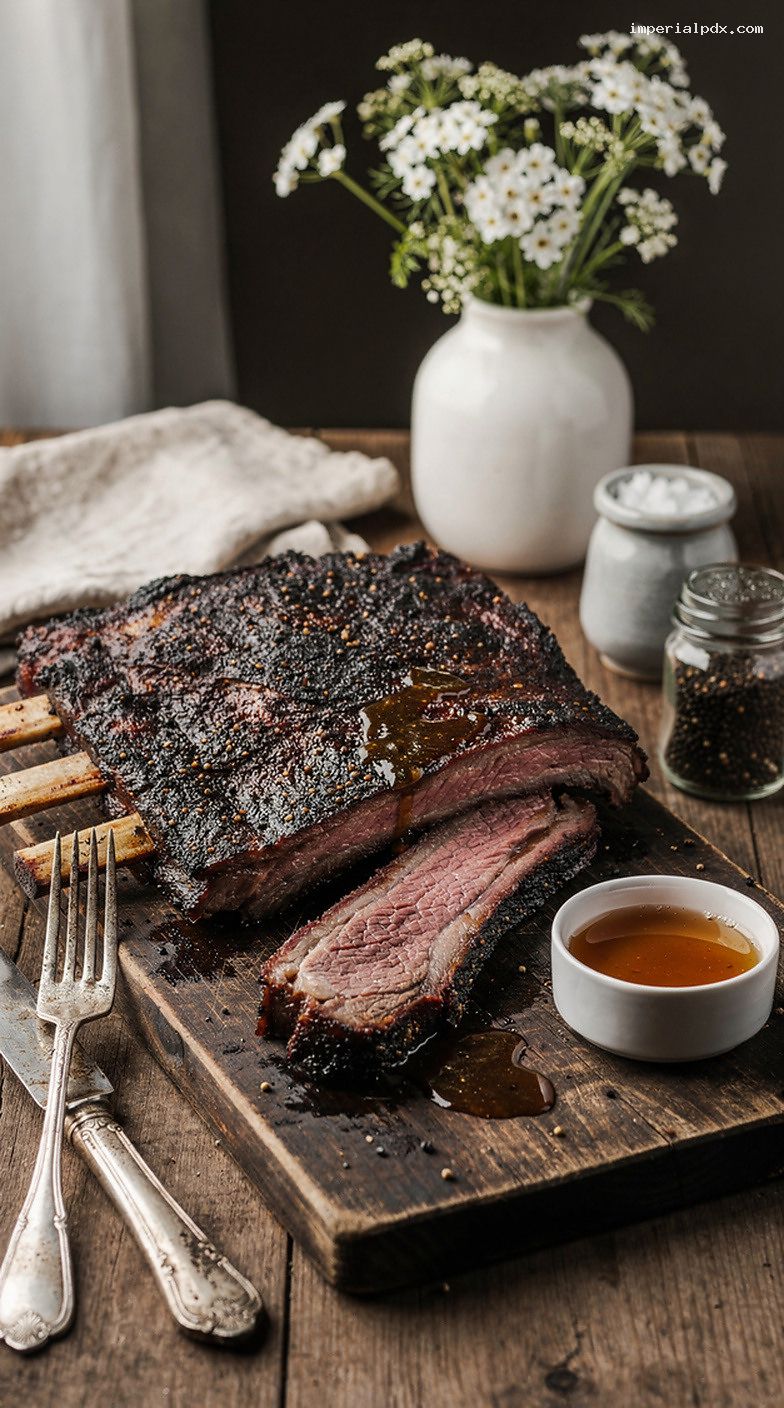
To serve, unwrap and slice between the bones to create big “dino bone” portions. If you want clean slices off the bone, slice across the grain into thick slices. Serve as-is so the peppery bark stays crisp and bold.
Pro Tips
- Use coarse pepper: 16-mesh “butcher grind” builds a bark that tastes peppery, not dusty.
- Don’t wrap too early: if the bark still looks wet, it can soften and smear inside the wrap. Wait until it looks set and dry.
- Probe for tenderness, not just temperature: plate ribs are done when the probe slides in easily, usually around 200–205°F.
- Rest is part of the cook: the 90-minute rest helps juices redistribute and makes slicing cleaner.
- Keep the mop light: too much liquid cools the surface and can slow bark formation.
Variations
- Pure salt-and-pepper only: skip the garlic powder and mop for a super-traditional, minimalist bark.
- Central Texas “tallow wrap”: always wrap in butcher paper with beef tallow for a richer finish and a slightly silkier bite.
- Spicier bark: add 1 tsp crushed red pepper or 1/2 tsp cayenne to the rub (still mostly salt and pepper).
Storage & Make-Ahead
Cool leftovers to room temperature for no more than 2 hours, then refrigerate in an airtight container for up to 4 days. For longer storage, freeze tightly wrapped portions for up to 3 months.
To reheat without drying out: wrap slices or a rib portion in foil with 2 tbsp beef broth, and warm in a 275°F oven until hot, about 25 to 35 minutes. For best texture, reheat gently and avoid blasting at high heat.
Nutrition (per serving)
Approximate, will vary by trim level and rendered fat: 820 calories, 62 g protein, 62 g fat, 2 g carbs, 1,250 mg sodium.