Quick Recipe Version (TL;DR)
Quick Ingredients
- 1 lb (450 g) fresh pumpkin ravioli or roasted squash gnocchi
- 8 tbsp (113 g) unsalted butter
- 1/4 cup (35 g) pine nuts
- 10–12 fresh sage leaves
- 1 tsp finely grated lemon zest
- 1–2 tsp fresh lemon juice (to taste)
- 1/3 cup (30 g) finely grated Parmesan cheese
- Kosher salt and freshly ground black pepper
Do This
- 1. Bring a large pot of salted water to a boil for the ravioli or gnocchi.
- 2. Toast pine nuts in a dry skillet over medium heat, stirring, until golden and fragrant, 3–5 minutes; transfer to a bowl.
- 3. In the same light-colored skillet, melt butter over medium heat with sage leaves; cook, swirling, until butter turns deep golden brown and sage crisps, 5–7 minutes.
- 4. Remove pan from heat; stir in lemon zest and 1 tsp lemon juice. Season with salt and pepper.
- 5. Cook ravioli or gnocchi until they float and are just tender, 2–4 minutes; transfer directly to the brown butter with a bit of pasta water.
- 6. Add Parmesan and toasted pine nuts; toss gently over low heat to coat, loosening with more pasta water as needed.
- 7. Taste, adjust salt, pepper, and lemon, then serve immediately topped with extra Parmesan and pine nuts.
Why You’ll Love This Recipe
- Deep, nutty brown butter and crispy sage bring out the natural sweetness of pumpkin and roasted squash.
- Toasted pine nuts, lemon zest, and Parmesan add crunch, brightness, and umami in every bite.
- Fast enough for a weeknight, but elegant enough for a dinner party.
- Works beautifully with store-bought ravioli or gnocchi, and is an easy upgrade for homemade pasta.
Grocery List
- Produce: Fresh sage, 1 lemon, optional fresh parsley or extra sage for garnish
- Dairy: Unsalted butter, Parmesan cheese, optional mascarpone or ricotta (if making your own pumpkin ravioli filling)
- Pantry: Pine nuts, kosher salt, black pepper, olive oil (optional), pumpkin ravioli or roasted squash gnocchi (fresh or frozen, store-bought or homemade)
Full Ingredients
For the Brown Butter–Sage Sauce
- 8 tbsp (113 g) unsalted butter
- 10–12 fresh sage leaves (8 large or 12 small), plus a few extra leaves for garnish if desired
- 1/4 cup (35 g) pine nuts
- 1 tsp finely grated lemon zest (from about 1/2 lemon)
- 1–2 tsp fresh lemon juice, to taste
- 1/3 cup (30 g) finely grated Parmesan cheese, plus more for serving
- Kosher salt, to taste (start with 1/4 tsp and adjust)
- Freshly ground black pepper, to taste
For the Pasta or Gnocchi
- 1 lb (450 g) pumpkin ravioli or roasted squash gnocchi, fresh or frozen
- Kosher salt, for the pasta water (about 1 1/2 tbsp for a large pot)
For Serving (Optional but Highly Recommended)
- Extra finely grated Parmesan cheese
- Extra lemon zest or a final squeeze of lemon
- A few whole sage leaves, quickly crisped in the hot butter
- Freshly ground black pepper
Step-by-Step Instructions
Step 1: Prep your ingredients
Before you turn on the stove, set yourself up for success. Finely grate the Parmesan cheese and set aside. Rinse and thoroughly dry the sage leaves. Finely grate about 1 tsp of lemon zest, then cut the lemon in half and set it aside for juicing. Measure out the butter and pine nuts.
Bring a large pot of water (about 4–5 quarts) to a boil and season generously with kosher salt (about 1 1/2 tablespoons). This is the water you will use to cook your pumpkin ravioli or roasted squash gnocchi, and the salty water will also help season your sauce when you add a splash later.
Step 2: Toast the pine nuts
Place a dry, light-colored skillet (so you can easily see the color changes later when browning the butter) over medium heat. Add the pine nuts in a single layer. Toast, stirring or shaking the pan frequently, until the nuts are fragrant and golden in spots, 3–5 minutes.
Stay close: pine nuts can go from perfectly toasted to burnt quickly. Once they are evenly golden and smell nutty, immediately transfer them to a small bowl to stop the cooking. Set aside.
Step 3: Brown the butter with sage
In the same skillet, add the 8 tablespoons of unsalted butter. Set over medium heat. As the butter melts, add the sage leaves in a single layer. The butter will foam and bubble; swirl the pan occasionally to help it cook evenly and to baste the sage.
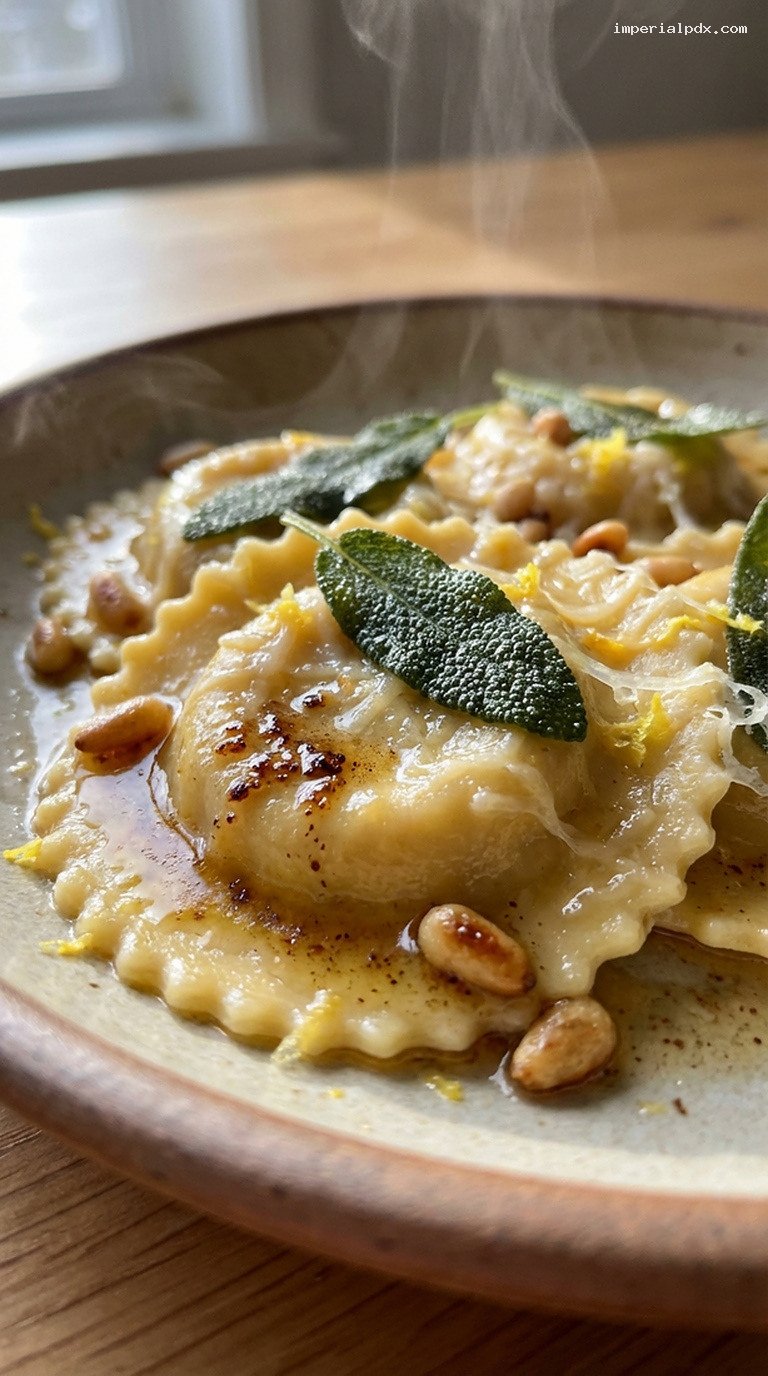
After about 3–5 minutes, the foam will start to subside and you will see browned milk solids forming on the bottom of the pan. The sage leaves will darken and become crisp. Keep swirling and watching carefully: you are aiming for a deep golden brown color and a nutty, toasted aroma, 5–7 minutes total from when you started. If at any point it smells acrid or very dark, reduce the heat immediately.
As soon as the butter is a rich golden brown (think hazelnut color) and smells nutty, remove the pan from the heat to prevent burning. Use a fork or tongs to transfer a few of the prettiest sage leaves to a plate lined with paper towel for garnish later, if you like.
Step 4: Brighten and season the sauce
With the skillet off the heat, stir in the lemon zest. It will sizzle slightly as it hits the hot butter and release its oils into the sauce. Add 1 teaspoon of lemon juice and stir to combine. Taste a small spoonful of the butter (carefully, it will still be hot) and season with kosher salt and freshly ground black pepper. The sauce should taste well-seasoned, nutty, and lightly bright from the lemon.
If you like more acidity, add up to another teaspoon of lemon juice, a few drops at a time, tasting as you go. Set the pan aside, off the heat, while you cook the ravioli or gnocchi.
Step 5: Cook the pumpkin ravioli or roasted squash gnocchi
Once the pot of water is at a rapid boil and well salted, gently add the pumpkin ravioli or roasted squash gnocchi. Give them a gentle stir to prevent sticking. Cook according to package directions or until they float to the surface and are just cooked through, usually 2–4 minutes for fresh pasta or gnocchi.
Before draining, dip a heatproof measuring cup into the pot and reserve about 1 cup of the starchy cooking water. You will use this to help the sauce cling to the pasta. Then, using a slotted spoon or spider strainer, transfer the ravioli or gnocchi directly from the pot into the skillet with the brown butter–sage sauce. Do not discard the pasta water yet.
Step 6: Emulsify the sauce and finish the dish
Return the skillet with the brown butter and pasta to low heat. Add about 1/4 cup of the reserved pasta water and gently toss or stir to coat the ravioli or gnocchi in the butter. Sprinkle the 1/3 cup of grated Parmesan evenly over the pasta.
Toss gently but thoroughly, allowing the Parmesan to melt into the warm butter and pasta water, forming a silky sauce that clings to each piece. If the sauce seems too thick or greasy, add more hot pasta water a tablespoon at a time, tossing between additions, until it looks glossy and smooth.
Stir in most of the toasted pine nuts, saving a spoonful for garnish. Taste and adjust seasoning with more salt, pepper, or a final squeeze of lemon juice as needed. The flavors should be balanced: nutty, buttery, savory, with a subtle brightness.
Step 7: Plate and garnish
Divide the dressed pumpkin ravioli or roasted squash gnocchi among warm plates or shallow bowls. Spoon any remaining brown butter–sage sauce from the skillet over the top.
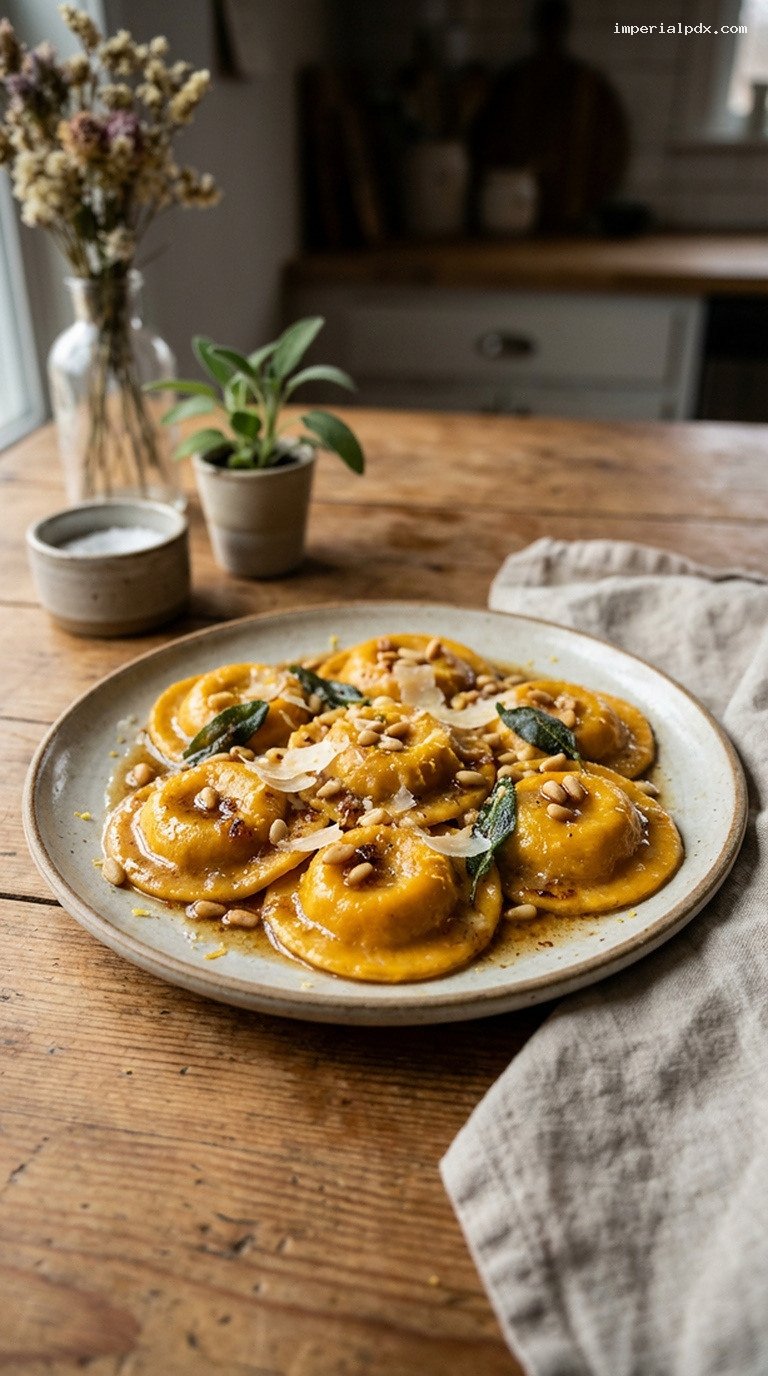
Garnish each portion with the reserved toasted pine nuts, a shower of extra grated Parmesan, the crispy sage leaves you set aside earlier, and a twist of black pepper. If you love citrus, finish with a tiny pinch of fresh lemon zest over each plate. Serve immediately while hot and glossy.
Pro Tips
- Use a light-colored pan. Stainless steel or light-colored aluminum makes it easy to see when the butter turns perfectly golden brown, preventing burning.
- Do not walk away from browning butter. It goes from nutty perfection to burnt quickly. Swirl the pan and watch closely in the last couple of minutes.
- Reserve pasta water. The starchy water helps turn the butter and Parmesan into a silky, emulsified sauce instead of a greasy one.
- Season in layers. Lightly season the brown butter, then taste again after adding Parmesan, since the cheese is salty too.
- Handle ravioli gently. Use a slotted spoon or spider instead of dumping into a colander to avoid tearing delicate handmade or fresh ravioli.
Variations
- Sage and hazelnut twist: Swap the pine nuts for roughly chopped toasted hazelnuts for a flavor reminiscent of classic Italian brown butter sauces.
- Creamy version: After browning the butter and adding lemon zest, whisk in 1/4 cup heavy cream over low heat before adding the pasta, for a slightly richer, velvety sauce.
- Herb blend: Use half sage and half fresh thyme leaves for a more complex herbal note that pairs beautifully with roasted squash.
Storage & Make-Ahead
This dish is at its absolute best served immediately, while the brown butter is warm and the ravioli or gnocchi are tender and glossy. However, you can prepare components ahead:
Toast the pine nuts up to 3 days in advance and store them in an airtight container at room temperature. You can also grate the Parmesan and zest the lemon a day ahead, storing both covered in the refrigerator. If you fully cook the ravioli or gnocchi and toss with the sauce, leftovers can be cooled and refrigerated in an airtight container for up to 2 days. Reheat gently in a skillet over low heat with a splash of water and a knob of butter, tossing until warmed through. Note that the texture will be softer and the sauce slightly less silky than when freshly made.
Nutrition (per serving)
Approximate values per serving (1/4 of the recipe, using pumpkin ravioli): about 530–600 calories, 28–32 g fat, 18–22 g protein, 50–60 g carbohydrates, 3–5 g fiber, and 800–900 mg sodium. Actual values will vary based on the specific ravioli or gnocchi, salt levels, and how much Parmesan you add at the table.