Quick Recipe Version (TL;DR)
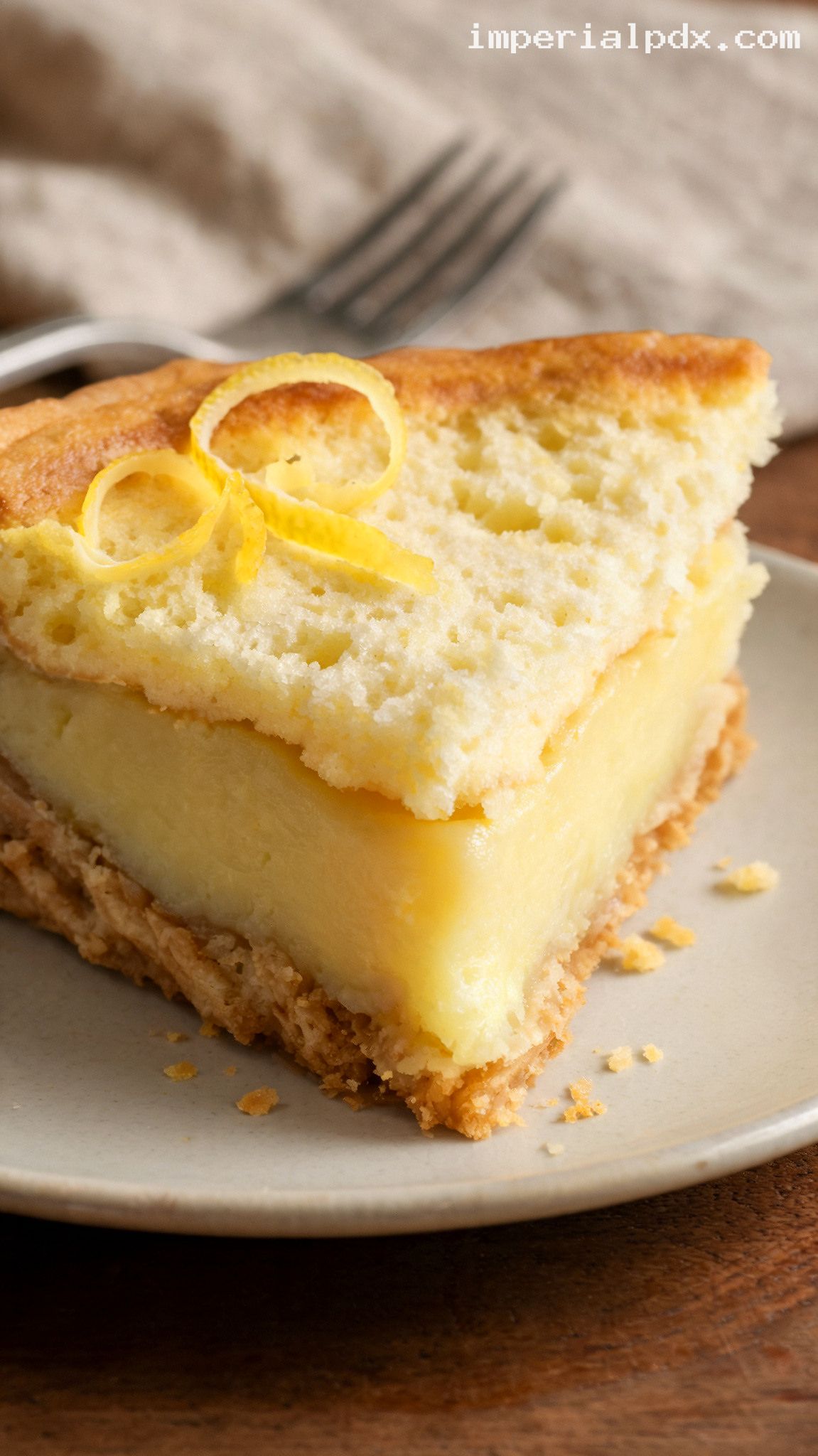
Pennsylvania Dutch Lemon Sponge Pie bakes into two lovely layers: a delicate, golden sponge on top and a soft lemon custard underneath, all nestled in a flaky crust. Fresh lemon juice and zest make this old-fashioned dessert bright, sweet-tart, and wonderfully refreshing.
Quick Ingredients
- 1 unbaked 9-inch single pie crust, about 9 ounces (250 g)
- 3 large eggs, separated, at room temperature
- 1 cup (200 g) granulated sugar, divided
- 1/4 cup (30 g) all-purpose flour
- 1/4 teaspoon fine salt
- 2 tablespoons (28 g) unsalted butter, melted and cooled slightly
- 1 tablespoon finely grated fresh lemon zest
- 1/3 cup (80 ml) fresh lemon juice
- 1 cup (240 ml) whole milk, at room temperature
Do This
- 1. Fit the crust into a 9-inch pie plate, crimp the edge, and refrigerate for 20 minutes. Heat the oven to 400°F (200°C).
- 2. Line the crust with parchment and fill with pie weights. Bake for 15 minutes, remove the lining and weights, and bake for 10 minutes more. Reduce the oven to 350°F (175°C).
- 3. Whisk 3/4 cup sugar, flour, and salt together. Whisk in the yolks, melted butter, lemon zest, and lemon juice, followed by the milk.
- 4. Beat the egg whites to soft peaks. Gradually add the remaining 1/4 cup sugar and beat to glossy medium-firm peaks. Gently fold into the lemon mixture.
- 5. Pour into the slightly cooled crust and bake at 350°F (175°C) for 40 minutes, until golden and gently set. The center should reach at least 160°F (71°C).
- 6. Cool on a rack for 1 hour, then refrigerate for at least 1 hour before slicing. Keep leftovers refrigerated.
Why You’ll Love This Recipe
- Two textures from one filling: The airy upper layer and tender custard form together as the pie bakes.
- Fresh, lively lemon flavor: Both juice and zest bring brightness without relying on bottled flavorings.
- Simple, familiar ingredients: Eggs, milk, butter, sugar, and a little flour become something special.
- A lighter-feeling finish: The delicate sponge and soft custard are refreshing after a hearty meal.
Grocery List
- Produce: 3 medium lemons, enough for 1/3 cup juice and 1 tablespoon finely grated zest, with a little extra zest for optional garnish.
- Dairy: 3 large eggs, whole milk, unsalted butter, and optional whipped cream for serving.
- Pantry: One prepared single pie crust or ingredients for your favorite homemade crust, granulated sugar, all-purpose flour, and fine salt.
Full Ingredients
For the Crust
- 1 unbaked single pie crust, homemade or store-bought, about 9 ounces (250 g), rolled into a 12-inch circle
For the Lemon Sponge Filling
- 3 large eggs, separated, at room temperature
- 1 cup (200 g) granulated sugar, divided into 3/4 cup (150 g) and 1/4 cup (50 g)
- 1/4 cup (30 g) all-purpose flour, spooned into the measuring cup and leveled
- 1/4 teaspoon fine salt
- 2 tablespoons (28 g) unsalted butter, melted and cooled until just warm
- 1 tablespoon finely grated lemon zest, from approximately 2 medium lemons
- 1/3 cup (80 ml) freshly squeezed lemon juice, strained to remove seeds
- 1 cup (240 ml) whole milk, at room temperature
Optional, for Serving
- 1/2 cup lightly sweetened whipped cream, divided among the slices
- 1/2 teaspoon finely grated lemon zest
Helpful Equipment
Use a standard 9-inch pie plate approximately 1 1/2 inches deep, a rimmed metal baking sheet, parchment paper, pie weights or dried beans, an electric mixer, a flexible spatula, and a wire cooling rack. A deep-dish plate will make a shallower-looking pie with this amount of filling.
Step-by-Step Instructions
Step 1: Shape and chill the crust
Fit the rolled dough into the pie plate without stretching it. Trim the overhang to 1/2 inch, fold it underneath itself, and crimp the edge. Refrigerate the lined plate for 20 minutes to help the crust hold its shape.
Meanwhile, position an oven rack in the lower third of the oven and preheat to 400°F (200°C). Separate the eggs while they are cold, placing the whites in a clean, grease-free mixing bowl and the yolks in a separate bowl. Let them lose their chill while you prepare the crust.
Step 2: Partially blind-bake the crust
Line the chilled crust with parchment paper and fill it with pie weights or dried beans, bringing the weights up the sides to support the pastry. Set the pie plate on a rimmed metal baking sheet and bake for 15 minutes.
Carefully lift out the parchment and weights. Return the crust to the oven for 10 minutes, until the bottom looks dry and the edges are lightly golden. If the bottom puffs, gently press it down with the back of a spoon. Set the crust on a rack while you make the filling, and reduce the oven temperature to 350°F (175°C). Leave the metal baking sheet nearby for baking the filled pie.
Step 3: Mix the lemon custard base
In a large bowl, whisk together 3/4 cup (150 g) of the sugar, the flour, and the salt. Add the egg yolks, melted butter, lemon zest, and lemon juice. Whisk until smooth, then gradually whisk in the milk.
The mixture will be thin, and it may look slightly curdled after the milk meets the lemon juice. That is normal; do not add extra flour or try to thicken it on the stove.
Step 4: Whip the egg whites
Using clean beaters, beat the egg whites on medium speed until foamy, then increase to medium-high and beat until soft peaks form. Gradually add the remaining 1/4 cup (50 g) sugar, about 1 tablespoon at a time.
Continue beating until the whites are glossy and hold medium-firm peaks: when you lift the beaters, the peaks should stand with a small curl at the tips. This usually takes about 3 to 5 minutes altogether. Stop before the whites become stiff, dry, or clumpy.
Step 5: Fold the filling together
Fold about one-third of the beaten whites into the lemon mixture to lighten it. Add the remaining whites in two additions, gently lifting the mixture from the bottom of the bowl and folding it over the top.
Stop when there are no large lumps of egg white. A few small white flecks are fine, and the filling will still look loose with a foamy upper portion. Preserving that air helps create the sponge layer.
Step 6: Fill and bake the pie
Set the slightly cooled crust back on the metal baking sheet. Pour in the filling, keeping it about 1/4 inch below the top of the crust, and gently distribute the foamy mixture across the surface. Transfer to the 350°F (175°C) oven immediately.
Bake for 40 minutes. The top should be lightly golden and spring back gently near the edges, while the center should have a small, unified wobble rather than a loose, liquid slosh. An instant-read thermometer inserted into the center of the filling should register at least 160°F (71°C). If necessary, bake for another 5 minutes and check again.
If the crust browns too quickly, cover only its rim with a pie shield or strips of foil. Avoid overbaking: the lower layer should remain a soft custard, not become firm and dry.
Step 7: Cool, chill, and serve
Transfer the pie to a wire rack and cool for 1 hour. The sponge may settle slightly as it cools; this is expected. Refrigerate for at least 1 hour to help the custard finish setting before slicing.
Cut with a sharp knife, wiping the blade between slices. Serve chilled, or let individual slices stand at room temperature for 10 minutes for a softer texture. Add a small spoonful of whipped cream and a little fresh lemon zest, if desired. The custard is intentionally tender, so the slices will be softer than those from a dense cream pie.
Pro Tips
- Zest before juicing: Remove only the yellow outer peel. The white pith underneath can taste bitter.
- Keep yolk out of the whites: Even a little yolk or grease can prevent the whites from whipping properly.
- Do not skip the partial blind bake: It gives the crust a head start before the wet filling is added.
- Fold gently and bake promptly: The trapped air is what gives the upper layer its delicate sponge texture.
- Judge doneness by more than color: A lightly golden top, a gentle central wobble, and a safe internal temperature are better guides than a deeply browned surface.
Variations
- Meyer lemon sponge pie: Replace the lemon juice and zest with equal amounts of Meyer lemon juice and zest. Keep the sugar unchanged for a softer, sweeter citrus flavor.
- Lemon-vanilla sponge pie: Whisk 1/2 teaspoon pure vanilla extract into the filling with the milk for a gentle vanilla note.
- Extra-zesty lemon pie: Increase the lemon zest to 1 tablespoon plus 1 teaspoon. Keep the juice at 1/3 cup so the filling proportions stay balanced.
Storage & Make-Ahead
Storage: Once chilled, cover the pie and refrigerate at 40°F (4°C) or below for up to 3 days. Refrigerate within 2 hours of baking, and do not leave the finished pie at room temperature for more than 2 hours during serving. The crust is crispest on the first day and gradually softens against the custard.
Make-ahead: Prepare the unbaked pastry up to 2 days ahead and keep it refrigerated. You can also partially blind-bake the crust up to 1 day ahead; cool completely and keep covered at room temperature. Mix the filling and whip the whites just before baking. The finished pie can be made 1 day ahead and refrigerated. Freezing is not recommended because the custard may release moisture and the sponge can lose its delicate texture.
Nutrition (per serving)
Calories: 335 kcal | Carbs: 44g | Protein: 5g | Fat: 15g | Saturated Fat: 6g | Fiber: 1g | Sugar: 27g | Sodium: 265mg | Cholesterol: 81mg
Nutrition is estimated for 1/8 of the pie using a prepared pastry crust, without optional toppings. Values vary with the crust used.