Quick Recipe Version (TL;DR)
Quick Ingredients
- 2 medium pears, peeled and finely diced (about 2 cups)
- 1 tablespoon fresh ginger, finely grated
- 1 small shallot, finely minced (about 1/4 cup)
- 1 tablespoon olive oil (or 1 tablespoon pan drippings from cooked pork/chicken)
- 1/2 cup (120 ml) dry white wine
- 1/2 cup (120 ml) chicken stock or vegetable stock
- 1 teaspoon Dijon mustard
- 1 tablespoon honey
- 1 teaspoon apple cider vinegar
- 1 teaspoon fresh thyme leaves (or 1/2 teaspoon dried thyme)
- 1/2 teaspoon kosher salt, plus more to taste
- 1/4 teaspoon black pepper, plus more to taste
- 2 tablespoons (28 g) cold unsalted butter, cut into 2 pieces
Do This
- 1. Dice pears; grate ginger; mince shallot; measure everything so it’s ready to go.
- 2. Heat oil (or pan drippings) in a skillet over medium heat; sauté shallot 1 minute.
- 3. Add pears, ginger, salt, and pepper; cook 3–4 minutes until pears start to soften.
- 4. Pour in white wine; simmer 4–5 minutes, scraping up browned bits, until reduced by about half.
- 5. Stir in stock, honey, Dijon, vinegar, and thyme; simmer 4–6 minutes until glossy and spoon-coating.
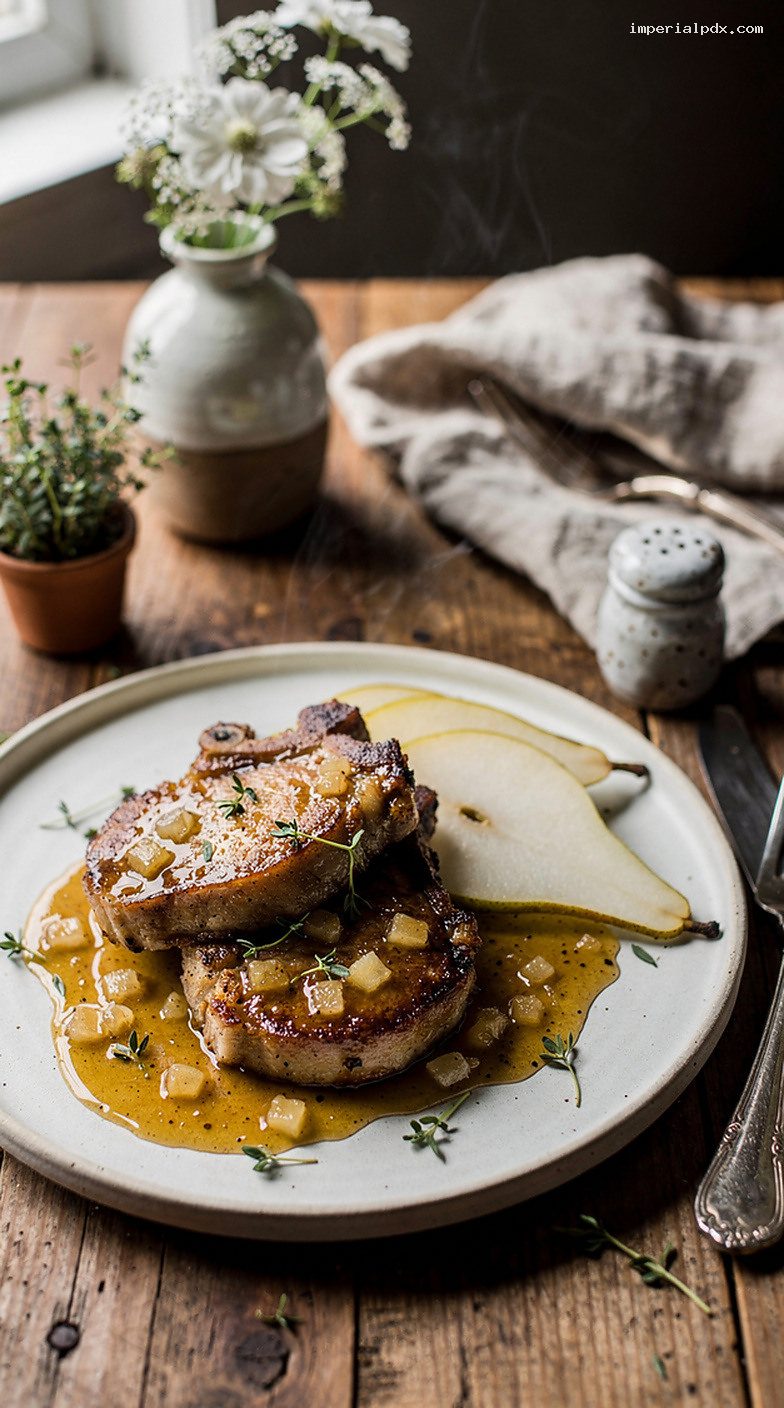
- 6. Turn off heat; swirl in cold butter until silky. Taste and adjust salt/pepper; spoon over pork chops, chicken, or roasted root vegetables.
Why You’ll Love This Recipe
- Sweet-savory balance: pears and honey meet tangy wine and vinegar for a sauce that tastes restaurant-worthy.
- Fast but impressive: ready in about 15 minutes on the stove, with big flavor from simple ingredients.
- Versatile: gorgeous over pork chops, chicken thighs, roasted carrots/parsnips, or even seared tofu.
- Real pan-sauce technique: reduces into a shiny glaze that clings (instead of running all over the plate).
Grocery List
- Produce: pears (2 medium), fresh ginger, shallot, fresh thyme
- Dairy: unsalted butter
- Pantry: olive oil, dry white wine, chicken or vegetable stock, Dijon mustard, honey, apple cider vinegar, kosher salt, black pepper
Full Ingredients
For the Pear–Ginger Pan Sauce
- Pears: 2 medium pears, peeled and finely diced (about 2 cups). (Bartlett, Anjou, or Bosc work well; choose ripe but still firm.)
- Aromatics: 1 small shallot, finely minced (about 1/4 cup); 1 tablespoon fresh ginger, finely grated
- Fat: 1 tablespoon olive oil or 1 tablespoon pan drippings left after cooking pork chops or chicken
- Deglaze: 1/2 cup (120 ml) dry white wine (Sauvignon Blanc or Pinot Grigio)
- Body: 1/2 cup (120 ml) chicken stock or vegetable stock
- Sweet + tang: 1 tablespoon honey; 1 teaspoon apple cider vinegar
- Seasoning: 1 teaspoon Dijon mustard; 1 teaspoon fresh thyme leaves (or 1/2 teaspoon dried thyme); 1/2 teaspoon kosher salt; 1/4 teaspoon black pepper
- Finish: 2 tablespoons (28 g) cold unsalted butter, cut into 2 pieces
Optional: Best Ways to Serve
- Pork chops or chicken: Sear and cook your meat first, then make the sauce in the same skillet using the browned bits (fond) for extra flavor.
- Roasted root vegetables: Roast carrots/parsnips/sweet potato at 425°F (220°C) until tender, 25–35 minutes, then drizzle sauce over the top.
Step-by-Step Instructions
Step 1: Prep everything (it goes fast)
Peel the pears, then finely dice them into small pieces (about 1/4-inch). Mince the shallot and grate the ginger. Measure the wine, stock, honey, vinegar, and Dijon so they’re ready to add quickly once the skillet is hot.
Tip: Smaller pear dice breaks down faster, giving you a naturally thicker, glossier sauce without any starch.
Step 2: Heat the skillet and soften the shallot
Set a medium skillet (10–12 inches) over medium heat. Add 1 tablespoon olive oil (or 1 tablespoon pan drippings if you just cooked pork or chicken). When the oil is shimmering, add the minced shallot.
Cook, stirring often, for 1 minute until the shallot turns translucent and smells sweet (not browned).
Step 3: Cook the pears and ginger to build flavor
Add the diced pears, grated ginger, 1/2 teaspoon kosher salt, and 1/4 teaspoon black pepper. Cook for 3–4 minutes, stirring every 30 seconds or so, until the pears begin to soften and release some juice.
You’re looking for the pears to lose their raw crunch but not turn to complete mush yet.
Step 4: Deglaze with white wine and reduce
Pour in 1/2 cup (120 ml) dry white wine. As it bubbles, use a wooden spoon to scrape up any browned bits from the bottom of the pan (that’s concentrated flavor).
Simmer for 4–5 minutes, or until the wine has reduced by about half and the pan no longer smells strongly of alcohol.
Step 5: Add stock, thyme, and seasonings; reduce to a glossy glaze
Stir in the 1/2 cup (120 ml) stock, 1 tablespoon honey, 1 teaspoon Dijon mustard, 1 teaspoon apple cider vinegar, and 1 teaspoon thyme leaves.
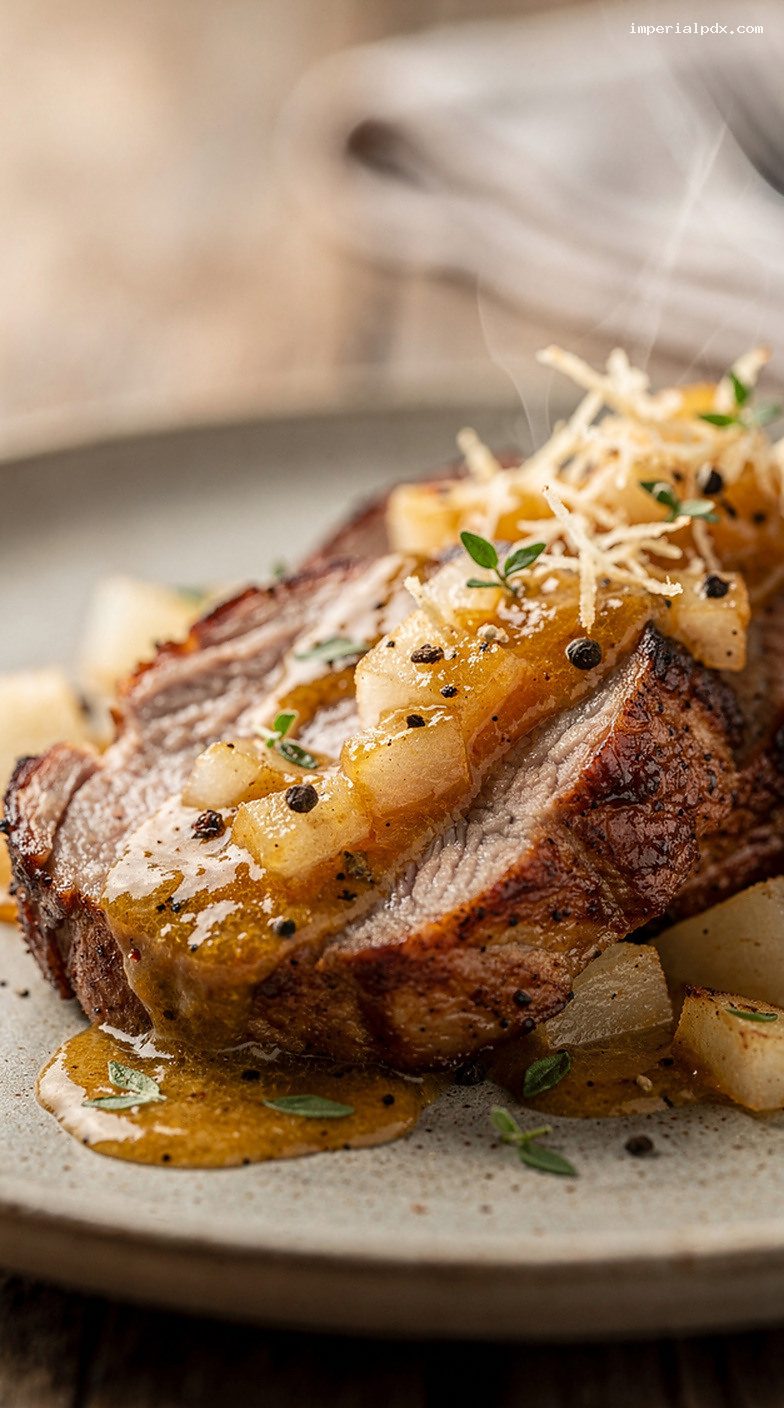
Bring to a lively simmer over medium to medium-high heat, then simmer for 4–6 minutes, stirring occasionally, until the sauce looks shiny and lightly thickened. It should coat the back of a spoon (when you swipe your finger through it, the line should briefly hold).
Target consistency: You should end with about 1 cup of sauce. If you want it thicker, simmer 1–2 minutes longer.
Step 6: Finish off the heat with butter for a silky pan sauce
Turn the heat off. Add the cold butter pieces and swirl the pan (or stir gently) until the butter melts and the sauce turns silky and slightly lighter in color.
Taste and adjust: add a pinch more salt for savory balance, a few grinds of pepper for warmth, or a few drops more vinegar if you want it brighter.
Step 7: Spoon over your main and serve immediately
Spoon the warm pear–ginger pan sauce over cooked pork chops, chicken breasts or thighs, or roasted root vegetables. For a pretty finish, sprinkle a few extra thyme leaves over the top right before serving.
If using with pork chops or chicken, serve while both the meat and sauce are hot so the glaze clings beautifully.
Pro Tips
- Use firm-ripe pears: If they’re overly soft, they’ll collapse too quickly and the sauce can taste flatter and sweeter.
- Reduce, don’t rush: The glossy “restaurant” texture comes from simmering long enough to concentrate the wine and stock.
- Butter goes in last, off heat: This keeps the sauce smooth and prevents it from separating.
- Control ginger heat: For a gentler sauce, use 2 teaspoons grated ginger. For a punchier bite, use the full 1 tablespoon.
- Too thick? Stir in 1–2 tablespoons warm stock or water until it loosens to your liking.
Variations
- Rosemary pear sauce: Swap thyme for 1/2 teaspoon finely chopped fresh rosemary (add it with the stock so it softens).
- Spiced fall version: Add 1/8 teaspoon ground cinnamon and a tiny pinch of ground cloves with the stock (very small amounts go a long way).
- Dairy-free finish: Replace butter with 1 tablespoon extra-virgin olive oil stirred in off heat (still glossy, just a different richness).
Storage & Make-Ahead
Cool the sauce to room temperature, then store in an airtight container in the refrigerator for up to 4 days. Reheat gently in a small saucepan over low heat until steaming (about 3–5 minutes), stirring often. If it thickens in the fridge, loosen with 1–2 tablespoons water or stock while reheating.
Make-ahead tip: You can dice pears and mince shallot up to 24 hours ahead; store pears tightly covered with a small squeeze of lemon to slow browning.
Nutrition (per serving)
Approximate, based on 4 servings (sauce only): 110 calories, 4 g fat, 17 g carbohydrates, 1 g protein, 14 g sugars, 240 mg sodium.