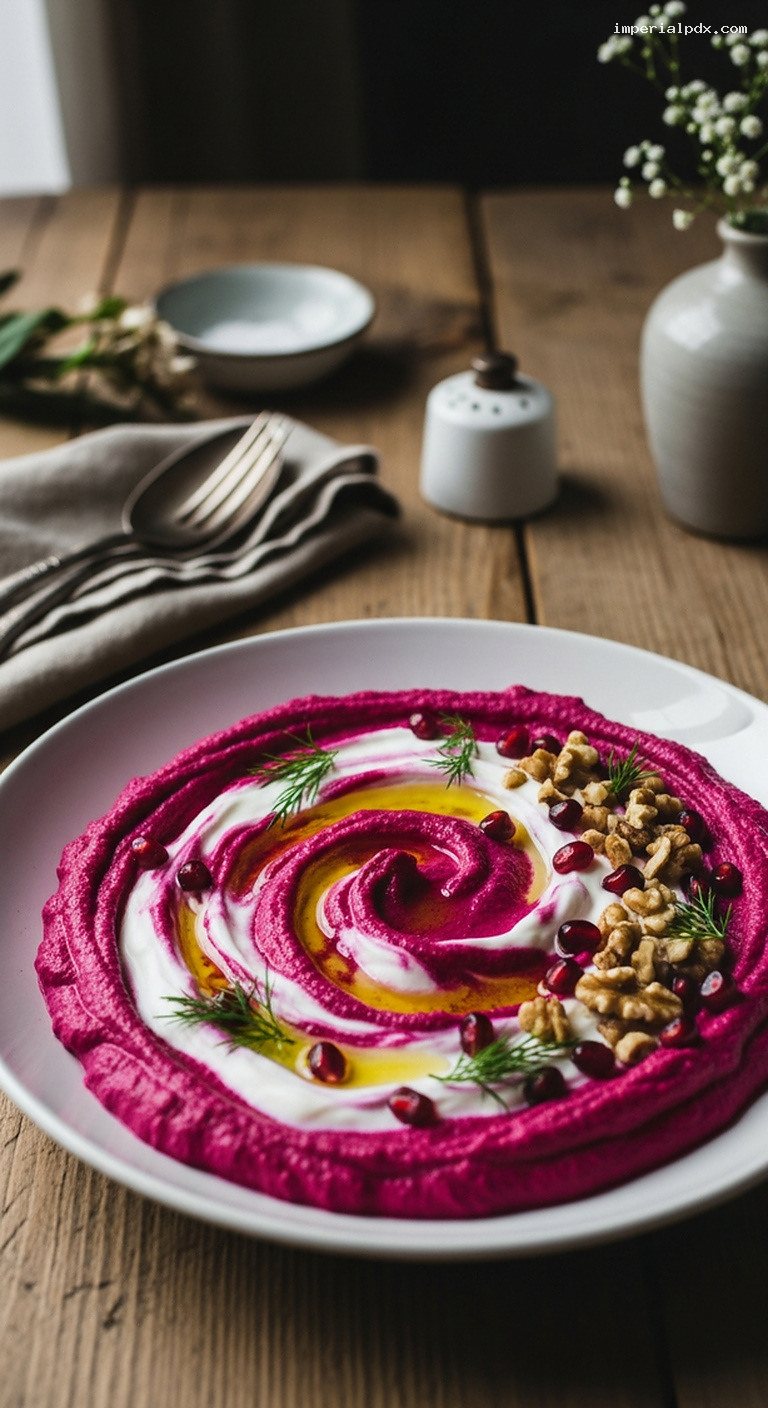
Quick Recipe Version (TL;DR)
Quick Ingredients
- 3 medium beets (about 450 g), scrubbed and trimmed
- 2 tbsp extra-virgin olive oil, divided
- 1 1/2 cups (360 g) full-fat Greek or strained yogurt
- 1 large garlic clove, finely grated or minced
- 2 tbsp fresh lemon juice
- 2 tbsp fresh dill, finely chopped, plus more for garnish
- 1/2 tsp fine sea salt, plus more to taste
- 1/4 tsp freshly ground black pepper
- 2–3 tbsp toasted walnuts, chopped (optional, for topping)
- 1–2 tsp extra olive oil, for drizzling
Do This
- 1. Heat oven to 400°F (200°C). Wrap beets in foil with 1 tbsp olive oil and a pinch of salt.
- 2. Roast 45–60 minutes until a knife slides in easily. Cool until handleable, then peel and roughly chop.
- 3. In a bowl, mix yogurt, garlic, lemon juice, dill, remaining 1 tbsp olive oil, salt, and pepper.
- 4. Add chopped beets to a food processor or blender with the yogurt mixture. Blend until smooth and creamy.
- 5. Taste and adjust seasoning with more salt, lemon, or dill as needed.
- 6. Chill at least 30 minutes for flavors to meld.
- 7. To serve, spread in a shallow bowl, drizzle with olive oil, and top with walnuts and extra dill.
Why You’ll Love This Recipe
- A stunning, naturally bright pink dip that instantly makes your meze spread look special.
- Cool, garlicky, and refreshing with the gentle sweetness of roasted beets.
- Simple ingredients, mostly hands-off roasting time, and easy to make ahead.
- Versatile: serve with bread, crackers, crudités, or alongside grilled meats and vegetables.
Grocery List
- Produce: Beets, garlic, fresh dill, lemon
- Dairy: Full-fat Greek yogurt or strained plain yogurt
- Pantry: Extra-virgin olive oil, fine sea salt, black pepper, walnuts (optional), pomegranate seeds (optional)
Full Ingredients
For the Pancar Tarator (Beet Yogurt Dip)
- 3 medium beets (about 450 g total), scrubbed and trimmed of greens
- 2 tbsp extra-virgin olive oil, divided
- 1 1/2 cups (360 g) full-fat Greek yogurt or strained plain yogurt
- 1 large garlic clove, finely grated or very finely minced (about 1 tsp)
- 2 tbsp fresh lemon juice (about 1 medium lemon)
- 2 tbsp fresh dill, finely chopped, packed
- 1/2 tsp fine sea salt, plus more to taste
- 1/4 tsp freshly ground black pepper
Optional Flavor Extras
- 1 tbsp red wine vinegar or apple cider vinegar, for extra tang
- 1/4–1/2 tsp ground cumin, for a warm, earthy note
For Serving & Garnish (Optional but Recommended)
- 2–3 tbsp walnuts, lightly toasted and roughly chopped
- 1–2 tbsp fresh dill fronds, for topping
- 1–2 tbsp pomegranate seeds, for color and sweetness
- 1–2 tsp extra-virgin olive oil, for drizzling
- Warm pita, crusty bread, crackers, or fresh vegetables for dipping
Step-by-Step Instructions
Step 1: Roast the beets until tender
Preheat your oven to 400°F (200°C). Scrub the beets well under cold running water to remove any dirt, and trim off the stem and root ends. Place the beets on a sheet of aluminum foil, drizzle with 1 tablespoon of the olive oil, and sprinkle with a small pinch of salt. Wrap tightly to form a sealed packet and place it on a baking tray to catch any drips.
Roast the beets for 45–60 minutes, depending on their size, until a small sharp knife slides into the center with little resistance. Very small beets may be done closer to 35 minutes; large ones may take slightly longer. Remove from the oven and let them cool until they are comfortable to handle, about 15–20 minutes.
Step 2: Peel and chop the roasted beets
Once the beets are cool enough to handle, slip off the skins with your fingers or gently rub with a paper towel; the skins should peel away easily. If they cling in spots, use a small paring knife to scrape them off. To avoid staining your hands, you can wear kitchen gloves or lightly oil your fingers first.
Roughly chop the peeled beets into 1–2 cm pieces. Precise size is not important here, as they will be blended, but smaller pieces will blend more smoothly and quickly.
Step 3: Mix the garlicky yogurt base
In a medium mixing bowl, combine the yogurt, remaining 1 tablespoon olive oil, grated garlic, lemon juice, chopped dill, salt, and black pepper. If using, add the red wine vinegar and ground cumin. Whisk until the mixture is smooth and everything is evenly distributed.
Taste the yogurt mixture at this stage. It should be pleasantly tangy, lightly garlicky, and well seasoned. Adjust with a pinch more salt, lemon juice, or dill if you like a brighter, more herby flavor.
Step 4: Blend the beets and yogurt together
Transfer the chopped roasted beets to a food processor or blender. Add the yogurt mixture. Blend until very smooth and creamy, pausing to scrape down the sides as needed. Depending on your equipment, this can take 30–90 seconds.
If the mixture seems too thick for your liking, you can add 1–2 tablespoons of cold water or an extra drizzle of olive oil and blend again until you reach your preferred consistency. The finished dip should be luxuriously smooth and spreadable, not runny.
Step 5: Taste and fine-tune the seasoning
Transfer a spoonful of the pancar tarator to a small dish and taste. Remember that chilling will slightly mute flavors, so it should taste a touch stronger than you want the final dip to be. Add more salt for depth, more lemon juice or vinegar for brightness, more dill for freshness, or a pinch more cumin for warmth. Blend briefly again if you add more ingredients.
Once you are happy with the flavor, transfer the dip to a serving bowl or storage container, smoothing the surface with the back of a spoon.
Step 6: Chill to develop flavor
Cover the bowl tightly and refrigerate the dip for at least 30 minutes, and up to 24 hours before serving. This resting time allows the garlic, herbs, and beets to meld into a more harmonious flavor, and the dip will thicken slightly as it chills.
If the dip thickens more than you prefer, simply stir in 1–2 teaspoons of cold water or a small splash of olive oil right before serving, until it loosens to your ideal texture.
Step 7: Garnish and serve as a meze
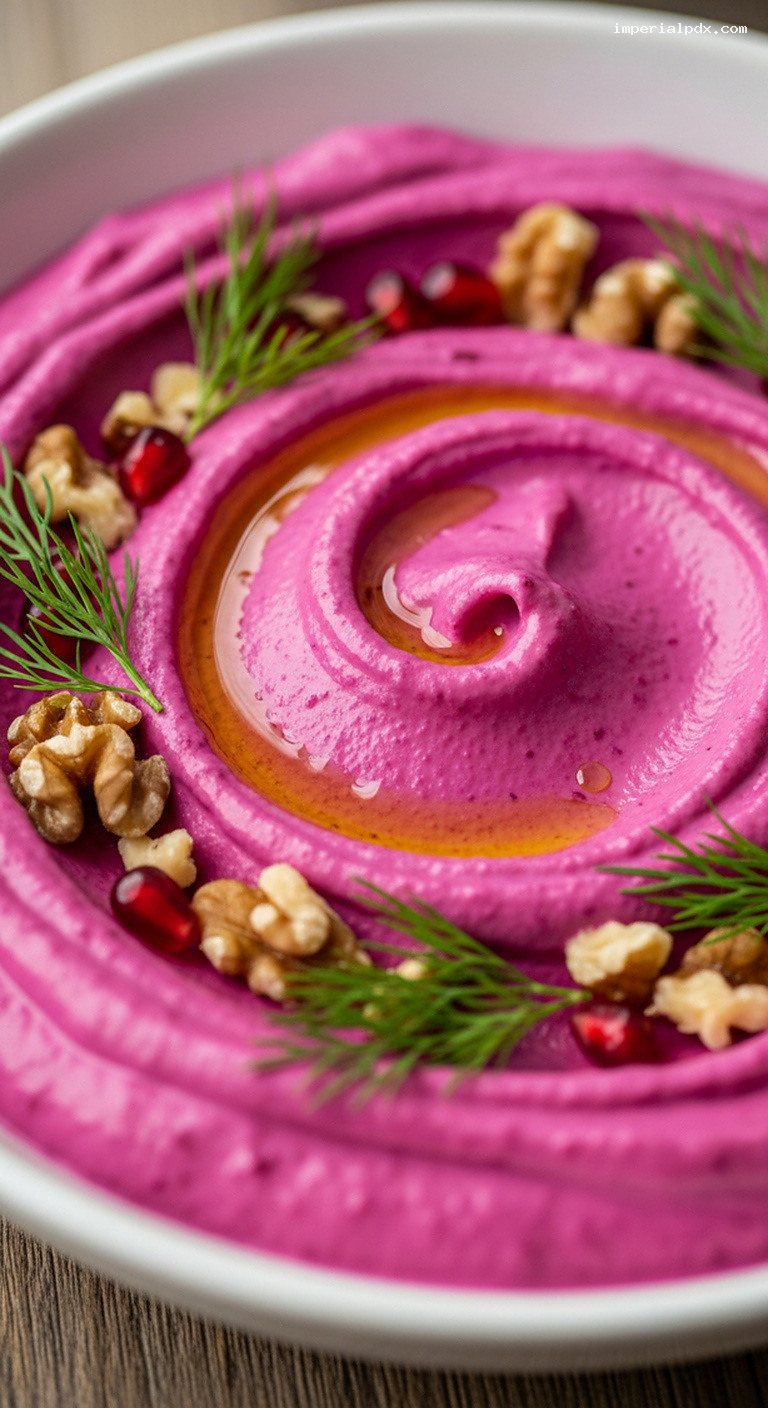
When you are ready to serve, give the dip a quick stir and spoon it into a shallow serving bowl or onto a small platter. Use the back of the spoon to create gentle swoops and swirls. Drizzle the surface with a thin ribbon of olive oil.
Scatter over the chopped toasted walnuts, extra dill fronds, and pomegranate seeds if using. Serve chilled or cool, alongside warm pita, crusty bread, crackers, or crisp vegetables like cucumber, carrot sticks, radishes, and bell pepper strips. Enjoy as part of a meze spread or as a colorful appetizer.
Pro Tips
- Roast, do not boil, for best flavor. Roasting concentrates the beets’ sweetness and keeps the dip from becoming watery, giving you a richer flavor and smoother texture.
- Strained yogurt matters. Using full-fat Greek or strained yogurt prevents a runny dip. If using regular yogurt, drain it in a fine sieve or cheesecloth over a bowl for 1–2 hours first.
- Control the garlic strength. Raw garlic intensifies as it sits. If you are sensitive, start with half a clove, taste after chilling, and add more if desired.
- Blend thoroughly for a silky texture. Let the processor run a bit longer than you think; the extra time breaks down beet fibers and yields a velvety dip.
- Adjust the color with beets and yogurt. For a deeper magenta, add an extra half beet; for a paler pink, blend in a spoonful or two more yogurt.
Variations
- Walnut-studded version: Fold 2–3 tablespoons of finely chopped toasted walnuts directly into the finished dip for texture and a nutty contrast to the creamy yogurt.
- Spiced pancar tarator: Add 1/2 teaspoon ground cumin and a pinch of smoked paprika or Aleppo pepper to the yogurt mixture for a gentle smoky warmth.
- Herb-forward twist: Replace half the dill with fresh mint or flat-leaf parsley for a more complex, garden-fresh flavor profile.
Storage & Make-Ahead
This dip is ideal for making ahead. Store pancar tarator in an airtight container in the refrigerator for up to 3–4 days. The color may deepen slightly over time, and the garlic will become more pronounced. If it thickens too much in the fridge, stir in a teaspoon or two of cold water or olive oil before serving. For the best texture and flavor, add garnishes (walnuts, dill, pomegranate seeds, and the final drizzle of olive oil) just before serving rather than in advance.
Nutrition (per serving)
Approximate values per serving (1/6 of the recipe, without optional garnishes): about 120 calories; 7 g fat; 8 g protein; 8 g carbohydrates; 2 g fiber; 5 g sugar; 220 mg sodium. Actual values will vary based on the exact yogurt, oil, and add-ins you use.