Quick Recipe Version (TL;DR)
Quick Ingredients
- 1 lb (450 g) lean ground beef
- 1 cup uncooked long-grain white rice, rinsed
- 1 small yellow onion, finely diced
- 3 cloves garlic, minced
- 1 cup frozen peas and carrots
- 3 scallions, thinly sliced (divided white and green parts)
- 1 3/4 cups water or low-sodium beef broth
- 1/3 cup low-sodium soy sauce
- 3 Tbsp brown sugar, packed
- 1 Tbsp rice vinegar
- 1 Tbsp mirin or additional 1 Tbsp brown sugar
- 1 Tbsp cornstarch
- 1 tsp fresh grated ginger (or 1/2 tsp ground ginger)
- 1 Tbsp toasted sesame oil
- 1–2 tsp neutral oil (for sautéing)
- Optional: 1/4 tsp red pepper flakes, toasted sesame seeds for garnish
Do This
- 1. In a bowl, whisk soy sauce, brown sugar, rice vinegar, mirin, cornstarch, ginger, sesame oil, and 1/4 cup of the water until smooth; set aside.
- 2. In a large deep skillet over medium-high heat, cook ground beef, breaking it up, until browned, 5–7 minutes; drain excess fat if needed.
- 3. Add 1–2 tsp oil, onion, garlic, and white parts of scallions; cook 2–3 minutes until softened and fragrant.
- 4. Stir in rinsed rice and cook 1–2 minutes to lightly toast the grains.
- 5. Whisk the teriyaki mixture again, pour into skillet, add remaining 1 1/2 cups water or broth, and stir. Bring to a boil, then reduce heat to low, cover, and simmer 15 minutes.
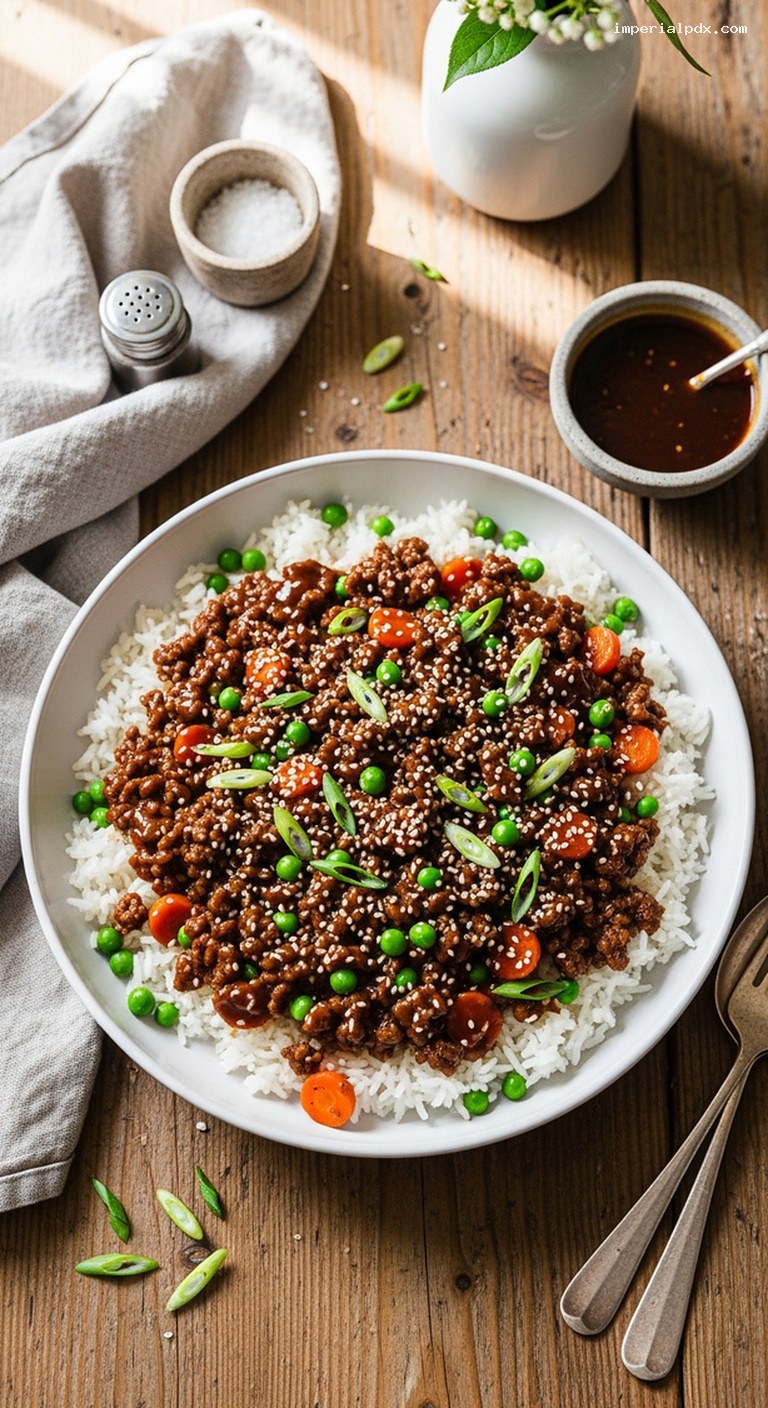
- 6. Quickly stir in frozen peas and carrots, cover, and cook 3–5 more minutes until rice is tender and liquid is absorbed. Fluff, top with green scallions and sesame seeds, and serve.
Why You’ll Love This Recipe
- All-in-one skillet dinner with protein, veggies, and rice in a single pan.
- Homemade teriyaki sauce that is perfectly sweet-savory with no mystery ingredients.
- Budget-friendly and family-friendly; great for busy weeknights and leftovers.
- Easy to customize with different vegetables, rice types, or protein swaps.
Grocery List
- Produce: Yellow onion, garlic, fresh ginger (or ground ginger), scallions, optional fresh cilantro or parsley for garnish.
- Dairy: None required.
- Pantry: Long-grain white rice, frozen peas and carrots, low-sodium soy sauce, brown sugar, rice vinegar, mirin (optional), cornstarch, toasted sesame oil, neutral cooking oil, red pepper flakes (optional), sesame seeds (optional), low-sodium beef broth or water, salt and black pepper.
Full Ingredients
For the Teriyaki Sauce
- 1/3 cup low-sodium soy sauce
- 3 Tbsp light or dark brown sugar, packed
- 1 Tbsp rice vinegar
- 1 Tbsp mirin or an additional 1 Tbsp brown sugar
- 1 Tbsp cornstarch
- 1 tsp fresh grated ginger or 1/2 tsp ground ginger
- 1 Tbsp toasted sesame oil
- 1/4 cup water (for dissolving cornstarch)
- Optional: 1/4 tsp red pepper flakes for gentle heat
For the Beef Teriyaki Rice Skillet
- 1 lb (450 g) lean ground beef (90% lean is ideal)
- 1–2 tsp neutral oil (canola, vegetable, or avocado oil)
- 1 small yellow onion, finely diced (about 1/2 cup)
- 3 cloves garlic, minced
- 3 scallions, thinly sliced, white and green parts separated
- 1 cup uncooked long-grain white rice, rinsed until water runs mostly clear
- 1 1/2 cups water or low-sodium beef broth (plus the 1/4 cup water used in the sauce, total 1 3/4 cups liquid)
- 1 cup frozen peas and carrots (do not thaw)
- Salt and freshly ground black pepper, to taste (you may not need much salt due to soy sauce)
- Optional garnish: 1–2 tsp toasted sesame seeds
Step-by-Step Instructions
Step 1: Prep your ingredients
Finely dice the onion, mince the garlic, and thinly slice the scallions, keeping white and green parts separate. Grate the ginger if using fresh. Measure out the rice, peas and carrots, and all sauce ingredients so everything is ready to go once you start cooking. Rinse the rice in a fine-mesh strainer under cold water for 30–60 seconds, swishing with your fingers, until the water runs mostly clear. This removes excess surface starch and helps keep the rice pleasantly fluffy instead of sticky in the skillet.
Step 2: Make the teriyaki sauce
In a medium bowl or large measuring cup, whisk together the soy sauce, brown sugar, rice vinegar, mirin (or extra brown sugar), cornstarch, grated or ground ginger, toasted sesame oil, red pepper flakes (if using), and 1/4 cup water. Whisk until the sugar has dissolved and no clumps of cornstarch remain. Set the bowl near the stove. The cornstarch will thicken the sauce as it simmers, giving you that glossy, clingy coating on the beef and rice.
Step 3: Brown the ground beef
Place a large, deep skillet with a fitted lid (at least 10 inches wide) over medium-high heat. Add the ground beef and cook, breaking it up with a spatula or wooden spoon, for 5–7 minutes until it is well browned and no pink remains. If there is more than about 1 tablespoon of fat in the pan, carefully spoon or drain off the excess. A small amount of fat left in the pan will add flavor, but too much can make the dish greasy.
Step 4: Sauté aromatics and toast the rice
Add 1–2 teaspoons of neutral oil to the skillet if the pan seems dry. Add the diced onion, minced garlic, and the white parts of the scallions. Cook, stirring frequently, for 2–3 minutes until the onion softens and becomes translucent and the mixture smells fragrant. Add the rinsed and drained rice to the pan. Stir constantly for 1–2 minutes to lightly toast the rice in the flavorful fat. The grains should look slightly glossy and smell nutty, but not brown or burned. This quick toasting step helps the rice cook up with better texture and flavor.
Step 5: Add sauce and liquid, then simmer
Give the teriyaki sauce mixture a quick whisk to re-disperse any cornstarch that may have settled. Pour the sauce into the skillet, followed by 1 1/2 cups water or low-sodium beef broth. Stir well, scraping up any browned bits from the bottom of the pan so they dissolve into the liquid. Increase the heat to medium-high and bring the mixture just to a gentle boil. Once it starts bubbling, stir again, then reduce the heat to low, cover the skillet with a tight-fitting lid, and let it simmer for 15 minutes without lifting the lid. The rice will absorb the liquid while the sauce thickens and coats the beef.
Step 6: Add the vegetables and finish cooking
After 15 minutes, quickly lift the lid and stir in the frozen peas and carrots, breaking up any large clumps. Smooth the mixture into an even layer, then cover again and continue to cook on low heat for another 3–5 minutes, until the rice is tender, most of the liquid has been absorbed, and the vegetables are hot and bright in color. Turn off the heat and let the skillet rest, covered, for 5 minutes. This resting time allows the rice to finish steaming and firm up slightly, so the dish is fluffy rather than soupy.
Step 7: Fluff, taste, and serve
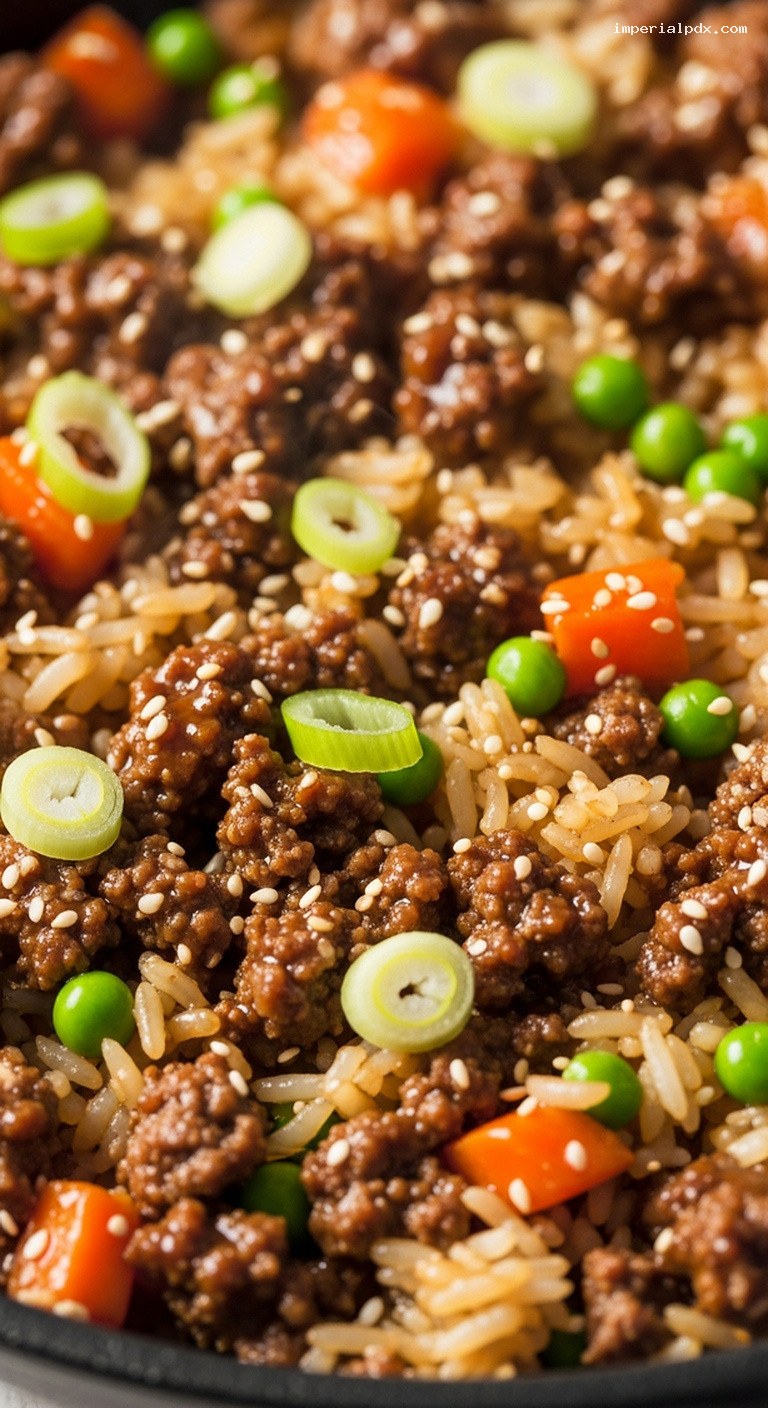
Uncover the skillet and use a fork or spatula to gently fluff and fold the rice and beef together, distributing the vegetables evenly. Taste and adjust seasoning as needed; you may want a pinch of salt, a grind of black pepper, or an extra splash of soy sauce or rice vinegar to brighten the flavor. Sprinkle the green parts of the scallions and sesame seeds (if using) over the top for a fresh, crunchy finish. Serve hot straight from the skillet, or spoon into warm bowls for a cozy one-pan meal.
Pro Tips
- Rinse the rice well: Removing extra starch keeps the rice grains separate and prevents a gummy texture in the skillet.
- Do not lift the lid too often: When the rice is simmering, keep the lid on so the steam can do its job; opening it frequently can lead to undercooked rice.
- Adjust sweetness and saltiness: Teriyaki is meant to be a bit sweet. If you prefer less sweetness, start with 2 Tbsp brown sugar and add more to taste at the end. Use low-sodium soy sauce so you can better control saltiness.
- Use broth for extra flavor: Cooking with low-sodium beef broth instead of water deepens the savory flavor of the rice and beef.
- Let it rest before serving: The extra 5-minute rest off heat helps any remaining liquid absorb and gives the rice time to set, so it scoops beautifully.
Variations
- Chicken teriyaki rice skillet: Swap the ground beef for 1 lb ground chicken or turkey. Brown it thoroughly before adding the aromatics, and consider using chicken broth instead of beef broth.
- Extra-veg version: Stir in additional vegetables such as diced bell peppers, small broccoli florets, or snap peas. Add firmer vegetables earlier with the onion, and more delicate ones with the peas and carrots.
- Brown rice option: Use 1 cup uncooked long-grain brown rice and increase the water or broth to 2 1/4 cups. Simmer covered for 35–40 minutes, adding the peas and carrots during the last 5–7 minutes of cooking.
Storage & Make-Ahead
Let the skillet cool to room temperature, then transfer leftovers to airtight containers. Store in the refrigerator for up to 4 days. Reheat gently in a skillet over medium-low heat with a splash of water or broth, stirring occasionally, until hot and steamy. You can also reheat individual portions in the microwave, covered, for 1–2 minutes, stirring once halfway through. For longer storage, freeze portions in freezer-safe containers or bags for up to 3 months. Thaw overnight in the refrigerator before reheating. This dish also works well for meal prep: cook the recipe as written, divide into 4 containers, and top with fresh scallions after reheating for a just-cooked taste.
Nutrition (per serving)
Approximate values per serving (1/4 of the recipe): about 520 calories, 25 g protein, 18 g fat, 63 g carbohydrates, 2–3 g fiber, and 11–14 g sugar. Sodium will vary depending on the brand of soy sauce and broth used; with low-sodium soy sauce and broth, expect approximately 900–1000 mg sodium per serving. These numbers are estimates and will change with ingredient brands and any substitutions.