Quick Recipe Version (TL;DR)
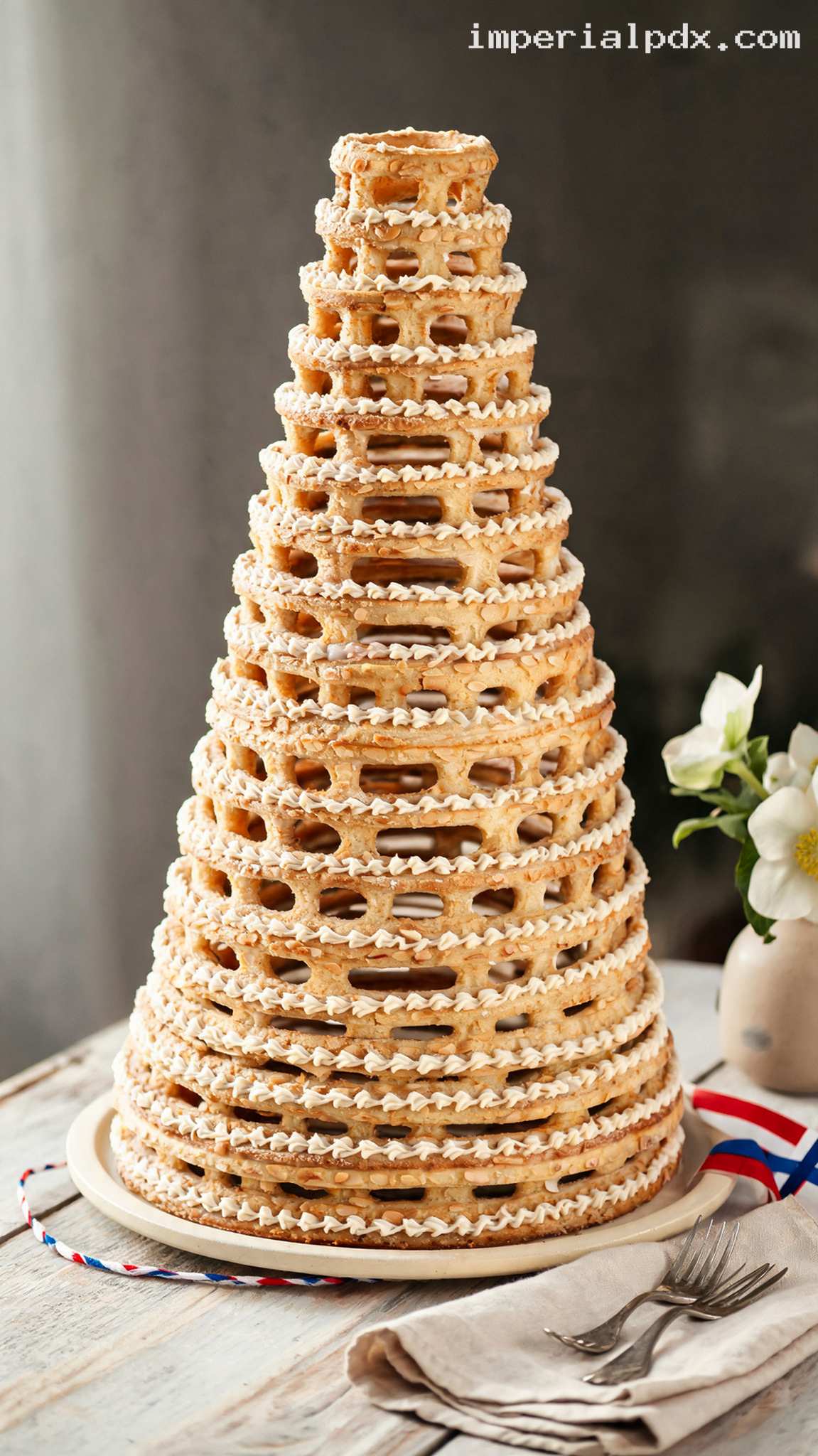
Norwegian Kransekake (Almond Ring Celebration Cake) is a festive tower of golden almond rings with crisp edges, wonderfully chewy centers, and delicate white royal icing. This version makes an 18-ring centerpiece for Christmas, weddings, or any extra-special gathering.
Quick Ingredients
- Almond dough: 500 g finely ground blanched almonds or blanched almond flour, 500 g powdered sugar, 120 g egg whites, 1/2 teaspoon almond extract, and 1/4 teaspoon fine salt.
- For the molds: 2 teaspoons neutral oil.
- Royal icing: 200 g powdered sugar, 30 g pasteurized egg white, and 1 teaspoon fresh lemon juice.
Do This
- 1. Mix the dough ingredients and knead into a smooth, firm almond paste. Wrap tightly and refrigerate for 8 hours.
- 2. Heat the oven to 350°F (180°C), conventional setting. Lightly oil an 18-ring kransekake mold set.
- 3. Roll the dough into ropes about 1/2 inch (12 mm) thick. Fit them into the mold grooves and carefully seal each join.
- 4. Bake two mold plates at a time for 15 minutes per batch, until lightly golden. Repeat for three batches.
- 5. Cool the rings in their molds for 30 minutes, then carefully release them and cool on racks for another 30 minutes.
- 6. Mix the icing, then stack the rings from largest to smallest, securing them with icing dots and piping delicate white zigzags around each ring.
- 7. Let the assembled cake stand for 1 hour before moving or serving.
Why You’ll Love This Recipe
- A true celebration centerpiece: Eighteen stacked rings create an impressive tower without cake layers, frosting, or complicated carving.
- Wonderful almond flavor: A short ingredient list lets the rich, nutty taste shine.
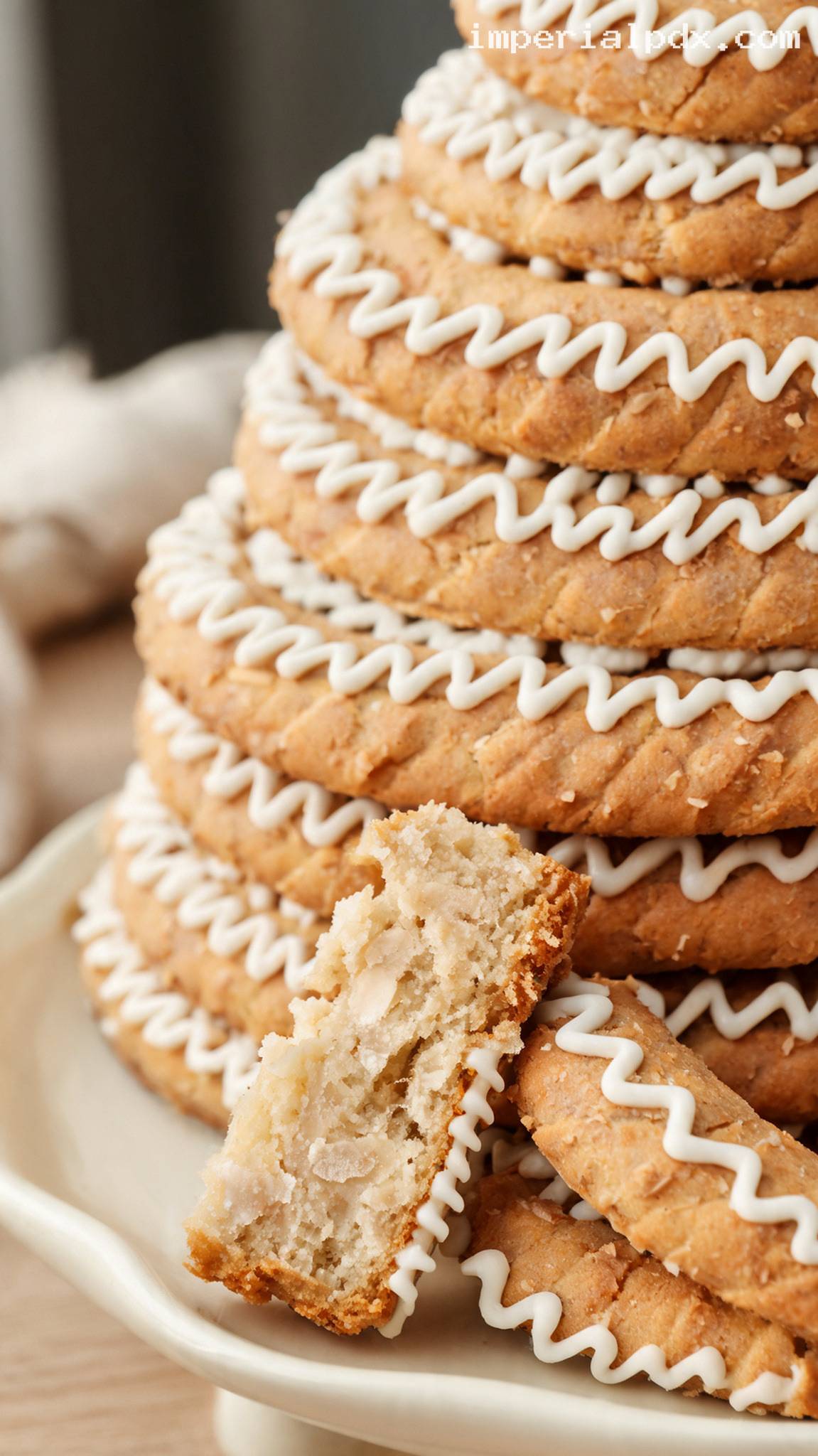
- That classic chewy texture: The rings have lightly crisp edges and dense, tender-chewy centers.
- Make-ahead friendly: Prepare the dough ahead or freeze the baked rings before decorating. The recipe is also naturally dairy-free and gluten-free when made with suitable ingredients.
Grocery List
- Produce: 1 small lemon, for 1 teaspoon fresh juice.
- Dairy: No milk or butter needed. Pick up 150 g pasteurized egg whites from the refrigerated egg section.
- Pantry: 500 g finely ground blanched almonds or blanched almond flour, 700 g powdered sugar, almond extract, fine salt, and neutral oil.
Full Ingredients
For the Almond Rings
- 500 g finely ground blanched almonds or blanched almond flour, preferably weighed rather than measured by volume
- 500 g powdered sugar, sifted
- 120 g egg whites, preferably pasteurized, at room temperature; approximately 4 large egg whites, but weigh for accuracy
- 1/2 teaspoon (2.5 ml) almond extract
- 1/4 teaspoon (1.5 g) fine salt
For Preparing the Molds
- 2 teaspoons (10 ml) neutral oil, such as sunflower or canola oil
For the Royal Icing
- 200 g powdered sugar, sifted
- 30 g pasteurized egg white, at room temperature
- 1 teaspoon (5 ml) fresh lemon juice
Equipment
- An 18-ring kransekake mold set, typically six metal plates with three ring grooves per plate
- Digital kitchen scale
- Large mixing bowl and sturdy spoon, or a stand mixer with a paddle attachment
- Baking sheet large enough to hold two mold plates without overlapping
- Wire cooling racks
- Piping bag fitted with a small round tip, approximately 2 mm wide
- Flat serving plate or sturdy cake board
Step-by-Step Instructions
Step 1: Make the almond dough
Combine the ground almonds, 500 g powdered sugar, and salt in a large bowl. Break up any lumps. Add 120 g egg whites and the almond extract, then mix with a sturdy spoon until the mixture starts to clump together.
Knead by hand for 3–5 minutes, or use a stand mixer with the paddle attachment on low speed, until you have a smooth, firm dough resembling modeling clay. It should hold its shape rather than spread. Do not whip the egg whites first; this cake needs a dense almond dough, not an airy meringue.
Step 2: Chill the dough
Shape the dough into a thick disk, wrap it tightly, and refrigerate for 8 hours. This rest hydrates the almonds and sugar and makes the dough easier to roll neatly.
If the chilled dough feels too firm to shape, let it stand at room temperature for 15 minutes before working with it. Keep any dough you are not currently using covered so its surface does not dry out.
Step 3: Prepare the oven and ring molds
Heat the oven to 350°F (180°C), conventional setting, with a rack in the middle. Brush all 18 mold grooves with a very thin coating of the neutral oil, using the 2 teaspoons across the entire set. Avoid leaving oil pooled in the grooves.
Plan to bake two mold plates per batch, giving you three batches in total. Set the first two plates on a baking sheet, leaving space between them so hot air can circulate.
Step 4: Shape and join the rings
Working with small portions, roll the dough on a clean, unfloured surface into even ropes approximately 1/2 inch (12 mm) thick, or slightly thinner if your mold grooves are narrow. Use gentle pressure and roll from the center outward.
Lay a rope into each groove without stretching it. Trim it to fit, bring the ends together, and pinch the seam firmly closed. Smooth the join so it is as thick as the rest of the ring; weak or thin seams can split during baking. Keep the dough comfortably within the grooves rather than mounding it above their rims.
Fill all 18 grooves, keeping plates that are waiting to bake in the refrigerator if space allows. Mold sizes vary; if you have a little dough left, shape it into short almond sticks and bake separately rather than overfilling the rings.
Step 5: Bake until lightly golden
Bake two mold plates at a time for 15 minutes per batch, rotating the baking sheet front to back after 8 minutes. The rings should be lightly golden around the edges, pale golden on top, and just set. Begin checking at 13 minutes if your molds are dark-colored or your oven runs hot.
Repeat with the remaining plates for three batches and approximately 45 minutes of total oven time. Avoid baking the rings to a deep brown: they should retain a chewy center rather than become hard all the way through.
Step 6: Cool and carefully release the rings
Let each batch cool in its molds for 30 minutes. Gently loosen an edge with a thin, blunt knife if necessary, then carefully lift out or invert each ring onto a cooling rack. Support larger rings with both hands.
Allow another 30 minutes on the rack, until completely cool. Warm rings are fragile, so resist the temptation to stack them early. Arrange the cooled rings from largest to smallest and test their order before opening the icing bag.
Step 7: Mix the royal icing
Combine 200 g sifted powdered sugar, 30 g pasteurized egg white, and 1 teaspoon lemon juice. Stir or beat on low speed for 2–3 minutes, until smooth, bright white, and thick enough to hold a piped line. Avoid beating in lots of air.
Lift the spoon to check the consistency: the icing should fall in a thick ribbon that briefly keeps its shape. If needed, add water 1/4 teaspoon at a time to loosen it, or powdered sugar 1 teaspoon at a time to thicken it. Transfer to a piping bag fitted with a small round tip, and keep the tip covered whenever you pause.
Step 8: Decorate and build the tower
Place the largest ring on a flat serving plate, using three small dots of icing underneath to keep it from sliding. Pipe a fine zigzag or scalloped line around its visible outer surface.
Add three or four small icing dots to the upper surface where the next ring will sit. Center the next-largest ring on top, decorate its exposed edge, and repeat, working upward through all 18 rings. Check the tower from several sides as you build so it stays centered rather than leaning.
Let the finished kransekake stand undisturbed for 1 hour so the icing can set. To serve, gently separate the rings from the top downward and break or cut them into small pieces. You do not need to slice through the whole tower like a layer cake.
Pro Tips
- Weigh the egg whites: Egg sizes vary, and a little extra liquid can make the rings spread. A scale gives much more reliable results than counting eggs.
- Choose the right almonds: Use finely ground whole blanched almonds or regular blanched almond flour, not defatted almond flour. Avoid grinding almonds so long that they turn oily.
- Keep the rope thickness consistent: Even ropes bake evenly and make a much straighter tower. Pay special attention to the joined ends.
- Do not overbake: Light golden edges are enough. The rings firm as they cool, while their centers should stay pleasantly chewy.
- Repair small breaks with icing: Once the pieces are completely cool, join them with royal icing and let the repair set before stacking. Position the repaired area toward the back.
Variations
- Rustic almond flavor: Replace 100 g of the blanched almonds with 100 g finely ground skin-on almonds. The rings will be a little darker and more speckled.
- Orange-scented Christmas cake: Knead 2 teaspoons finely grated orange zest into the dough along with the egg whites.
- Chocolate-dipped ring pieces: For a dessert platter instead of a tower, dip one end of each baked, cooled ring segment into melted dark chocolate and let it set before serving.
Storage & Make-Ahead
Dough: Keep the tightly wrapped dough refrigerated for up to 2 days before shaping. The required 8-hour chill is included in that window.
Baked rings: Store completely cooled, undecorated rings in an airtight container at room temperature for up to 5 days, separating layers with parchment. For longer storage, freeze the rings in a rigid, airtight container for up to 3 months. Thaw while still covered at room temperature for about 4 hours before decorating.
Assembled cake: Keep in a large airtight container or under a well-sealed cake cover in a cool, dry place for up to 3 days. Humidity can soften the icing. For the neatest centerpiece, assemble the cake the day before serving and transport it on its serving board, supported inside a snug, sturdy box.
Nutrition (per serving)
Calories: 241 kcal | Carbs: 34g | Protein: 5g | Fat: 11g | Saturated Fat: 1g | Fiber: 3g | Sugar: 30g | Sodium: 35mg | Cholesterol: 0mg
Nutrition is an estimate based on 24 servings and includes the royal icing. Actual values vary with the almond flour used and the amount of icing applied.