Quick Recipe Version (TL;DR)
Quick Ingredients
- 2 salmon fillets (5 to 6 oz / 140 to 170 g each, about 1-inch thick), fresh or fully thawed
- 1 cup asparagus pieces (1-inch) or 1 cup green beans (trimmed)
- 1/2 lemon (thinly sliced into 4 to 6 slices) + 1 tsp lemon juice
- 2 tbsp unsalted butter (cut into 2 pats)
- 1 small garlic clove (minced) or 1/2 tsp garlic powder
- 1 1/2 tsp chopped fresh dill (or 1/2 tsp dried dill)
- 1/2 tsp kosher salt, plus more to taste
- 1/4 tsp black pepper
- 2 tbsp water
- 2 pouches microwave rice or quinoa (8.5 to 9 oz / 240 to 255 g each), or 2 cups cooked
Do This
- 1. Add asparagus/green beans to a microwave-safe dish; add 2 tbsp water and a pinch of salt.
- 2. Place salmon on top (or beside), season with salt, pepper, garlic, and dill.
- 3. Top each fillet with a pat of butter and 2 to 3 lemon slices; drizzle 1 tsp lemon juice over everything.
- 4. Cover tightly (vented) with microwave-safe lid or plastic wrap; microwave on HIGH 3 minutes.
- 5. Rotate dish; microwave 2 to 5 minutes more until salmon reaches 145°F (63°C) in the thickest part and flakes easily.
- 6. Rest covered 2 minutes while microwaving rice/quinoa per package (usually 90 seconds).
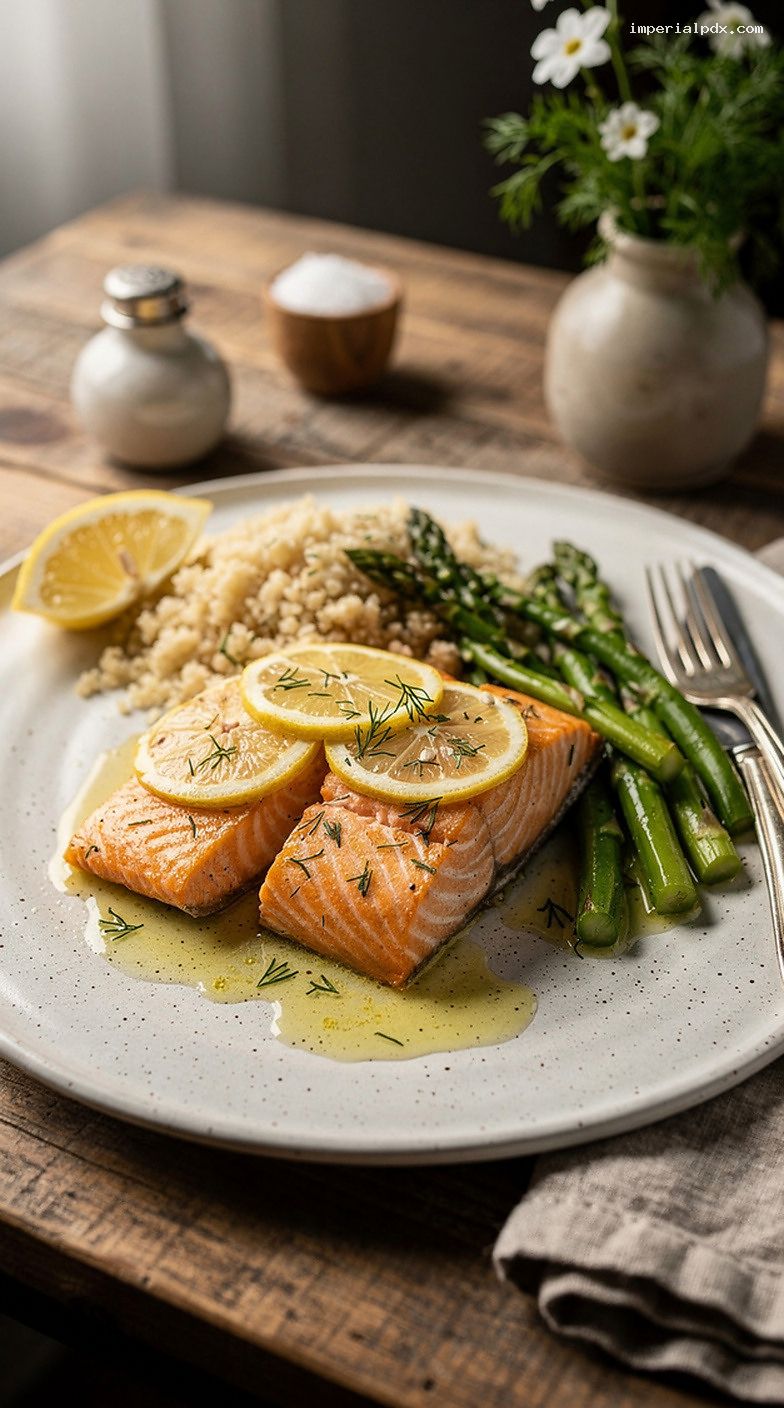
- 7. Serve salmon and veggies over rice/quinoa; spoon buttery lemon-dill juices from the dish on top.
Why You’ll Love This Recipe
- Fast but special: buttery lemon, dill, and garlic make it feel like a real dinner, not a shortcut.
- One dish for fish and veggies: the vegetables “steam” alongside the salmon, soaking up the flavor.
- Light and widely liked: clean, bright flavors with gentle richness from a small pat of butter.
- Reliable results: clear timing plus a temperature target for perfectly cooked salmon.
Grocery List
- Produce: 1 lemon, asparagus (or green beans), fresh dill, 1 garlic clove
- Dairy: unsalted butter
- Pantry: kosher salt, black pepper, microwave rice or microwave quinoa
Full Ingredients
Salmon & Seasoning
- 2 salmon fillets (5 to 6 oz / 140 to 170 g each, about 1-inch thick), fresh or fully thawed
- 1/2 tsp kosher salt (use 1/4 tsp if your salmon is pre-seasoned), plus more to taste
- 1/4 tsp black pepper
- 1 small garlic clove, minced (about 1 tsp) or 1/2 tsp garlic powder
- 1 1/2 tsp chopped fresh dill (or 1/2 tsp dried dill)
Lemon-Butter “Steam” Aromatics
- 1/2 lemon, thinly sliced into 4 to 6 slices (remove seeds)
- 1 tsp lemon juice (from the same lemon)
- 2 tbsp unsalted butter, cut into 2 pats
- 2 tbsp water (creates steam and keeps the veggies tender-crisp)
Vegetables
- Asparagus option: 1 cup asparagus, cut into 1-inch pieces (about 5 to 7 thick spears)
- Green bean option: 1 cup green beans, trimmed (leave whole or cut in half)
To Serve
- Microwave rice or quinoa: 2 pouches (8.5 to 9 oz / 240 to 255 g each) or 2 cups cooked
- Optional finishing: extra dill, extra lemon wedge, pinch of flaky salt
Step-by-Step Instructions
Step 1: Prep the vegetables and lemon
Cut 1 cup asparagus into 1-inch pieces (or trim 1 cup green beans). Thinly slice 1/2 lemon into 4 to 6 slices and squeeze out 1 tsp lemon juice. This is a quick recipe, so having everything ready before the microwave starts helps you hit the sweet spot on doneness.
Step 2: Set up the steaming dish
Choose a wide, microwave-safe dish that can hold the salmon in a single layer (a 8- to 9-inch shallow casserole dish works well). Add the vegetables to the dish and pour in 2 tbsp water. Sprinkle the vegetables with a small pinch of the kosher salt.
Spread the vegetables into an even layer so they steam evenly.
Step 3: Season and top the salmon
Place the 2 salmon fillets on top of the vegetables (or nestled beside them if your dish is large). Season the salmon with 1/2 tsp kosher salt and 1/4 tsp black pepper. Sprinkle on the minced garlic and dill.
Top each fillet with 1 pat of butter and layer 2 to 3 lemon slices over each piece of salmon. Drizzle 1 tsp lemon juice over the salmon and vegetables.
Step 4: Cover tightly to “steam” in the microwave
Cover the dish with a microwave-safe lid or microwave-safe plastic wrap. If using plastic wrap, keep it slightly vented by leaving a 1-inch gap at one corner (or poke 2 small holes) to release excess steam safely.
The tight cover is what makes this technique work: it traps steam so the salmon cooks gently and the veggies turn tender-crisp without drying out.
Step 5: Microwave in short bursts until the salmon is done
Microwave on HIGH (100% power) for 3 minutes. Carefully rotate the dish 180 degrees (microwaves often heat unevenly), then microwave on HIGH for 2 minutes.
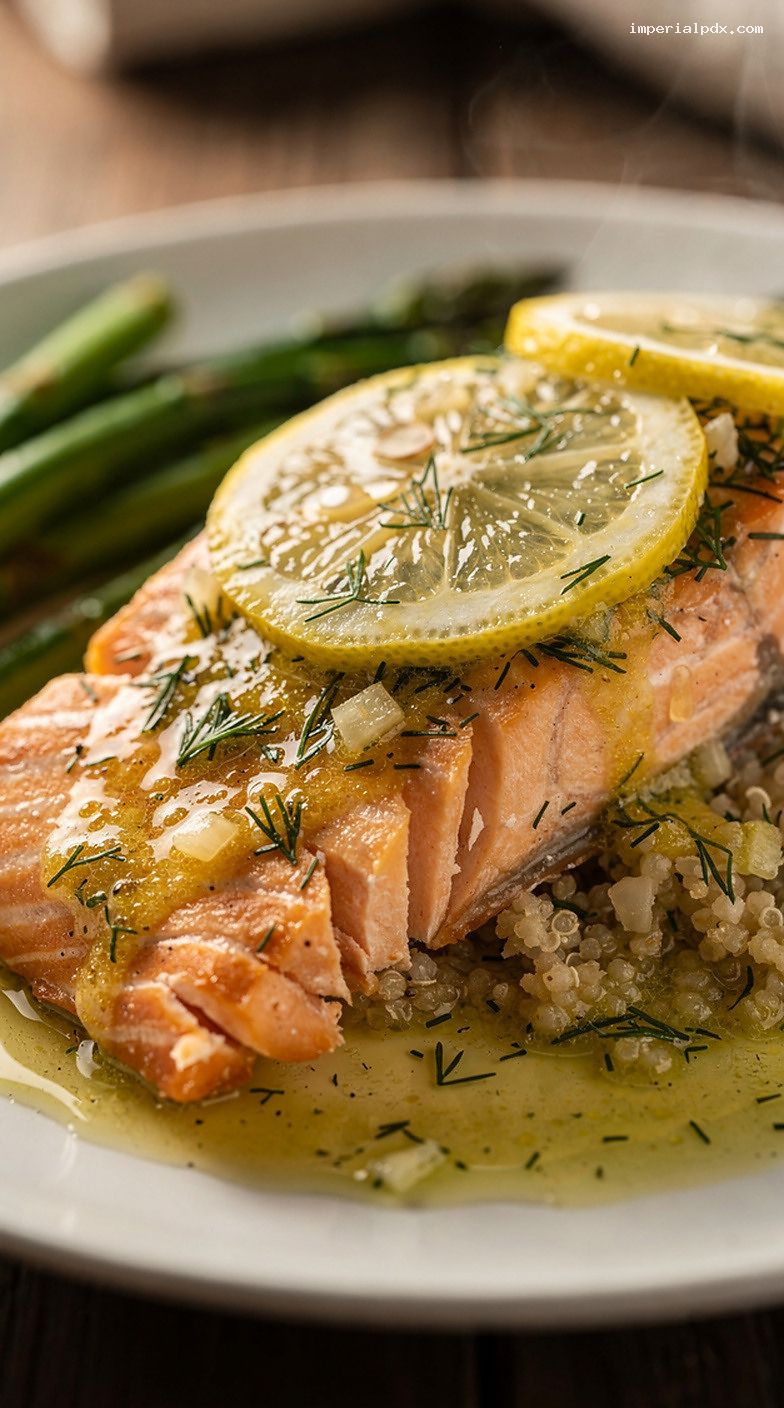
Check doneness. The salmon should look opaque on the outside and begin to flake. If it needs more time, microwave in 30-second bursts until the thickest part reaches 145°F (63°C) on an instant-read thermometer.
Total microwave time is typically 5 to 8 minutes for 1-inch-thick fillets; very thick fillets may take up to 9 to 10 minutes. (Exact timing depends on thickness, starting temperature, and your microwave’s wattage.)
Step 6: Rest briefly, then microwave the rice or quinoa
Let the salmon rest covered for 2 minutes. This finishes the cooking gently and keeps the fish juicy.
While it rests, microwave your rice or quinoa pouches according to the package directions (commonly 90 seconds on HIGH per pouch). Fluff with a fork.
Step 7: Serve over grains and spoon the lemon-butter juices on top
Divide the rice or quinoa between two bowls or plates. Top with the vegetables and salmon. Spoon the buttery lemon-dill juices from the dish over the salmon and grains (it’s essentially a quick pan sauce created by steam and butter).
Finish with a pinch of extra dill or a small squeeze of lemon if you like it brighter.
Pro Tips
- Use a thermometer for perfect salmon: Pull at 145°F (63°C) in the thickest part. If you prefer slightly softer salmon, stop at 140°F (60°C) and let it rise during the 2-minute rest (food safety guidance commonly recommends 145°F).
- Cut veggies to match cook time: Thicker asparagus does best when cut into 1-inch pieces. If your green beans are very thick, slice them lengthwise or cut shorter.
- Don’t skip the tight cover: Steam is what keeps the salmon from drying out in the microwave.
- Avoid overcooking: Once salmon flakes easily, switch to 30-second bursts. Microwaves can go from perfect to dry quickly.
- Boost flavor without extra work: Add 1/4 tsp Dijon mustard to the dish juices and stir before spooning over (optional, but excellent with lemon and dill).
Variations
- Greek-inspired: Swap dill for 1 tsp chopped fresh parsley and add 1/4 tsp dried oregano; finish with crumbled feta (optional).
- Spicy lemon-garlic: Add 1/8 tsp red pepper flakes and a tiny drizzle of hot sauce to the dish juices before serving.
- No butter option: Replace butter with 2 tsp olive oil and add an extra 1 tsp lemon juice for richness and brightness.
Storage & Make-Ahead
Refrigerate: Cool leftovers promptly, then store salmon, veggies, and grains in airtight containers for up to 2 days.
Reheat: For best texture, reheat gently: microwave at 50% power in 30-second bursts just until warmed through. Add a teaspoon of water to the container and cover to create gentle steam.
Make-ahead: Pre-slice lemon, trim veggies, and chop dill up to 24 hours ahead. Keep everything refrigerated separately. Cooked salmon is best fresh, but prepping the components makes this truly weeknight-fast.
Nutrition (per serving)
Approximate, using 6 oz salmon, 1 cup asparagus, 1 rice pouch per serving, and 1 tbsp butter per serving: 620 calories, 38 g protein, 58 g carbs, 26 g fat, 7 g saturated fat, 3 g fiber, 780 mg sodium.