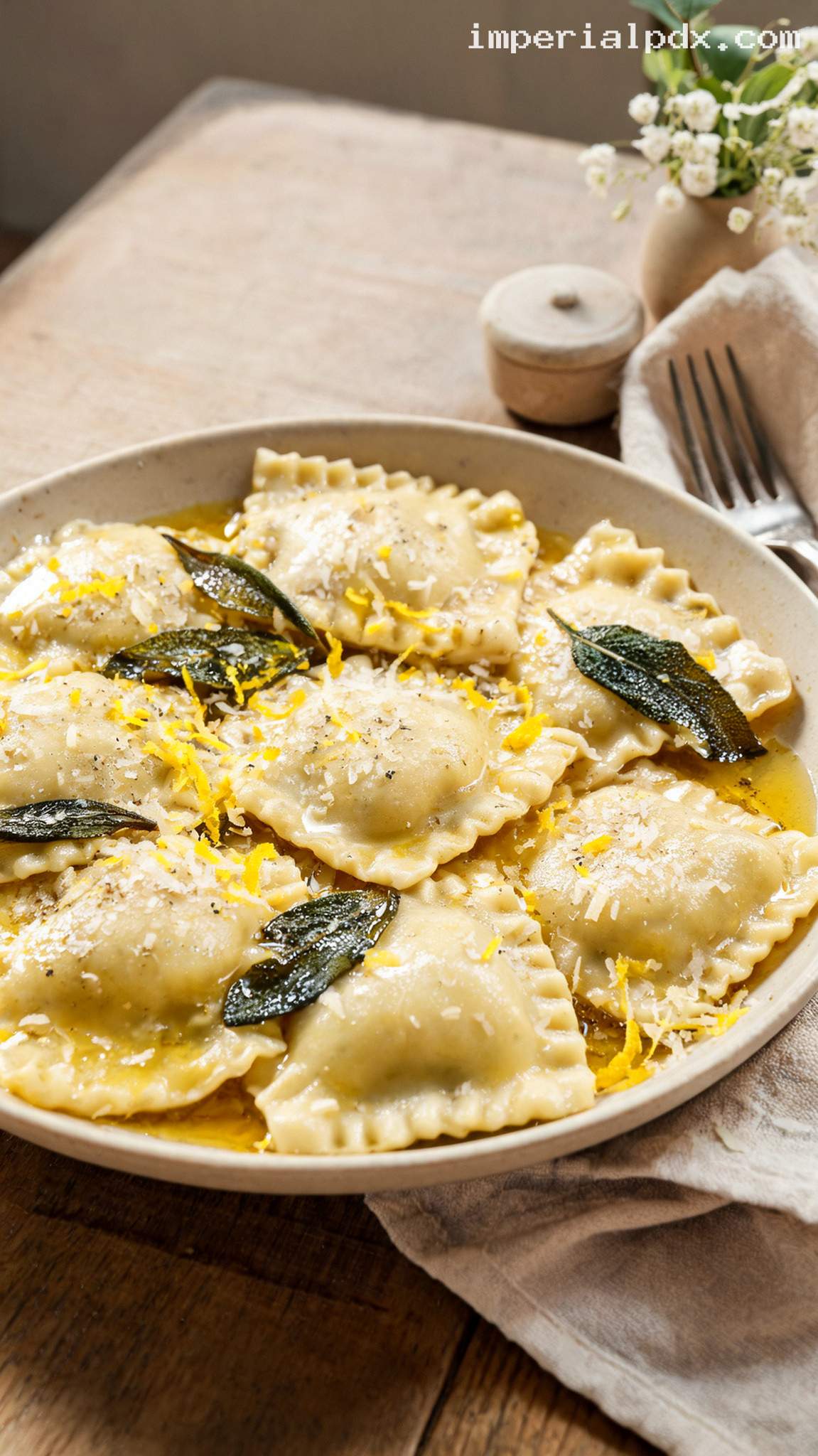
Quick Recipe Version (TL;DR)
Quick Ingredients
- Pasta dough: 2 cups “00” flour or all-purpose flour, 2 large eggs, 2 large egg yolks, 1 teaspoon extra-virgin olive oil, 1/2 teaspoon fine sea salt, 1 to 2 teaspoons water if needed
- Filling: 15 ounces whole-milk ricotta, 1/2 cup finely grated Parmesan, 1 large egg yolk, 2 teaspoons finely grated lemon zest, 1 teaspoon fresh lemon juice, 2 tablespoons chopped parsley, 1 tablespoon chopped chives, 1/4 teaspoon fine sea salt, 1/8 teaspoon black pepper, pinch of nutmeg
- Sauce: 6 tablespoons unsalted butter, 18 fresh sage leaves, 1 small garlic clove, 1/4 cup reserved pasta water, 1 teaspoon fresh lemon juice, 1/4 teaspoon fine sea salt, black pepper, extra Parmesan for serving
- For shaping: 1/4 cup semolina flour or all-purpose flour for dusting
Do This
- 1. Make a smooth pasta dough from flour, eggs, yolks, olive oil, and salt; knead 8 to 10 minutes, wrap, and rest 30 minutes at room temperature.
- 2. Stir together drained ricotta, Parmesan, egg yolk, lemon zest, lemon juice, herbs, salt, pepper, and nutmeg; chill while the dough rests.
- 3. Roll pasta into thin sheets, about 1/32 inch thick, using a pasta machine or rolling pin.
- 4. Add 1-teaspoon mounds of filling, cover with pasta, press out air, seal well, and cut into ravioli.
- 5. Cook ravioli in gently boiling salted water at 212°F for 2 to 4 minutes, until tender and floating.
- 6. Melt butter with sage and garlic until fragrant and lightly golden, then loosen with pasta water and lemon juice.
- 7. Gently toss ravioli in the sage butter, finish with Parmesan, black pepper, and a little lemon zest.
Why You’ll Love This Recipe
- Elegant but doable: Homemade ravioli feels restaurant-worthy, yet the filling and sauce are simple and forgiving.
- Bright Mediterranean flavor: Creamy ricotta, lemon zest, fresh herbs, Parmesan, and sage create a delicate, balanced filling.
- Light, refined sauce: The sage butter coats the ravioli beautifully without hiding the lemony ricotta center.
- Make-ahead friendly: Shape the ravioli in advance and cook them straight from the refrigerator or freezer.
Grocery List
- Produce: 2 lemons, 1 small bunch fresh sage, 1 small bunch fresh parsley, 1 small bunch fresh chives, 1 garlic clove
- Dairy: 15 ounces whole-milk ricotta, Parmesan cheese, unsalted butter
- Pantry: “00” flour or all-purpose flour, semolina flour or extra all-purpose flour for dusting, extra-virgin olive oil, fine sea salt, black pepper, ground nutmeg
- Eggs: 2 large eggs plus 3 large egg yolks total
Full Ingredients
For the Fresh Pasta Dough
- 2 cups “00” flour or all-purpose flour, spooned and leveled, plus more as needed
- 2 large eggs, at room temperature
- 2 large egg yolks, at room temperature
- 1 teaspoon extra-virgin olive oil
- 1/2 teaspoon fine sea salt
- 1 to 2 teaspoons water, only if the dough feels dry
For the Ricotta, Lemon, and Herb Filling
- 15 ounces whole-milk ricotta, drained for 20 to 30 minutes if wet
- 1/2 cup finely grated Parmesan cheese, about 1 ounce, plus more for serving
- 1 large egg yolk
- 2 teaspoons finely grated lemon zest, preferably from an unwaxed lemon
- 1 teaspoon fresh lemon juice
- 2 tablespoons finely chopped fresh parsley
- 1 tablespoon finely chopped fresh chives
- 1/4 teaspoon fine sea salt
- 1/8 teaspoon freshly ground black pepper
- 1 small pinch ground nutmeg, about 1/16 teaspoon
For Shaping and Cooking
- 1/4 cup semolina flour or all-purpose flour, for dusting trays and pasta sheets
- 1 tablespoon fine sea salt, for the pasta cooking water
For the Sage Butter Sauce
- 6 tablespoons unsalted butter, cut into tablespoon-size pieces
- 18 fresh sage leaves
- 1 small garlic clove, lightly crushed and peeled
- 1/4 cup reserved pasta cooking water, plus 1 to 2 tablespoons more if needed
- 1 teaspoon fresh lemon juice
- 1/4 teaspoon fine sea salt, or to taste
- 1/8 teaspoon freshly ground black pepper, plus more for serving
- 1 teaspoon finely grated lemon zest, for finishing
- 2 tablespoons finely grated Parmesan cheese, for finishing
Step-by-Step Instructions
Step 1: Make the pasta dough
Place the flour on a clean work surface and make a wide well in the center. Add the 2 whole eggs, 2 egg yolks, olive oil, and 1/2 teaspoon fine sea salt to the well. Use a fork to beat the eggs gently, gradually pulling in flour from the inner edge of the well until the mixture becomes thick and shaggy.
Use your hands or a bench scraper to bring the dough together. Knead for 8 to 10 minutes, pressing the dough away from you with the heel of your hand, folding it back, and turning it a quarter turn. The dough should become smooth, elastic, and only slightly tacky. If it feels crumbly after several minutes, knead in water 1 teaspoon at a time. If it is sticky, dust lightly with flour.
Shape the dough into a disk, wrap it tightly in plastic wrap or place it in an airtight bag, and rest at room temperature, about 70°F, for 30 minutes. This resting time relaxes the gluten so the pasta rolls out smoothly.
Step 2: Prepare the ricotta lemon filling
If your ricotta looks watery, spoon it into a fine-mesh sieve set over a bowl and let it drain for 20 to 30 minutes. A thicker filling is much easier to seal inside ravioli.
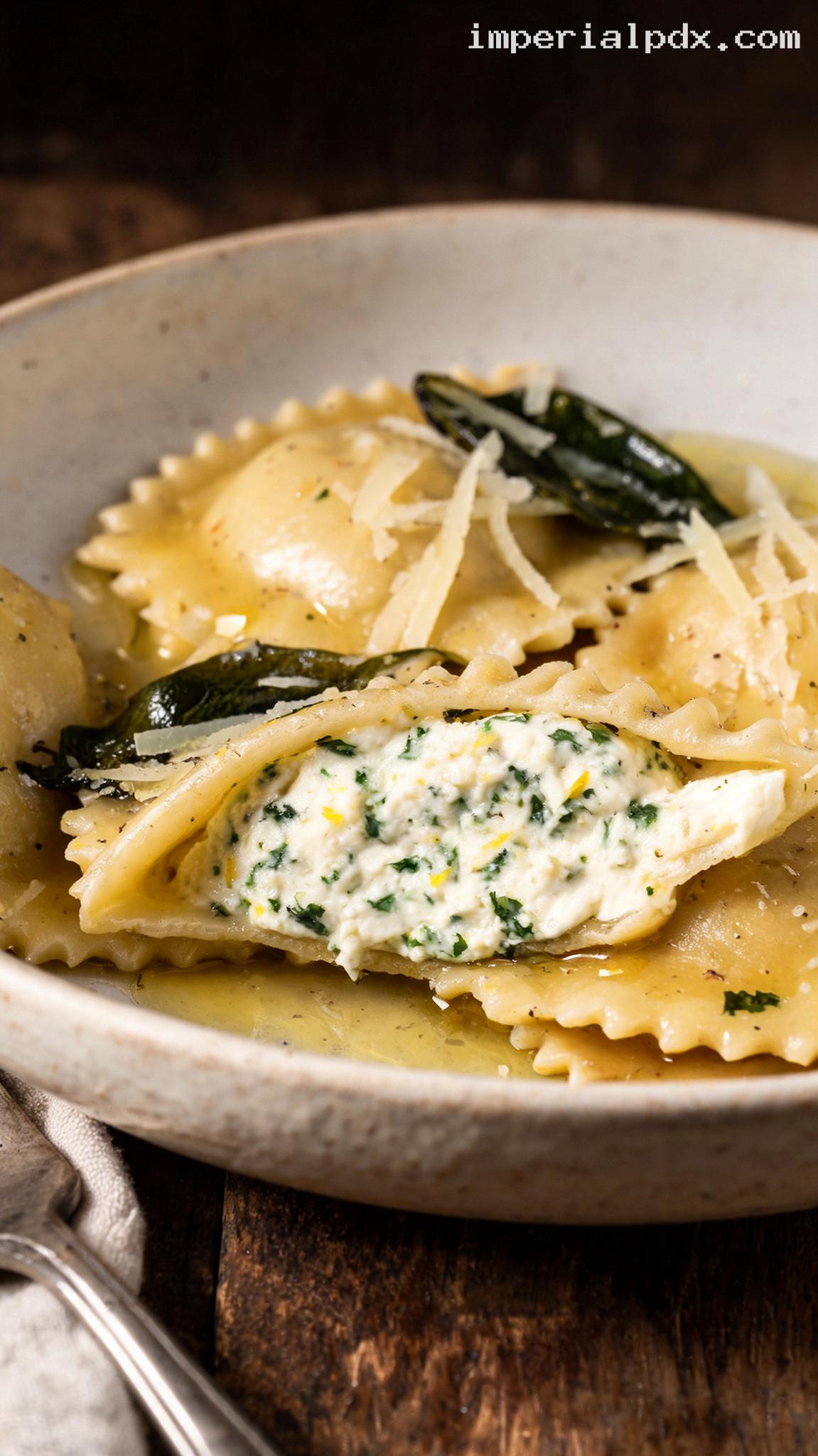
In a medium bowl, combine the drained ricotta, Parmesan, 1 egg yolk, lemon zest, lemon juice, parsley, chives, salt, pepper, and nutmeg. Stir until creamy and evenly mixed. Taste a tiny amount and adjust with a pinch more salt or lemon zest if you like a brighter filling. Cover and refrigerate at 40°F or colder while you roll the pasta.
Step 3: Roll the pasta sheets
Lightly dust a baking sheet with semolina flour. Cut the rested dough into 4 equal pieces and keep the pieces you are not using covered so they do not dry out. Flatten 1 piece into a rectangle with your hands.
Using a pasta machine, roll the dough through the widest setting once, then fold it into thirds like a letter and roll it through again. Repeat this fold-and-roll process 2 more times to strengthen the dough. Then pass the sheet through progressively thinner settings, one setting at a time, until it is very thin but still easy to handle, about 1/32 inch thick. On many pasta machines, this is setting 6 or 7, depending on the model.
If using a rolling pin, roll the dough on a lightly floured surface into a long, thin sheet, lifting and turning often to prevent sticking. You should be able to see the shadow of your hand through the pasta. Lay the sheet on the prepared tray and cover lightly with a clean kitchen towel while you roll a second sheet.
Step 4: Fill, seal, and cut the ravioli
Lay one pasta sheet on a lightly dusted surface. Spoon or pipe 1-teaspoon portions of filling in two rows, spacing them about 1 1/2 inches apart. You should get about 8 ravioli per dough quarter, for about 32 ravioli total.
Lightly brush around the filling with water if the pasta feels dry. Place a second pasta sheet over the top. Starting around each mound of filling, press gently but firmly to push out trapped air, then seal the edges. Removing air pockets helps prevent the ravioli from bursting as they cook.
Cut into squares with a fluted pastry wheel, sharp knife, or ravioli cutter. Aim for ravioli about 2 to 2 1/4 inches wide. Transfer the finished ravioli to a semolina-dusted baking sheet in a single layer. Repeat with the remaining dough and filling. Keep the shaped ravioli lightly covered while you work.
Step 5: Boil the ravioli gently
Bring a large pot of water to a rolling boil, about 212°F. Add 1 tablespoon fine sea salt. Reduce the heat slightly so the water is boiling gently rather than violently; delicate ravioli cook best in a steady but not aggressive boil.
Cook the ravioli in 2 batches to avoid crowding. Fresh ravioli usually take 2 to 4 minutes. They are ready when they float, the pasta looks slightly translucent at the edges, and the dough is tender. Before draining, reserve at least 1/2 cup of the starchy pasta water. Use a spider strainer or slotted spoon to transfer the ravioli directly into the sauce, or onto a lightly oiled plate if the sauce is not quite ready.
Step 6: Make the sage butter sauce
While the ravioli cook, place the butter, sage leaves, and crushed garlic clove in a large skillet over medium heat. Cook for 3 to 5 minutes, swirling the pan often, until the butter melts, foams, smells nutty, and turns light golden around the edges. The sage should become fragrant and slightly crisp. If the butter darkens too quickly, lower the heat to medium-low.
Remove and discard the garlic clove. Add 1/4 cup reserved pasta water carefully, as it may bubble, then swirl or whisk to create a glossy sauce. Stir in 1 teaspoon lemon juice, 1/4 teaspoon salt, and 1/8 teaspoon black pepper. Keep the sauce warm over low heat.
Step 7: Toss and serve
Add the cooked ravioli to the skillet with the sage butter. Gently spoon the sauce over the pasta for 1 to 2 minutes, adding 1 to 2 tablespoons more pasta water if needed to keep the sauce silky and lightly coating the ravioli. Avoid vigorous stirring, which can tear the pasta.
Divide the ravioli among 4 warm shallow bowls. Spoon any remaining sage butter over the top. Finish each serving with Parmesan, a little lemon zest, freshly ground black pepper, and a few crisp sage leaves. Serve immediately while the pasta is tender and the filling is warm and creamy.
Pro Tips
- Drain wet ricotta: Excess moisture can make the ravioli difficult to seal and may cause the filling to leak during cooking.
- Do not overfill: One level teaspoon of filling is plenty. Overfilled ravioli are more likely to burst.
- Seal from the filling outward: Press around each mound first, then seal the outer edges. This pushes out air pockets.
- Keep pasta covered: Fresh pasta dries quickly. Cover rolled sheets and shaped ravioli with a clean towel while you work.
- Use pasta water to finish the sauce: The starch helps the butter cling to the ravioli and creates a smooth, restaurant-style gloss.
Variations
- Olive oil and sage version: Replace the butter with 1/4 cup extra-virgin olive oil. Warm the sage and garlic over medium-low heat for 3 minutes, then add pasta water and lemon juice to finish.
- Spinach ricotta ravioli: Stir 1/2 cup finely chopped cooked spinach into the filling. Squeeze the spinach very dry before adding it.
- Toasted walnut finish: Sprinkle each serving with 2 tablespoons toasted chopped walnuts for a nutty crunch that pairs beautifully with sage and lemon.
Storage & Make-Ahead
To refrigerate uncooked ravioli: Arrange the ravioli in a single layer on a semolina-dusted tray, cover loosely, and refrigerate at 40°F or colder for up to 8 hours. Cook directly from the refrigerator, adding about 1 extra minute if needed.
To freeze uncooked ravioli: Freeze the tray of ravioli until firm, about 1 hour, then transfer to a freezer-safe bag or container. Freeze for up to 2 months. Cook from frozen in gently boiling salted water for 4 to 6 minutes; do not thaw first.
To store leftovers: Refrigerate cooked ravioli in an airtight container for up to 2 days. Reheat gently in a covered skillet over low heat with 1 to 2 tablespoons water or a small pat of butter until warmed through. The pasta will be softer after reheating, but still delicious.
Nutrition (per serving)
Calories: 612 kcal | Carbs: 54g | Protein: 25g | Fat: 34g | Saturated Fat: 19g | Fiber: 3g | Sugar: 2g | Sodium: 845mg | Cholesterol: 278mg