Quick Recipe Version (TL;DR)
Quick Ingredients
- Dough: 300 g all-purpose flour, 1 large egg, 110 ml water at room temperature, 15 ml neutral oil, and 3 g fine salt.
- Potatoes and cheese: 400 g peeled floury potatoes and 250 g well-drained low-fat quark or Topfen, weighed after draining.
- Aromatics: 80 g finely chopped onion and 15 g unsalted butter.
- Filling seasonings: 6 g finely chopped fresh spearmint, 3 g finely chopped chives, 3 g fine salt, 1/4 teaspoon ground black pepper, and 1/8 teaspoon ground nutmeg.
- To finish: 100 g unsalted butter and 6 g finely chopped chives.
- For cooking and shaping: 1.5 liters water for the potatoes, 4 liters water plus 20 g fine salt for the pasta, and 20 g flour for dusting.
Do This
- 1. Mix the dough ingredients, knead for 8 minutes, cover, and rest at room temperature for 30 minutes.
- 2. Cut the potatoes into 2 cm pieces. Cover with 1.5 liters water, bring to a boil, and simmer for 15 minutes. Drain, mash, and cool for 10 minutes.
- 3. Soften the onion in 15 g butter over medium-low heat for 8 minutes. Cool, then mix with the potatoes, quark, mint, filling chives, salt, pepper, and nutmeg.
- 4. Roll the dough about 2 mm thick and cut out twenty 11 cm circles, rerolling scraps as needed.
- 5. Divide the filling among the circles, fold into half-moons, press out trapped air, and seal firmly. Crimp with a fork or pinch into a traditional braided edge.
- 6. Bring 4 liters water and 20 g salt to a boil, then reduce to a gentle simmer. Cook the pockets in 2 batches for 8 minutes per batch.
- 7. Brown 100 g butter over medium heat for 4 minutes, watching closely. Spoon over the drained pasta and finish with 6 g chives.
Why You’ll Love This Recipe
- Comforting but fresh: Fluffy potatoes and tangy curd cheese meet a gentle lift of mint and chives.
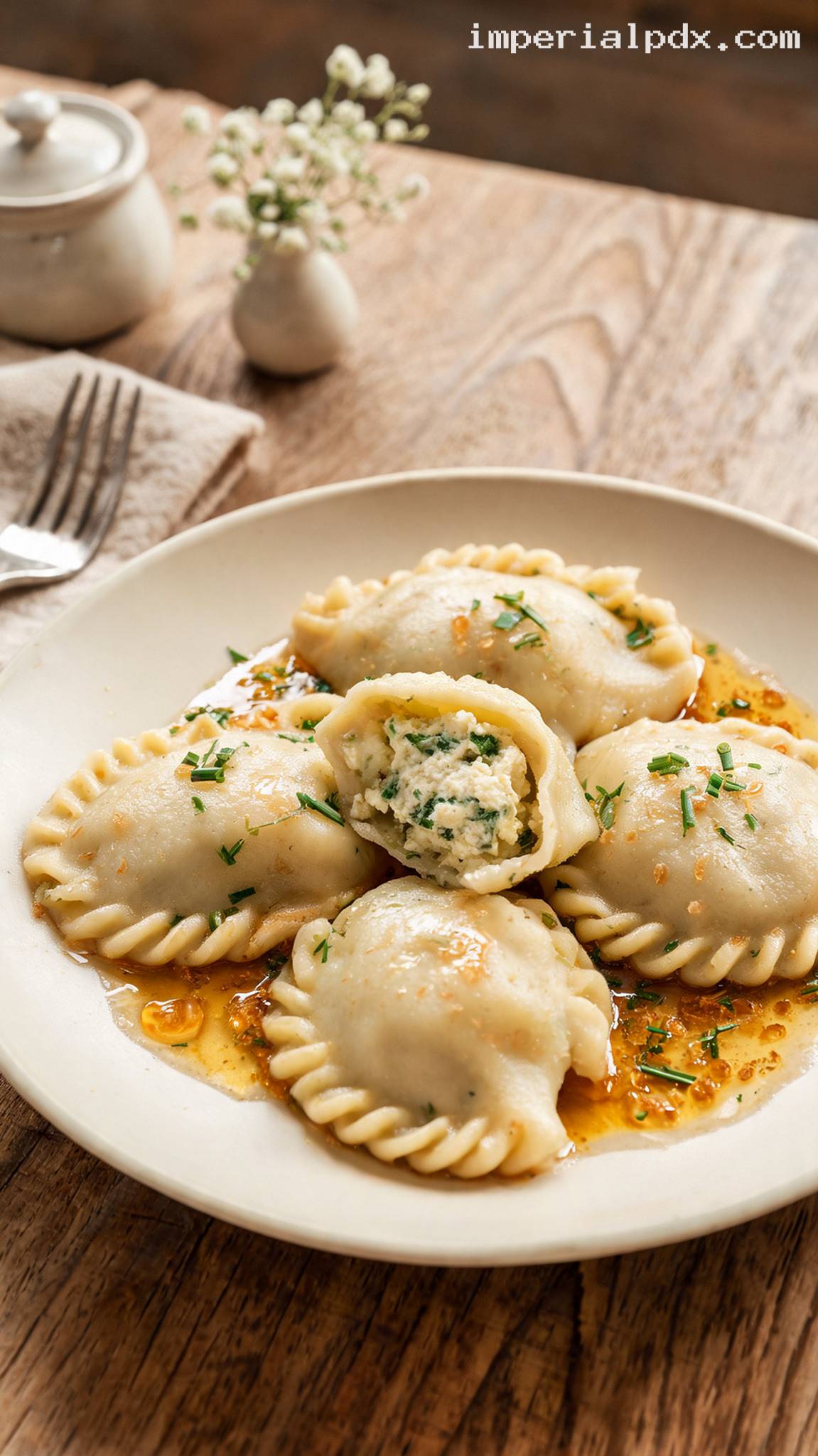
- A special handmade touch: These generous Carinthian pasta pockets look beautiful, even with a simple fork-crimped edge.
- A short, delicious finishing sauce: Nutty browned butter settles into the folds and makes every bite feel special.
- Freezer-friendly: Make an extra batch and cook the frozen pockets straight from the freezer.
Grocery List
- Produce: 400 g peeled floury potatoes, such as Russet or Maris Piper; 1 small onion, yielding 80 g chopped; 1 small bunch fresh spearmint; 1 small bunch chives.
- Dairy: Low-fat quark or Topfen, enough to provide 250 g after draining; 115 g unsalted butter; 1 large egg.
- Pantry: 320 g all-purpose flour, including dusting flour; 15 ml neutral oil; 26 g fine salt; ground black pepper; ground nutmeg.
Full Ingredients
For the Pasta Dough
- 300 g all-purpose flour
- 1 large egg, about 50 g without the shell
- 110 ml water, at room temperature, approximately 20°C
- 15 ml neutral oil, such as sunflower or canola oil
- 3 g fine salt, approximately 1/2 teaspoon
- 20 g additional all-purpose flour, for dusting the work surface and tray
For the Potato, Curd Cheese, and Mint Filling
- 400 g peeled floury potatoes, cut into 2 cm pieces
- 250 g well-drained low-fat quark or Topfen, weighed after draining
- 80 g onion, finely chopped
- 15 g unsalted butter
- 6 g fresh spearmint leaves, finely chopped, approximately 2 tablespoons
- 3 g fresh chives, finely chopped, approximately 1 tablespoon
- 3 g fine salt, approximately 1/2 teaspoon
- 1/4 teaspoon ground black pepper
- 1/8 teaspoon ground nutmeg
For Cooking and Serving
- 1.5 liters water, for boiling the potatoes
- 4 liters water, for cooking the pasta
- 20 g fine salt, for the pasta cooking water
- 100 g unsalted butter, for browning
- 6 g fresh chives, finely chopped, approximately 2 tablespoons
Cheese note: Topfen is the Austrian curd cheese traditionally used here. Choose a dry, crumbly variety when available. If your quark is soft or has visible whey, buy about 350 g, drain it in a cheesecloth-lined sieve in the refrigerator, and weigh out 250 g afterward. Allow at least 30 minutes for draining, or longer if needed; this preliminary draining time is not included in the recipe timing.
Step-by-Step Instructions
Step 1: Make and rest the dough
Combine the 300 g flour and 3 g salt in a large bowl. Make a well in the center and add the egg, 110 ml water, and oil. Stir with a fork, gradually drawing in the flour, until a shaggy dough forms.
Turn onto the work surface and knead for 8 minutes, until smooth, firm, and pliable. Avoid adding dusting flour unless the dough actually sticks. Cover with an overturned bowl and rest at room temperature for 30 minutes while you prepare the filling.
Step 2: Cook and mash the potatoes
Place the potato pieces in a saucepan with 1.5 liters cold water. Bring to a boil over high heat, then reduce to a steady simmer and cook for 15 minutes, or until a knife slips easily into the pieces.
Drain thoroughly, return the potatoes to the warm pan, and let them steam-dry off the heat for 2 minutes. Pass through a potato ricer or mash until smooth. Spread on a plate and cool for 10 minutes, until no longer steaming.
Step 3: Mix the savory filling
Melt 15 g butter in a small skillet over medium-low heat. Add the onion and cook for 8 minutes, stirring frequently, until soft and translucent rather than browned. Transfer to a bowl and cool for 5 minutes.
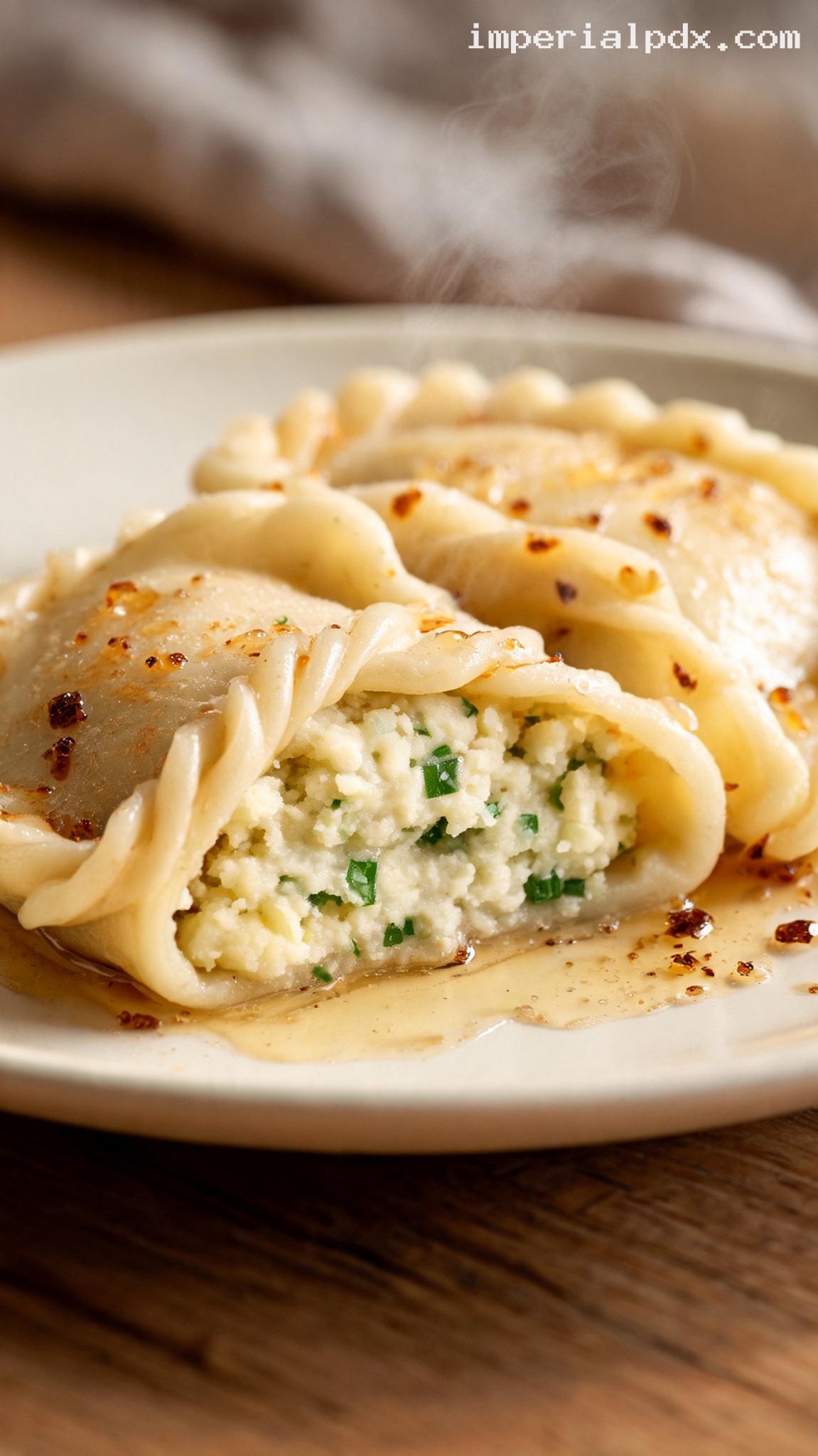
Add the cooled potatoes, drained quark, mint, 3 g chives, 3 g salt, pepper, and nutmeg. Mix until evenly combined. The filling should be moist but firm enough to hold a soft mound, with no liquid collecting in the bowl. Divide into 20 portions, approximately 35–38 g each.
Step 4: Roll and cut the dough
Lightly flour the work surface using some of the reserved dusting flour. Divide the rested dough in half and keep one half covered. Roll the other half into a sheet about 2 mm thick.
Cut out 11 cm circles using a round cutter or a small bowl as a guide. Repeat with the remaining dough. Gather the scraps, cover and rest them for 5 minutes, then reroll to make about 20 circles in total. Keep the cut circles covered with a clean towel so their edges stay supple.
Step 5: Fill and seal the pockets
Place one portion of filling in the center of each circle, leaving a border of at least 1 cm. If the dough edges feel dry, brush the border very lightly with water. Fold the dough over the filling to form a half-moon.
Starting near the filling and working outward, gently press away trapped air. Press the edges together firmly. For an easy seal, crimp with a fork. For the traditional Carinthian finish, called Krendeln, pinch a small section of the sealed edge, fold it diagonally inward, and repeat along the curve to create a braided-looking border. Keep the border reasonably thin so it cooks through.
Set the finished pockets in a single layer on a lightly floured tray. Do not stack them.
Step 6: Gently simmer the Kasnudeln
Bring 4 liters water and 20 g salt to a boil in a wide pot. Reduce the heat until the water is gently simmering, approximately 90–95°C at sea level. The surface should move softly rather than bubble vigorously.
Lower in 10 pockets, giving them enough room to move. Gently loosen any that settle against the bottom. Cook for 8 minutes, maintaining a gentle simmer. Floating alone is not a reliable sign that they are done: check that the thickest sealed edge is tender, not chalky or floury.
Lift out with a slotted spoon and drain well. Transfer to warm plates and cover loosely while you cook the second batch for another 8 minutes.
Step 7: Brown the butter
While the second batch cooks, place the remaining 100 g butter in a light-colored saucepan over medium heat. Melt and cook for approximately 4 minutes, swirling frequently. It will foam, then develop golden-brown milk solids and a toasted, nutty aroma.
As soon as the milk solids turn golden to hazelnut brown, remove the pan from the heat and pour the butter into a heatproof bowl to stop the cooking. Do not wait for the specks to become black; browned butter can burn quickly.
Step 8: Finish and serve
Arrange 5 pasta pockets on each warm plate. Spoon the browned butter over them, including the flavorful golden milk solids, and sprinkle with the remaining 6 g chives. Serve immediately while the pasta is tender and the filling is warm and fluffy.
A crisp green salad with a lightly acidic dressing makes a lovely counterpoint to the rich butter.
Pro Tips
- Dry filling is easier to handle: Drain the cheese well and let the potatoes release their steam before mixing. Wet filling makes sealing harder and can encourage leaking.
- Choose gentle mint: Carinthian noodle mint is traditional where available. Fresh spearmint is an accessible substitute; peppermint can taste too sharp.
- Let the dough relax: If it springs back while rolling, cover it and wait 5 minutes before continuing.
- Keep the edges clean: Filling or excess flour caught in the seam prevents a dependable seal. Brush away loose flour before pressing the edges together.
- Skip the rolling boil: A gentle simmer protects the pockets and helps the thicker crimped borders cook evenly.
Variations
- Alternative curd cheese: Replace the quark with 250 g dry-curd farmer’s cheese, finely crumbled. Well-drained ricotta also works, although its flavor is milder and less tangy.
- A gentler herbal filling: Replace half the mint with 3 g finely chopped flat-leaf parsley. Keep the chives as written.
- Simple melted-butter finish: For a milder variation, melt the 100 g finishing butter over low heat for 2–3 minutes without browning, then spoon it over the pockets and add the chives.
Storage & Make-Ahead
Prepare ahead: Refrigerate the filling in a covered container for up to 24 hours at 4°C or below. The dough can also be wrapped tightly and refrigerated for 24 hours; let it stand at room temperature for 30 minutes before rolling. Keep assembled, uncooked pockets covered on a well-floured tray in the refrigerator for up to 12 hours.
Freeze: Freeze uncooked pockets in a single layer on a lined tray for approximately 2 hours, until firm. Transfer to an airtight freezer container and store for up to 2 months. Cook directly from frozen at a gentle simmer for 10–12 minutes, checking that the seams are tender and the filling reaches 74°C.
Store leftovers: Refrigerate cooked pockets within 2 hours and use within 3 days. Reheat a serving in a covered skillet with 15 ml water over medium-low heat for approximately 5–7 minutes, until the center reaches 74°C. Add the browned butter near the end so it does not burn.
Nutrition (per serving)
Calories: 685 kcal | Carbs: 80g | Protein: 19g | Fat: 29g | Saturated Fat: 16g | Fiber: 5g | Sugar: 4g | Sodium: 760mg | Cholesterol: 112mg
Estimated for one serving of 5 pockets with one-quarter of the browned butter and garnish. Values vary with the cheese used, dusting flour retained, and salt absorbed during cooking.