Quick Recipe Version (TL;DR)
Quick Ingredients
- 4 large eggs
- 2 tablespoons prepared dashi, cooled
- 1 tablespoon mirin
- 2 teaspoons granulated sugar
- 1 teaspoon Japanese soy sauce
- 1/8 teaspoon fine sea salt
- 2 teaspoons neutral cooking oil
- 2 tablespoons finely grated daikon radish, squeezed dry
Do This
- 1. Stir together the dashi, mirin, sugar, soy sauce, and salt.
- 2. Gently beat the eggs, mix in the seasoning, and strain for a smooth texture.
- 3. Heat a tamagoyaki pan over medium-low heat to about 300°F (150°C), then lightly oil it.
- 4. Add one-quarter of the egg mixture and cook for 45 to 60 seconds, until mostly set.
- 5. Roll the egg toward you, move it to the far side, oil the pan, and add another thin layer.
- 6. Repeat until all the egg is used, then shape the omelet and rest it for 2 minutes.
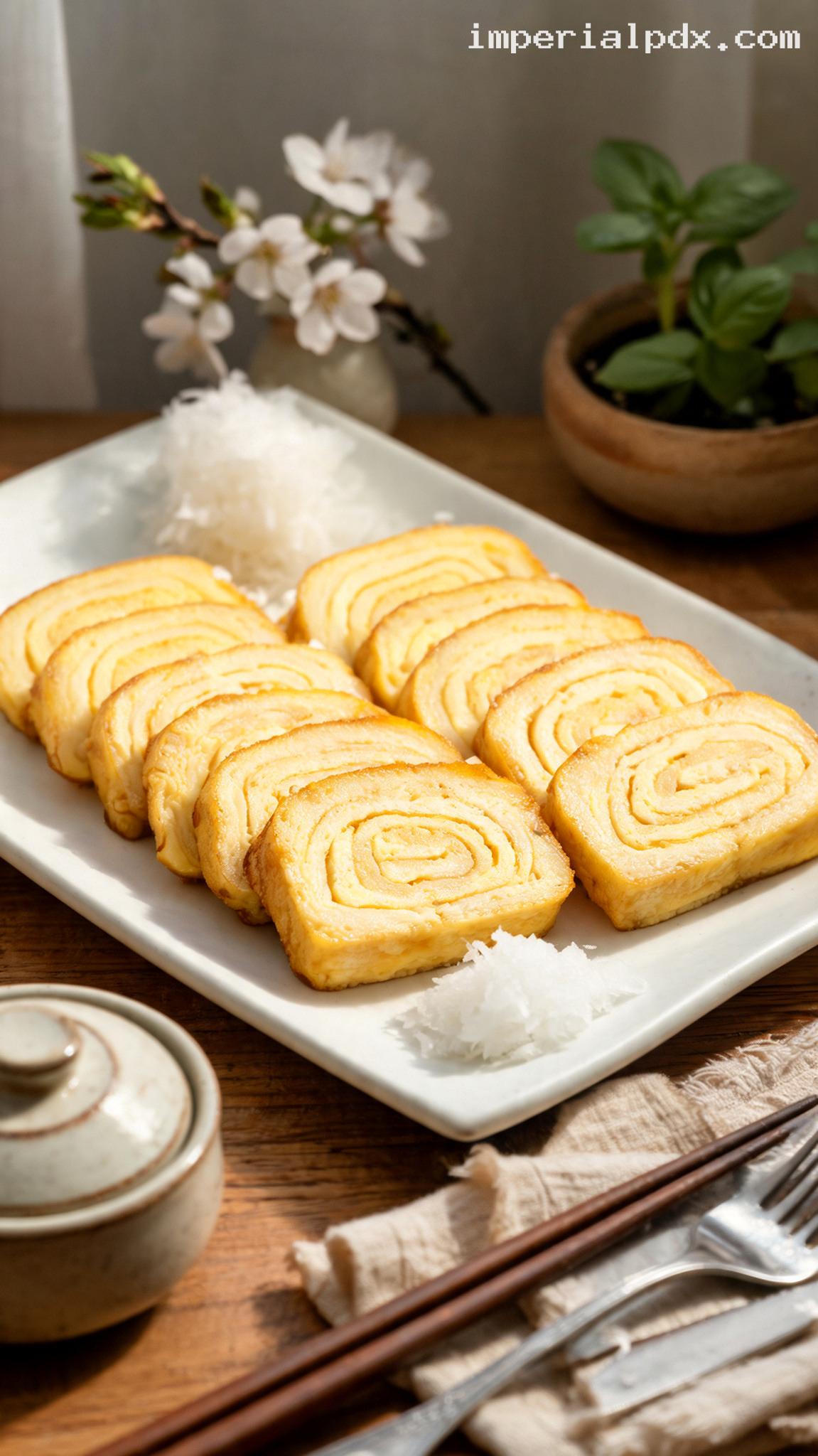
- 7. Slice into 8 pieces and serve warm or at room temperature with grated daikon.
Why You’ll Love This Recipe
- Thin, tender egg layers create a soft and delicate texture.
- Dashi, mirin, and soy sauce provide a balanced sweet-savory flavor.
- It takes only 20 minutes and uses a short list of everyday Japanese ingredients.
- The neat, bite-sized slices are ideal for breakfast, lunch boxes, or bento.
Grocery List
- Produce: Daikon radish
- Dairy: 4 large eggs
- Pantry: Prepared dashi, mirin, granulated sugar, Japanese soy sauce, fine sea salt, and neutral cooking oil
Full Ingredients
For the Seasoned Eggs
- 4 large eggs, about 7 ounces or 200 grams without shells
- 2 tablespoons prepared dashi, cooled to room temperature
- 1 tablespoon mirin
- 2 teaspoons granulated sugar
- 1 teaspoon Japanese soy sauce
- 1/8 teaspoon fine sea salt
For Cooking
- 2 teaspoons neutral cooking oil, such as canola, rice bran, or avocado oil
For Serving
- 2 tablespoons finely grated daikon radish, gently squeezed to remove excess liquid
Step-by-Step Instructions
Step 1: Make the dashi seasoning
In a small bowl, combine 2 tablespoons cooled dashi, 1 tablespoon mirin, 2 teaspoons sugar, 1 teaspoon soy sauce, and 1/8 teaspoon salt. Stir for about 30 seconds, or until the sugar and salt are dissolved. The mixture should be completely cool before it is added to the eggs so it does not begin cooking them.
Step 2: Mix and strain the eggs
Crack the 4 eggs into a medium bowl. Use chopsticks or a fork to break the yolks and stir gently for about 30 seconds. Avoid vigorous whisking, which creates excess air and can make the finished omelet bubbly rather than smooth. Add the dashi seasoning and stir just until evenly combined. Pour the mixture through a fine-mesh sieve into a measuring cup or bowl with a pouring spout, pressing any thick egg white through the sieve. You should have approximately 1 cup of egg mixture.
Step 3: Preheat and oil the pan
Set a 7-by-5-inch or 8-by-6-inch rectangular tamagoyaki pan over medium-low heat. Preheat it for about 2 minutes, aiming for a surface temperature of approximately 300°F (150°C). To test without a thermometer, touch a drop of egg mixture to the pan; it should sizzle gently and set within a few seconds without browning immediately. Add 1 teaspoon oil, then use a folded paper towel held with tongs or chopsticks to spread a very thin coating over the bottom and sides. Reserve the oiled paper towel for coating the pan between layers.
Step 4: Cook and roll the first layer
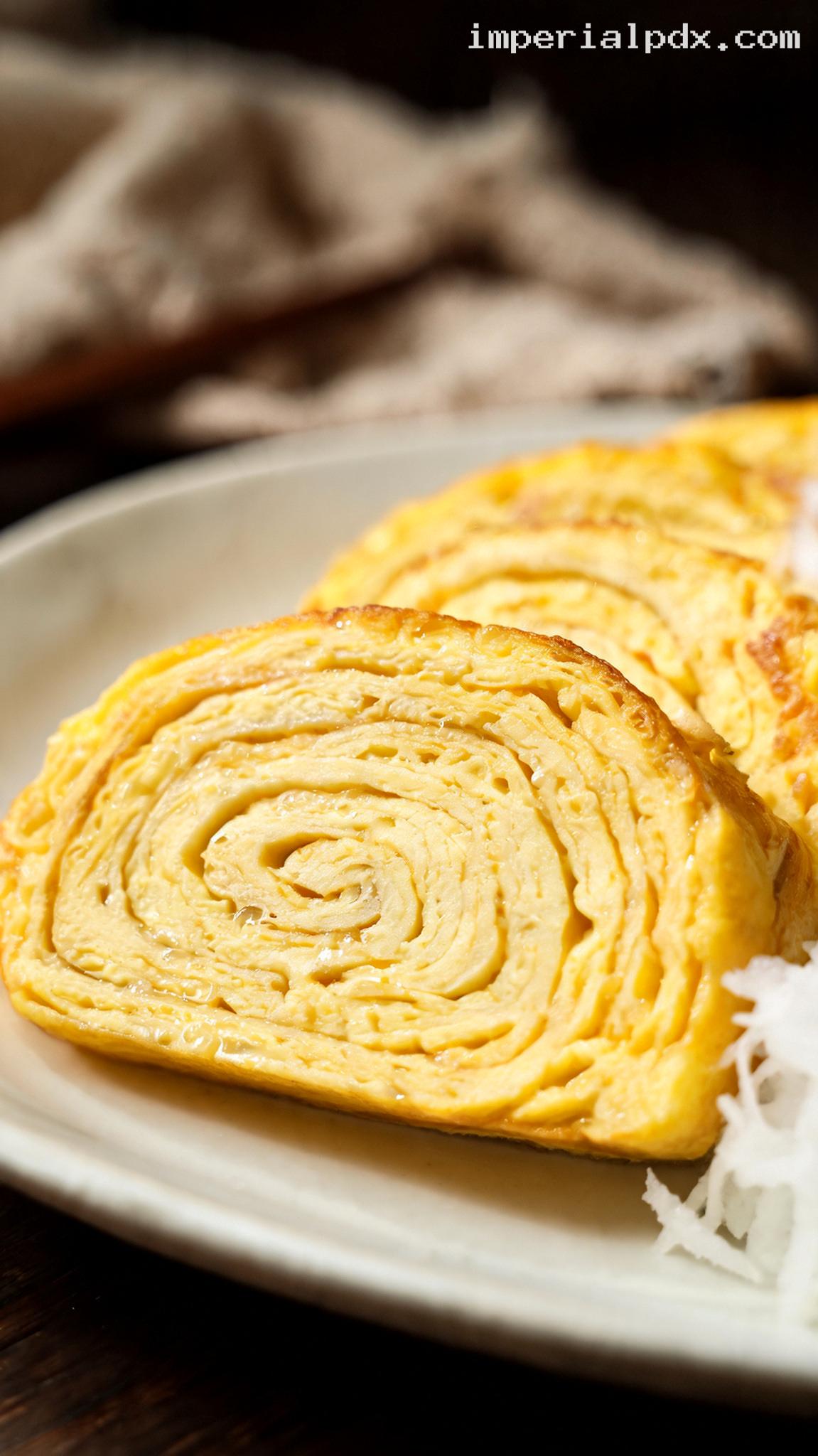
Pour about one-quarter of the egg mixture, approximately 1/4 cup, into the pan. Tilt the pan so the egg covers the bottom in a thin, even layer. Pop any large bubbles with chopsticks. Cook for 45 to 60 seconds, until the surface is mostly set but still slightly moist and glossy. Starting at the far edge, lift and fold the egg toward you in 2 or 3 small rolls. A spatula is helpful if chopsticks feel difficult. The first roll does not have to look perfect because it will form the center of the omelet.
Step 5: Build the second layer
Slide the rolled egg to the far side of the pan. Wipe the exposed pan with the oiled paper towel, adding a little of the remaining oil if the pan looks dry. Pour another one-quarter of the egg mixture into the pan. Gently lift the existing roll so some uncooked egg flows underneath it; this connects the new layer to the roll. Cook for 40 to 50 seconds, until mostly set, then roll the omelet from the far side toward you again.
Step 6: Finish the remaining layers
Repeat the oiling, pouring, lifting, and rolling process twice more with the remaining egg mixture. Adjust the heat as needed to keep the pan close to 300°F (150°C). The eggs should set gently without developing dark brown patches. After the final roll, turn the omelet seam-side down and cook for 20 to 30 seconds. Rotate it onto each long side for another 15 to 20 seconds to define the rectangular shape. If checking with an instant-read thermometer, the center should reach 160°F (71°C).
Step 7: Shape, rest, and slice
Transfer the omelet to a bamboo sushi mat or a sheet of parchment paper. While it is still warm, wrap it snugly and press the sides gently to create an even rectangular log. Let it rest for 2 minutes so the layers settle and the shape holds. Unwrap and trim the ends if desired, then cut crosswise into 8 equal pieces, each about 3/4 inch thick. Arrange the pieces cut-side up and serve with the grated daikon.
Pro Tips
- Keep the heat moderate: A pan that is too hot will brown the eggs before they can form tender, flexible layers. Reduce the heat if the egg sizzles aggressively.
- Strain for the smoothest texture: Removing thick strands of egg white helps the mixture spread evenly and produces clean, delicate layers.
- Use only a thin film of oil: Too much oil makes the layers greasy and prevents them from bonding neatly.
- Roll while the surface is slightly moist: The residual uncooked egg acts as an adhesive between layers.
- Use a round skillet if necessary: An 8-inch nonstick skillet works well; simply fold in the curved sides as you roll to form a rectangular shape.
Variations
- Less-sweet tamagoyaki: Reduce the sugar from 2 teaspoons to 1 teaspoon for a more savory breakfast omelet.
- Scallion tamagoyaki: Stir 1 tablespoon very finely sliced scallion into the strained egg mixture before cooking.
- Nori-layered tamagoyaki: Place a 2-by-4-inch strip of toasted nori over the second egg layer just before rolling for a subtle ocean flavor and a dark spiral accent.
Storage & Make-Ahead
Allow the tamagoyaki to cool, then refrigerate it in an airtight container within 1 hour of cooking. It will keep for up to 3 days. For the cleanest slices, refrigerate the omelet whole and cut it shortly before serving. Enjoy it cold, let it stand at room temperature for 15 minutes, or warm it in the microwave at 50% power for 15 to 20 seconds. For longer storage, wrap individual portions tightly and freeze for up to 1 month; thaw overnight in the refrigerator. When packing tamagoyaki in a bento, cool it completely before closing the box and keep the bento chilled with an ice pack until serving.
Nutrition (per serving)
Calories: 190 kcal | Carbs: 7g | Protein: 13g | Fat: 12g | Saturated Fat: 3g | Fiber: 0g | Sugar: 6g | Sodium: 410mg | Cholesterol: 372mg