Quick Recipe Version (TL;DR)
Quick Ingredients
- 2 cups (360 g) Japanese short-grain rice + 2 1/2 cups (600 ml) water
- 1 tbsp neutral oil; 1 large onion (about 300 g), sliced
- 1 medium carrot (about 120 g), chopped; 1 medium Yukon Gold potato (about 250 g), chopped
- 2 cloves garlic, grated; 1 tsp grated fresh ginger; 1/2 small apple, grated (about 75 g)
- 3 cups (720 ml) chicken stock; 1 tbsp soy sauce; 1 tbsp ketchup; 1 tsp honey
- 1 package Japanese curry roux, mild (3.5–4 oz / 100–115 g)
- Chicken or pork cutlets (about 1 1/4 lb / 570 g total); salt + pepper
- 1/2 cup (60 g) all-purpose flour; 2 large eggs; 2 cups (90 g) panko
- Neutral frying oil (about 4 cups / 950 ml), for 350°F (175°C) frying
- 3–4 cups shredded green cabbage; pickled ginger; tonkatsu sauce
Do This
- 1. Cook rice; keep warm.
- 2. Start curry: sauté onion, add carrot/potato/apple/garlic/ginger, then simmer in stock with seasonings.
- 3. Turn off heat and dissolve curry roux; simmer 5 minutes until glossy and thick.
- 4. Season cutlets; bread in flour, egg, then panko.
- 5. Fry at 350°F (175°C) until deep golden and cooked through (chicken 165°F/74°C; pork 145°F/63°C); rest 5 minutes.
- 6. Slice katsu; set out rice, curry, cabbage, pickled ginger, and tonkatsu sauce for a build-your-own station.
Why You’ll Love This Recipe
- It’s a full katsu curry experience at home: crunchy cutlet, cozy curry, fluffy rice, and bright pickles.
- The curry is rich and mild (family-friendly), with an optional spice boost if you want it.
- A “station” setup means everyone can customize their bowl: more sauce, more cabbage, extra ginger.
- Smart timing: the curry simmers while you bread and fry the cutlets.
Grocery List
- Produce: 1 large onion, 1 carrot, 1 Yukon Gold potato, 1/2 small apple, garlic, fresh ginger, green cabbage, optional lemon, optional scallions
- Dairy: eggs
- Pantry: Japanese short-grain rice, neutral oil (for frying + sautéing), all-purpose flour, panko breadcrumbs, chicken stock, soy sauce, ketchup, honey, Japanese curry roux blocks (mild), tonkatsu sauce, pickled ginger, kosher salt, black pepper
Full Ingredients
For the Rice
- 2 cups (360 g) Japanese short-grain rice
- 2 1/2 cups (600 ml) water
For the Mild Japanese Curry Sauce
- 1 tbsp (15 ml) neutral oil (canola, rice bran, grapeseed)
- 1 large yellow onion (about 300 g), thinly sliced
- 1 medium carrot (about 120 g), peeled and cut into 1/2-inch pieces
- 1 medium Yukon Gold potato (about 250 g), peeled and cut into 3/4-inch pieces
- 2 cloves garlic, finely grated or minced
- 1 tsp finely grated fresh ginger
- 1/2 small apple, peeled and grated (about 75 g)
- 3 cups (720 ml) chicken stock (or vegetable stock)
- 1 tbsp (15 ml) soy sauce
- 1 tbsp (15 ml) ketchup
- 1 tsp (5 ml) honey (or 2 tsp sugar)
- 1 package Japanese curry roux, mild (3.5–4 oz / 100–115 g), broken into pieces
- Optional: 1/2 tsp garam masala for a warmer finish
- Kosher salt, to taste
For the Crispy Katsu Cutlets (Choose One)
- Chicken option: 2 large boneless, skinless chicken breasts (about 1 1/4 lb / 570 g total), butterflied into 4 cutlets
- Pork option: 4 boneless pork loin chops (about 5–6 oz / 140–170 g each), pounded to 1/2-inch (1.25 cm) thickness
- 1 1/4 tsp kosher salt
- 1/2 tsp black pepper
For Breading & Frying
- 1/2 cup (60 g) all-purpose flour
- 2 large eggs
- 1 tbsp (15 ml) water (to loosen the egg wash)
- 2 cups (90 g) panko breadcrumbs
- Neutral frying oil (about 4 cups / 950 ml), for frying at 350°F (175°C)
For the “Station” Sides & Serving
- 3–4 cups (150–200 g) finely shredded green cabbage
- 1/3 cup (about 80 g) pickled ginger (beni shoga), drained
- 1/2 cup (120 ml) tonkatsu sauce, for serving
- Optional garnish: thinly sliced scallions, toasted sesame seeds
- Optional: lemon wedges (nice with chicken katsu)
Step-by-Step Instructions
Step 1: Cook the rice
Rinse 2 cups (360 g) Japanese short-grain rice in a bowl under cool water, swishing with your hand, then drain. Repeat 3–4 times, until the water is only lightly cloudy.
Cook using a rice cooker (best option), or on the stovetop: combine rinsed rice with 2 1/2 cups (600 ml) water in a medium pot. Bring to a boil over medium-high heat, then immediately reduce to low, cover, and simmer for 15 minutes. Turn off heat and keep covered for 10 minutes. Fluff with a rice paddle or fork. Keep warm.
Step 2: Prep the cabbage and serving sides
Shred the cabbage as finely as you can (thin ribbons make it feel restaurant-style). For extra crunch, soak it in a bowl of ice water for 10 minutes, then drain very well and pat dry.
Set out the pickled ginger and tonkatsu sauce in small bowls. If using scallions or sesame seeds, prep those now.
Step 3: Start the curry base (slow-sweet onions)
In a medium pot or Dutch oven, heat 1 tbsp neutral oil over medium heat. Add the sliced onion with a pinch of salt and cook, stirring often, until softened and lightly golden, about 8–10 minutes. You’re building flavor here, so don’t rush it.
Step 4: Simmer the curry vegetables until tender
Add the carrot, potato, grated apple, garlic, and ginger. Stir for 1 minute to coat everything in the oniony oil and wake up the aromatics.
Pour in 3 cups (720 ml) chicken stock, then add 1 tbsp soy sauce, 1 tbsp ketchup, and 1 tsp honey. Bring to a gentle boil, then lower to a steady simmer (small bubbles), partially covered, for 15–18 minutes, or until the potato is tender when pierced with a fork.
Step 5: Finish the curry (dissolve roux, then thicken)
Turn the heat to low (or even off for a moment). Add the curry roux pieces a few at a time, stirring constantly so they melt smoothly and don’t clump.
Once dissolved, simmer gently (uncovered) for 5 minutes, stirring frequently, until the sauce becomes thick, glossy, and spoon-coating. Taste and add salt if needed. If you like, stir in 1/2 tsp garam masala right at the end. Keep the curry warm on the lowest heat while you make the katsu.
Step 6: Set up a tidy breading station for the cutlets
While the curry stays warm, set up three shallow dishes:
Dish 1: 1/2 cup (60 g) flour
Dish 2: 2 eggs whisked with 1 tbsp water
Dish 3: 2 cups (90 g) panko
Season the chicken or pork cutlets evenly with 1 1/4 tsp kosher salt and 1/2 tsp black pepper. Dredge each cutlet in flour (shake off excess), dip in egg, then press firmly into panko so the crumbs adhere well.
Step 7: Fry until crisp and cooked through
In a heavy pot or deep skillet, heat about 4 cups (950 ml) neutral oil to 350°F (175°C). (Use a thermometer for best results; stable oil temperature is the secret to crisp, non-greasy katsu.)
Fry 1–2 cutlets at a time (don’t crowd the pan) until deeply golden and crisp, flipping once:
- Chicken cutlets: about 3–4 minutes per side, until the thickest part reaches 165°F (74°C).
- Pork cutlets: about 3 minutes per side, until the thickest part reaches 145°F (63°C).
Transfer to a rack (best) or paper towels. Let rest for 5 minutes so the juices settle and the crust stays crisp.
Step 8: Slice and build the Japanese katsu curry station
Slice each cutlet into 1/2-inch (1.25 cm) strips. Set out a “station” with:
- Warm rice
- Hot curry sauce
- Sliced katsu
- Shredded cabbage
- Pickled ginger
- Tonkatsu sauce on the side
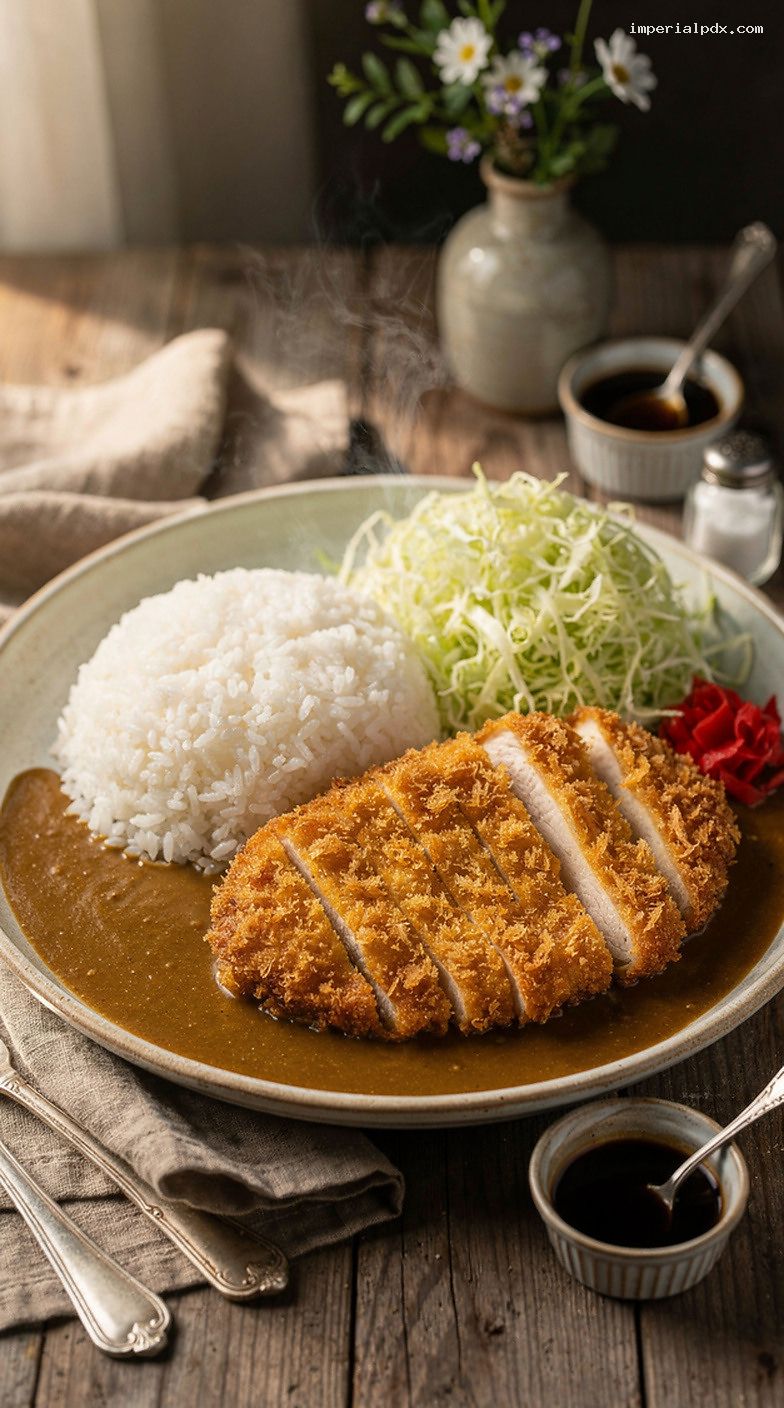
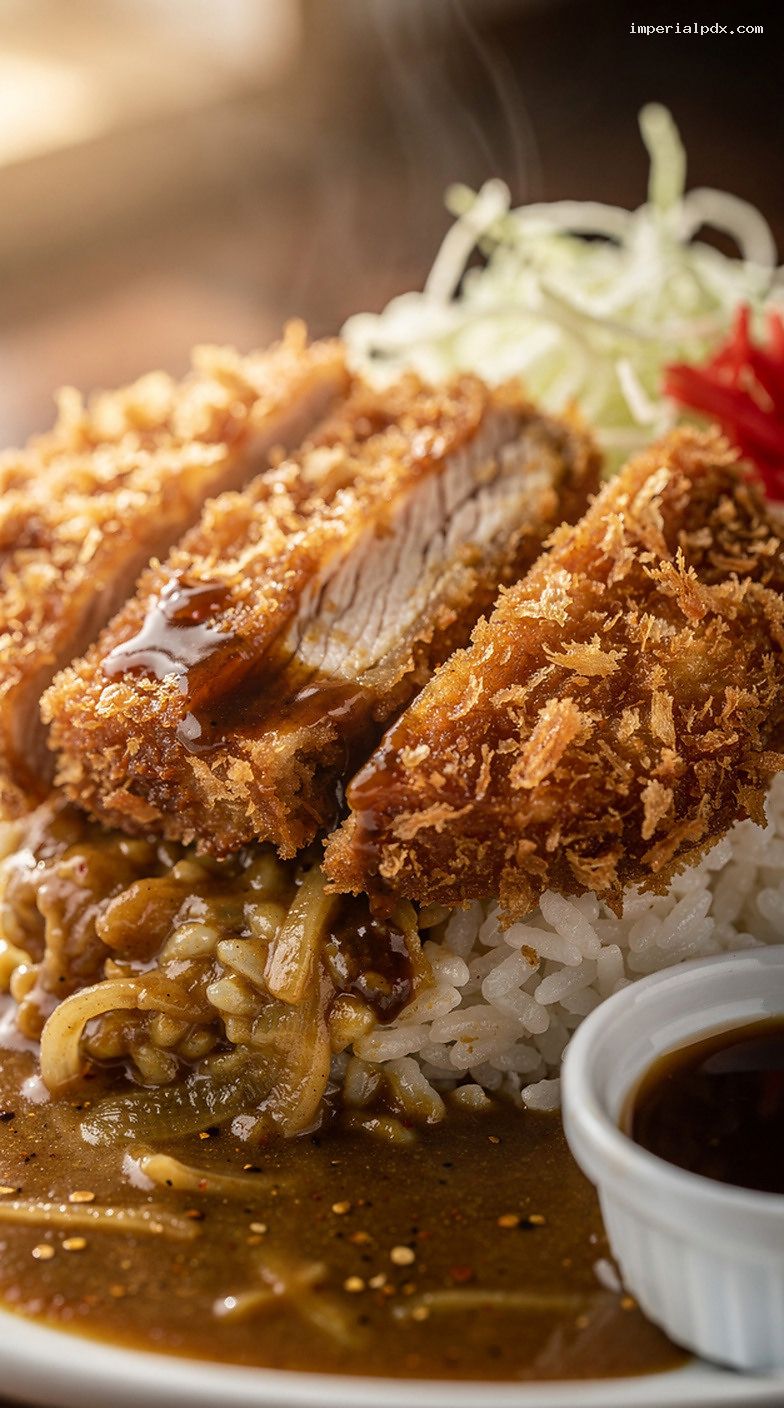
To serve in bowls or plates: mound rice, spoon curry alongside (or partially over the rice), arrange katsu slices on top or next to the curry, and add a fluffy pile of cabbage. Let everyone drizzle tonkatsu sauce and add ginger to taste.
Pro Tips
- Keep the katsu crisp: drain on a wire rack, not directly on paper towels (paper towels can trap steam and soften the crust).
- Oil temperature matters: aim for 350°F (175°C). If it drops too low, the breading absorbs oil; too high, the crust browns before the center cooks.
- Thicker curry, restaurant-style: simmer an extra 2–3 minutes after the roux dissolves, stirring often, until the sauce is glossy and thick.
- Smooth curry option: for a silkier sauce, briefly blend a cup of the cooked curry (before adding roux) and return it to the pot.
- Slice after resting: resting 5 minutes keeps chicken juicy and pork tender.
Variations
- Oven-baked katsu: Place breaded cutlets on a rack set over a sheet pan, spray lightly with oil, and bake at 425°F (220°C) for 18–22 minutes (chicken to 165°F/74°C, pork to 145°F/63°C). Broil 1–2 minutes for extra browning.
- Extra-veg curry: add 1 cup (150 g) sliced mushrooms with the onions, or add 1 cup (150 g) frozen peas during the last 2 minutes of simmering.
- Spicier curry: use medium-hot roux, or whisk in 1/2 tsp chili powder plus 1/2 tsp garam masala at the end.
Storage & Make-Ahead
Curry: Cool and refrigerate in an airtight container for up to 4 days, or freeze for up to 2 months. Reheat gently on the stovetop over low heat, adding 1–3 tbsp water if it thickens too much.
Katsu: Best the same day. Store leftovers airtight in the fridge for up to 2 days. Re-crisp on a rack over a sheet pan in a 375°F (190°C) oven for 10–12 minutes (until hot and crisp). Avoid microwaving if you want crunch.
Make-ahead plan: Make the curry and shred the cabbage up to 1 day ahead. Fry the cutlets just before serving for the best texture.
Nutrition (per serving)
Approximate, based on chicken katsu and including rice, curry sauce, and sides: 820 calories, Protein: 38 g, Carbohydrates: 98 g, Fat: 30 g, Fiber: 6 g, Sodium: 1250 mg. (Values vary by curry roux brand, oil absorption, and portion size.)