Quick Recipe Version (TL;DR)
Quick Ingredients
- 1 1/2 cups long-grain white rice (Baldo, jasmine, or basmati)
- 2 1/4 cups hot low-sodium vegetable or chicken broth
- 3 tbsp unsalted butter
- 1 tbsp olive oil
- 1 small onion, finely chopped
- 1 medium carrot, small dice (about 1/2 cup)
- 1/2 cup fresh or frozen peas
- 2 tbsp fresh dill, finely chopped
- 1 tsp finely grated lemon zest
- 1 tsp kosher salt (or to taste), 1/4 tsp black pepper
Do This
- 1) Rinse rice in cold water until mostly clear; drain well.
- 2) Heat butter and olive oil in a medium pot; sauté onion until soft.
- 3) Stir in rice and toast 3–4 minutes until glossy and fragrant.
- 4) Add carrot and peas; season with salt and pepper, stir to coat.
- 5) Pour in hot broth, bring to a gentle boil, then reduce to low, cover, and cook 15 minutes.
- 6) Remove from heat, cover pot with a clean towel and lid; rest 10 minutes.
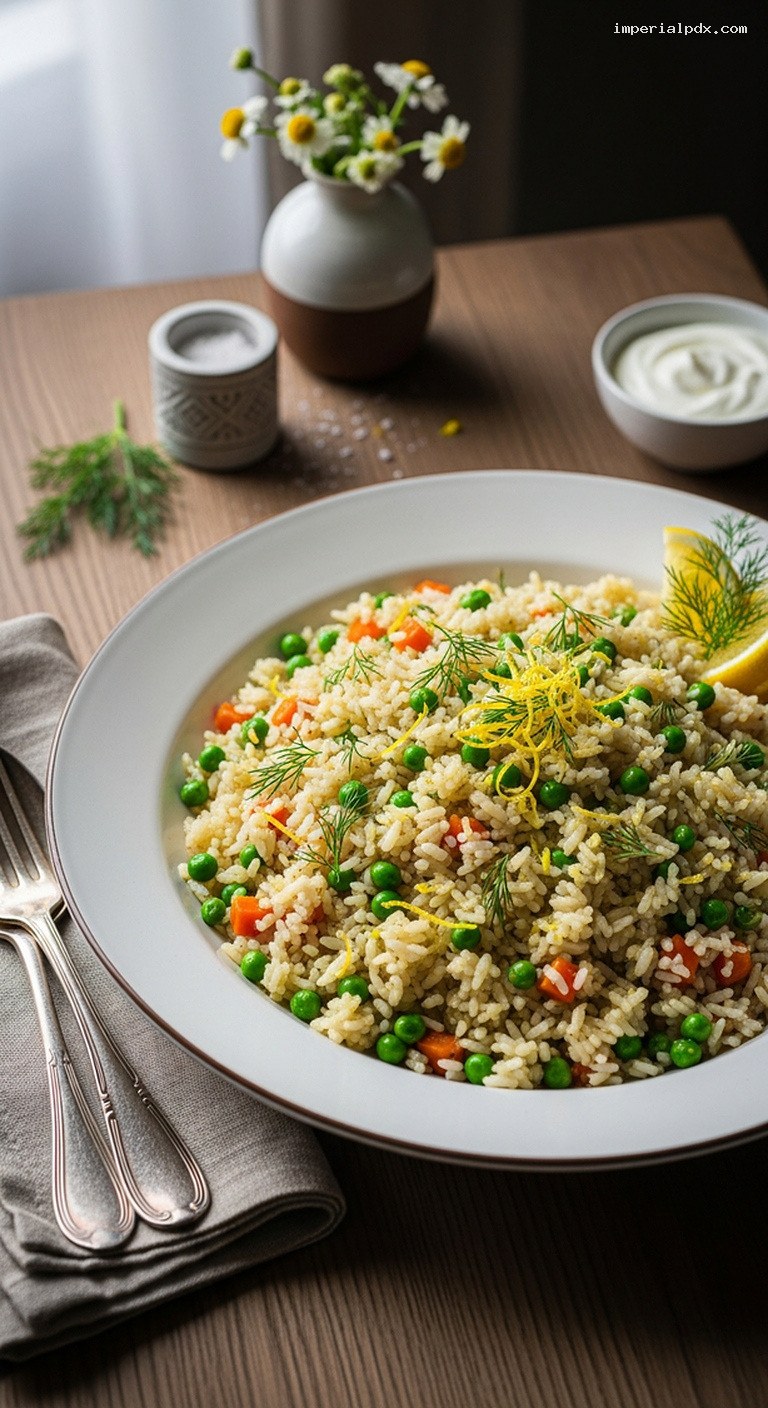
- 7) Fluff with a fork, fold in dill and lemon zest, adjust seasoning, and serve warm.
Why You’ll Love This Recipe
- Fragrant and buttery, with bright pops of lemon and dill that keep it light.
- A complete veggie-packed side: tender carrots, sweet peas, and aromatic herbs in every bite.
- Foolproof pilaf method gives you fluffy, separate grains of rice without guesswork.
- Perfect alongside grilled meats, roasted vegetables, or as a simple, comforting bowl on its own.
Grocery List
- Produce: 1 small onion, 1 medium carrot, fresh dill, 1 lemon, optional parsley for garnish.
- Dairy: Unsalted butter.
- Pantry: Long-grain white rice, olive oil, low-sodium vegetable or chicken broth (or bouillon), kosher salt, black pepper, optional bay leaf.
Full Ingredients
For Imam’s Pilaf (Sebzeli Pilav)
- 1 1/2 cups long-grain white rice (Turkish Baldo, jasmine, or basmati), rinsed
- 2 1/4 cups low-sodium vegetable or chicken broth, heated to just below a simmer
- 3 tbsp unsalted butter
- 1 tbsp olive oil
- 1 small yellow onion, finely chopped (about 1/2 cup)
- 1 medium carrot, peeled and cut into small dice (about 1/2 cup)
- 1/2 cup peas (fresh or frozen; if frozen, no need to thaw)
- 1 tsp kosher salt, plus more to taste
- 1/4 tsp freshly ground black pepper
- 1 small bay leaf (optional, for aroma)
For Finishing & Garnish
- 2 tbsp fresh dill, finely chopped (loosely packed)
- 1 tsp finely grated lemon zest (from about 1/2 medium lemon)
- Lemon wedges, for serving (optional but recommended)
- Extra chopped dill or flat-leaf parsley, for garnish (optional)
Step-by-Step Instructions
Step 1: Rinse and prepare the rice
Measure 1 1/2 cups of long-grain white rice into a fine-mesh strainer. Rinse under cold running water, gently swishing the rice with your fingers until the water runs mostly clear. This removes excess surface starch and helps the grains cook up fluffy instead of sticky.
After rinsing, let the rice drain very well for a few minutes so you are not adding extra water to the pot. You do not need a long soak for this recipe, but if you have time, a 10-minute soak in cold water before the final drain can help the grains stay nicely separate.
Step 2: Prep the vegetables and aromatics
Finely chop the small onion. Peel the carrot and cut it into small dice (about 0.5 cm pieces), so it cooks quickly and mixes evenly with the rice. Finely chop the fresh dill, and zest the lemon using a fine grater or microplane; set dill and zest aside for the finishing step.
Heat the broth in a small saucepan or in the microwave until hot but not boiling, and keep it nearby. Starting with hot broth helps the pilaf come up to a simmer faster and cook more evenly.
Step 3: Sauté the onion and toast the rice
Place a medium, heavy-bottomed pot (with a tight-fitting lid) over medium heat. Add 3 tablespoons unsalted butter and 1 tablespoon olive oil. Once the butter has melted and is gently foaming, add the chopped onion and a small pinch of salt. Cook, stirring often, for 4–5 minutes until the onion is soft, translucent, and sweet but not browned.
Add the well-drained rice to the pot. Stir to coat every grain with the butter and oil. Toast the rice for 3–4 minutes, stirring frequently, until it looks slightly opaque and glossy and smells nutty and fragrant. This toasting step is key for that classic pilaf flavor and texture.
Step 4: Add vegetables, liquid, and seasonings
Stir in the diced carrot and peas, mixing them evenly through the rice. Season with 1 teaspoon kosher salt and 1/4 teaspoon black pepper. If using, add the bay leaf now. Stir to combine so the seasonings are distributed throughout.
Pour in the 2 1/4 cups of hot broth. Stir once to make sure everything is evenly arranged, then bring the mixture up to a gentle boil over medium-high heat. As soon as it reaches a soft boil, give it one final gentle stir to loosen any rice from the bottom of the pot.
Step 5: Simmer the pilaf gently
When the liquid is bubbling gently, reduce the heat to low and cover the pot tightly with its lid. Let the pilaf cook undisturbed for 15 minutes. Avoid lifting the lid or stirring during this time; the steam inside the pot is what cooks the rice evenly and keeps the grains from breaking.
After 15 minutes, quickly lift the lid and check: most of the liquid should be absorbed, and small steam holes may be visible on the surface. If the rice still looks very wet, cover and continue cooking over low heat for 2–3 more minutes.
Step 6: Rest the rice for perfect texture
Once the liquid is absorbed and the rice is tender, remove the pot from the heat. Turn off the burner. Place a clean kitchen towel over the pot, then put the lid back on over the towel. The towel will absorb excess steam and help keep the grains fluffy instead of soggy.
Let the pilaf rest, covered, for 10 minutes. This resting time is when the rice finishes steaming gently and the texture becomes wonderfully tender and separate.
Step 7: Fluff, finish, and serve
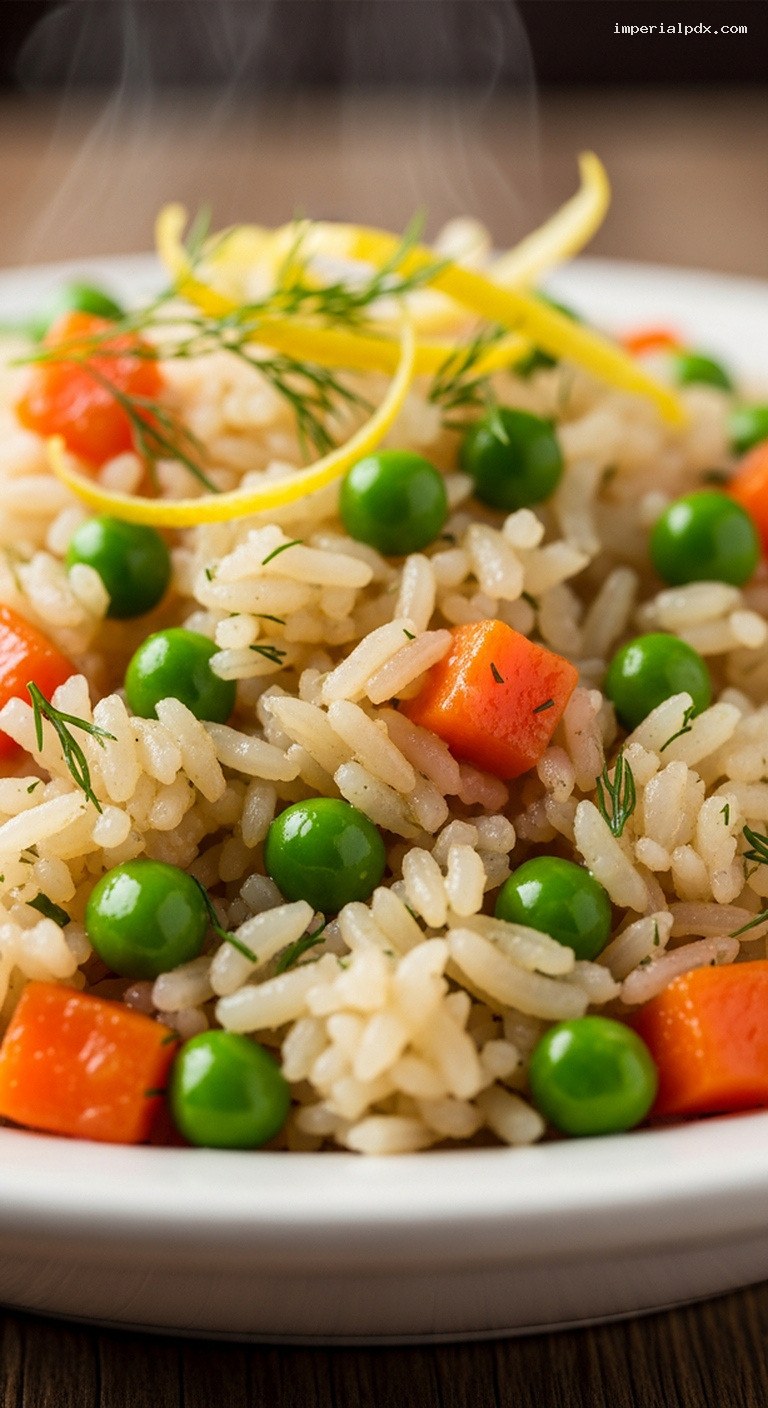
After resting, remove the lid and towel. Discard the bay leaf, if used. Sprinkle the chopped dill and lemon zest over the top of the rice. Using a fork (not a spoon), gently fluff the pilaf, folding the herbs and zest through without smashing the grains or vegetables.
Taste and adjust the seasoning with a little more salt or pepper if needed. Transfer the imam’s pilaf to a warm serving dish, garnish with extra dill or parsley if you like, and serve immediately with lemon wedges on the side for squeezing over individual portions. The gentle lemon brightness, buttery rice, sweet peas, and carrots should feel hearty yet fresh and light.
Pro Tips
- Use a heavy pot with a tight lid: A sturdy, heavy-bottomed saucepan or Dutch oven helps prevent scorching and ensures even cooking.
- Do not skip the resting time: The 10-minute covered rest is crucial for fluffy, separate grains and allows excess moisture to redistribute.
- Adjust liquid for different rice types: For very firm long-grain rice, you may need an extra 2–4 tablespoons of broth; for softer varieties, stick to the 2 1/4 cups.
- Season the broth, not just the rice: If your broth is very low in salt, taste it before adding and adjust so it is pleasantly seasoned; this flavors every grain.
- Add herbs at the end: Dill and lemon zest are added off the heat to keep their flavor bright and fresh instead of cooked and dull.
Variations
- Vegan olive oil version: Swap the butter for 3–4 tablespoons of good-quality olive oil. The flavor shifts from buttery to pleasantly fruity and is completely dairy-free.
- Chickpea & herb pilaf: Fold in 1 cup cooked, drained chickpeas along with the carrot and peas. Increase broth by 1/4 cup and add an extra tablespoon of dill or some chopped parsley.
- Orzo-studded pilaf: Replace 1/4 cup of the rice with 1/4 cup orzo. Toast the orzo with the rice until lightly golden for a mixed texture that is very typical in Turkish-style pilafs.
Storage & Make-Ahead
Cool leftover pilaf quickly by spreading it out in a shallow container. Once it reaches room temperature, cover and refrigerate for up to 4 days. For food safety, do not leave cooked rice at room temperature for more than 2 hours.
To reheat, sprinkle a tablespoon or two of water over the rice, cover, and warm gently in a saucepan over low heat, stirring occasionally, until hot. Alternatively, microwave covered on medium power in 1–2 minute bursts, fluffing in between. Add a small knob of butter or a drizzle of olive oil to refresh the flavor. This pilaf also freezes well: pack in airtight containers and freeze for up to 2 months; thaw overnight in the refrigerator before reheating.
Nutrition (per serving)
Approximate values for 1 of 4 servings: about 330 calories; 11 g fat; 53 g carbohydrates; 6 g protein; 3 g fiber; sodium will vary depending on the saltiness of your broth and added salt. These figures are estimates and will change with ingredient brands and exact quantities used.