Quick Recipe Version (TL;DR)
Quick Ingredients
- 1 kg boneless lamb loin (center-cut, well trimmed)
- 28 g kosher salt (about 1 1/2 Tbsp; weigh if possible)
- 10 g sugar (about 2 tsp)
- 2.5 g curing salt #2 (Prague Powder #2; about 1/2 tsp)
- 6 garlic cloves, minced
- 2 Tbsp fresh rosemary, finely chopped
- 1–2 tsp red chili flakes, to taste
- 1 tsp freshly ground black pepper
- Optional: strips of lemon zest, crushed fennel seeds
- Butcher’s twine; optional natural casing or cheesecloth
Do This
- 1. Trim lamb loin of excess surface fat and silverskin; pat completely dry and weigh it.
- 2. Mix salt, sugar, curing salt #2, garlic, rosemary, chili flakes, pepper, and any optional aromatics.
- 3. Rub cure mixture all over lamb, place in a zip-top bag or vacuum bag, seal, and refrigerate 3–4 days, turning daily.
- 4. Rinse off cure under cold water, pat very dry, and trim to an even cylinder; tie tightly with butcher’s twine. Optional: slide into soaked natural casing.
- 5. Hang lamb in a cool space (10–15°C / 50–59°F) with 70–80% humidity and good airflow for 18–30 days.
- 6. Weigh periodically; once it has lost 35–40% of its starting weight and feels firm but sliceable, it is ready.
- 7. Slice very thinly across the grain and serve at cool room temperature with bread, olives, or cheese.
Why You’ll Love This Recipe
- A beautiful, home-cured lamb version of Italian lonzino: lean, aromatic, and deeply savory.
- Surprisingly hands-off: just a short prep, then time and air do the magic.
- Customizable flavor profile with garlic, rosemary, chili, and other herbs or spices.
- Perfect for a special charcuterie board, yet achievable for patient home cooks with basic equipment.
Grocery List
- Produce: Garlic, fresh rosemary, optional lemon (for zest).
- Dairy: None.
- Pantry: Boneless lamb loin, kosher salt, sugar, curing salt #2 (Prague Powder #2), red chili flakes, black pepper, optional fennel seeds, vodka or other neutral spirit (for sanitizing), butcher’s twine, optional natural beef bung or collagen casing, optional cheesecloth.
Full Ingredients
Lamb
- 1 boneless lamb loin, center-cut, about 1–1.3 kg (2.2–2.9 lb), preferably pasture-raised
Salt Cure Mix
- 28 g kosher salt (about 1 1/2 Tbsp Diamond Crystal; use weight for accuracy)
- 10 g white sugar (about 2 tsp)
- 2.5 g curing salt #2 (Prague Powder #2; about 1/2 tsp)
- 6 garlic cloves, very finely minced (about 2 Tbsp packed)
- 2 Tbsp finely chopped fresh rosemary leaves (from 3–4 sprigs)
- 1–2 tsp red chili flakes, to taste
- 1 tsp freshly ground black pepper
- Optional but delicious: 1 tsp lightly crushed fennel seeds
- Optional: 2–3 wide strips lemon zest (from 1 lemon), pith removed
For Drying & Hanging
- Butcher’s twine, food-safe
- Optional: 1 natural beef bung or large collagen casing, soaked and rinsed well
- Optional: Unbleached cheesecloth (if not using a casing)
- 30–60 ml (2–4 Tbsp) neutral spirit such as vodka, for sanitizing twine and casing
Step-by-Step Instructions
Step 1: Select, trim, and weigh the lamb loin
Choose a fresh, high-quality boneless lamb loin. Look for a relatively even, cylindrical piece with a fine grain and a mild, clean smell. Rinse briefly under cold water if needed and pat absolutely dry with paper towels.
Using a sharp boning or chef’s knife, carefully trim away thick surface fat and any silverskin (the shiny, tough membrane). Aim to keep a thin, even layer of fat at most; excess fat can go rancid during long drying. Shape the loin into as even a cylinder as possible, tucking thin end pieces under if needed.
Now weigh the trimmed loin on a digital scale and write down the weight. This number is important later: you will dry the lamb until it loses about 35–40% of this starting weight.
Step 2: Mix the cure with garlic, rosemary, and chili
In a small bowl, combine the kosher salt, sugar, and curing salt #2. Stir very thoroughly to evenly distribute the curing salt. Add the minced garlic, chopped rosemary, chili flakes, black pepper, and any optional fennel seeds and lemon zest strips. Use a fork or your fingers to work everything into a slightly pasty mixture.
It is important that the ingredients are evenly mixed so the cure contacts the lamb uniformly. If you are nervous about the garlic clumping, you can briefly pulse all the cure ingredients in a food processor, then scrape the paste back into a bowl.
Step 3: Rub the lamb and cure it in the refrigerator
Place the lamb loin on a tray or cutting board. Sprinkle some of the cure mix underneath the loin, then press the rest all over the surface, massaging it into all sides and ends. Make sure every bit of the lamb is coated, including where you tucked any thinner ends.
Transfer the coated loin and any remaining cure into a heavy-duty zip-top bag or a vacuum bag. Seal tightly, removing as much air as you can. If you have a vacuum sealer, this is a good time to use it.
Refrigerate the lamb for 3–4 days. Turn the bag once or twice a day, massaging gently to redistribute the cure and the liquid that forms. The meat will firm up and deepen slightly in color as it cures.
Step 4: Rinse, dry, and truss the lamb
After 3–4 days, remove the lamb from the bag. It should feel firmer and exude a cured aroma of garlic and herbs. Rinse it briefly under cold running water to remove excess cure and aromatics. Pat thoroughly dry with clean paper towels; the surface should be as dry as possible before drying.
Trim the shape if necessary so it is a neat, uniform cylinder. Tuck any thinner ends under so the thickness is fairly consistent; this helps it dry evenly. Using butcher’s twine, tie the loin every 2.5–3 cm (about 1 inch) along its length, just tight enough to help it hold shape. Tie a final loop at one end long enough to hang the loin.
If you like, lightly dab the surface with vodka or another neutral spirit on a clean cloth to help sanitize the exterior before drying.
Step 5: Optional – case the lamb in a natural or collagen casing
This step is optional but recommended if you want a more traditional, evenly dried lonzino-style texture. Soak the beef bung or collagen casing according to package directions until soft and pliable, then rinse thoroughly inside and out. Swish it briefly in a little vodka or neutral spirit to sanitize, then drain.
Feed the trussed lamb loin into the casing, working the casing up around it until completely encased with a few centimeters extra at each end. Tie the casing snugly around the meat at each twine knot, expelling as much trapped air as possible. Prick any visible air pockets with a clean needle or sausage pricker. Finally, make a strong hanging loop at one end.
Step 6: Hang to air-dry until 35–40% weight loss
Hang the lamb lonzino by its loop in a dedicated curing chamber, wine fridge, or other cool space where you can maintain:
- Temperature: 10–15°C (50–59°F)
- Humidity: roughly 70–80%
- Gentle airflow (not blasting directly onto the meat)
Keep the meat away from strong-smelling foods. Place a tray or plate underneath to catch any drips. Weigh the lamb again after trussing/casing and note this “starting dry weight.” Check the weight once a week. When it has lost about 35–40% of this weight, it is usually ready: firm throughout, but not rock-hard.
This typically takes 18–30 days, depending on your environment and the thickness of the loin. A fine, white surface bloom of mold is normal and beneficial. If you see fuzzy, brightly colored molds (black, green, orange, or pink) or smell anything harsh or putrid, discard the meat.
Step 7: Slice and serve your lamb lonzino
When the lamb has reached 35–40% weight loss and feels firm but still sliceable, bring it to slightly cool room temperature (about 15–18°C / 59–64°F). Remove any casing if used and wipe the surface with a lightly damp cloth if desired.
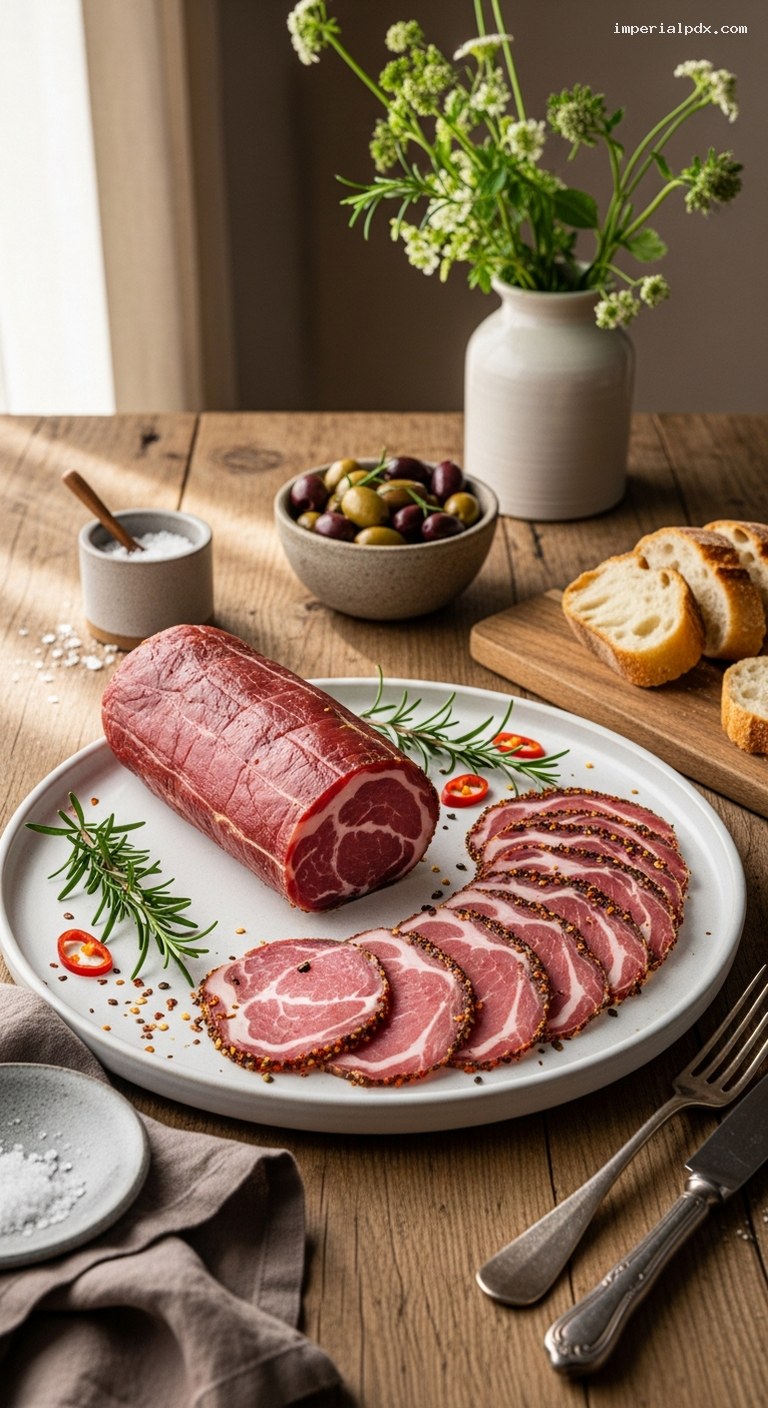
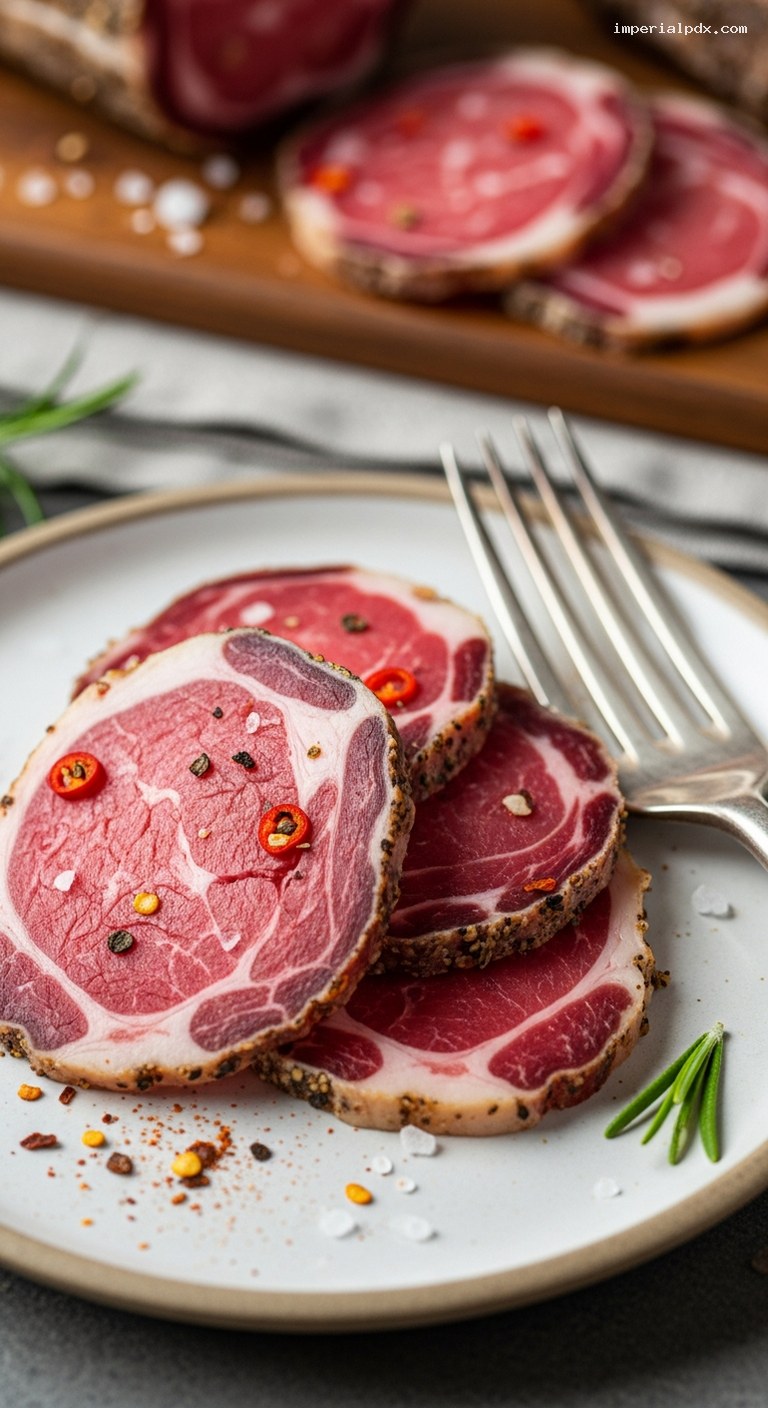
Using a very sharp slicing knife, cut the lonzino into paper-thin slices across the grain. The interior should be a rich, rosy red with a slightly darker rim, and the texture pleasantly chewy but tender. Taste a slice: you should get balanced salt, bright lamb flavor, and aromatic garlic, rosemary, and chili heat.
Arrange slices loosely folded on a platter. Serve with crusty bread, olives, pickled vegetables, hard cheese, and a drizzle of good olive oil if you like. Leftover whole pieces should be rewrapped and stored as described below.
Pro Tips
- Use a scale for safety and consistency. Weighing the meat and the cure (especially curing salt #2) is the best way to ensure proper seasoning and safe curing.
- Do not skip curing salt #2. For whole-muscle dry cures like this, curing salt #2 is important for safety and stable color. It is not the same as pink Himalayan salt.
- Control your environment. A dedicated curing fridge or modified wine fridge is ideal. Too dry and the outside hardens before the center is done; too humid and you risk spoilage.
- Monitor weight, not just time. Use the 35–40% weight-loss target as your main indicator of doneness; days are only a guideline.
- Slice just before serving. Thin slices dry out quickly. Cut what you need and keep the rest wrapped as a whole piece to maintain texture.
Variations
- Smoky paprika version: Replace half the chili flakes with 1–2 tsp smoked Spanish paprika for a gently smoky, brick-red crust and flavor.
- Mediterranean herb mix: Add 1 tsp dried oregano and 1 tsp dried thyme, and swap lemon zest for orange zest for a more citrusy, herbal profile.
- Juniper and black pepper: Add 4–6 lightly crushed juniper berries and increase black pepper to 2 tsp for a bolder, more game-forward cured lamb.
Storage & Make-Ahead
Lonzinostyle cured lamb is, by design, a make-ahead project. Once fully dried, wrap the whole piece tightly in parchment or butcher paper, then in plastic wrap, and store in the refrigerator for up to 2–3 months. For even longer storage, vacuum sealing is ideal; the flavor will continue to develop slowly.
After slicing, keep portions tightly wrapped and refrigerated, and aim to use within 5–7 days for best texture. Always slice only what you need just before serving. For serving, bring the lamb lonzino out of the fridge 15–20 minutes ahead so the fat softens and the aroma opens up.
Do not freeze if you can avoid it; freezing can make the texture slightly crumbly, though it is still safe and tasty. If you must freeze, wrap very well and thaw slowly in the refrigerator.
Nutrition (per serving)
Approximate for 1 of 16 servings (about 30 g): 70–90 calories; 10–12 g protein; 3–5 g fat; 0–2 g carbohydrates; 350–450 mg sodium. Actual values vary with your lamb cut, trimming, and exact drying level.