Quick Recipe Version (TL;DR)
Quick Ingredients
- 2 large boneless duck breasts, skin on (10–12 oz / 280–340 g each)
- 2 cups (460 g) kosher salt (Morton-style), plus extra if needed
- 1 cup (200 g) granulated sugar
- 2 tbsp (25 g) light brown sugar, packed
- 2 tsp black peppercorns, lightly crushed
- 1 tsp juniper berries, lightly crushed (optional but classic)
- 2 dried bay leaves, crumbled
- 1 tsp dried thyme or herbes de Provence
- 1/2 tsp garlic powder
- Freshly ground black pepper, for finishing
- Cheesecloth and kitchen twine, for wrapping
Do This
- 1. Trim duck breasts of any silverskin, pat very dry with paper towels.
- 2. Mix salts, sugars, and spices. Spread a 1 cm layer in a non-reactive dish, lay duck on top, and completely bury in remaining cure.
- 3. Cover and refrigerate 24–36 hours, until the thickest part feels noticeably firmer.
- 4. Rinse off cure under cold water, pat completely dry, and season lightly with black pepper.
- 5. Wrap each breast tightly in 2 layers of cheesecloth and tie with twine.
- 6. Hang or place on a rack in the refrigerator (uncovered) 7–10 days, until firm and dark red and about 30% lighter by weight.
- 7. Slice very thinly across the grain and serve like prosciutto with bread, olives, and sharp or creamy cheeses.
Why You’ll Love This Recipe
- Transforms simple duck breasts into a luxurious, deep-red “duck prosciutto” with almost no active work.
- No special equipment needed: just salt, sugar, spices, cheesecloth, and your regular refrigerator.
- Elegant make-ahead appetizer for holidays, dinner parties, or casual wine-and-cheese nights.
- Beautifully customizable with your favorite spices, herbs, and serving ideas.
Grocery List
- Produce: Fresh thyme or rosemary (optional, for serving), lemons (for garnish), arugula or other salad greens (for plating, optional).
- Dairy: Soft goat cheese, blue cheese, or aged hard cheese (optional, for serving).
- Pantry: Boneless duck breasts (frozen or fresh), kosher salt, granulated sugar, light brown sugar, black peppercorns, juniper berries, dried bay leaves, dried thyme or herbes de Provence, garlic powder, olive oil, cornichons or pickles, olives, crusty bread or crackers, cheesecloth, kitchen twine.
Full Ingredients
For the Cured Duck “Ham”
- 2 large boneless duck breasts, skin on (about 10–12 oz / 280–340 g each)
- 2 cups (460 g) kosher salt (Morton-style; if using Diamond Crystal, increase to 3 cups / 690 g)
- 1 cup (200 g) granulated sugar
- 2 tbsp (25 g) light brown sugar, packed
- 2 tsp black peppercorns, lightly crushed
- 1 tsp juniper berries, lightly crushed (optional but traditional)
- 2 dried bay leaves, crumbled
- 1 tsp dried thyme or herbes de Provence
- 1/2 tsp garlic powder
- 1/2–1 tsp freshly ground black pepper, for finishing
Optional For Serving
- Crusty baguette or rustic bread, thinly sliced and lightly toasted
- Plain crackers or crostini
- Soft goat cheese, triple-cream brie, or blue cheese
- Cornichons or small pickles, and mixed olives
- Arugula or mixed salad greens
- Extra-virgin olive oil and lemon wedges
- Flaky sea salt, for finishing
Step-by-Step Instructions
Step 1: Prep the duck breasts
Remove the duck breasts from any packaging and pat them very dry on all sides with paper towels. Place each breast skin-side down on a cutting board. Using a sharp knife, trim away any obvious bits of loose fat or ragged edges. If you see any silvery, tough-looking membrane (silverskin) on the flesh side, carefully slide your knife under one edge and shave it away so the cure can penetrate evenly.
Flip the breasts skin-side up. If the skin has a very thick, uneven layer of fat at one end, you can trim just a little of the excess, but do not remove the skin or most of the fat — it protects the meat while drying and becomes a delicious, silky rim around each slice. Pat dry again and set aside on a clean plate.
Step 2: Mix the curing blend
In a medium bowl, combine the kosher salt, granulated sugar, and brown sugar. Add the lightly crushed black peppercorns, crushed juniper berries (if using), crumbled bay leaves, dried thyme or herbes de Provence, and garlic powder. Stir thoroughly so the spices are evenly distributed throughout the salt-and-sugar mix.
Choose a non-reactive container big enough to hold both breasts in a single layer (glass, ceramic, or a food-safe plastic container). Scatter about 1–1.5 cm (roughly 1/3 of the mixture) of the curing blend over the bottom of the container to create an even, well-covered bed.
Step 3: Pack the duck in cure
Lay the duck breasts on top of the cure bed, skin-side up and not touching if possible. Pour and pack the remaining curing mixture over and around the duck, taking care to completely bury each breast. Press the cure gently around the contours of the meat so there are no exposed spots.
Cover the container tightly with a lid or plastic wrap and refrigerate. Let the duck cure for 24–36 hours. For smaller breasts (around 6–8 oz / 170–225 g), 24 hours is usually enough; for larger ones (10–12 oz / 280–340 g), go closer to 36 hours. Halfway through the curing time, you can uncover, gently flip the breasts, re-bury them, and re-cover to help them cure evenly.
You will notice some liquid drawn out into the container — this is exactly what you want. The salt and sugar are firming the meat and concentrating its flavor.
Step 4: Rinse and dry thoroughly
After 24–36 hours, remove the container from the fridge. Take the duck breasts out of the cure and brush off as much of the salt mixture as you can with your hands. Discard the used cure; it should not be reused.
Rinse each breast quickly but thoroughly under cold running water, rubbing lightly with your fingers to remove clinging salt and spices. Do not soak the meat; a quick rinse is sufficient. Pat the duck very dry on all sides with plenty of paper towels — this drying step is important for good texture and safe curing.
Place the dried duck on a clean plate or rack. Sprinkle the flesh side and skin side lightly with freshly ground black pepper. Avoid adding any more salt at this point; the interior is already well seasoned from the cure.
Step 5: Wrap in cheesecloth for drying
Cut a piece of cheesecloth large enough to wrap one duck breast snugly in a double layer. Lay the cheesecloth flat on your work surface, place one duck breast in the center, and wrap it tightly, tucking in the sides so no meat is exposed. Repeat with a second layer of cheesecloth if your cloth is very open-weave.
Tie the wrapped breast firmly with kitchen twine in several places along its length, like a small roast, so it holds a neat, compact shape. If you plan to hang it, tie an extra loop of twine at one end to use as a hanger. Repeat with the second duck breast.
Step 6: Dry slowly in the refrigerator
Place the wrapped and tied duck breasts in the coldest part of your refrigerator (ideally 35–40°F / 1.5–4°C). You have two options:
- Hanging: Suspend the breasts from a rack or shelf using the twine loops, ensuring they do not touch each other or any surfaces.
- On a rack: Lay the breasts on a wire rack set over a tray, with space around them for air circulation. Turn them every day or two so they dry evenly.
Let the duck dry for 7–10 days. The exact time depends on the size of the breasts and your fridge conditions. If you have a kitchen scale, weigh each breast before curing and occasionally during drying; you are aiming for about 25–35% weight loss. Alternatively, use the touch test: when gently squeezed at the thickest point, the meat should feel firm but still slightly springy, not squishy.
Step 7: Check doneness, slice, and serve
When the duck feels firm and has darkened to a deep, rich red, unwrap one breast and inspect it. The surface should be dry but not hard, and the fat layer should feel slightly waxy, not dried out. Slice off a thin piece from the thickest end: the interior should be a uniform deep red with no raw, jelly-like center.
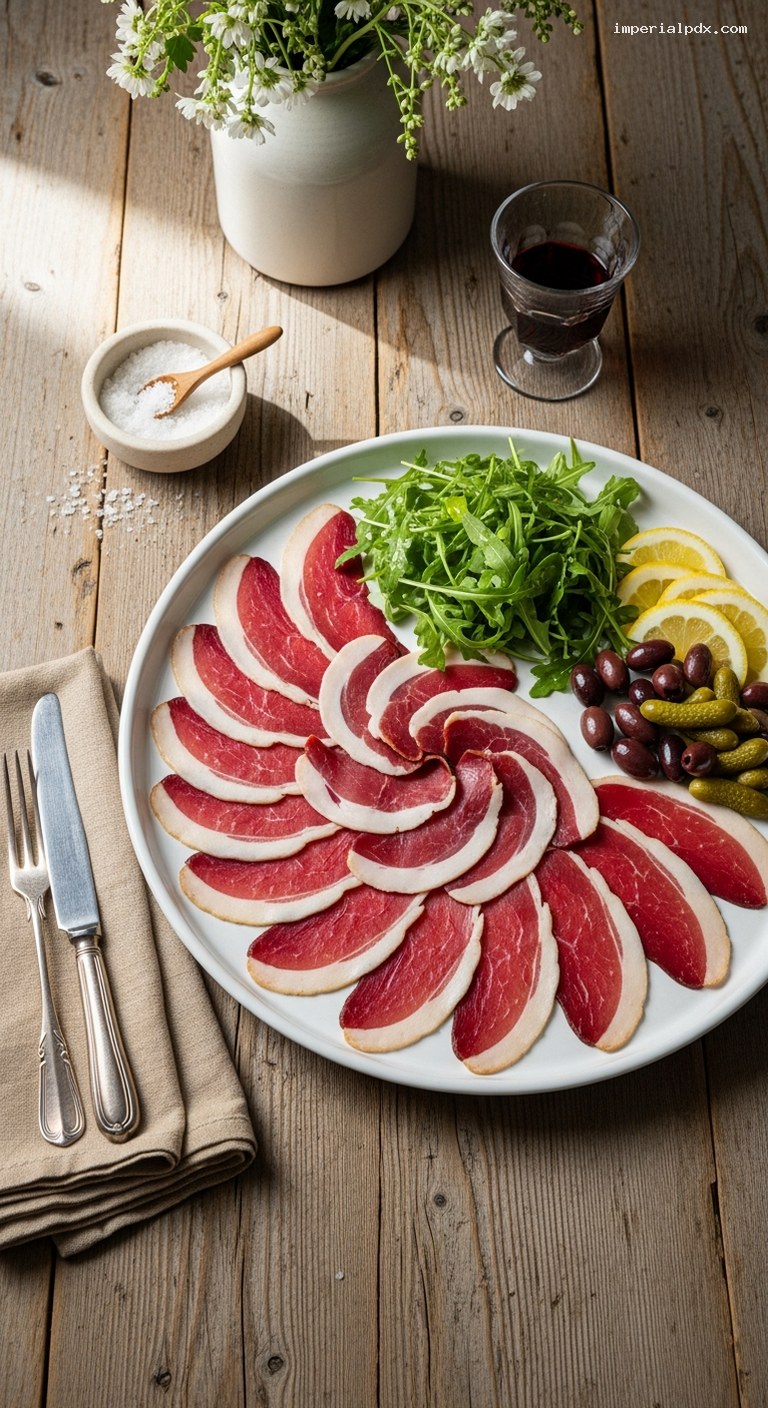
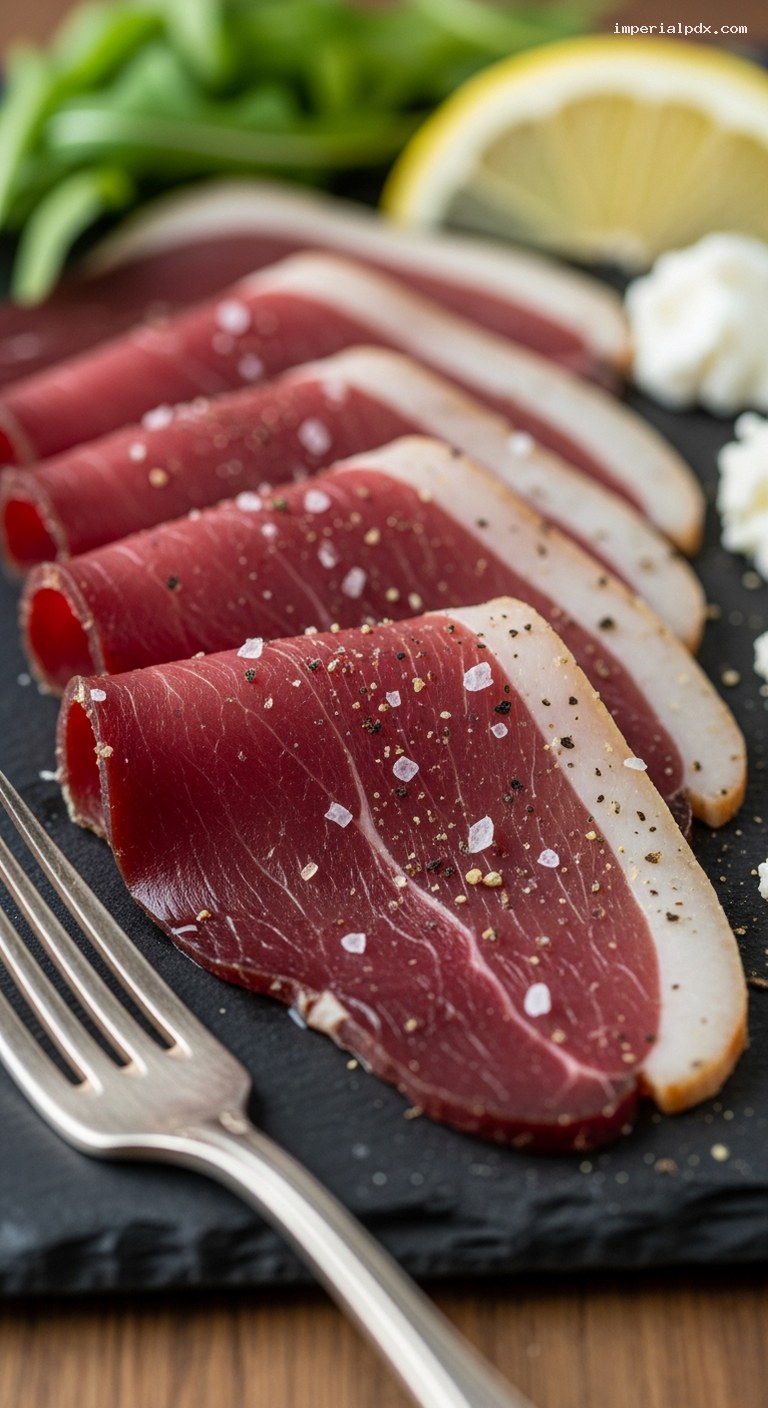
To serve, use a very sharp slicing knife and cut the duck breast crosswise, against the grain, into paper-thin slices. Aim for almost translucent slices, much like you would cut prosciutto. Arrange the slices in loose folds on a board or plate, letting the creamy white fat and ruby-red meat show.
Serve your cured duck “ham” simply with good bread and olives, or build a full charcuterie board with cheeses, pickles, arugula, olive oil, and a squeeze of lemon. Any leftover breast can be rewrapped tightly and refrigerated.
Pro Tips
- Salt brand matters: Kosher salt varies in volume. This recipe assumes Morton-style kosher salt. If using Diamond Crystal, increase the volume by about 50% or, even better, go by weight.
- Weigh for precision: For the most consistent results, weigh the duck before curing and dry it until it loses about 25–35% of its original weight. This is a reliable indicator that the cure has penetrated fully.
- Fridge airflow is key: Make sure there is airflow all around the duck (use a rack or hang it). Stagnant air and tight plastic wrapping will trap moisture and can cause spoilage.
- Do not overcure in salt: Leaving the meat buried in salt for much longer than 36 hours can result in an overly salty, dry product. If your breasts are unusually large, check at 24 hours and extend only as needed.
- Slice just before serving: The slices dry out quickly when exposed to air. Slice what you plan to serve, and keep the rest of the piece wrapped and chilled.
Variations
- Spiced orange duck prosciutto: Add 1–2 tsp finely grated orange zest, 1/2 tsp ground coriander, and a pinch of ground clove to the curing mix. Serve with shaved fennel, orange segments, and olives.
- Smoky paprika and garlic: Add 1 tsp smoked sweet paprika and increase the garlic powder to 1 tsp. This gives the duck a subtle smoky, chorizo-like aroma that pairs beautifully with Manchego and sherry.
- Herb-crusted: After rinsing and drying, coat the flesh side lightly with a mixture of finely chopped fresh rosemary and thyme (about 2 tsp total) before wrapping in cheesecloth for a fragrant herbal rind.
Storage & Make-Ahead
Once dried to your liking, keep the cured duck breasts tightly wrapped in parchment or wax paper, then place them in a resealable bag or airtight container. Store in the refrigerator for up to 3 weeks. For longer storage (up to 2–3 months), you can freeze the whole cured breast, well wrapped, and thaw it overnight in the fridge before slicing.
This recipe is ideal for making ahead: all of the work happens days before you plan to serve it. If you are preparing for a party, start at least 10–12 days in advance to give yourself a comfortable curing and drying window. Once sliced, leftovers can be kept covered in the fridge for a few days, but the texture is best when you slice fresh from the whole piece.
Nutrition (per serving)
Approximate values per 1 oz (28 g) serving of cured duck breast (without accompaniments): about 90 calories, 7 g fat, 2.5 g saturated fat, 0 g carbohydrates, 0 g fiber, 7 g protein, and roughly 350–450 mg sodium. Actual values will vary based on duck size, exact trimming, and how much surface salt remains after curing.