Quick Recipe Version (TL;DR)
Quick Ingredients
- 2 medium eggplants (about 1 1/2 lb / 680 g), cut into 1/2-inch cubes
- 1 1/2 tsp kosher salt (for eggplant) + more to taste
- 5 tbsp extra-virgin olive oil, divided
- 1 lb (450 g) ground beef (80–90% lean)
- 1 medium yellow onion, finely chopped
- 1 small carrot, finely chopped
- 1 celery rib, finely chopped
- 4 garlic cloves, minced
- 1/2 tsp crushed red pepper flakes (optional)
- 2 tbsp tomato paste
- 1/2 cup (120 ml) dry red wine (optional)
- 1 can (28 oz / 800 g) crushed tomatoes
- 1/2 cup (120 ml) beef or chicken broth (or water)
- 1 tsp dried oregano
- 1/2 tsp dried thyme or dried basil
- 1 bay leaf
- 1 tsp sugar (optional, to balance acidity)
- Freshly ground black pepper
- 12 oz (340 g) short pasta (rigatoni, penne) or soft polenta for serving
- Fresh basil or parsley, chopped, for garnish
- Freshly grated Parmesan or Pecorino, for serving (optional)
Do This
- 1. Salt eggplant cubes with 1 1/2 tsp kosher salt and let drain in a colander for 20 minutes, then pat very dry.
- 2. Sauté eggplant in 3 tbsp hot olive oil over medium-high heat until golden and tender, 8–10 minutes; remove to a plate.
- 3. In the same pot, add 2 tbsp olive oil, then sauté onion, carrot, and celery 5–7 minutes. Add beef, season, and cook until browned.
- 4. Stir in garlic, red pepper flakes, and tomato paste; cook 1–2 minutes. Deglaze with red wine (if using) and simmer 2 minutes.
- 5. Add crushed tomatoes, broth, oregano, thyme, bay leaf, sugar, and browned eggplant. Simmer gently 25–30 minutes, stirring occasionally.
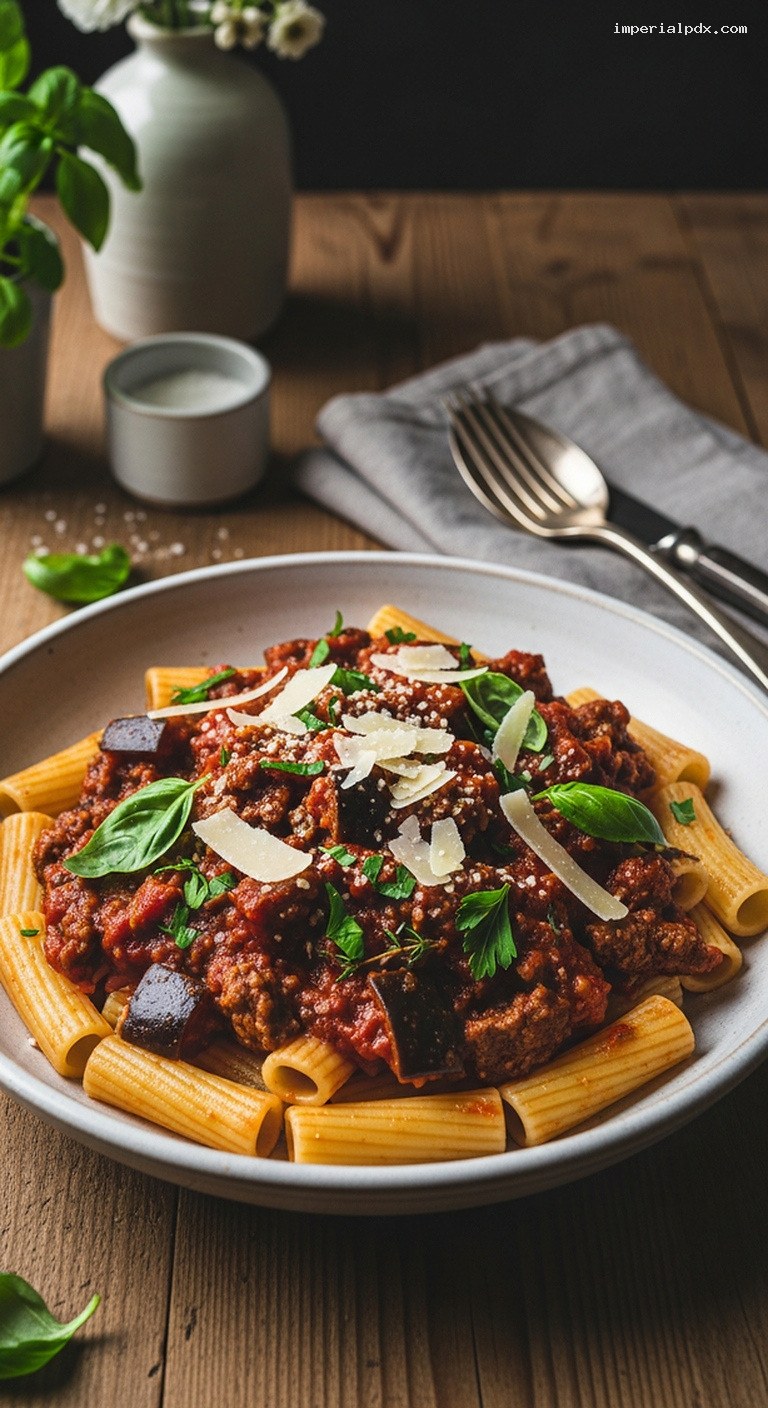
- 6. Meanwhile, cook pasta in boiling salted water until al dente, or prepare soft polenta. Toss or spoon ragu over pasta/polenta, garnish with herbs and cheese, and serve hot.
Why You’ll Love This Recipe
- Comforting and hearty, with the richness of a slow-cooked meat sauce but weeknight-friendly timing.
- Eggplant melts into the tomato-beef ragu, adding silky texture and depth of flavor without being heavy.
- Versatile: ladle it over pasta, creamy polenta, or even crusty bread for a rustic, cozy meal.
- Great for meal prep: the flavor only improves after a night in the fridge and it freezes beautifully.
Grocery List
- Produce: Eggplants, yellow onion, carrot, celery, garlic, fresh basil and/or parsley.
- Dairy: Parmesan or Pecorino cheese (optional, for serving), butter or extra cheese if enriching polenta.
- Pantry: Extra-virgin olive oil, kosher salt, black pepper, crushed red pepper flakes, tomato paste, canned crushed tomatoes, dried oregano, dried thyme or basil, bay leaf, sugar, beef or chicken broth, dry red wine (optional), dried polenta or pasta.
Full Ingredients
For the Beef and Eggplant Ragu
- 2 medium eggplants (about 1 1/2 lb / 680 g), cut into 1/2-inch (1.25 cm) cubes
- 1 1/2 tsp kosher salt, for salting eggplant
- 5 tbsp extra-virgin olive oil, divided
- 1 lb (450 g) ground beef, 80–90% lean
- 1 medium yellow onion, finely chopped (about 1 cup)
- 1 small carrot, finely chopped (about 1/2 cup)
- 1 celery rib, finely chopped (about 1/2 cup)
- 4 garlic cloves, minced
- 1/2 tsp crushed red pepper flakes (optional, for mild heat)
- 2 tbsp tomato paste
- 1/2 cup (120 ml) dry red wine (optional, for deglazing)
- 1 can (28 oz / 800 g) crushed tomatoes
- 1/2 cup (120 ml) beef or chicken broth, or water
- 1 tsp dried oregano
- 1/2 tsp dried thyme or dried basil
- 1 bay leaf
- 1 tsp sugar (optional, to balance acidity)
- Kosher salt and freshly ground black pepper, to taste
- 2–3 tbsp chopped fresh basil or flat-leaf parsley, to finish
For Serving
- 12 oz (340 g) dried pasta (rigatoni, penne, fusilli, or pappardelle)
- or 4–6 servings of soft polenta, hot and spoonable
Optional Garnishes
- Fresh basil leaves or chopped parsley
- Freshly grated Parmesan or Pecorino cheese
- Extra-virgin olive oil, for drizzling
Step-by-Step Instructions
Step 1: Prep and Salt the Eggplant
Trim the stems from the eggplants and cut them into 1/2-inch (1.25 cm) cubes. Place the cubes in a large colander set over the sink or a bowl. Sprinkle with 1 1/2 teaspoons kosher salt and toss with your hands to coat evenly. Let the eggplant sit for 20 minutes. This step draws out excess moisture and some of the bitterness, helping the cubes brown better and stay pleasantly tender instead of spongy.
After 20 minutes, rinse the eggplant quickly under cool water to remove excess surface salt. Spread the cubes out on a clean kitchen towel or paper towels and pat them very dry. Dry eggplant browns more easily and absorbs less oil.
Step 2: Brown the Eggplant
In a large, heavy-bottomed pot or Dutch oven, heat 3 tablespoons of the olive oil over medium-high heat until shimmering, about 1–2 minutes. Add the dried eggplant cubes in a single layer (work in two batches if needed to avoid crowding). Cook, stirring every minute or so, until the eggplant is golden in spots and tender but not falling apart, about 8–10 minutes total.
Transfer the browned eggplant to a plate or bowl and set aside. If the pot looks very dry or has any burnt bits, add a splash of water, scrape up the browned bits, and pour them over the eggplant to save the flavor. Do not wash the pot; you will use it for the ragu and those browned bits will add depth.
Step 3: Build the Flavor Base and Brown the Beef
Return the pot to medium heat and add the remaining 2 tablespoons olive oil. Add the chopped onion, carrot, and celery. Cook, stirring occasionally, until the vegetables are softened and just starting to turn golden at the edges, about 5–7 minutes.
Add the ground beef, breaking it up with a wooden spoon into small crumbles. Season lightly with a pinch of salt and several grinds of black pepper. Cook, stirring occasionally, until the beef is no longer pink and some browned bits form on the bottom of the pot, about 6–8 minutes.
Step 4: Add Garlic, Tomato Paste, and Deglaze
Stir in the minced garlic and crushed red pepper flakes (if using). Cook for 30–60 seconds until fragrant, stirring constantly so the garlic does not burn. Add the tomato paste and cook, stirring, for 1–2 minutes, letting it darken slightly in color to concentrate its flavor.
Pour in the red wine (if using), scraping the bottom of the pot with a wooden spoon to release all the browned bits. Let the wine simmer for about 2 minutes over medium heat until it reduces slightly and no longer smells strongly alcoholic. If you are not using wine, you can skip this step or add a splash of broth to help deglaze.
Step 5: Simmer the Ragu with Eggplant
Add the crushed tomatoes, broth (or water), dried oregano, dried thyme or basil, bay leaf, and sugar (if using) to the pot. Stir well to combine. Return the browned eggplant and any collected juices to the pot and stir gently to distribute it through the sauce.
Bring the mixture up to a gentle simmer over medium heat, then reduce the heat to low or medium-low to maintain a steady, gentle bubbling. Simmer uncovered for 25–30 minutes, stirring every 5–10 minutes to prevent sticking. The sauce should thicken slightly and the eggplant should become silky and tender, almost melting into the ragu. Taste and adjust seasoning with additional salt and black pepper as needed.
Step 6: Cook the Pasta or Polenta
While the ragu simmers, bring a large pot of water to a rolling boil (about 212°F / 100°C). Add a generous tablespoon of salt, then add the pasta. Cook according to the package directions until al dente, usually 8–11 minutes depending on the shape. Reserve about 1/2 cup (120 ml) of the starchy pasta cooking water, then drain the pasta well.
If you are serving the ragu over polenta instead, cook your polenta so it is soft and spoonable by the time the sauce is ready. Keep it warm over very low heat, stirring occasionally and adding a splash of water or broth if it thickens too much.
Step 7: Finish and Serve
When the ragu has finished simmering, remove the bay leaf. Stir in the chopped fresh basil or parsley. If the sauce seems too thick, loosen it with a splash of broth or the reserved pasta water; if it seems thin, let it simmer a few more minutes uncovered. Taste again and adjust salt and pepper to your liking.
For pasta: Add the hot drained pasta directly into the pot of ragu along with a splash (2–4 tablespoons) of the reserved pasta water. Toss over low heat for 1–2 minutes so the sauce coats the pasta and some of the starch from the water helps it cling.
For polenta: Spoon a generous portion of creamy polenta into warm bowls and ladle the ragu over the top.
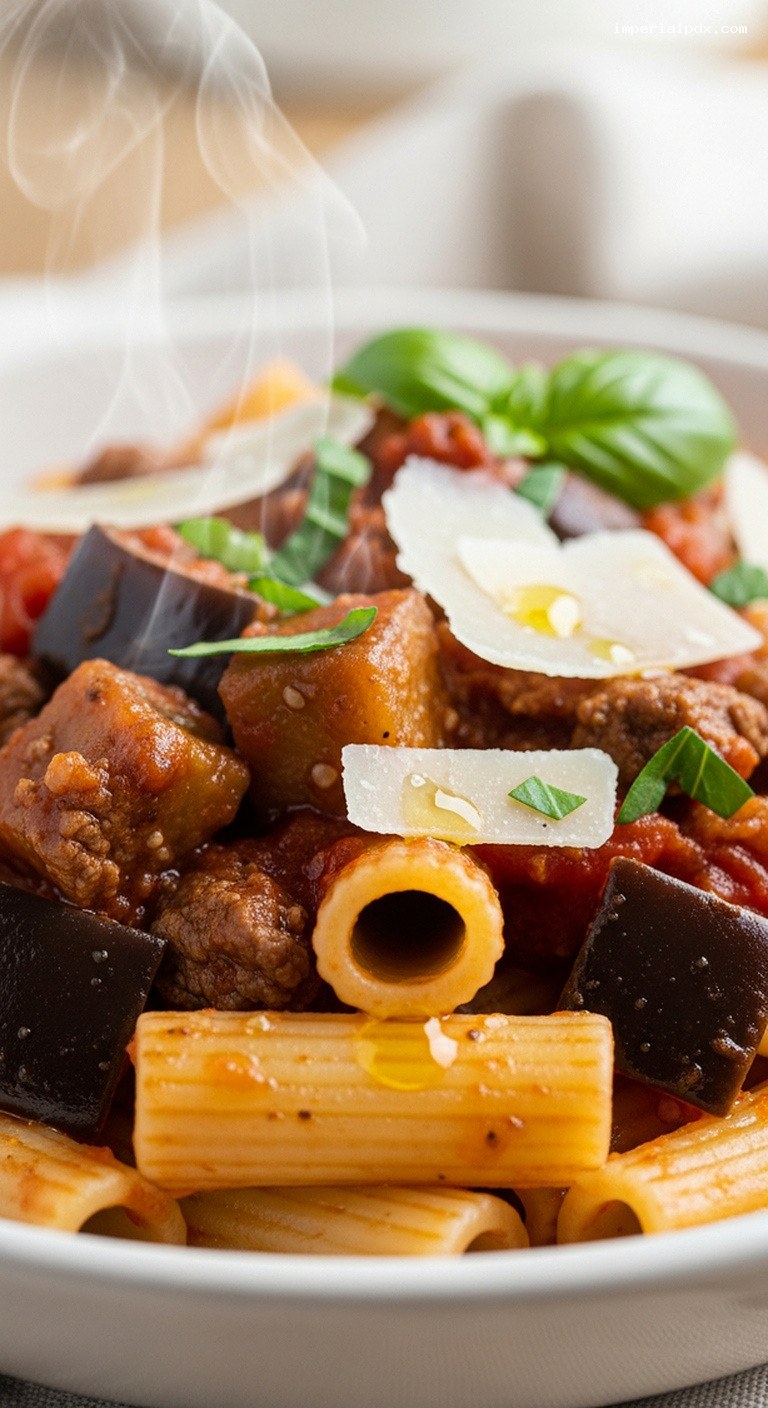
Finish each serving with a drizzle of good olive oil, a shower of freshly grated Parmesan or Pecorino, and extra fresh herbs. Serve hot.
Pro Tips
- Dry the eggplant well. Any surface moisture will prevent browning and make the eggplant absorb more oil. Take a minute to pat it very dry after salting.
- Do not rush the browning. Let the eggplant and beef develop good color; that caramelization is what makes the ragu taste rich and complex.
- Adjust the consistency at the end. Too thick? Add a splash of broth or pasta water. Too thin? Simmer uncovered for a few extra minutes.
- Use a wide pot. A Dutch oven or wide saucepan gives more surface area for browning and reduces the sauce more evenly.
- Make it ahead. This ragu tastes even better the next day as the flavors meld, making it ideal for prepping ahead of time.
Variations
- Spicy Calabrian-style twist: Increase the crushed red pepper to 1–1 1/2 teaspoons, and add a spoonful of Calabrian chile paste or a pinch of smoked paprika for deeper heat and smokiness.
- Vegetable-forward version: Replace half of the beef with finely chopped mushrooms or cooked lentils. You keep the meaty feel while sneaking in more veggies and fiber.
- Creamy finish: For a luxurious texture, stir in 1/4 cup (60 ml) heavy cream or a knob (2–3 tablespoons) of mascarpone or ricotta at the very end, off the heat, until just incorporated.
Storage & Make-Ahead
Let the ragu cool to room temperature, then transfer it to airtight containers. Refrigerate for up to 4 days. The flavor actually improves after a night in the fridge. To reheat, warm gently in a saucepan over medium-low heat, adding a splash of water or broth if it has thickened too much. Stir occasionally until piping hot.
For longer storage, freeze the ragu (without pasta or polenta) in freezer-safe containers or bags for up to 3 months. Thaw overnight in the refrigerator, then reheat on the stovetop. Cook fresh pasta or polenta just before serving and combine with the reheated ragu.
Nutrition (per serving)
Approximate values for 1 of 6 servings of ragu (sauce only, without pasta, polenta, or cheese): about 320 calories; 20 g fat; 7 g saturated fat; 14 g carbohydrates; 5 g fiber; 9 g sugars (mostly from vegetables and tomatoes); 23 g protein; 660 mg sodium (will vary based on broth and added salt). These numbers are estimates and will change depending on the exact ingredients and brands you use.