Quick Recipe Version (TL;DR)
Quick Ingredients
- 2 cups (380 g) short-grain sushi rice, rinsed
- 2 1/4 cups (530 ml) water
- 1/3 cup (80 ml) rice vinegar
- 3 tbsp sugar + 1 1/2 tsp kosher salt
- 1/2 cup finely diced carrot (about 1 small)
- 1/2 cup finely diced cucumber or takuan, patted dry
- 1/3 cup thinly sliced green onion
- 3 tbsp toasted sesame seeds
- 1 tsp neutral oil (for sautéing veg)
- 20 seasoned inari-age (fried tofu) pockets, drained
- 2–3 tbsp furikake, plus more to taste
- 1–2 tbsp inari syrup from the package (optional, for extra sweetness)
Do This
- 1. Rinse sushi rice until water runs mostly clear. Cook with 2 1/4 cups water in a rice cooker or pot. Let rest 10 minutes.
- 2. Warm rice vinegar, sugar, and salt until dissolved. While rice is hot, gently fold in the vinegar seasoning; spread rice to cool until just warm.
- 3. Finely chop carrot, cucumber or takuan, and green onion. Lightly sauté carrot (and any mushrooms, if using) in 1 tsp oil until just tender; cool.
- 4. Drain inari pockets, gently squeeze out excess liquid, and carefully open each pouch.
- 5. Fold cooled vegetables, sesame seeds, 1–2 tbsp furikake, and optional inari syrup into the seasoned rice.
- 6. With damp hands, shape 2 tbsp portions of rice into small ovals. Stuff each inari pocket with one portion, packing gently.
- 7. Arrange cone sushi on a platter, sprinkle with more furikake, and rest 10–15 minutes. Serve at cool room temperature.
Why You’ll Love This Recipe
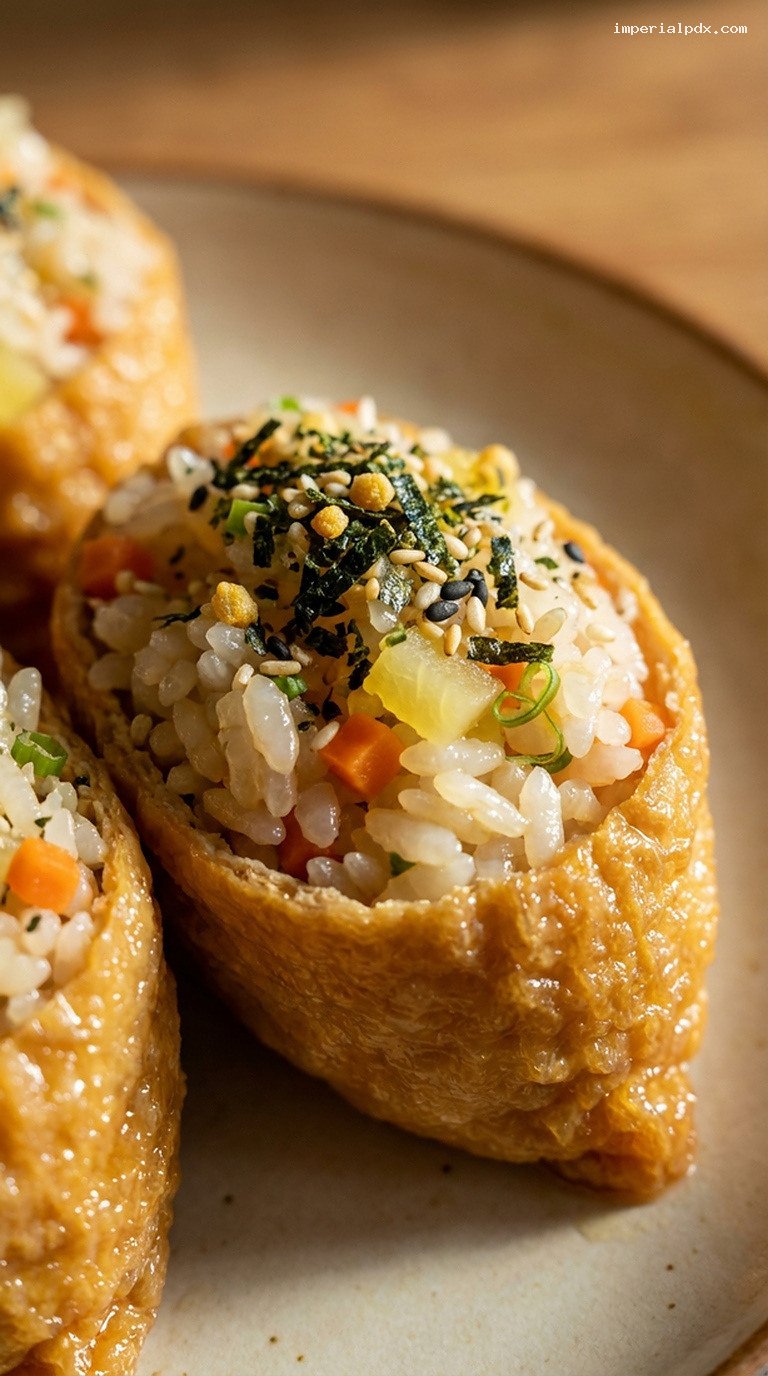
This Hawaiian-style cone sushi (inari) is the kind of sweet-salty bite you find at local okazuya shops: tender sushi rice flecked with veggies and sesame, tucked into seasoned tofu pockets, and finished with a sprinkle of furikake.
- Perfect make-ahead party food: bite-sized, colorful, and easy to eat with your fingers.
- Family-friendly flavors: slightly sweet, gently vinegared rice with a savory tofu pocket.
- Flexible and forgiving: swap in your favorite crunchy veggies or furikake blends.
- Great for bento, potlucks, or beach days when you want something filling but light.
Grocery List
- Produce: 1 small carrot, 1 small cucumber or piece of takuan (pickled daikon), 2–3 green onions, optional: a few shiitake mushrooms.
- Dairy: None.
- Pantry: Short-grain sushi rice, rice vinegar, sugar, kosher salt, neutral oil (canola, grapeseed, or vegetable), seasoned inari-age (fried tofu pockets, canned or pouched), furikake seasoning, toasted sesame seeds, optional soy sauce and inari syrup from the package.
Full Ingredients
Sushi Rice
- 2 cups (380 g) short-grain sushi rice (such as Calrose or Japanese-style rice)
- 2 1/4 cups (530 ml) water
Sushi Vinegar Seasoning
- 1/3 cup (80 ml) rice vinegar (unseasoned)
- 3 tbsp granulated sugar
- 1 1/2 tsp kosher salt (or 1 tsp fine table salt)
Vegetable & Sesame Mix-Ins
- 1/2 cup finely diced carrot (about 1 small carrot, peeled)
- 1/2 cup finely diced cucumber or takuan (Japanese pickled daikon), patted dry
- 1/3 cup thinly sliced green onion (2–3 stalks)
- Optional: 1/3 cup finely chopped shiitake mushrooms (fresh or rehydrated dried), sautéed
- 3 tbsp toasted sesame seeds (white, black, or a mix)
- 1 tsp neutral oil (for sautéing the carrot and mushrooms)
- Optional: 1 tsp soy sauce, to season the sautéed vegetables
Inari Pockets & Toppings
- 20 seasoned inari-age (fried tofu) pockets, canned or pouched, in sweet-savory sauce
- 2–3 tbsp furikake (nori komi, sesame-nori, or your favorite blend), plus more for serving
- Optional: 1–2 tbsp syrup from the inari-age package, to add a touch of sweetness to the rice
Step-by-Step Instructions
Step 1: Rinse and Cook the Sushi Rice
Place the 2 cups of short-grain rice in a bowl and cover with plenty of cold water. Swirl the rice gently with your hand, then pour off the cloudy water. Repeat this rinsing process 4–5 times until the water is mostly clear. This removes excess starch and helps the grains cook up glossy and separate.
Drain the rice well in a fine-mesh strainer, then transfer it to your rice cooker or a medium saucepan. Add 2 1/4 cups water. If you have time, let the rice soak in the water for 10–15 minutes; this helps it cook evenly.
Cook in a rice cooker on the regular white rice setting. For stovetop, bring to a gentle boil over medium heat, then cover, reduce to low, and simmer for 15 minutes. Turn off the heat and let it sit, covered, for another 10 minutes to finish steaming.
Step 2: Make the Sushi Vinegar
While the rice cooks, combine the rice vinegar, sugar, and salt in a small saucepan or microwave-safe cup. Warm gently over low heat, or microwave in 10–15 second bursts, just until the sugar and salt dissolve when stirred. Do not let it boil; heating is only to help it dissolve.
Set this sushi vinegar mixture aside to cool slightly. It should be warm or room temperature when you add it to the rice, not hot.
Step 3: Season and Cool the Rice
When the rice has finished steaming, gently transfer it to a wide, shallow bowl, a large mixing bowl, or (if you have one) a wooden sushi oke or hangiri. Spread the rice out a bit so it is in an even layer.
Drizzle the warm sushi vinegar evenly over the hot rice. Using a rice paddle or a wide spatula, gently cut and fold the rice: slice through and turn it over rather than stirring in circles. This keeps the grains from getting mashed and helps the seasoning distribute evenly.
As you fold, fan the rice with a piece of cardboard or a fan (or simply let a gentle breeze from an open window do the work) until the rice is glossy and just barely warm. This takes about 5–10 minutes. Cover the bowl with a clean, slightly damp kitchen towel while you prepare the vegetables so the rice does not dry out.
Step 4: Prep and Season the Vegetables
Finely dice the carrot and cucumber or takuan so the pieces are about the size of a grain of rice. Thinly slice the green onions. If using shiitake mushrooms, remove stems and finely chop the caps.
Heat 1 tsp neutral oil in a small skillet over medium heat. Add the diced carrot (and chopped mushrooms, if using) with a tiny pinch of salt. Sauté for 2–3 minutes, just until the carrot is slightly tender but still has a bit of bite. If you like, splash in 1 tsp soy sauce and stir to coat for extra flavor. Remove from heat and let cool completely; warm vegetables will make the rice sticky and gummy.
Pat the cucumber or takuan pieces dry with a paper towel so they do not add excess moisture. Have the toasted sesame seeds and sliced green onion ready.
Step 5: Prepare the Inari Pockets
Open the cans or pouches of seasoned inari-age over a bowl to catch the syrup. Set aside 1–2 tbsp of this syrup if you plan to add it to the rice later for extra sweetness.
Working over the sink or bowl, gently pick up each tofu pocket and lightly squeeze it to remove some of the excess liquid, being careful not to tear it. You want the pockets moist and flavorful, not dripping.
With clean fingers, carefully open each inari pocket to form a small pouch. If any have a sealed side, gently work your thumb inside to separate the layers. Arrange the opened pockets on a plate or tray, ready for filling.
Step 6: Fold the Rice with Veggies, Sesame, and Furikake
Uncover the seasoned sushi rice. It should be slightly warm or room temperature and still soft and glossy. Add the cooled sautéed carrot (and mushrooms, if using), the diced cucumber or takuan, sliced green onion, and toasted sesame seeds to the rice.
Sprinkle in 1–2 tbsp of furikake and, if desired, 1–2 tbsp of the reserved inari syrup for a subtle sweetness that echoes the tofu pockets. Using your rice paddle or spatula, gently fold everything together until the vegetables and seasonings are evenly distributed. Taste a small spoonful and adjust with a bit more furikake or a small pinch of salt if needed.
Step 7: Shape and Fill the Cone Sushi (Inari)
Prepare a small bowl of clean water to lightly dampen your hands; this keeps the rice from sticking. Take one inari pocket in your non-dominant hand. With your other hand, scoop about 2 tbsp of the rice mixture and gently squeeze it into a compact oval or small log shape.
Carefully tuck the shaped rice into the inari pocket, pressing it down gently so it fills the corners without tearing the tofu. For a classic Hawaiian okazuya-style look, let the rice mound slightly above the opening and keep the top open rather than folding it closed. You can gently pinch the bottom corners to give a slight “cone” shape if you like.
Repeat with the remaining pockets and rice. Arrange the finished cone sushi on a platter in neat rows. Sprinkle the tops generously with additional furikake so each piece is dusted with colorful flecks of nori and sesame.
Let the cone sushi rest at cool room temperature for about 10–15 minutes before serving; this lets the flavors meld and the tofu pockets gently absorb some of the seasoned rice flavor.
Pro Tips
- Use the right rice. Short-grain sushi rice is essential. Medium- or long-grain rice will not have the same tender, slightly sticky texture that holds together inside the pockets.
- Do not over-wet the inari. Lightly squeezing the inari pockets keeps them flavorful but prevents soggy cone sushi. They should feel moist, flexible, and not dripping.
- Chop everything small. Keeping the vegetables in tiny, rice-grain-sized pieces means the rice mixture packs neatly and each bite tastes balanced.
- Handle the rice gently. When seasoning and mixing, cut and fold rather than stirring; this preserves the shape of the grains and avoids gummy rice.
- Work with barely warm rice. If the rice is too hot, it will be difficult to handle and may tear the tofu pockets; if it is too cold, it becomes firm and does not pack as nicely.
Variations
- Local-style tuna cone sushi: Fold 1 small can (about 5 oz / 140 g) well-drained, flaked tuna into the rice mixture along with the vegetables. This is very popular in Hawaii and adds extra protein.
- Spicy furikake cone sushi: Use a spicy furikake blend or add a little shichimi togarashi to the rice mixture. Drizzle the finished inari with a thin line of spicy mayo (mayonnaise mixed with sriracha) just before serving.
- Veggie-packed version: Add finely chopped blanched green beans, edamame, or finely diced bell pepper for more color and crunch. Keep total mix-ins around 1 1/2 to 2 cups so the rice still holds together.
Storage & Make-Ahead
Cone sushi is best eaten the day it is made, served at cool room temperature. You can prepare the seasoned rice mixture and fill the inari pockets up to 4 hours ahead; keep them covered with plastic wrap or a lid at a cool room temperature (not in direct sun or a hot room).
For longer storage, place the finished cone sushi in a single layer in an airtight container and refrigerate for up to 24 hours. The rice will firm up slightly in the fridge, so bring them out 30–45 minutes before serving to take off the chill. Do not microwave, as it will toughen the tofu pockets.
You can also make the sushi vinegar and prep/chop the vegetables a day ahead and refrigerate them separately. Cook and season the rice on the day you plan to serve, then fold in the prepped vegetables, fill the pockets, and garnish.
Nutrition (per serving)
Approximate values per serving (2 pieces): about 210 calories, 4 g protein, 34 g carbohydrates, 5 g fat, 2 g fiber, 7 g sugars, and 540 mg sodium. Values will vary based on the specific brand of inari-age and furikake you use, as well as any added ingredients or variations.