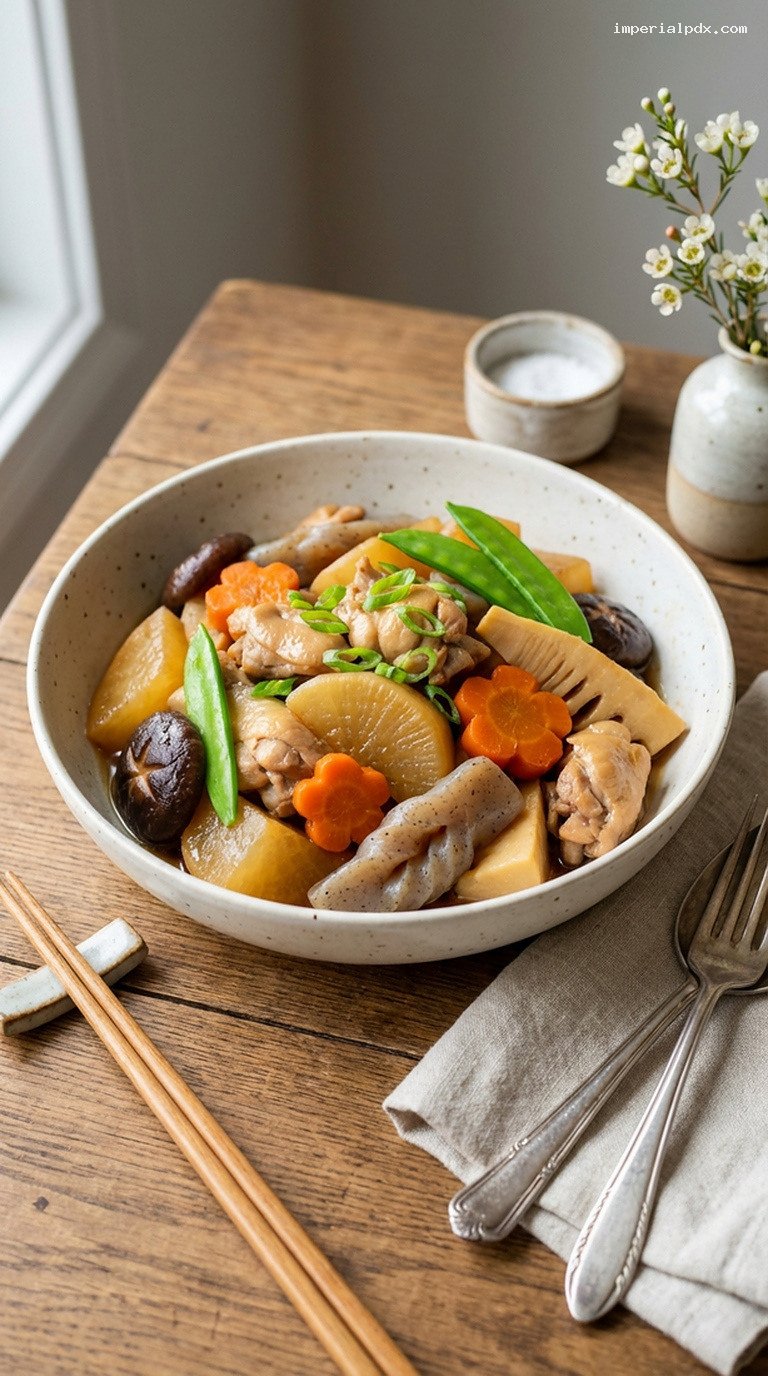
Quick Recipe Version (TL;DR)
Quick Ingredients
- 8 dried shiitake mushrooms + 1 1/2 cups warm water for soaking
- 1 (8 oz / 225 g) block konnyaku
- 1 medium daikon radish (about 1 1/2 lb / 680 g)
- 3 medium carrots
- 1 can (8 oz / 225 g) sliced bamboo shoots, rinsed and drained
- 1 cup snow peas, trimmed
- 1 1/2 lb (680 g) boneless skinless chicken thighs, bite-size pieces
- 1 Tbsp neutral oil
- 3 cups dashi (homemade or from powder)
- 1/3 cup soy sauce (shoyu)
- 1/4 cup mirin
- 3 Tbsp sake (optional but recommended)
- 2 Tbsp sugar
- 1/2 tsp kosher salt (or to taste)
- 2 green onions, thinly sliced (optional garnish)
Do This
- 1. Soak shiitake in warm water for 20 minutes; strain and reserve soaking liquid. Blanch konnyaku in boiling water 2–3 minutes, then slice bite-size.
- 2. Prep vegetables: peel and chunk daikon and carrots (shapes about 1 inch), drain bamboo shoots, trim snow peas.
- 3. Cut chicken into bite-size pieces. In a wide pot, heat oil over medium-high and lightly brown chicken 3–4 minutes; remove to a plate.
- 4. In the same pot, add dashi, 1 cup strained shiitake soaking liquid, soy sauce, mirin, sake, sugar, and salt. Bring to a gentle boil.
- 5. Add daikon, carrots, konnyaku, bamboo, and shiitake. Top with chicken. Cover and simmer on low 25–30 minutes until vegetables are tender.
- 6. Uncover and simmer 8–10 minutes more to reduce the broth until it looks glossy and lightly coats the ingredients.
- 7. Add snow peas and cook 1–2 minutes until bright green. Taste and adjust seasoning. Garnish with green onions and serve hot.
Why You’ll Love This Recipe
- A classic Hawaiian New Year’s dish that feels special but is easy enough for a cozy weeknight dinner.
- Light, savory shoyu-dashi broth that gently flavors every vegetable and piece of chicken.
- Great make-ahead dish that actually tastes even better the next day as the flavors meld.
- Balanced, veggie-forward one-pot meal with tender chicken and a beautiful mix of colors and textures.
Grocery List
- Produce: Daikon radish, carrots, snow peas, green onions (optional garnish).
- Dairy: None.
- Pantry: Dried shiitake mushrooms, konnyaku, canned bamboo shoots, dashi (or dashi powder), soy sauce (shoyu), mirin, sake, sugar, kosher salt, neutral oil (canola, vegetable, or grapeseed).
Full Ingredients
Main Ingredients
- 8 dried shiitake mushrooms
- 1 1/2 cups (360 ml) warm water, for soaking shiitake (you will use 1 cup in the broth)
- 1 (8 oz / 225 g) block konnyaku
- 1 medium daikon radish (about 1 1/2 lb / 680 g), peeled
- 3 medium carrots, peeled
- 1 can (8 oz / 225 g) sliced bamboo shoots, rinsed and drained well
- 1 cup (about 3 oz / 85 g) snow peas, trimmed and strings removed
- 1 1/2 lb (680 g) boneless skinless chicken thighs, trimmed and cut into bite-size pieces (about 1 1/2 inches)
- 1 Tbsp neutral oil (canola, vegetable, or grapeseed)
- 2 green onions, thinly sliced on the bias (optional, for garnish)
Broth Seasoning
- 3 cups (720 ml) prepared dashi
- You can use homemade kombu-bonito dashi or mix 2–3 tsp dashi powder with 3 cups hot water (follow your package directions).
- 1 cup (240 ml) reserved, strained shiitake soaking liquid (from above)
- 1/3 cup (80 ml) soy sauce (shoyu; Hawaiian style or regular Japanese-style)
- 1/4 cup (60 ml) mirin
- 3 Tbsp (45 ml) sake (optional but adds depth)
- 2 Tbsp (25 g) sugar (granulated or light brown)
- 1/2 tsp kosher salt, plus more to taste
Optional Garnish
- Extra thinly sliced green onions
- Very thin strips of yuzu peel or lemon zest, for a festive touch (optional)
Step-by-Step Instructions
Step 1: Soak the shiitake and prep the konnyaku
Place the dried shiitake mushrooms in a small bowl and pour in 1 1/2 cups of warm water, making sure the mushrooms are submerged. Place a small plate or bowl on top to keep them under the water, and let soak for about 20 minutes, or until fully rehydrated and soft. When ready, gently squeeze out excess liquid back into the bowl, remove and discard the tough stems, and leave the caps whole or cut them in half if they are large. Strain the soaking liquid through a fine mesh sieve or paper towel into a measuring cup and set aside; you will use 1 cup of this for the broth.
Meanwhile, bring a small pot of water to a boil. Rinse the konnyaku block, then cut it into bite-size pieces (about 1 inch). You can cut into rectangles or triangles, or make traditional “tied” pieces if you like. Drop the konnyaku into the boiling water and blanch for 2–3 minutes to remove any strong aroma. Drain well and set aside.
Step 2: Prep and shape the vegetables
Peel the daikon radish and cut it into thick rounds about 3/4 inch (2 cm) wide. Cut each round into half-moons or quarters so that each piece is around 1 1/2 inches across. Try to keep the pieces roughly the same size so they cook evenly. Lightly round off the sharp corners with your knife if you want a more traditional look and to prevent them from breaking during simmering.
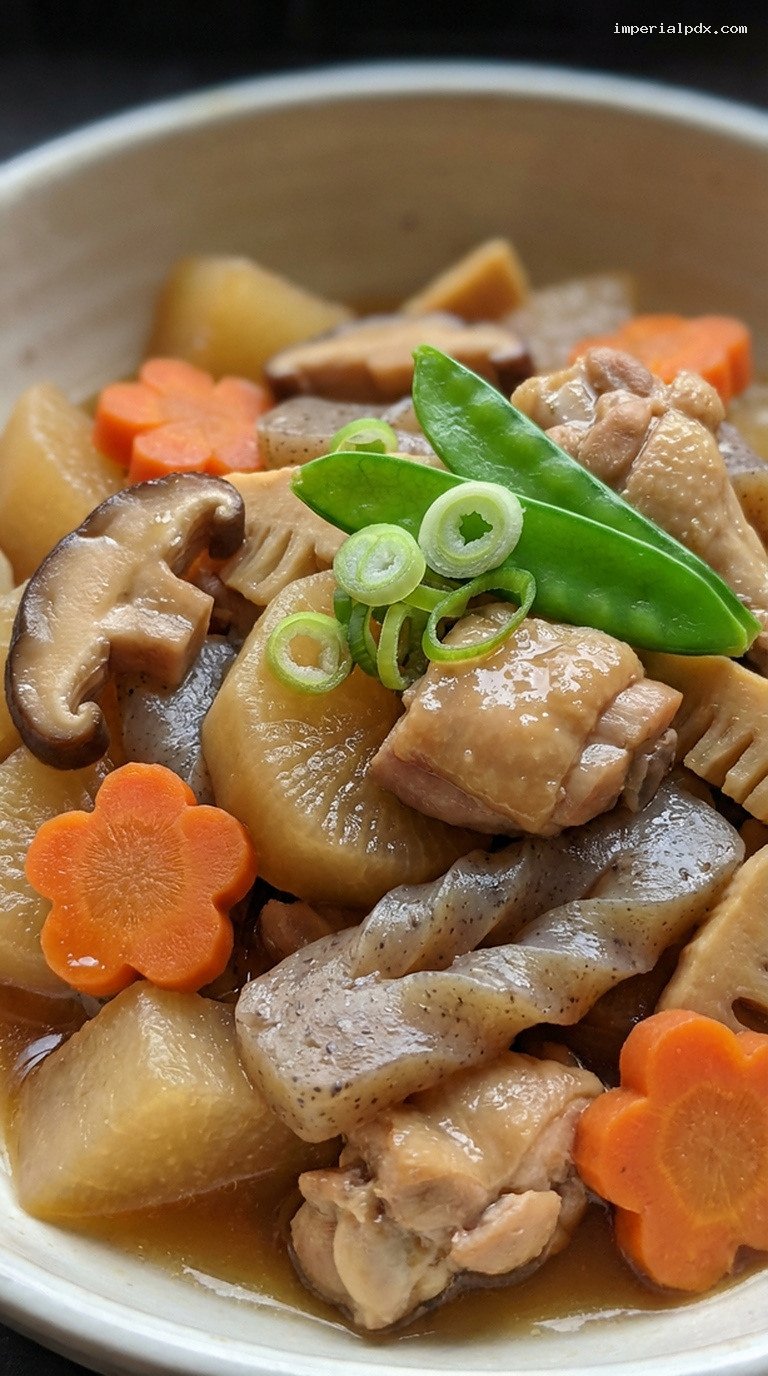
Peel the carrots and cut them into 1/2–3/4 inch chunks. You can cut them on a slight diagonal (rolling the carrot a quarter turn between each cut) for rustic “rolling” cuts, or use a vegetable cutter to make flower shapes for a festive New Year’s style. Drain the canned bamboo shoots and rinse under cold water; if any pieces are very large, cut them into bite-size pieces. Trim the snow peas by snapping off the stem end and pulling away any string along the edge, then set them aside for later; they will be added at the very end to keep them crisp and bright.
Step 3: Prep and lightly brown the chicken
Pat the chicken thighs dry with paper towels and cut into bite-size pieces, about 1 1/2 inches. Drying the surface helps the chicken brown better and keeps the broth from getting greasy. Season lightly with a pinch of salt (remember the broth will be seasoned too).
Heat 1 tablespoon of neutral oil in a wide, heavy pot or Dutch oven over medium-high heat. When the oil is hot and shimmering, add the chicken in a single layer without crowding; you may need to do this in two batches. Brown the chicken for about 2 minutes on each side, just until you get a little color. The chicken does not need to be cooked through at this stage. Transfer the browned chicken to a plate and set aside. Leave any browned bits and a thin coating of fat in the pot; they will add flavor to the broth.
Step 4: Build the shoyu-dashi broth
In the same pot, with the heat off or on low, pour in 3 cups of dashi and 1 cup of the strained shiitake soaking liquid. Add the soy sauce, mirin, sake (if using), sugar, and 1/2 teaspoon kosher salt. Stir gently to dissolve the sugar and scrape up any browned bits from the bottom of the pot. Taste the broth: it should taste a little saltier and more intense than you want the final dish to be, because the vegetables and chicken will absorb the flavor as they cook. Adjust with a little more soy sauce or salt if needed, keeping in mind that the broth will reduce later and become more concentrated.
Turn the heat to medium-high and bring the seasoned broth to a gentle boil.
Step 5: Layer in the vegetables and simmer gently
Once the broth is gently boiling, add the daikon, carrots, konnyaku, bamboo shoots, and the rehydrated shiitake mushroom caps. Arrange the harder vegetables, like daikon and carrot, toward the bottom of the pot and the softer ones on top; this helps them cook evenly. Nestle the browned chicken pieces on top of the vegetables, along with any juices from the plate. The ingredients should be mostly submerged; if needed, you can add a splash more dashi or water so that everything is almost covered, but avoid diluting the broth too much.
When the liquid returns to a gentle boil, reduce the heat to low, cover the pot with a lid slightly ajar, and simmer gently for 25–30 minutes. Try not to stir too often, as stirring can break up the vegetables. Instead, you can gently shift the ingredients with a wooden spoon or swirl the pot occasionally to help them cook evenly. The dish is ready for the next step when the daikon is tender all the way through and the carrots are soft but not falling apart.
Step 6: Reduce the broth until glossy
After 25–30 minutes of covered simmering, remove the lid. Continue to cook on low to medium-low heat for another 8–10 minutes, uncovered, to allow the broth to reduce. You want the liquid level to drop and thicken slightly so that it lightly coats the chicken and vegetables instead of being a thin, soupy broth. This stage is what gives nishime its characteristic glossy, flavorful finish.
Keep an eye on the pot and gently move the ingredients occasionally to prevent anything from sticking to the bottom. Taste the broth during this stage and adjust the seasoning if needed with a bit more soy sauce, sugar, or salt to suit your taste. The flavors should be well-balanced: lightly sweet, savory, and full of umami from the dashi and shiitake.
Step 7: Add snow peas and finish the dish
When the broth has reduced and looks slightly shiny, add the trimmed snow peas on top. Simmer for just 1–2 minutes, until the snow peas turn a bright, vibrant green and are crisp-tender. Avoid overcooking them, as you want them to keep their fresh color and a bit of snap.
Turn off the heat and let the nishime sit for 5–10 minutes covered; this rest allows the flavors to settle and soak into the ingredients even more. To serve, gently lift the chicken and vegetables into bowls with a slotted spoon and spoon a bit of the reduced broth over the top. Garnish with thinly sliced green onions and, if desired, a few very thin strips of yuzu peel or lemon zest for a festive touch. Serve hot as part of a New Year’s spread or as a comforting main dish with steamed rice.
Pro Tips
- Cut everything to similar size. Keeping the daikon, carrot, konnyaku, and chicken around 1–1 1/2 inches helps them cook at the same rate and gives the dish a harmonious, traditional look.
- Blanch the konnyaku. A quick 2–3 minute boil removes its natural aroma and lets it better soak up the shoyu-dashi flavors.
- Use the shiitake soaking liquid. Strained soaking liquid adds a deep, earthy umami to the broth. Just be sure to strain out any grit.
- Simmer gently, do not boil hard. A strong boil can break up the vegetables and make the broth cloudy. A gentle, steady simmer keeps everything tender and pretty.
- Even better the next day. Let the cooked nishime cool, refrigerate overnight, and reheat gently; the flavors meld and deepen beautifully.
Variations
- Vegetarian Nishime: Omit the chicken and sake. Use kombu-based dashi (no bonito) and add extra shiitake, firm tofu cubes, and maybe some taro or lotus root for heartiness.
- Pork Nishime: Substitute the chicken thighs with thinly sliced pork shoulder or pork belly. Brown well to render some fat before building the broth for a richer, more robust flavor.
- Extra-root version: Add peeled chunks of taro (satoimo), lotus root slices, or burdock root (gobo) along with the daikon and carrots. These are very traditional in Japanese-style simmered dishes and make the stew even more substantial.
Storage & Make-Ahead
Chicken nishime is an excellent make-ahead dish and is often prepared before New Year’s specifically because it keeps well. Let the pot cool to room temperature, then transfer the contents and broth to an airtight container. Refrigerate for up to 4 days. The flavors will continue to meld and deepen, and many people enjoy it most on the second day.
To reheat, gently warm on the stovetop over low heat until just simmering, adding a splash of water or dashi if it seems too thick. You can also microwave individual portions, covered, stirring once or twice. For freezing, remove the snow peas (they lose texture when frozen) and freeze the rest in an airtight container for up to 1 month. Thaw overnight in the refrigerator, reheat gently, and add freshly cooked snow peas at the end if you like.
Nutrition (per serving)
Approximate values for 1 of 6 servings: about 280 calories; 20 g protein; 13 g fat; 16 g carbohydrates; 3 g fiber; 7 g sugars; 900 mg sodium. Actual values will vary based on brands used, how much broth is consumed, and any added vegetables or substitutions.