Quick Recipe Version (TL;DR)
Quick Ingredients
- 1 cup finely minced scallions (about 1 large bunch, 6–8 scallions)
- 3 tablespoons finely grated fresh ginger
- 1/3 cup neutral oil (canola, vegetable, grapeseed, or peanut)
- 1 tablespoon unseasoned rice vinegar
- 3/4–1 teaspoon kosher salt, to taste
- 1/4 teaspoon sugar (optional)
- 1 teaspoon toasted sesame oil (optional)
- 1 small red chili or 1/4 teaspoon red pepper flakes (optional, for heat)
Do This
- 1. Finely mince scallions and grate ginger; place in a heatproof bowl.
- 2. Add salt, sugar, and chopped chili (if using); stir to combine and lightly bruise with a spoon.
- 3. Heat neutral oil in a small saucepan over medium heat for 3–4 minutes, until it reaches about 350°F (175°C) and shimmers.
- 4. Carefully pour the hot oil over the scallion-ginger mixture; it should sizzle vigorously.
- 5. Stir immediately, then mix in rice vinegar and toasted sesame oil (if using); taste and adjust salt.
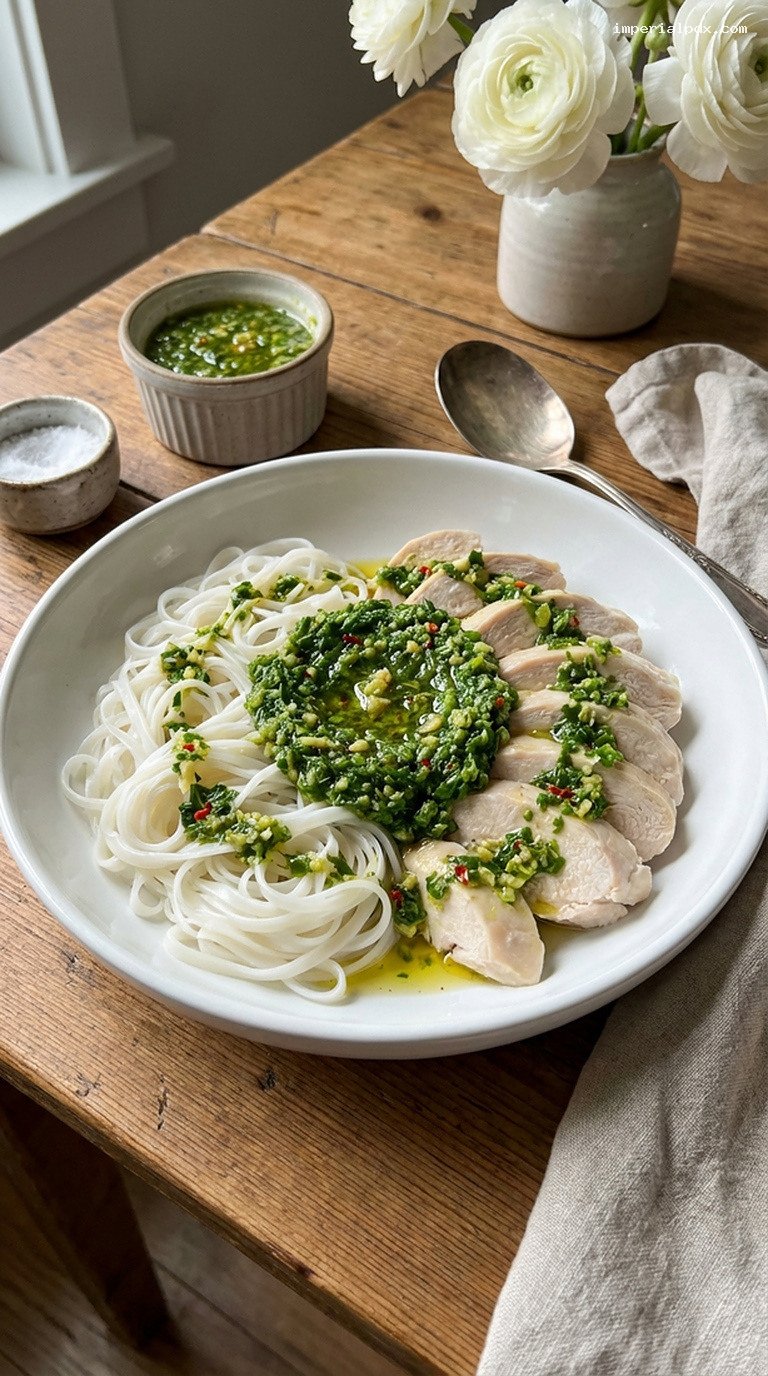
- 6. Spoon over steamed chicken, tofu, or hot rice noodles and serve warm or at room temperature.
Why You’ll Love This Recipe
- Explosively flavorful but incredibly simple: just chop, heat oil, and pour.
- Perfect “magic sauce” for plain steamed chicken, tofu, rice, or noodles.
- Uses basic pantry ingredients and comes together in about 15 minutes.
- Easily adjustable for more heat, more tang, or extra sesame richness.
Grocery List
- Produce: 1 large bunch scallions (green onions), fresh ginger root, 1 small red chili (or red pepper flakes), optional lime and cilantro for serving.
- Dairy: None.
- Pantry: Neutral oil (canola, vegetable, grapeseed, or peanut), toasted sesame oil, unseasoned rice vinegar, kosher salt, sugar, rice noodles (optional), firm tofu (optional), chicken for steaming or poaching (optional), soy sauce (optional for variations).
Full Ingredients
For the Ginger-Scallion Sauce
- 1 cup very finely minced scallions (about 1 large bunch, 6–8 scallions), white and green parts
- 3 tablespoons finely grated fresh ginger (from about a 2-inch piece, peeled)
- 1/3 cup neutral oil (such as canola, vegetable, grapeseed, or peanut)
- 1 tablespoon unseasoned rice vinegar
- 3/4–1 teaspoon kosher salt, plus more to taste
- 1/4 teaspoon sugar (optional, helps round the flavors)
- 1 teaspoon toasted sesame oil (optional, for nutty depth)
- 1 small fresh red chili, finely minced, or 1/4 teaspoon red pepper flakes (optional, for heat)
For Serving (Choose Your Base)
- 1 pound boneless, skinless chicken breasts or thighs, gently steamed or poached until cooked through (165°F / 74°C internal temperature), then sliced
- or 14 ounces firm tofu, pressed and steamed or pan-seared, then sliced or cubed
- or 8 ounces dried rice noodles, cooked according to package directions
- Optional: extra sliced scallions, lime wedges, soy sauce, or chili flakes for the table
Step-by-Step Instructions
Step 1: Prep the scallions and ginger
Rinse the scallions under cold water and pat them completely dry with a clean kitchen towel. This helps them sizzle instead of steam when the hot oil hits. Trim off the root ends and any wilted tops. Very finely mince the scallions, aiming for tiny pieces so they soften quickly in the oil.
Peel the ginger with a spoon or paring knife, then finely grate it on a microplane or the smallest holes of a box grater. Measure out 3 tablespoons of grated ginger. Place the minced scallions and grated ginger into a medium, heatproof bowl (glass or ceramic is ideal).
Step 2: Season the aromatics
Add 3/4 teaspoon kosher salt to the scallion-ginger mixture. If using, add 1/4 teaspoon sugar and the minced fresh red chili or red pepper flakes. Using the back of a spoon, gently press and stir the mixture for 15–20 seconds to lightly bruise the scallions and ginger. This helps release their flavor so the hot oil can pull it out even more.
Step 3: Heat the oil
In a small saucepan, add 1/3 cup neutral oil. Set the pan over medium heat and warm for 3–4 minutes, until the oil is shimmering and just starting to release a faint wisp of smoke. If you have an instant-read thermometer, aim for about 350°F (175°C). If you drop in a tiny piece of scallion, it should sizzle immediately and vigorously but not burn.
Do not walk away from the oil; it can go from perfect to smoking quickly. If it starts to smoke heavily, remove it from the heat and let it cool for 30–60 seconds before proceeding.
Step 4: Pour the hot oil over the aromatics
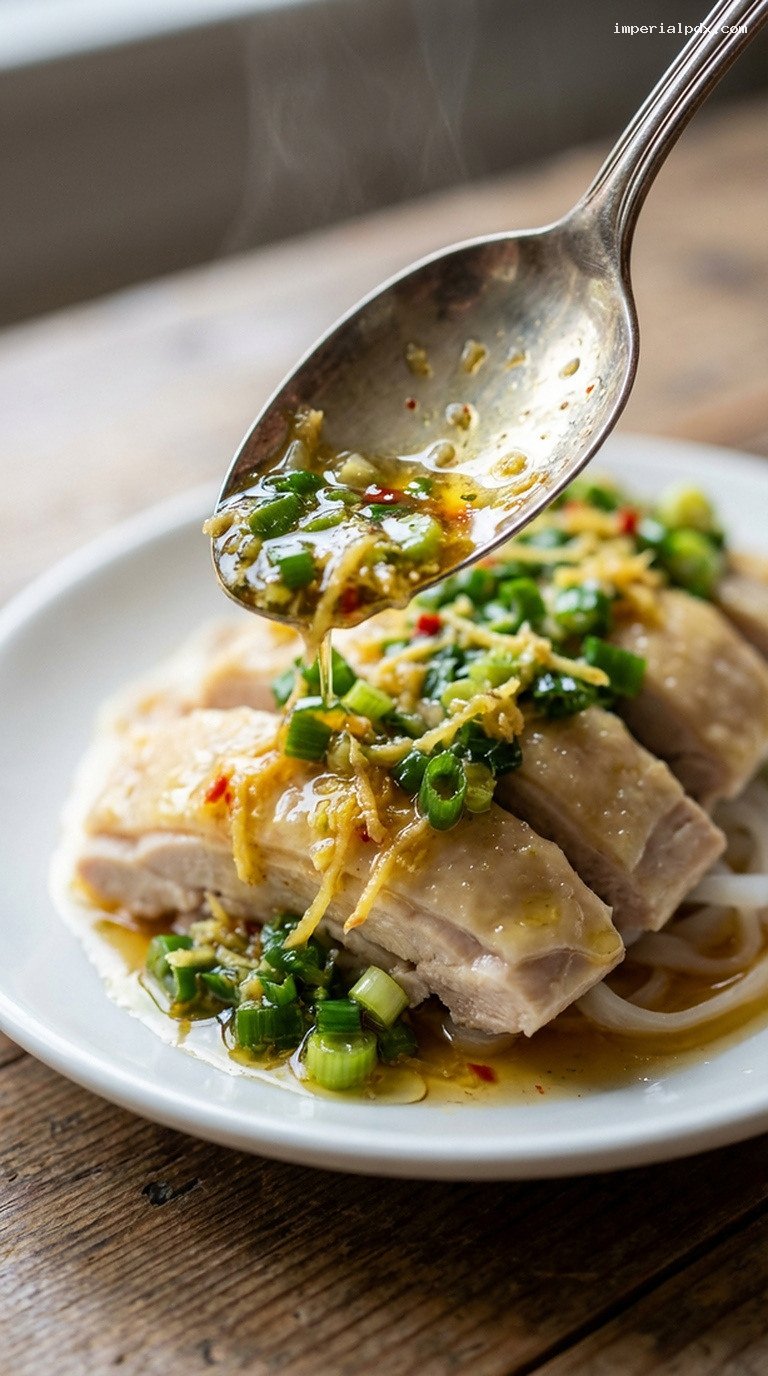
Carefully and steadily pour the hot oil directly over the scallion-ginger mixture in the heatproof bowl. You should hear a strong sizzle as soon as the oil hits. Stand back slightly and pour slowly to avoid splatters.
Once all the oil is in, immediately stir the mixture thoroughly. The hot oil lightly cooks the scallions and ginger, turning them bright, glossy, and fragrant without making them mushy or bitter.
Step 5: Add vinegar and sesame oil, then adjust seasoning
Let the mixture cool for 1–2 minutes, then stir in 1 tablespoon rice vinegar and 1 teaspoon toasted sesame oil (if using). Taste a small dab. Add more salt, a pinch at a time, if needed. If you like a touch more brightness, add up to 1 additional teaspoon rice vinegar.
The sauce should taste punchy, salty, gingery, and slightly tangy, with a pleasant oniony bite. Adjust heat with more chili if you prefer it spicier.
Step 6: Serve over chicken, tofu, or rice noodles
To serve, spoon 1–2 tablespoons of warm or room-temperature sauce over each portion of steamed or poached chicken, steamed or pan-seared tofu, or hot rice noodles. For chicken, ensure it has been cooked gently until it reaches 165°F (74°C) in the thickest part, then slice and fan it on a plate before topping with sauce. For noodles, toss with a splash of the sauce first, then add an extra spoonful on top for shine.
Garnish with extra sliced scallions, lime wedges, or a sprinkle of chili flakes if you like. Serve immediately. The sauce will continue to deepen in flavor as it sits, so it is excellent made a little ahead of time as well.
Pro Tips
- Chop very finely: The smaller the scallion and ginger pieces, the better the texture and the more evenly they cook when hit with hot oil.
- Use a truly heatproof bowl: Glass or ceramic is best. Avoid plastic, which can melt or warp when you pour in 350°F (175°C) oil.
- Control salt for your base: If your chicken or tofu is well-seasoned or you plan to add soy sauce at the table, start with 3/4 teaspoon salt and add more only after tasting.
- Adjust the oil temperature, not the time: Every stove is different, so use visual cues (shimmering surface, gentle wisp of smoke) or a thermometer to hit about 350°F (175°C), rather than relying solely on minutes.
- Double or triple easily: This recipe scales up very well. Just keep the same ratios and use a larger bowl for the aromatics.
Variations
- Soy-sesame version: Add 1–2 teaspoons light soy sauce and increase sugar to 1/2 teaspoon. This creates a slightly darker, more savory sauce that is fantastic on rice and noodles.
- Extra-chili version: Add 1–2 teaspoons crushed red pepper flakes or finely chopped fresh chilies to the scallion-ginger mix before pouring on the oil, and finish with a few more flakes on top. Great for spice lovers.
- Citrus-herb twist: Replace half the rice vinegar with fresh lime juice and stir in 2 tablespoons chopped cilantro after the oil has cooled slightly. Especially good on tofu and rice noodles.
Storage & Make-Ahead
Transfer the cooled sauce to a clean, airtight glass jar or container. Refrigerate for up to 5 days. The oil may thicken and the flavors will meld as it sits; simply let the sauce come to room temperature for 15–20 minutes and stir well before serving. For faster loosening, you can place the closed jar in a bowl of warm (not hot) water for a few minutes. Always use a clean spoon to avoid introducing moisture or contaminants that could shorten its shelf life.
Nutrition (per serving)
Approximate values per serving (about 2 tablespoons, 1/8 of the recipe): 100 calories; 11 g fat (1.5 g saturated); 1–2 g carbohydrates; 0 g fiber; 0.5 g protein; about 260 mg sodium. Values will vary based on exact brands and whether optional ingredients are used.