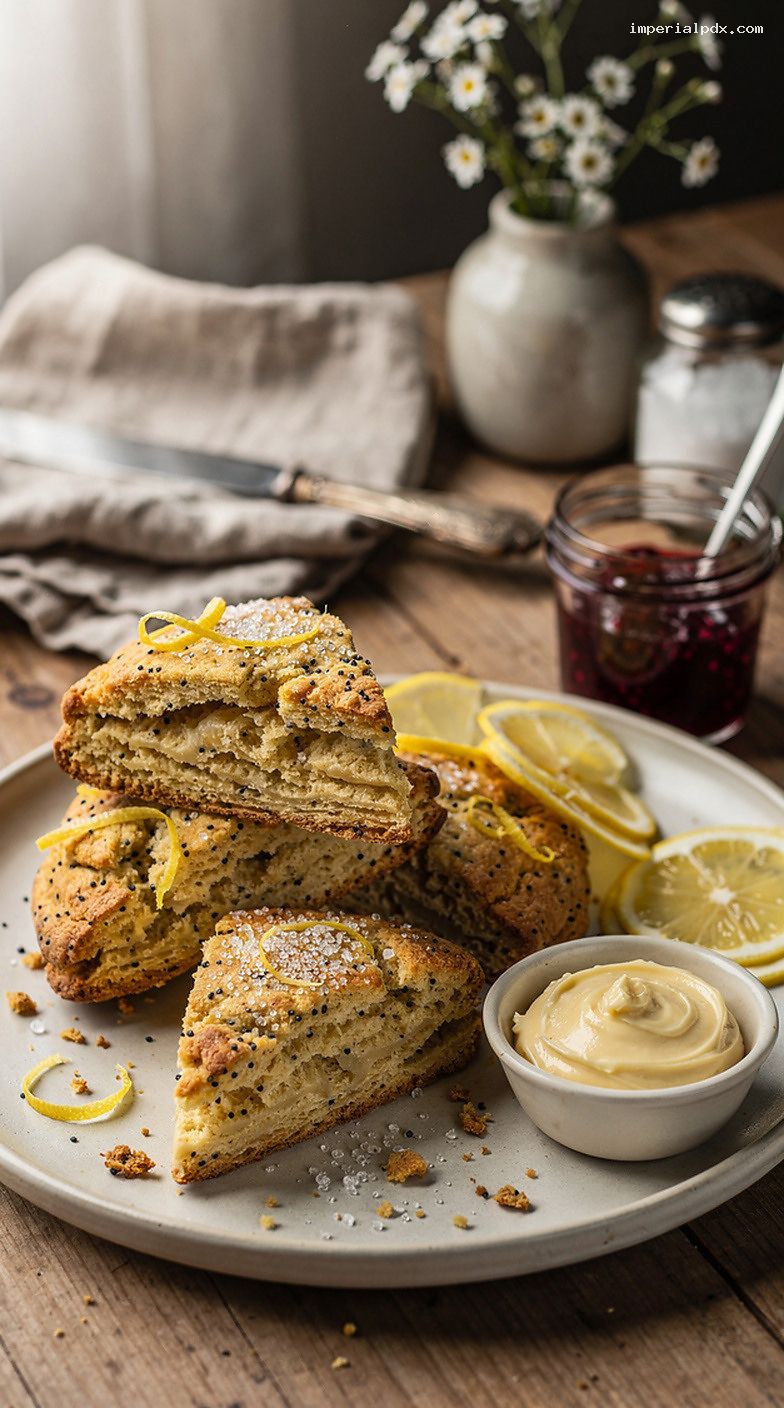
Quick Recipe Version (TL;DR)
Quick Ingredients
- 2 cups (250 g) all-purpose flour
- 1/3 cup (67 g) granulated sugar
- 1 tbsp poppy seeds
- 1 tbsp baking powder
- 1/2 tsp fine salt
- 1 tbsp lemon zest (from 2 lemons)
- 1/2 cup (113 g) unsalted butter, frozen, grated
- 1/2 cup (120 ml) cold heavy cream, plus 2 tbsp (30 ml) for brushing
- 1 large egg
- 1 tsp vanilla extract
- 2 tbsp (30 ml) fresh lemon juice
- 1 tbsp coarse sugar (optional, for topping)
- To serve: jam
- Optional honey butter: 4 tbsp (56 g) softened unsalted butter + 2 tbsp (42 g) honey + pinch of salt
Do This
- 1. Heat oven to 400°F (204°C). Line a sheet pan with parchment.
- 2. Whisk flour, sugar, poppy seeds, baking powder, salt, and lemon zest.
- 3. Cut in frozen grated butter until shaggy with pea-size bits.
- 4. Whisk cream, egg, vanilla, and lemon juice; stir into dry just until a rough dough forms.
- 5. Pat into a rectangle, fold into thirds twice (for flaky layers), then pat into an 8-inch round and cut 8 wedges.
- 6. Chill wedges 20 minutes; brush with cream and sprinkle coarse sugar.
- 7. Bake 16–18 minutes until golden; cool 10 minutes. Serve with jam or honey butter.
Why You’ll Love This Recipe
- Flaky, tender texture: A simple fold-and-pat technique creates café-style layers without complicated lamination.
- Bright lemon flavor: Plenty of zest plus a splash of juice keeps the scones fresh and sunny.
- Not overly sweet: Perfect for pairing with jam or a swipe of honey butter.
- Reliable and make-ahead friendly: Shape and chill (or freeze) the wedges for easy baking later.
Grocery List
- Produce: 2 lemons
- Dairy: unsalted butter, heavy cream
- Pantry: all-purpose flour, granulated sugar, poppy seeds, baking powder, fine salt, vanilla extract, coarse sugar (optional), honey (optional), jam (for serving)
Full Ingredients
Lemon-Poppy Seed Scones
- 2 cups (250 g) all-purpose flour, spooned and leveled
- 1/3 cup (67 g) granulated sugar
- 1 tbsp poppy seeds
- 1 tbsp baking powder
- 1/2 tsp fine salt
- 1 tbsp finely grated lemon zest (from 2 medium lemons)
- 1/2 cup (113 g) unsalted butter, frozen for at least 1 hour, then grated on the large holes of a box grater
- 1/2 cup (120 ml) cold heavy cream
- 1 large egg, cold
- 1 tsp vanilla extract
- 2 tbsp (30 ml) fresh lemon juice
For Brushing and Finishing
- 2 tbsp (30 ml) cold heavy cream (for brushing)
- 1 tbsp coarse sugar (optional, for a crisp, sparkling top)
Optional Honey Butter (for serving)
- 4 tbsp (56 g) unsalted butter, softened to room temperature
- 2 tbsp (42 g) honey
- Pinch of fine salt
For Serving
- Jam (strawberry, raspberry, blackberry, or apricot are especially good with lemon)
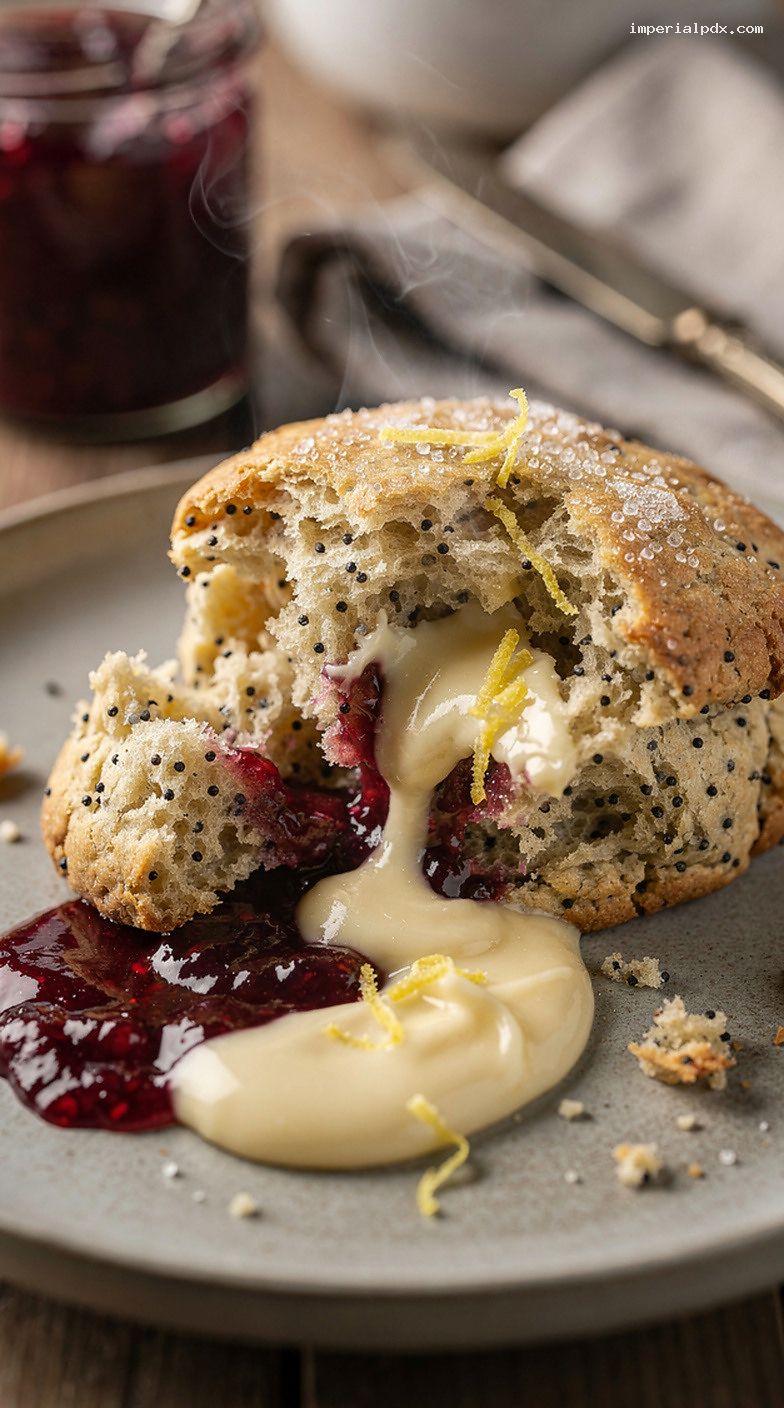
Step-by-Step Instructions
Step 1: Prep the pan and preheat
Arrange an oven rack in the center position. Preheat the oven to 400°F (204°C). Line a rimmed baking sheet with parchment paper (or a silicone baking mat). This helps the bottoms brown evenly and prevents sticking.
Step 2: Combine the dry ingredients and zest
In a large mixing bowl, whisk together the flour, granulated sugar, poppy seeds, baking powder, salt, and lemon zest. Take a moment to rub the zest into the sugar with your fingertips; this releases the lemon oils and boosts the citrus aroma throughout the dough.
Step 3: Add the butter for a flaky, layered crumb
Add the frozen, grated butter to the bowl. Toss with a fork (or your fingers) until the butter is evenly coated in flour and the mixture looks shaggy with lots of visible butter bits. If your kitchen is warm, pop the bowl into the freezer for 5 minutes to keep the butter cold.
Step 4: Mix the cold wet ingredients
In a small bowl, whisk together the cold heavy cream, egg, vanilla extract, and fresh lemon juice until smooth. Pour this into the flour-butter mixture.
Use a fork to stir until the dough looks rough and slightly dry in spots. Then gently press and fold with your hands just until it comes together. The key is to stop mixing as soon as there’s no loose flour at the bottom of the bowl.
Step 5: Fold the dough to create flaky layers
Turn the dough out onto a lightly floured surface. Pat it into a rectangle about 1 inch (2.5 cm) thick (roughly 8 x 5 inches). Fold the dough into thirds like a letter (left side over center, then right side over). Rotate 90 degrees, pat it back into a rectangle, and fold into thirds again.
After the second fold, gently pat the dough into an 8-inch (20 cm) round about 1 inch (2.5 cm) thick. If the dough sticks, dust very lightly with flour; avoid adding too much extra flour, which can make scones dry.
Step 6: Cut, chill, and finish the tops
Use a sharp knife or bench scraper to cut the round into 8 wedges. Transfer the wedges to the prepared baking sheet, spacing them at least 1 inch apart.
Chill the scones in the refrigerator for 20 minutes. This firms the butter so the scones rise higher and bake up flakier.
After chilling, brush the tops lightly with the 2 tablespoons (30 ml) heavy cream. Sprinkle with coarse sugar if using.
Step 7: Bake until golden and serve with jam or honey butter
Bake at 400°F (204°C) for 16–18 minutes, rotating the pan halfway through, until the tops are golden and the edges look set. A scone is done when it feels light for its size and the center no longer looks wet.
Cool on the pan for 10 minutes, then transfer to a rack. Serve warm or at room temperature with jam, or make the honey butter while they cool.
Step 8: Make the honey butter (optional)
In a small bowl, stir together the softened butter, honey, and a pinch of salt until smooth and glossy. Serve alongside the scones, or spread directly on warm halves so it melts into the crumb.
Pro Tips
- Keep everything cold: Cold butter and cold cream are what give you the best lift and the flakiest layers. If the dough warms up, chill it for 10 minutes before shaping.
- Don’t overmix: Stir just until the dough comes together. Overmixing develops gluten and makes scones tough instead of tender.
- Use a sharp cutter: Clean cuts help the scones rise evenly. Press straight down (don’t saw back and forth) if using a bench scraper.
- Chilling matters: That 20-minute chill helps the scones hold their shape and brown more evenly.
- Want extra lemon punch? Add another 1/2 tbsp zest, or serve with lemon curd alongside the jam.
Variations
- Lemon glaze finish: Whisk 3/4 cup (90 g) powdered sugar with 1 1/2–2 tbsp (22–30 ml) lemon juice and drizzle over cooled scones.
- Blueberry lemon-poppy: Gently fold in 1 cup (150 g) fresh blueberries after the wet ingredients are added (work quickly and lightly).
- Whole-wheat twist: Replace 1/2 cup (62 g) of the all-purpose flour with 1/2 cup (60 g) whole-wheat flour for a slightly nuttier flavor.
Storage & Make-Ahead
Storage: Once completely cool, store scones in an airtight container at room temperature for up to 2 days. For longer storage, freeze in a freezer-safe bag for up to 2 months.
Reheating: Warm at 300°F (149°C) for 8–10 minutes (or until just heated through). Frozen scones can be reheated at 300°F (149°C) for 12–15 minutes.
Make-ahead: Cut the dough into wedges, place on a parchment-lined sheet, and freeze until solid (about 1 hour). Transfer to a bag and freeze up to 2 months. Bake from frozen at 400°F (204°C) for 18–22 minutes, brushing with cream and adding coarse sugar right before baking.
Nutrition (per serving)
Approximate, per 1 scone (without jam or honey butter): 285 calories; 14 g fat; 34 g carbohydrates; 1 g fiber; 10 g sugar; 6 g protein; 320 mg sodium.