Quick Recipe Version (TL;DR)
Quick Ingredients
- 4 large turkey legs (about 5 lb / 2.3 kg total)
- 3 tbsp (54 g) Diamond Crystal kosher salt (or 2 tbsp / 36 g Morton kosher salt)
- 2 tbsp (25 g) packed light brown sugar
- 2 tsp smoked paprika
- 2 tsp black pepper
- 2 tsp garlic powder
- 1 tsp onion powder
- 1 tsp ground mustard
- 1 tsp dried thyme
- 1/4 tsp cayenne pepper
- Optional for fair-style cured flavor/color: 1 level tsp (5.7 g) Prague Powder #1 (curing salt)
- 1/2 cup (120 ml) apple juice
- 2 tbsp (30 ml) apple cider vinegar
- 2 tbsp (28 g) unsalted butter, melted
- 1 tbsp (21 g) honey
- 1 tbsp (15 g) BBQ sauce
- Hardwood for smoking (hickory or oak), 2 cups chunks (or 3 cups chips)
Do This
- 1. Mix dry cure (salt, sugar, spices; add curing salt if using). Rub all over 4 turkey legs.
- 2. Refrigerate uncovered on a rack for 18 hours.
- 3. Rinse off cure, pat very dry, and air-dry on a rack in the fridge for 1 hour.
- 4. Heat smoker to 250°F (121°C). Add hickory/oak. Smoke legs for 3 hours.
- 5. After the first 90 minutes, spritz every 30 minutes with apple juice + vinegar.
- 6. Raise heat to 375°F (190°C). Brush with butter + honey + BBQ sauce; cook 25 minutes, until 175°F (79°C) internal.
- 7. Rest 10 minutes, then serve hot with extra BBQ sauce and napkins.
Why You’ll Love This Recipe
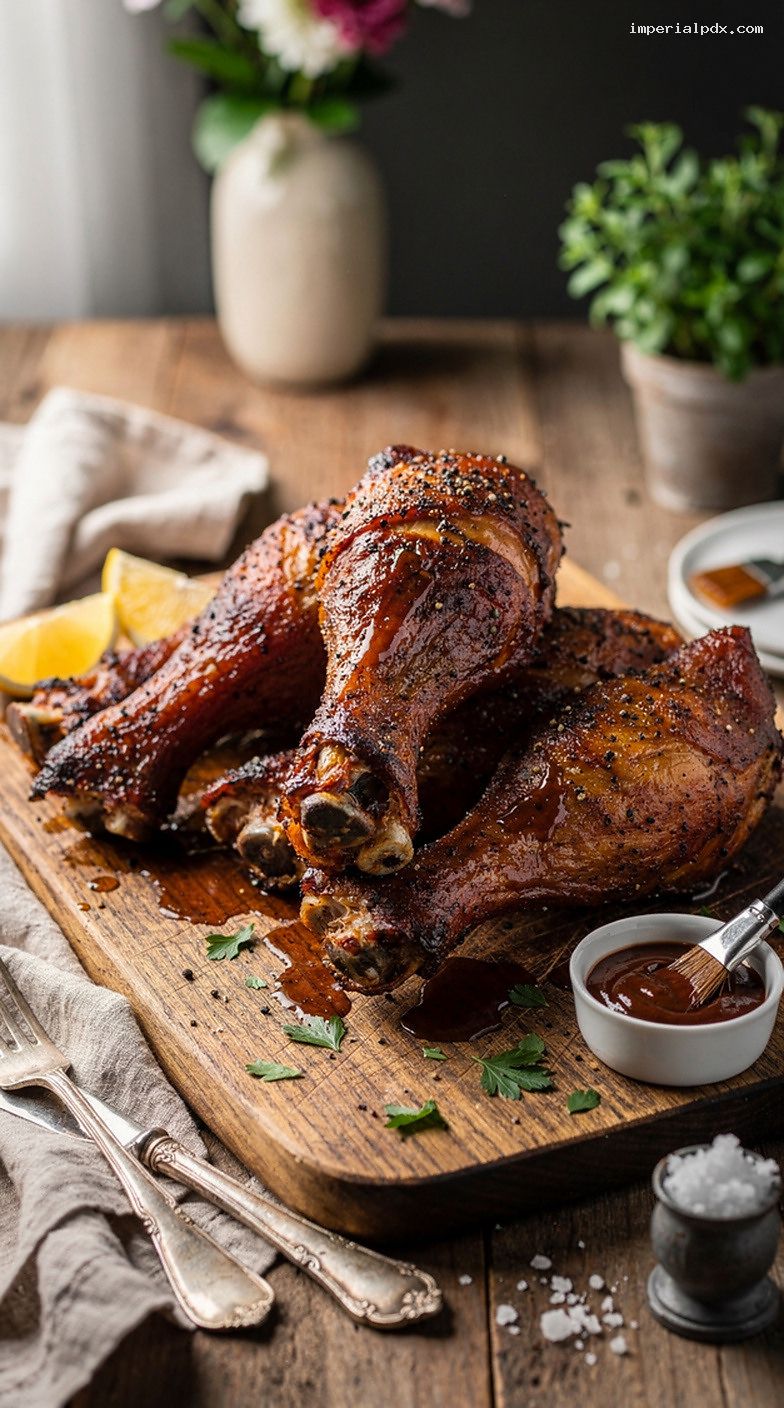
- Big fair-style turkey legs with bronzed smokehouse color and juicy meat.
- Dry-brine/cure gives deep seasoning all the way to the bone (no bland bites).
- Two-stage cook: low-and-slow smoke for tenderness, then higher heat for darker, better skin.
- Flexible: works on a dedicated smoker, a charcoal grill, or a pellet grill.
Grocery List
- Produce: optional fresh parsley (for garnish), optional lemon wedges (for serving)
- Dairy: unsalted butter
- Pantry: turkey legs, kosher salt, light brown sugar, smoked paprika, black pepper, garlic powder, onion powder, ground mustard, dried thyme, cayenne pepper, apple juice, apple cider vinegar, honey, BBQ sauce
Full Ingredients
Turkey
- 4 large turkey legs (drumsticks), about 5 lb (2.3 kg) total
Fair-Style Dry Cure / Dry Brine
- 3 tbsp (54 g) Diamond Crystal kosher salt (or 2 tbsp / 36 g Morton kosher salt)
- 2 tbsp (25 g) packed light brown sugar
- 2 tsp smoked paprika
- 2 tsp freshly ground black pepper
- 2 tsp garlic powder
- 1 tsp onion powder
- 1 tsp ground mustard
- 1 tsp dried thyme
- 1/4 tsp cayenne pepper
- Optional (for classic fair-style “cured” aroma and pinker meat): 1 level tsp (5.7 g) Prague Powder #1 (curing salt), for up to 5 lb (2.3 kg) of turkey legs
Spritz (helps smoke adhere and keeps the surface from drying)
- 1/2 cup (120 ml) apple juice
- 2 tbsp (30 ml) apple cider vinegar
High-Heat Finish Glaze (for darker skin and shine)
- 2 tbsp (28 g) unsalted butter, melted
- 1 tbsp (21 g) honey
- 1 tbsp (15 g) BBQ sauce
Smoke & Serving
- Hardwood for smoking: 2 cups chunks (hickory or oak recommended; cherry is great blended in for color)
- BBQ sauce, for serving (about 1/2 cup / 120 ml, optional)
- Optional garnish: chopped parsley; optional lemon wedges
Step-by-Step Instructions
Step 1: Trim, dry, and set up a rack
Pat the turkey legs dry with paper towels. If there are extra flaps of loose skin or large fatty bits hanging off, trim them so the legs cook and brown more evenly. Don’t remove the skin entirely; it protects the meat and helps you get that classic fair-style look.
Set a wire rack over a rimmed baking sheet (this keeps airflow around the legs during curing and drying).
Step 2: Mix the fair-style cure (dry brine)
In a small bowl, combine the kosher salt, brown sugar, smoked paprika, black pepper, garlic powder, onion powder, ground mustard, thyme, and cayenne.
If using Prague Powder #1, mix it in thoroughly so it’s evenly distributed. (Important: use Prague Powder #1 only as written; do not substitute other curing salts, and do not increase the amount.)
Step 3: Rub, rack, and refrigerate for 18 hours
Rub the cure mixture all over each turkey leg, covering the thickest parts and getting into any creases around the joint. Place the legs on the rack, skin-side up.
Refrigerate uncovered for exactly 18 hours. This seasons the meat deeply and helps the surface dry so it takes smoke better.
Step 4: Rinse, dry well, and form a pellicle (1 hour)
Remove the turkey legs from the fridge. Rinse each leg briefly under cool water to remove excess cure from the surface (this helps prevent the exterior from getting too salty). Pat very dry with paper towels.
Return the legs to the rack and refrigerate uncovered for exactly 1 hour. This creates a slightly tacky surface (pellicle) that helps smoke cling and improves browning.
Step 5: Preheat the smoker to 250°F (121°C)
Preheat your smoker (or set up a charcoal grill for indirect heat) to a steady 250°F (121°C). Add hardwood: hickory or oak gives that classic “fair” aroma; adding a small handful of cherry wood gives great color.
If your smoker uses a water pan, fill it with hot water to help stabilize temperature and keep the surface from drying too quickly.
Step 6: Smoke low-and-slow for 3 hours, spritzing on schedule
Place the turkey legs in the smoker with space between them so smoke and heat can circulate. Smoke at 250°F (121°C) for exactly 3 hours.
Mix the spritz: apple juice + apple cider vinegar in a spray bottle. After the first 90 minutes of smoking, spritz the legs every 30 minutes (so you’ll spritz at 1:30, 2:00, and 2:30). Keep the smoker closed as much as possible; spritz quickly and get the lid closed again.
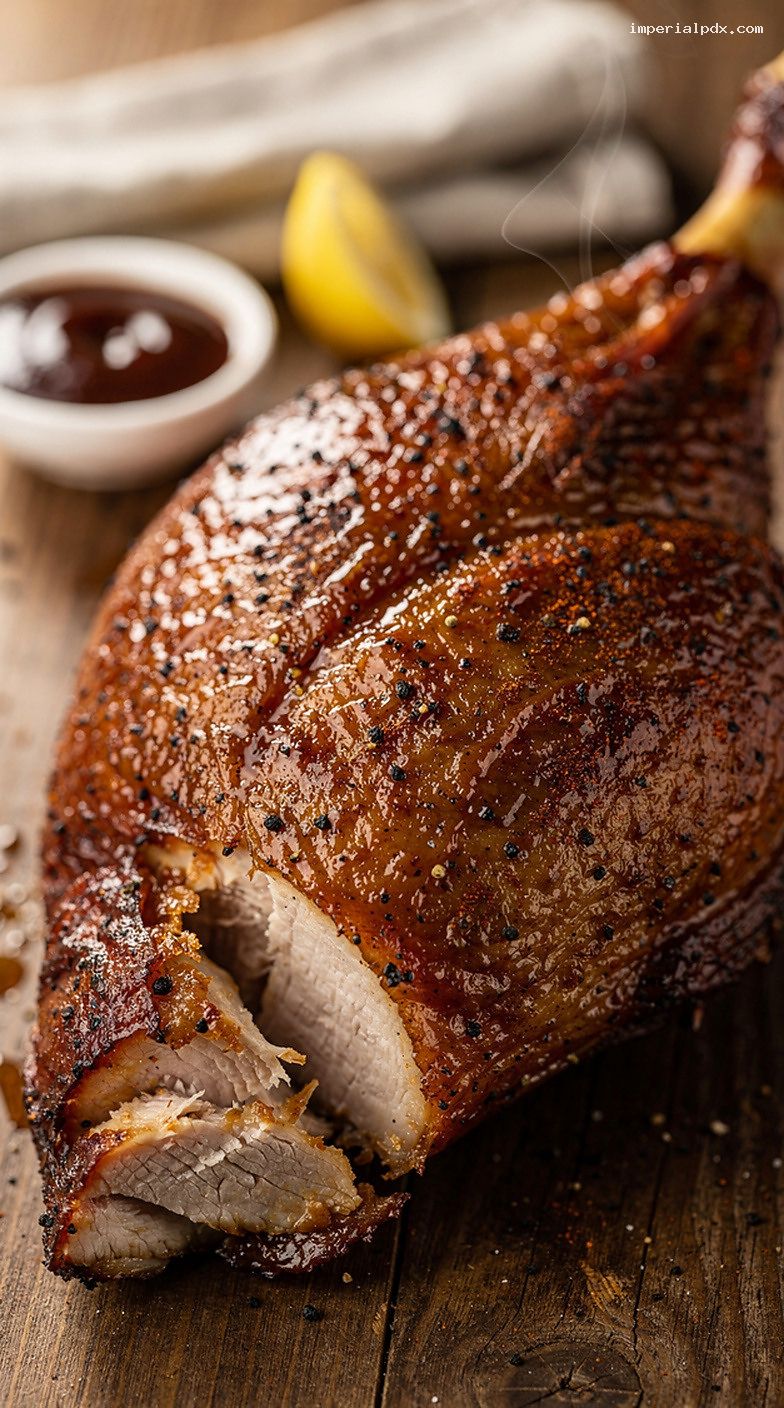
By the end of 3 hours, the legs should look bronzed and smoky.
Step 7: Finish hot at 375°F (190°C) for darker skin, then rest
Increase the cooker temperature to 375°F (190°C). In a small bowl, stir together the melted butter, honey, and BBQ sauce.
Brush the legs all over with the glaze. Cook at 375°F (190°C) for exactly 25 minutes, brushing once more halfway through (at the 12-minute mark) for extra shine and color.
Confirm doneness with an instant-read thermometer inserted into the thickest part without touching bone: the target internal temperature is 175°F (79°C) for juicy meat that still pulls cleanly.
Rest the turkey legs for exactly 10 minutes (this keeps the juices in the meat and makes them easier to handle). Serve hot, optionally with extra BBQ sauce, chopped parsley, and lemon wedges.
Pro Tips
- Use temperature as the final judge. Turkey legs vary a lot in size. Keep the schedule, but always confirm you hit 175°F (79°C) in the thickest spot for the best texture.
- Uncovered fridge time matters. The uncovered cure and the 1-hour drying step help you get better smoke adhesion and a darker, less rubbery skin.
- Wood choice affects “fair” flavor. Hickory is the classic theme-park vibe; oak is slightly smoother. Add a little cherry for richer color.
- Don’t overdo the spritz. Too much spritzing can cool the smoker and wash off developing bark. Stick to the exact schedule.
- If you skip curing salt, still do the dry brine. You’ll lose the hammy cured note and pink color, but the legs will still be deeply seasoned and smoky.
Variations
- Garlic-pepper fair leg: Replace smoked paprika with 1 tbsp coarse black pepper (total) and increase garlic powder to 1 tbsp (total) for a more classic peppery bite.
- Spicy BBQ finish: Add 1 tsp hot sauce to the butter-honey-BBQ glaze and increase cayenne to 1/2 tsp in the cure.
- Citrus-herb smokehouse: Add 1 tsp dried rosemary to the cure and serve with lemon wedges (skip the BBQ sauce in the glaze; use butter + honey only).
Storage & Make-Ahead
Refrigerate: Cool leftovers to room temperature for no more than 1 hour, then wrap tightly and refrigerate for up to 4 days.
Reheat (best method): Wrap legs in foil with 1 tbsp water. Reheat in a 325°F (163°C) oven for 25–35 minutes, until hot throughout (165°F / 74°C). Unwrap for the last 5 minutes to re-crisp the skin.
Make-ahead: You can apply the cure up to 18 hours in advance exactly as written. For the best skin, smoke and finish the day you plan to serve.
Nutrition (per serving)
Approximate per 1 turkey leg (recipe makes 4): 520 calories, 48 g protein, 34 g fat, 8 g carbohydrates, 3 g sugar, 1800 mg sodium. (Values vary based on turkey leg size and how much glaze sticks.)