Quick Recipe Version (TL;DR)
Quick Ingredients
- 1 rack beef back ribs (4.5–5.5 lb), membrane removed
- 2 tbsp coarse kosher salt (about 24 g)
- 2 tbsp coarse-ground black pepper (16-mesh preferred, about 14 g)
- 1 tsp garlic powder (optional)
- 1 tsp onion powder (optional)
- Smoking wood: 3–4 cups oak or hickory chunks (or 4–6 oz pellets)
- Mop: 1/2 cup beef broth, 1/4 cup apple cider vinegar, 2 tbsp unsalted butter, 1 tbsp Worcestershire, 1 tsp hot sauce
Do This
- 1. Trim ribs, remove membrane, and season with salt + pepper (and optional garlic/onion). Rest 30–60 minutes (or dry brine 8–24 hours).
- 2. Preheat smoker to 250°F and set up for indirect cooking with oak/hickory smoke.
- 3. Smoke ribs meat-side up at 250°F for 3 hours, undisturbed, until bark looks set.
- 4. Mix mop; start lightly mopping every 30 minutes for the last 1–2 hours.
- 5. Keep smoking until probe-tender between the bones and internal temp is about 200–205°F (typically 6–6.5 hours total).
- 6. Rest ribs, loosely tented, for 30–45 minutes.
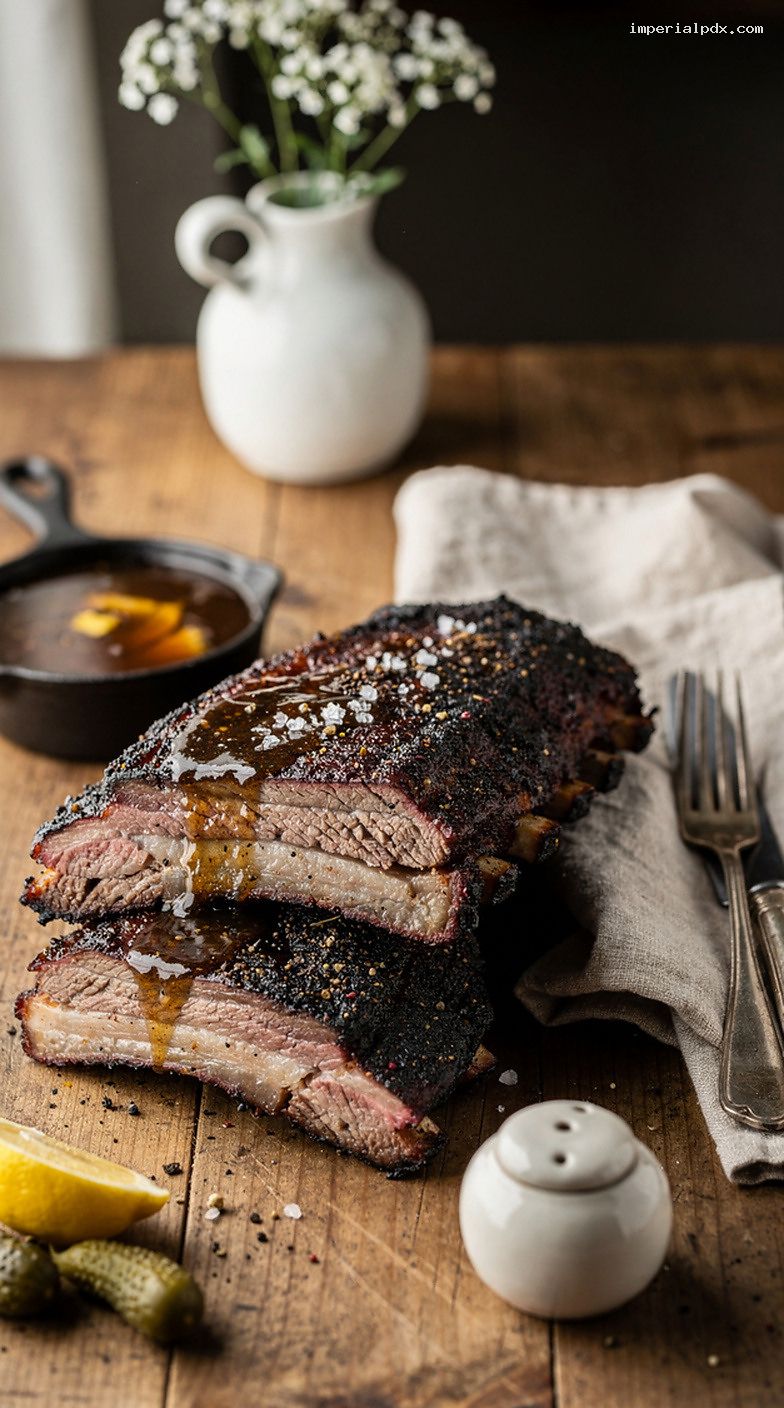
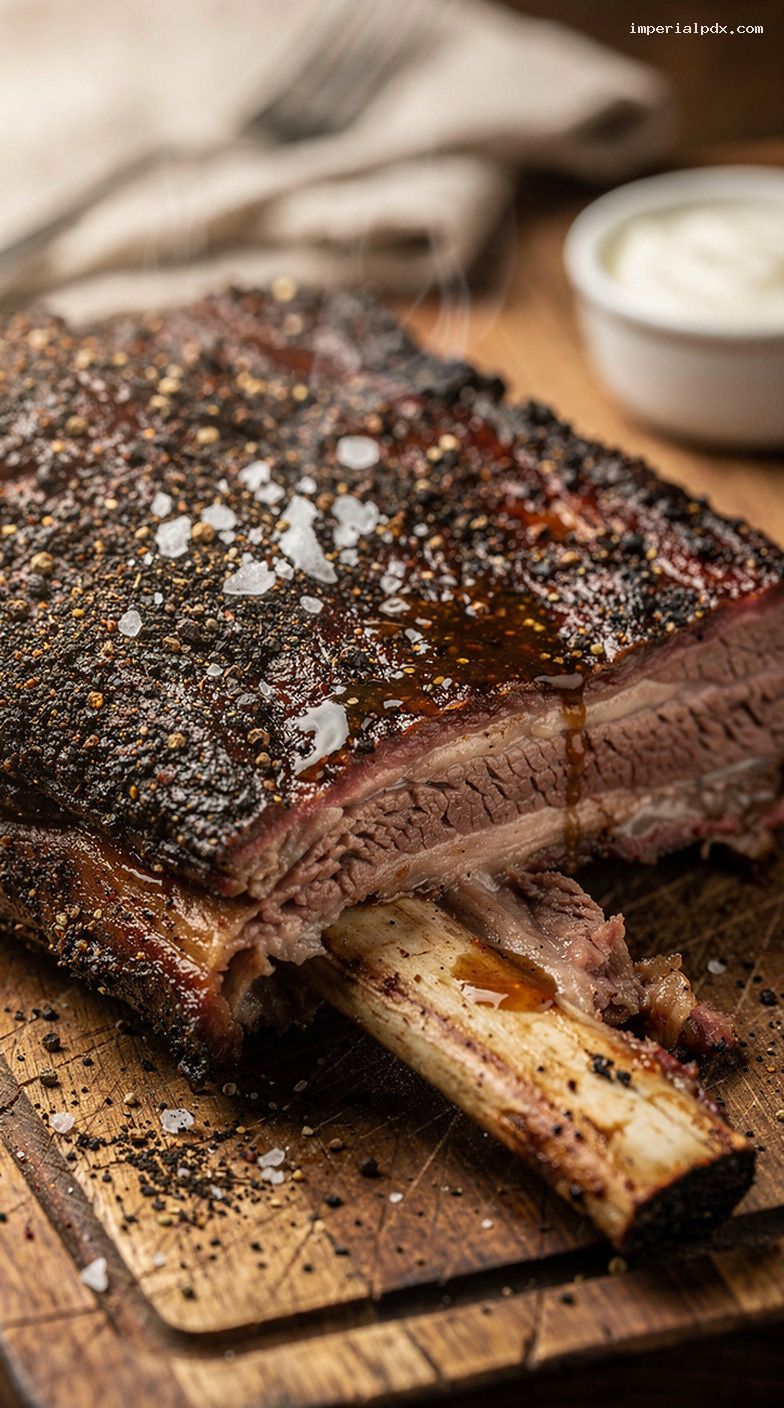
- 7. Slice between bones and serve as big “dino-style” portions with extra black pepper on top.
Why You’ll Love This Recipe
- Big, dramatic, shareable ribs: Beef back ribs eat like a steak-on-a-stick when smoked “dino style.”
- Simple Texas-style seasoning: Coarse salt and pepper build a bold bark without fuss.
- Deep beefy flavor + rendered fat: Low-and-slow heat melts connective tissue and turns the fat silky.
- Light mop for shine and balance: A thin, tangy mop keeps the surface lively without washing off the bark.
Grocery List
- Produce: None required (optional: lemon wedges, parsley for serving)
- Dairy: Unsalted butter
- Pantry: Beef back ribs (4.5–5.5 lb rack), coarse kosher salt, coarse-ground black pepper (16-mesh if possible), garlic powder (optional), onion powder (optional), beef broth, apple cider vinegar, Worcestershire sauce, hot sauce, smoking wood chunks (oak or hickory) or pellets, butcher paper or heavy-duty foil (optional)
Full Ingredients
For the ribs
- 1 rack beef back ribs, 4.5–5.5 lb (ask for the meatiest rack you can find)
- 1–2 tsp neutral oil (optional, as a binder)
Texas-style salt & pepper rub
- 2 tbsp coarse kosher salt (about 24 g)
- 2 tbsp coarse-ground black pepper (16-mesh preferred, about 14 g)
- 1 tsp garlic powder (optional, for extra savoriness)
- 1 tsp onion powder (optional)
Light mop (thin, not sweet)
- 1/2 cup beef broth
- 1/4 cup apple cider vinegar
- 2 tbsp unsalted butter
- 1 tbsp Worcestershire sauce
- 1 tsp hot sauce (choose a vinegar-forward style)
Fuel and smoke
- Smoking wood: 3–4 cups oak or hickory chunks (or 4–6 oz pellets for a pellet grill)
- Charcoal or propane as needed for your cooker
Optional for serving
- Freshly cracked black pepper, to finish
- Lemon wedges (for a bright squeeze right before eating)
- Pickles and sliced onions (classic barbecue sidekicks)
Step-by-Step Instructions
Step 1: Trim and remove the membrane
Unwrap the beef back ribs and pat them very dry with paper towels. Flip them bone-side up. If there’s a thin, shiny membrane (silver skin) covering the bones, slide a butter knife under it over a middle bone, then grab it with a paper towel and pull it off in one sheet. Removing it helps smoke and seasoning penetrate and makes the ribs easier to eat.
If there are any loose flaps or dangling bits, trim them so they don’t burn. Don’t over-trim; the fat is part of what makes these ribs luscious.
Step 2: Season generously with salt and pepper
If you like, rub the ribs lightly with 1–2 tsp neutral oil to help the seasoning adhere (not required). Mix the salt, pepper, and optional garlic/onion powders. Season the ribs evenly on all sides, focusing on the meaty top surface.
For the best flavor and bark, let the seasoned ribs rest in the fridge uncovered for 8–24 hours (dry brine). If you’re short on time, let them sit at room temperature for 30–60 minutes while you heat the smoker.
Step 3: Preheat the smoker to 250°F for steady, clean smoke
Set up your smoker for indirect cooking and preheat to 250°F. Add oak or hickory for a bold beef-friendly smoke. Aim for thin, steady smoke (almost “blue”); thick white smoke can turn the bark bitter.
If you have a water pan, fill it with hot water to help stabilize temperature. This is optional but helpful for long cooks.
Step 4: Smoke the ribs until the bark sets
Place the ribs on the grate meat-side up, with the thicker end toward the hotter part of your smoker. Smoke at 250°F for 3 hours without mopping. During this phase you’re building bark: salt and pepper should look dry and “stuck” to the surface.
After 2 hours, do a quick check to make sure nothing is drying too aggressively or burning around the edges. Otherwise, keep the lid closed and let the smoke do its job.
Step 5: Make the light mop and start mopping gently
In a small saucepan, combine the beef broth, apple cider vinegar, butter, Worcestershire, and hot sauce. Warm over low heat just until the butter melts (do not boil). Keep warm.
Beginning around the 3-hour mark, lightly mop the ribs every 30 minutes. Use a basting brush or a small mop and dab rather than scrub—this keeps the bark intact. You’re aiming for a thin sheen, not a wet coating.
Step 6: Cook until probe-tender and the fat is rendered
Continue smoking at 250°F until the ribs are tender when you slide a probe or skewer between the bones (it should go in with little resistance, like soft butter). This usually takes 6 to 6.5 hours total, but cook time can vary by smoker and rib thickness.
Use temperature as a guide, not the only finish line: look for an internal temperature of about 200–205°F in the thickest meaty areas. The surface fat should look glossy and softened, not hard or waxy.
Optional wrap (only if needed): If the ribs seem to stall hard or the edges are getting too dark, wrap tightly in butcher paper or heavy-duty foil after the bark is set (around hour 3–4), then continue cooking at 250°F until tender.
Step 7: Rest, slice “dino style,” and serve
Transfer the ribs to a cutting board and rest 30–45 minutes, loosely tented with foil. Resting helps the juices redistribute so the meat stays moist when you slice.
Slice between the bones with a sharp knife. For a dramatic “dino style” platter, serve large 1–2 bone portions. Finish with a pinch of freshly cracked black pepper and (optional) a squeeze of lemon to brighten the rich beef.
Pro Tips
- Buy the meatiest rack you can: Beef back ribs vary wildly; choose racks with thick meat between bones and a good fat cap.
- Coarse pepper matters: 16-mesh black pepper gives a classic barbecue bark and peppery bite without tasting dusty.
- Keep the mop light: Too much liquid can soften bark. Think “paint a shine,” not “soak.”
- Clean smoke wins: If the smoke smells sharp or acrid, open vents and let the fire burn cleaner before adding more wood.
- Don’t chase a single number: Tenderness (probe feel) is the real doneness test; temperature supports it.
Variations
- Central Texas style (pure SPG): Use only salt and pepper (skip garlic/onion). Finish with extra black pepper at the table.
- Chile-forward pepper bite: Add 1 tsp ancho chile powder to the rub for a deeper, slightly fruity warmth (still not sweet).
- Hot-and-fast option: Smoke at 275°F and start checking for tenderness around 5 hours. Mop as written, but keep it especially light.
Storage & Make-Ahead
Refrigerate leftover ribs within 2 hours. Store in an airtight container for up to 4 days. For best texture, reheat gently: wrap ribs in foil with 2–3 tbsp beef broth, then warm in a 300°F oven for 25–35 minutes until hot. You can also reheat covered on a grill over low indirect heat.
Make-ahead tip: Season the ribs and dry brine uncovered in the fridge for 8–24 hours. This improves seasoning penetration and helps the bark set faster.
Nutrition (per serving)
Approximate, based on 1 of 6 servings: 650 calories, 45 g protein, 52 g fat, 1 g carbohydrates, 0 g fiber, 700 mg sodium. (Values vary widely with rib size, trimming, and how much fat renders.)