Quick Recipe Version (TL;DR)
Quick Ingredients
- 1 1/2 cups (225 g) pitted prunes
- 1/3 cup (80 ml) dark or amber rum
- 3 cups (720 ml) whole milk
- 4 large eggs
- 3/4 cup (150 g) granulated sugar
- 1 1/3 cups (160 g) all-purpose flour
- 2 tsp vanilla extract
- 1/4 tsp fine sea salt
- 3 tbsp (40 g) unsalted butter, melted, plus extra for greasing
Do This
- 1. Soak prunes in rum and just-boiled water for 30 minutes, until plump.
- 2. Heat oven to 350°F (180°C). Generously butter a 9 x 13 in (23 x 33 cm) baking dish.
- 3. Whisk eggs and sugar until frothy. Whisk in flour and salt until smooth.
- 4. Gradually whisk in milk, vanilla, and melted butter to make a thin, crêpe-like batter.
- 5. Spread drained prunes evenly in the prepared dish. Pour batter over the top.
- 6. Bake 40–45 minutes until puffed, deep golden, and just set in the center. Cool until warm, then slice and serve.
Why You’ll Love This Recipe
- A classic taste of Brittany: simple ingredients transformed into a rustic, elegant dessert.
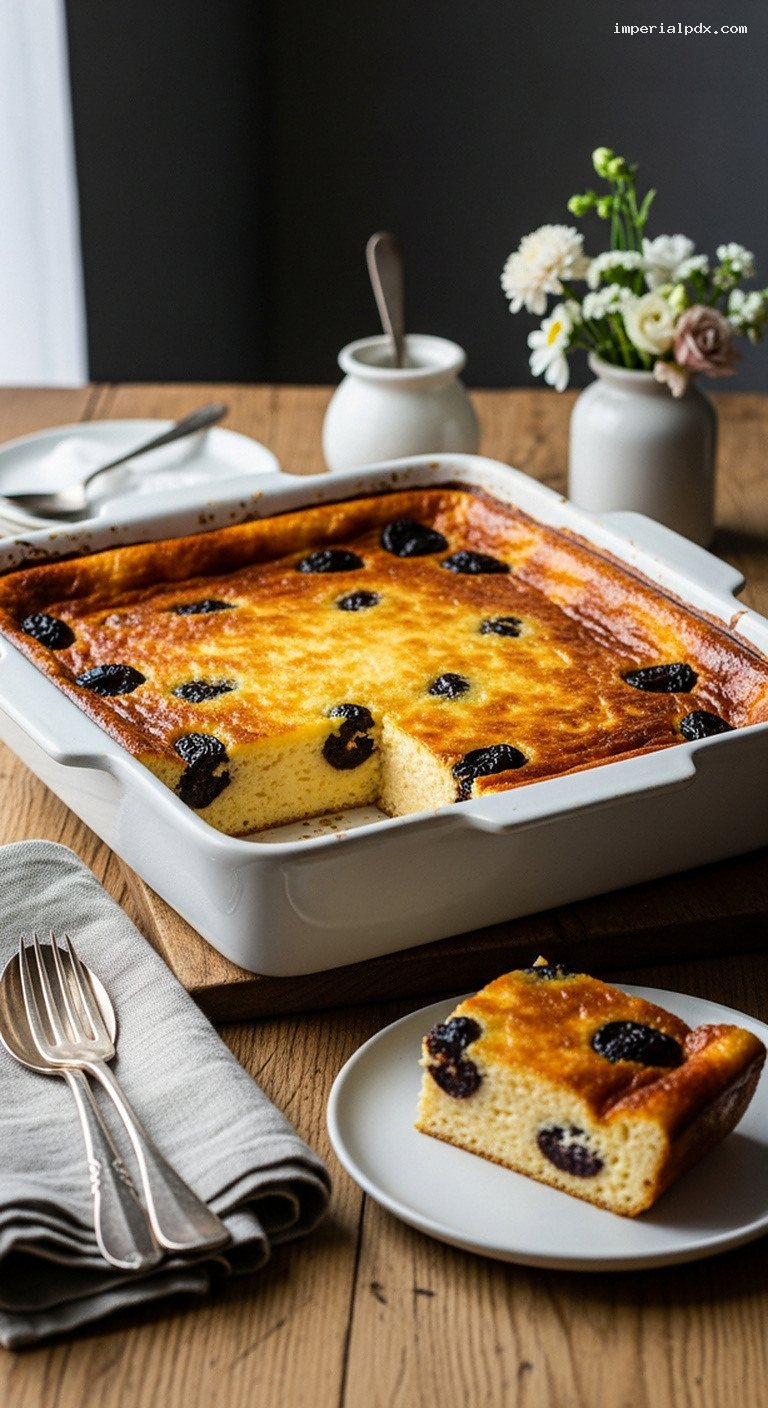
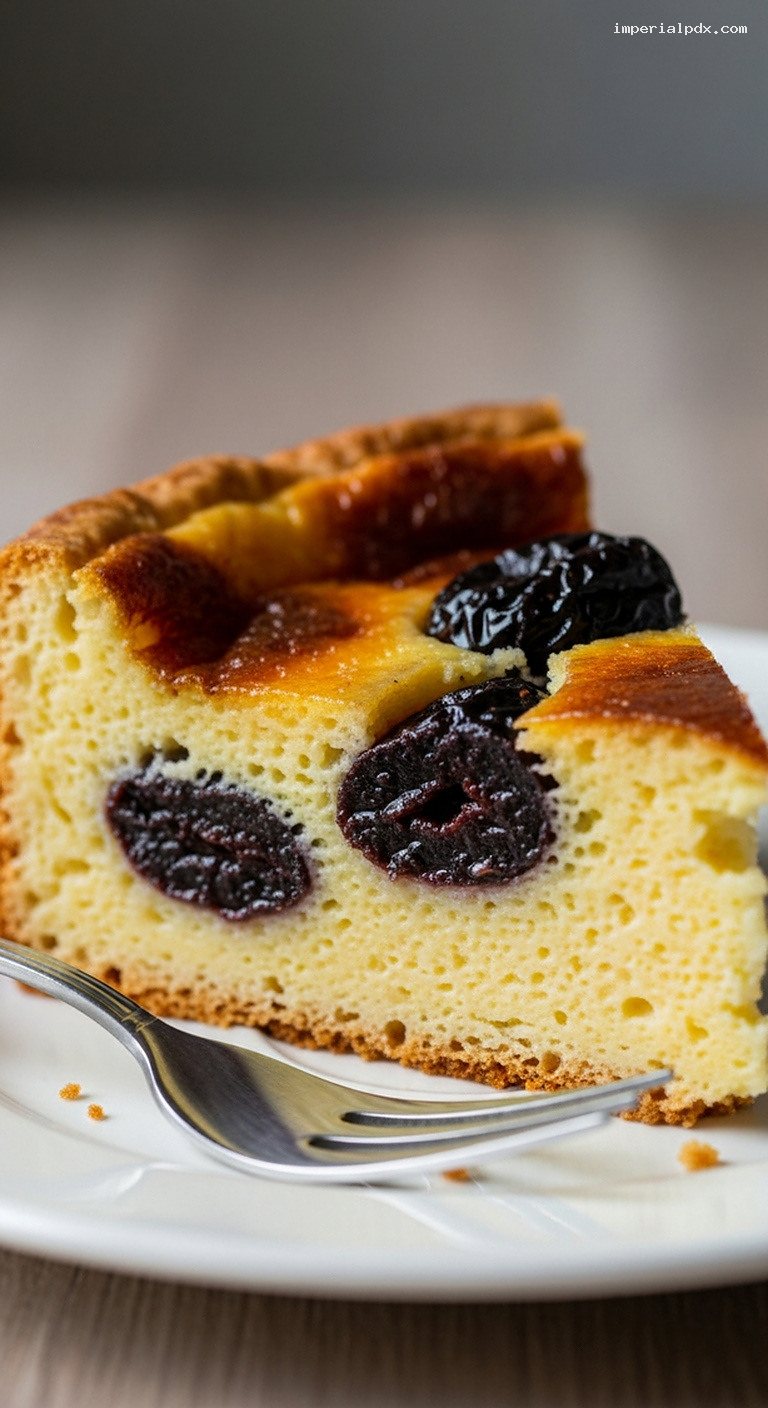
- Custardy and silky inside with a golden, gently blistered top and jammy prunes in every slice.
- Make-ahead friendly: it keeps beautifully and tastes even better the next day.
- Easy batter, no special equipment, and endlessly adaptable to your pantry.
Grocery List
- Produce: Pitted prunes (dried plums)
- Dairy: Whole milk, unsalted butter, eggs
- Pantry: Granulated sugar, all-purpose flour, vanilla extract, dark or amber rum, fine sea salt
Full Ingredients
For the Rum-Soaked Prunes
- 1 1/2 cups (about 8 oz / 225 g) pitted prunes
- 1/3 cup (80 ml) dark or amber rum
- 1/2 cup (120 ml) just-boiled water
For the Custard Batter
- 4 large eggs, at room temperature
- 3/4 cup (150 g) granulated sugar
- 1 1/3 cups (160 g) all-purpose flour
- 1/4 tsp fine sea salt
- 3 cups (720 ml) whole milk, preferably at room temperature
- 2 tsp pure vanilla extract
- 3 tbsp (40 g) unsalted butter, melted and slightly cooled
To Prepare the Pan
- 1–2 tbsp softened unsalted butter, for greasing
- Optional: 1–2 tbsp granulated sugar, for dusting the pan (adds a light, crisp edge)
Step-by-Step Instructions
Step 1: Soak the prunes
Place the pitted prunes in a heatproof bowl. Pour the rum over the top, then add the just-boiled water. Stir briefly so all the prunes are moistened. Let them soak for at least 30 minutes, stirring once or twice, until the prunes are plump and soft. If you have more time, you can soak them for up to 2 hours for an even richer flavor.
After soaking, drain the prunes well, reserving a tablespoon or two of the soaking liquid if you like to drizzle over the finished pudding.
Step 2: Prepare the oven and baking dish
About 15 minutes before you plan to bake, preheat the oven to 350°F (180°C) with a rack in the center. Generously butter a 9 x 13 inch (23 x 33 cm) baking dish or similarly sized ceramic gratin dish, making sure to get into all the corners so the custard does not stick.
For a lightly crisp, caramelized edge, you can sprinkle 1–2 tablespoons of granulated sugar evenly over the buttered dish, tapping and tilting to coat the bottom and sides, then discarding any excess.
Step 3: Start the custard batter
In a large mixing bowl, whisk the eggs and granulated sugar together for 1–2 minutes, until the mixture looks pale and slightly frothy. This helps dissolve the sugar and gives the custard a smooth texture.
In a separate bowl, whisk together the flour and salt to break up any lumps. Sift or sprinkle the dry mixture into the egg–sugar mixture, whisking gently until you have a thick, smooth paste with no visible dry pockets of flour. Do not worry if it is quite stiff at this stage.
Step 4: Thin the batter with milk, vanilla, and butter
Gradually pour in the whole milk, about 1/2 cup (120 ml) at a time, whisking well after each addition to keep the batter smooth. At first it will be thick; as you add more milk it will loosen into a thin, crêpe-like batter.
Whisk in the vanilla extract and the melted (but not hot) butter until fully combined. The finished batter should be silky and fluid, with the consistency of heavy cream or slightly thinner. If you see any small lumps, you can pass the batter through a fine-mesh sieve into a clean bowl.
For best texture, let the batter rest at room temperature for about 20–30 minutes while the prunes finish soaking and the oven heats. This allows the flour to hydrate and results in a more tender, custardy pudding.
Step 5: Arrange the prunes in the dish
Pat the drained prunes lightly with a paper towel to remove excess liquid. Spread them evenly over the bottom of your prepared baking dish. You can arrange them in neat rows or scatter them more randomly for a rustic look, but try to distribute them so that each slice will contain several prunes.
If you reserved a tablespoon of the rum soaking liquid, you can drizzle it lightly over the prunes for extra flavor.
Step 6: Pour, bake, and watch for doneness
Give the batter a brief stir, then gently pour it over the prunes in the baking dish. The prunes may float slightly; that is normal. Carefully transfer the dish to the center rack of the preheated oven.
Bake for 40–45 minutes, or until the far breton is puffed, deeply golden on top, and just set in the center. It should wobble slightly when you jiggle the dish but not look liquid. A thin knife or skewer inserted near the center should come out mostly clean, with a few moist custard streaks but no wet batter.
If the top is browning too quickly before the custard is set, loosely tent the dish with foil for the last 10 minutes of baking.
Step 7: Cool, slice, and serve
Remove the far breton from the oven and set the dish on a cooling rack. It will deflate slightly as it cools; this is expected and part of its rustic charm. Let it cool for at least 20–30 minutes before slicing so the custard can firm up enough to cut cleanly.
Serve warm or at room temperature, cut into squares or rectangles. If you like, brush the top lightly with a teaspoon or two of rum or reserved soaking liquid for a glossy finish, or dust with a little powdered sugar just before serving. Far breton is lovely on its own, but also pairs nicely with a spoonful of crème fraîche, a dollop of softly whipped cream, or a cup of coffee or tea.
Pro Tips
- Room temperature ingredients: Using room temperature eggs and milk helps the batter come together smoothly and bake evenly.
- Rest the batter: A 20–30 minute rest before baking improves the custard texture and reduces bubbles, giving a silky, dense interior.
- Check for gentle wobble: For perfect doneness, remove the far breton when the center still has a slight jiggle. It will continue to set as it cools.
- Use good prunes: Soft, moist prunes give the best texture. If yours are very dry, extend the soaking time and add a little extra hot water.
- Flavor depth: Dark or amber rum adds traditional Breton character. If you prefer less alcohol, use half the rum and more hot water.
Variations
- Alcohol-free version: Skip the rum and soak the prunes in very strong black tea, hot apple juice, or hot orange juice for a fragrant, non-alcoholic twist.
- Apple and prune far: Sauté 1 large apple (thinly sliced) in 1 tbsp butter and 1 tbsp sugar until just tender. Spread the apples and prunes together in the dish before pouring over the batter.
- Mixed dried fruits: Replace up to half of the prunes with dried apricots, figs, or raisins. Cut larger fruits into bite-size pieces and soak them together with the prunes.
Storage & Make-Ahead
Once completely cool, cover the baking dish tightly with plastic wrap or transfer slices to an airtight container. Store in the refrigerator for up to 3 days. The flavor often improves by the next day as the custard and prunes meld together.
To serve leftovers, enjoy chilled, at room temperature, or gently rewarmed. For reheating, place slices in a 300°F (150°C) oven for 10–15 minutes, just until warmed through. Avoid microwaving for too long, as it can make the custard rubbery.
You can also bake the far breton a day in advance: let it cool, refrigerate, then bring it out 30–45 minutes before serving so it can lose its chill.
Nutrition (per serving)
Approximate values per serving (1/8 of the recipe): about 360 calories; 10 g fat; 6 g saturated fat; 53 g carbohydrates; 4 g fiber; 34 g sugars; 9 g protein; 160 mg sodium. These values are estimates and will vary based on exact ingredients and portion sizes.