Quick Recipe Version (TL;DR)
Quick Ingredients
- Chicken: 1 1/2 pounds boneless, skinless chicken thighs, cut into 1 1/2-inch pieces
- Marinade: 3 tablespoons soy sauce, 1 tablespoon sake or mirin, 1 tablespoon grated fresh ginger, 2 teaspoons grated garlic, 1 teaspoon toasted sesame oil, 1 teaspoon sugar, 1/4 teaspoon white or black pepper
- Coating: 3/4 cup potato starch and 1/4 cup all-purpose flour
- Frying: 4 cups neutral oil, or enough for 2 inches in a heavy pot
- To serve: Lemon wedges, shredded cabbage, sliced scallions, Japanese mayonnaise, and shichimi togarashi, optional
Do This
- 1. Cut chicken thighs into bite-size pieces and pat them dry.
- 2. Marinate chicken with soy sauce, sake or mirin, ginger, garlic, sesame oil, sugar, and pepper for 30 minutes.
- 3. Mix potato starch and flour in a shallow dish; heat oil to 325°F.
- 4. Dredge chicken pieces lightly, shaking off excess coating; rest coated pieces for 5 minutes.
- 5. Fry in batches at 325°F for 3 to 4 minutes, until lightly golden; drain on a rack.
- 6. Raise oil to 375°F and fry again for 1 to 2 minutes, until deeply golden and 165°F inside.
- 7. Serve hot with lemon wedges, shredded cabbage, scallions, and Japanese mayonnaise if desired.
Why You’ll Love This Recipe
- Juicy inside, crisp outside: A short soy-ginger marinade seasons the chicken deeply, while potato starch creates a delicate crunch.
- Restaurant-style results at home: The double-fry method gives karaage its signature light, shattery exterior without a heavy batter.
- Weeknight-friendly: The chicken needs only 30 minutes of marinating and cooks quickly in bite-size pieces.
- Flexible serving style: Enjoy it as a main dish with rice and cabbage, as an appetizer, or tucked into lunch boxes.
Grocery List
- Produce: Fresh ginger, garlic, lemon, green cabbage, scallions
- Dairy: None needed
- Meat: Boneless, skinless chicken thighs
- Pantry: Soy sauce, sake or mirin, toasted sesame oil, granulated sugar, white or black pepper, potato starch, all-purpose flour, neutral frying oil, Japanese mayonnaise, shichimi togarashi
Full Ingredients
Chicken and Marinade
- 1 1/2 pounds boneless, skinless chicken thighs, trimmed and cut into 1 1/2-inch bite-size pieces
- 3 tablespoons Japanese soy sauce
- 1 tablespoon sake or mirin
- 1 tablespoon finely grated fresh ginger
- 2 teaspoons finely grated garlic, about 2 medium cloves
- 1 teaspoon toasted sesame oil
- 1 teaspoon granulated sugar
- 1/4 teaspoon ground white pepper or freshly ground black pepper
Light Crisp Coating
- 3/4 cup potato starch
- 1/4 cup all-purpose flour
For Frying
- 4 cups neutral oil, such as canola, vegetable, rice bran, or peanut oil, or enough to fill a heavy pot 2 inches deep
For Serving
- 1 lemon, cut into wedges
- 2 cups finely shredded green cabbage, optional
- 1 scallion, thinly sliced, optional
- 2 tablespoons Japanese mayonnaise, optional
- 1 teaspoon shichimi togarashi, optional
- Cooked Japanese short-grain rice, optional for serving as a meal
Step-by-Step Instructions
Step 1: Cut the chicken into bite-size pieces
Pat the chicken thighs dry with paper towels, then trim away any large pieces of excess fat. Cut the chicken into roughly 1 1/2-inch pieces. Try to keep the pieces similar in size so they cook evenly. Chicken thighs are ideal for karaage because they stay tender and juicy, even after frying.
Step 2: Mix the soy-ginger marinade
In a medium bowl, whisk together the soy sauce, sake or mirin, grated ginger, grated garlic, toasted sesame oil, sugar, and pepper. Add the chicken pieces and toss very well, making sure each piece is coated in the marinade.
Cover the bowl and marinate for 30 minutes at room temperature if your kitchen is cool, or refrigerate for 30 minutes to 4 hours. For the best balance of flavor and texture, do not marinate longer than 4 hours, as the soy sauce can begin to make the chicken overly salty and slightly firm.
Step 3: Prepare the coating and frying station
Set a wire rack over a rimmed baking sheet for draining the fried chicken. In a shallow dish, stir together the potato starch and all-purpose flour. The potato starch gives the karaage a crisp, delicate shell, while the small amount of flour helps the coating cling to the chicken.
Pour the oil into a heavy Dutch oven, deep skillet, or sturdy pot until it is about 2 inches deep. Heat the oil over medium heat to 325°F. Use a deep-fry thermometer or instant-read thermometer to check the temperature accurately.
Step 4: Coat the chicken lightly
Lift the chicken pieces out of the marinade one at a time, letting excess marinade drip back into the bowl. Dredge each piece in the potato starch mixture, pressing gently so the coating adheres in a thin, even layer. Shake off any loose excess.
Place the coated chicken on a plate or small tray and let it rest for 5 minutes before frying. This short rest helps the coating hydrate slightly, which makes it cling better and fry up crisp instead of dusty.
Step 5: First fry at 325°F
Working in batches, carefully lower the coated chicken pieces into the 325°F oil. Do not crowd the pot; each piece should have space around it. Fry for 3 to 4 minutes, turning occasionally, until the chicken is pale golden and the coating is set.
Transfer the first-fried chicken to the wire rack. Let the oil return to 325°F before adding the next batch. This first fry cooks the chicken gently and sets up the crisp coating for the second fry.
Step 6: Rest the chicken and raise the oil temperature
After all the chicken has been fried once, let it rest on the rack for 5 minutes. During this time, the residual heat continues to move through the chicken, helping keep the interior juicy.
Increase the heat and bring the oil to 375°F. The higher temperature in the second fry rapidly crisps the outside and gives karaage its signature golden, crunchy finish.
Step 7: Second fry until deeply crisp
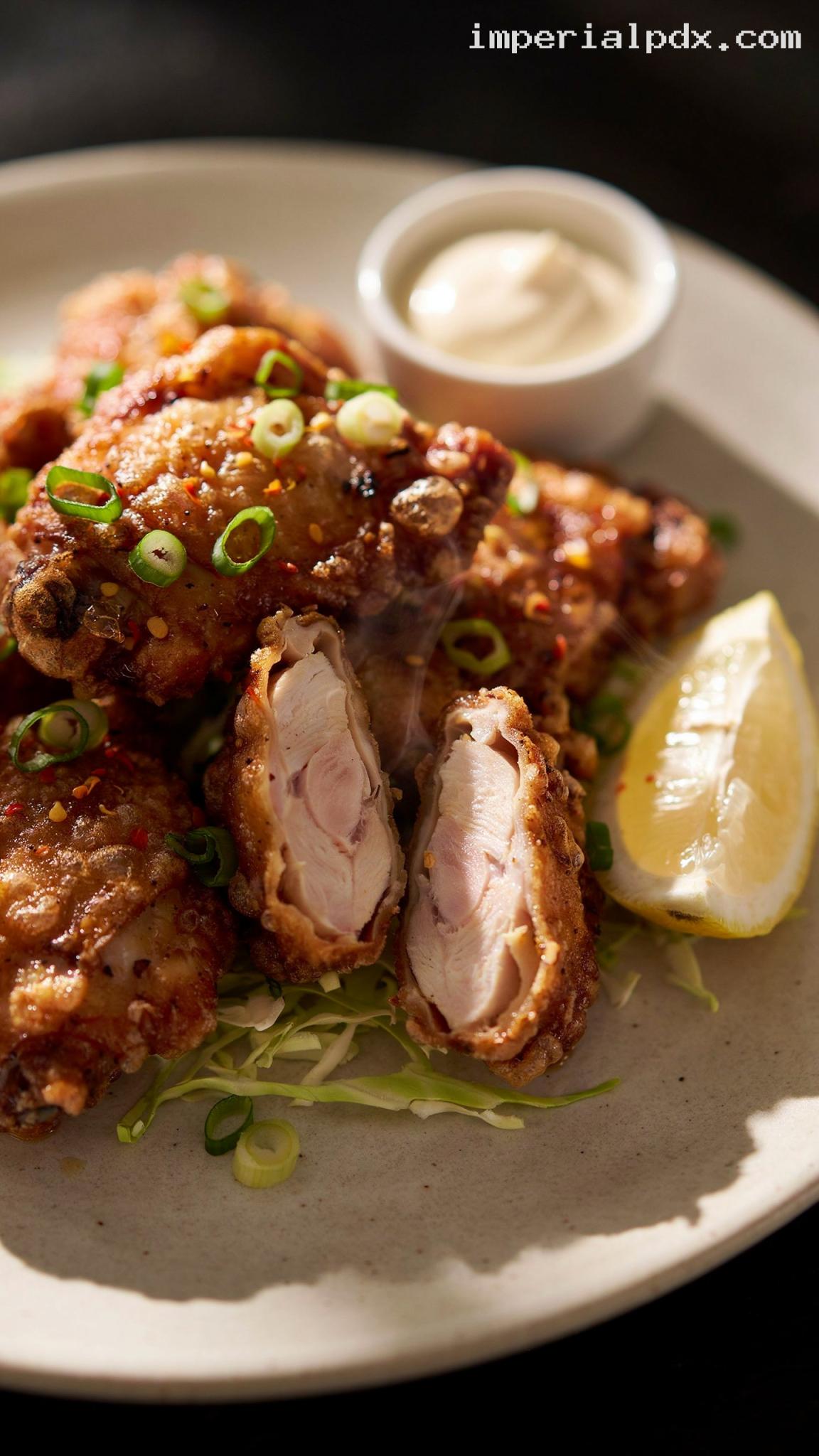
Return the chicken to the oil in batches and fry at 375°F for 1 to 2 minutes, turning once or twice, until the pieces are deeply golden, crisp, and well defined around the edges. The internal temperature of the thickest pieces should reach 165°F.
Transfer the finished karaage back to the wire rack. Avoid draining it on paper towels if possible, because trapped steam can soften the coating. If desired, sprinkle very lightly with a pinch of flaky salt while hot, but taste first because the soy marinade is already savory.
Step 8: Serve hot with bright, fresh garnishes
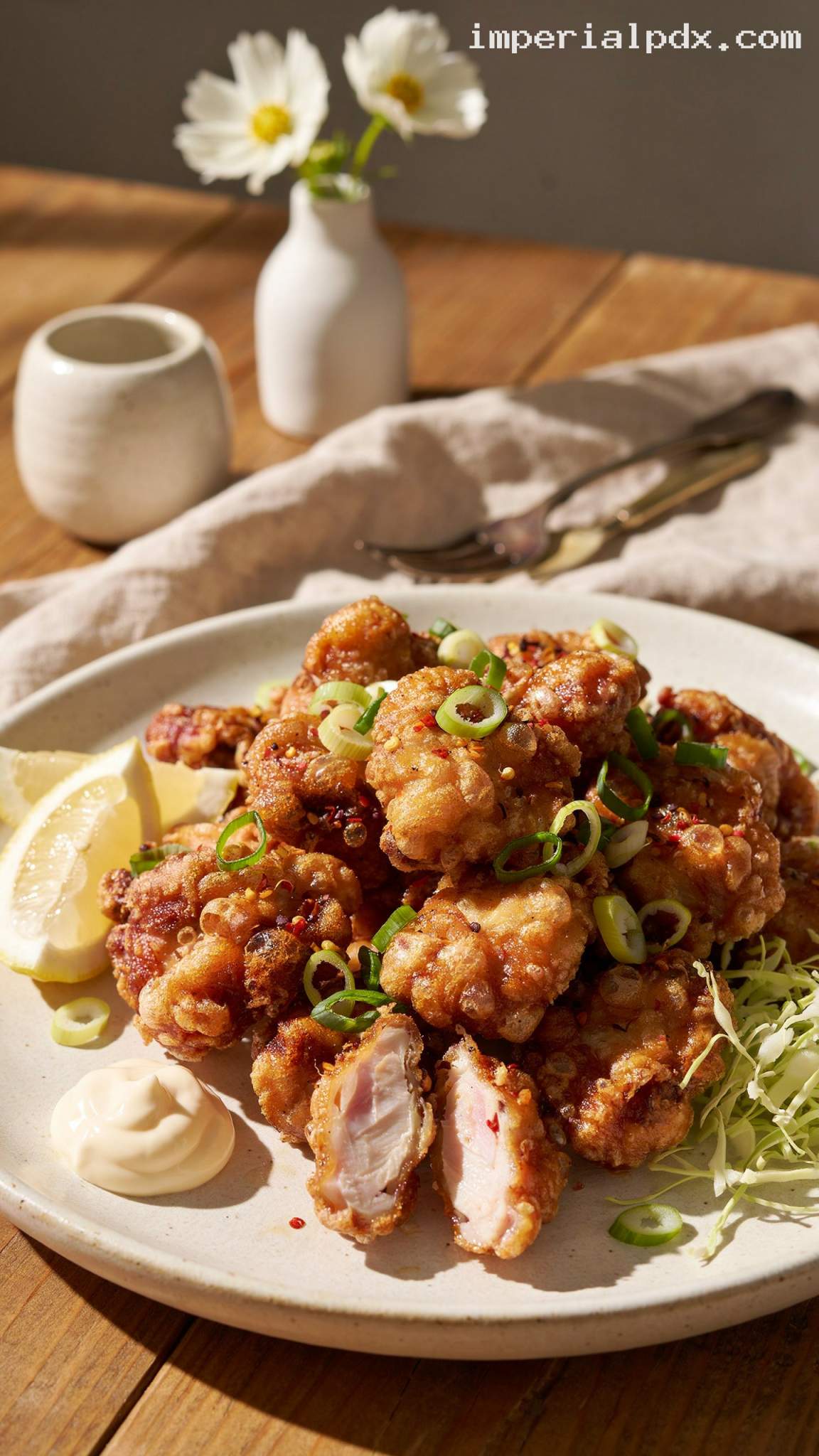
Serve the karaage immediately while the crust is at its crispiest. Arrange it with shredded cabbage, lemon wedges, sliced scallions, and Japanese mayonnaise. A pinch of shichimi togarashi adds gentle heat and citrusy spice. For a full meal, serve with steamed Japanese rice and a simple cucumber salad or miso soup.
Pro Tips
- Use chicken thighs for the juiciest result: Chicken breast works, but thighs are more forgiving and stay succulent through the double fry.
- Keep the coating light: Karaage should not have a thick batter. Dredge, press gently, then shake off the excess so the crust stays delicate.
- Watch the oil temperature: If the oil is too cool, the coating absorbs more oil; if it is too hot, the outside browns before the chicken cooks through.
- Fry in small batches: Crowding the pot lowers the temperature quickly and can make the chicken greasy instead of crisp.
- Use a wire rack for draining: Air circulation keeps the crust crisp on all sides.
Variations
- Spicy karaage: Add 1 teaspoon chili garlic paste or 1/2 teaspoon cayenne pepper to the marinade, then finish with shichimi togarashi.
- Yuzu-style karaage: Add 1 teaspoon yuzu kosho to the marinade and serve with extra lemon or yuzu wedges for a bright citrus finish.
- Sake-free version: Use 1 tablespoon mirin instead of sake and reduce the sugar to 1/2 teaspoon for a slightly sweeter, family-friendly marinade.
Storage & Make-Ahead
Karaage is best eaten right after frying, when the coating is crisp and the chicken is hot. Leftovers can be cooled completely, stored in an airtight container, and refrigerated for up to 3 days. Reheat on a wire rack set over a baking sheet in a 375°F oven for 8 to 10 minutes, or in an air fryer at 350°F for 4 to 6 minutes, until hot and crisp again. Avoid microwaving if you want to preserve the crunchy exterior.
For make-ahead prep, cut the chicken and mix it with the marinade up to 4 hours in advance. Keep it covered in the refrigerator. Wait to coat the chicken until just before frying, because the starch coating becomes gummy if it sits too long. Cooked karaage can also be frozen for up to 1 month; reheat from frozen in a 375°F oven for 14 to 16 minutes.
Nutrition (per serving)
Calories: 486 kcal | Carbs: 24g | Protein: 34g | Fat: 27g | Saturated Fat: 5g | Fiber: 1g | Sugar: 2g | Sodium: 820mg | Cholesterol: 155mg