Quick Recipe Version (TL;DR)
Quick Ingredients
- 1 kg firm apples (about 6–7 medium), peeled and sliced
- 60 g (1/4 cup) granulated sugar + 100 g (1/2 cup) for layering
- 45 ml (3 tbsp) dark or amber rum
- 1 tsp vanilla extract, zest of 1/2 lemon, pinch of salt
- 200 g (1 2/3 cups) all-purpose flour
- 1 large egg
- 120 ml (1/2 cup) lukewarm water
- 1 tbsp neutral oil (grapeseed, canola, or sunflower)
- 1/2 tsp fine salt
- 150 g (10 tbsp) unsalted butter, melted and cooled slightly
Do This
- 1. Toss sliced apples with 60 g sugar, rum, vanilla, lemon zest, and a pinch of salt; marinate 30–60 minutes.
- 2. Make dough: mix flour and salt, add egg, water, and oil; knead until very smooth and elastic (8–10 minutes). Rest 30–45 minutes, covered.
- 3. Heat oven to 190°C / 375°F. Line a 23–26 cm (9–10 inch) round tin with baking parchment and lightly butter it.
- 4. Stretch rested dough on a floured, cloth-covered table until paper-thin and translucent, about 70 x 90 cm (28 x 36 inches).
- 5. Brush entire sheet generously with melted butter, sprinkle with some of the 100 g sugar, and fold into overlapping layers to form a rough rectangle.
- 6. Lay a portion of the folded dough into tin, add a layer of apples, repeat dough–butter–sugar–apples layers, finishing with several buttery dough layers on top.
- 7. Brush top with remaining butter, sprinkle with remaining sugar, and bake 45–50 minutes until deep golden and shatteringly crisp. Cool 15–20 minutes before slicing.
Why You’ll Love This Recipe
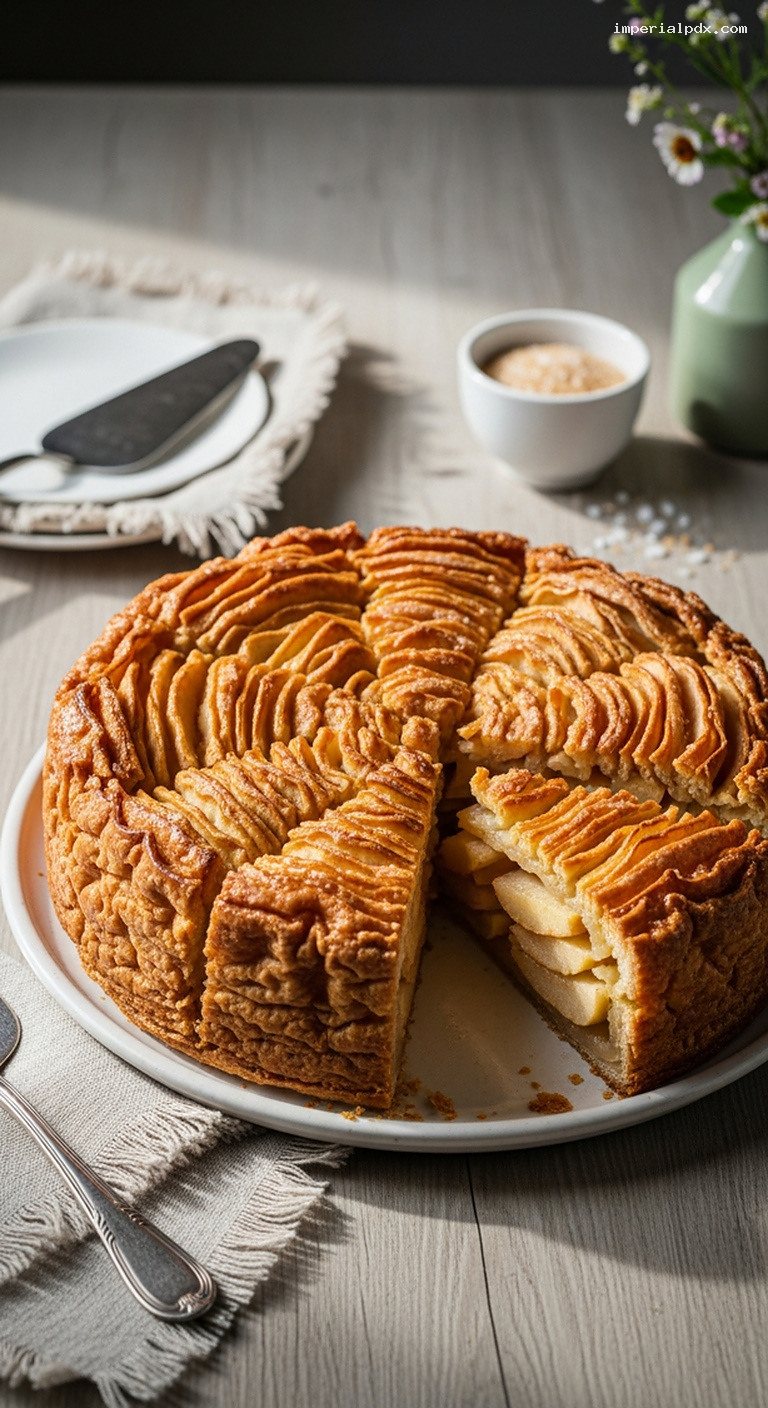
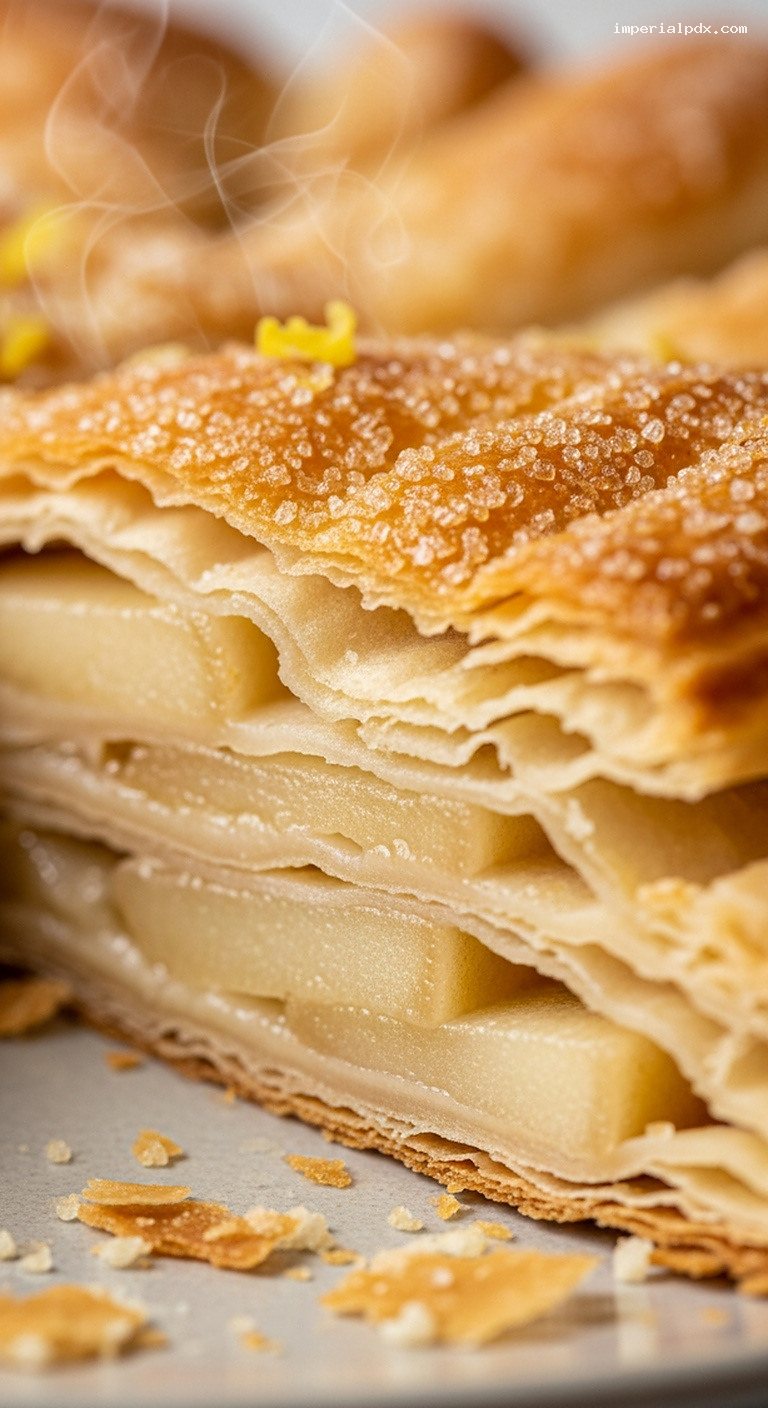
- It is an impressive yet rustic French dessert: ultra-thin, crackly layers wrapped around fragrant, rum-kissed apples.
- The dough uses simple pantry ingredients, and the stretching technique is achievable at home with a bit of patience.
- Most of the work can be done ahead (marinating apples, making dough), making it perfect for entertaining.
- It tastes even better slightly warm or at room temperature, so no last-minute stress at serving time.
Grocery List
- Produce: 1 kg firm apples (such as Golden Delicious, Pink Lady, or Granny Smith), 1 lemon (for zest, optional)
- Dairy: 150 g unsalted butter, 1 large egg
- Pantry: All-purpose flour, granulated sugar, dark or amber rum, vanilla extract, neutral oil, fine salt, optional powdered sugar for serving
Full Ingredients
For the rum-scented apples
- 1 kg firm apples (about 6–7 medium) — peeled, cored, and thinly sliced (3–4 mm / 1/8 inch)
- 60 g (1/4 cup) granulated sugar
- 45 ml (3 tbsp) dark or amber rum (Armagnac or Calvados also work)
- 1 tsp pure vanilla extract
- Finely grated zest of 1/2 lemon (optional but recommended)
- Pinch of fine sea salt
For the paper-thin pastry (Pastis-style dough)
- 200 g (1 2/3 cups) all-purpose flour, plus extra for dusting
- 1/2 tsp fine salt
- 1 large egg (about 50–55 g out of shell), at room temperature
- 120 ml (1/2 cup) lukewarm water
- 1 tbsp neutral oil (grapeseed, canola, or sunflower)
For assembly and finishing
- 150 g (10 tbsp) unsalted butter, melted and cooled until just warm
- 100 g (1/2 cup) granulated sugar, for sprinkling between layers and on top
- Butter or oil, for greasing the pan
- Optional: 2–3 tbsp apricot jam, warmed and thinned with 1 tsp water, for brushing baked top
- Optional: Powdered sugar, for dusting before serving
Step-by-Step Instructions
Step 1: Marinate the apples
Peel, core, and thinly slice the apples into 3–4 mm (about 1/8 inch) slices. Place them in a large bowl. Add 60 g (1/4 cup) sugar, rum, vanilla extract, lemon zest (if using), and a pinch of salt. Toss gently but thoroughly so all the slices are coated.
Cover the bowl and let the apples marinate at room temperature for 30–60 minutes, stirring once or twice. They will soften slightly and release some fragrant juices. Just before using, taste a slice: it should be lightly sweet and delicately boozy. If very tart, you can add an extra 1–2 tsp sugar, but remember more sweetness will come from the sugared pastry layers.
Step 2: Make the pastry dough
In a medium bowl, whisk together the flour and 1/2 tsp salt. In a separate jug or small bowl, whisk the egg, lukewarm water, and 1 tbsp neutral oil until smooth.
Make a well in the flour and pour in the egg mixture. Using a fork or your fingers, gradually pull the flour into the liquid until a shaggy dough forms. Turn it out onto a clean work surface (no extra flour yet) and knead for 8–10 minutes. The dough should become very smooth, soft, and elastic. It should not be sticky; if it is, sprinkle on just 1–2 tsp extra flour and keep kneading.
Form the dough into a smooth ball, place it back in the bowl, and lightly coat with a few drops of oil. Cover tightly with plastic wrap or a lid. Let rest at room temperature for at least 30 minutes and up to 1 hour. This rest makes the dough much easier to stretch paper-thin without tearing.
Step 3: Prepare your pan and work surface
While the dough rests, prepare your baking setup. Butter a 23–26 cm (9–10 inch) round metal cake tin or tart pan (a springform works well) and line the bottom with a circle of baking parchment. Lightly butter the parchment as well. Set the pan aside.
For stretching the dough, cover a large table with a clean, smooth cotton tablecloth or bedsheet. Lightly dust it with flour, then rub the flour over the surface with your hands so there are no heavy patches. You will be stretching the dough until it is roughly 70 x 90 cm (28 x 36 inches), so choose the largest surface you have.
Melt the 150 g butter in a small saucepan or microwave, then let it cool until it is warm but not hot. Keep a pastry brush nearby. Measure out the 100 g (1/2 cup) sugar you will use for sprinkling between layers.
Step 4: Stretch the dough until paper-thin
Place the rested dough ball in the center of your floured cloth. With a rolling pin, roll it into a rough rectangle about 30 x 40 cm (12 x 16 inches). Dust lightly with flour as needed to prevent sticking, but keep it to a minimum.
Now switch to your hands. Slide your hands, knuckles up, under the dough near the center. Gently pull and stretch outward, moving around the table as you work, using the backs of your hands and knuckles to avoid poking holes. Let gravity help as you stretch the edges. Aim to stretch the dough so thin you can clearly see the pattern or color of the cloth underneath.
If a small tear appears, pinch it gently to close it or ignore it; minor tears will be hidden in the folds. Continue until the dough is very large, thin, and almost translucent, roughly 70 x 90 cm (28 x 36 inches). Trim any very thick edges with a knife or scissors.
Step 5: Butter, sugar, and fold the pastry sheet
Once the dough is fully stretched, generously brush the entire surface with melted butter. Be especially thorough around the edges, which tend to dry out quickly.
Sprinkle a light, even layer of the 100 g (1/2 cup) sugar over the buttered dough. You do not need to use all the sugar at this point; just make sure most of the surface has a gentle snowy coating.
Now, using the cloth to help you, fold one long side of the dough toward the center, then fold the opposite long side over it, like folding a letter into thirds. Brush the newly exposed surface with butter and dust lightly with more sugar. Fold the short sides in the same way to create a neat or slightly irregular rectangle roughly the size of your baking pan or a bit larger. Brush again with butter and lightly sugar. You should now have multiple thin, buttery, sugared layers of dough stacked on each other.
Step 6: Assemble the croustade with apples and layers
Heat your oven to 190°C / 375°F with a rack in the lower-middle position.
Cut or tear the folded sheet of dough into 4–6 roughly equal portions. These will form your layered base, middle, and top. Place one portion in the bottom of the prepared pan, gently scrunching or ruffling it so it fits and creates airy folds rather than lying flat. This irregularity is what makes the croustade so crisp and beautiful.
Brush this layer lightly with more melted butter (do not drench it) and sprinkle with a little sugar. Add about one-third of the marinated apple slices in an even layer, leaving behind most of the juices in the bowl so the pastry does not become soggy.
Repeat with another portion of dough, again ruffling, brushing with butter, sprinkling with sugar, then adding another third of the apples. Finish with a final layer of apples and cover with 2–3 remaining portions of dough, slightly overlapping and crumpling them attractively. Use up most of the remaining butter to brush the top generously, and sprinkle it with the last of the sugar for a glossy, crackly finish.
Step 7: Bake until crisp, golden, and fragrant
Place the croustade in the preheated oven and bake for 45–50 minutes, until the top is a deep golden brown, the edges look dry and very crisp, and you can hear a faint, gentle sizzling. Rotate the pan halfway through baking for even color.
If the top is browning too quickly after about 30–35 minutes, tent it loosely with a piece of foil and continue baking until the pastry is thoroughly crisp and the apples are tender.
Optional: As soon as the croustade comes out of the oven, brush the top lightly with warmed, thinned apricot jam for a soft shine and a hint of fruitiness. Let cool in the pan for at least 15–20 minutes before slicing, so the layers can set slightly and become easier to cut.
Step 8: Serve and enjoy
Run a thin knife around the edge of the pan to loosen the pastry, then carefully remove the croustade and transfer it to a serving platter. Dust with powdered sugar just before serving if you like.
Serve warm or at room temperature, cut into wedges. It is wonderful on its own, but also pairs beautifully with a small scoop of vanilla ice cream, lightly sweetened whipped cream, or a dollop of crème fraîche. Enjoy the contrast between the shatteringly crisp pastry and the soft, rum-scented apples inside.
Pro Tips
- Room-temperature dough stretches best: If the dough feels tight or springs back as you stretch it, let it rest a further 10 minutes and try again.
- Work quickly once stretched: Thin dough dries fast. Have your butter melted and sugar measured before you begin stretching so you can fold and layer right away.
- Do not overload with juice: Use mainly the apple slices, not the liquid at the bottom of the bowl, to avoid a soggy base.
- Embrace the ruffles: Scrunching and crumpling the dough creates beautiful, crisp, airy layers. Perfection is not the goal; irregular folds are authentic and delicious.
- Oven heat matters: A well-preheated, hot oven is essential for puffing and crisping the layers. Allow a full 15–20 minutes of preheating.
Variations
- Phyllo shortcut: Replace the homemade pastry with 8–10 sheets of store-bought phyllo. Brush each sheet generously with melted butter and sprinkle lightly with sugar, layering several sheets below and above the apples. Bake as directed.
- Armagnac or Calvados croustade: For a more traditional Gascon flavor, use Armagnac instead of rum. In Normandy-style versions, Calvados pairs beautifully with apples.
- Mixed fruit twist: Combine apples with 1–2 sliced pears or a handful of raisins soaked in rum for a slightly different texture and depth of flavor.
Storage & Make-Ahead
This dessert is at its absolute best within a few hours of baking, when the pastry is at its crispiest. If you need to plan ahead:
You can marinate the apples up to 12 hours in advance; cover and refrigerate, then bring to room temperature and drain off excess liquid before using. The dough can be made and rested (well covered) at room temperature for up to 2 hours, or refrigerated for up to 12 hours; bring it back to room temperature before stretching.
Leftover croustade can be stored, loosely covered, at room temperature for up to 1 day. To revive some of the crispness, reheat wedges on a baking sheet in a 180°C / 350°F oven for 8–10 minutes. After the first day, the pastry will soften, but the flavor is still lovely.
Nutrition (per serving)
Approximate values per serving (1/8 of the croustade): about 420 kcal; 22 g fat; 13 g saturated fat; 52 g carbohydrates; 3 g fiber; 27 g sugars; 6 g protein; 230 mg sodium. These numbers will vary slightly depending on the exact apples, sugar, and butter used, and whether you add jam or serve with cream or ice cream.