Quick Recipe Version (TL;DR)
Quick Ingredients
- 2 tbsp olive oil
- 2 tbsp unsalted butter
- 3 oz pancetta, finely diced (optional but recommended)
- 1 onion, 1 carrot, 1 celery stalk, all finely chopped
- 3 cloves garlic, minced
- 1 lb ground pork
- 1 lb ground veal
- Salt, black pepper, pinch red pepper flakes (optional)
- 1 cup dry white wine
- 1½ cups low-sodium chicken stock
- 1 cup whole milk
- 1 cup heavy cream
- Fresh sage, thyme, bay leaf
- ¼ tsp freshly grated nutmeg
- 1 tsp finely grated lemon zest
- 1 lb tagliatelle or other wide pasta
- Freshly grated Parmigiano-Reggiano, for serving
Do This
- 1. Finely chop onion, carrot, celery, garlic, and pancetta. Measure liquids and herbs.
- 2. In a large heavy pot, warm olive oil and butter over medium heat. Cook pancetta until lightly golden, then add onion, carrot, and celery; soften 8–10 minutes. Stir in garlic.
- 3. Increase heat to medium-high. Add ground pork and veal with 1 tsp salt and pepper. Cook, breaking up meat, until no longer pink and lightly browned, 8–10 minutes.
- 4. Pour in white wine, scraping up browned bits. Simmer until almost fully reduced, 5–7 minutes.
- 5. Add chicken stock, milk, sage, thyme, bay leaf, nutmeg, and red pepper flakes if using. Bring to a gentle simmer, then cook uncovered on low 60–75 minutes, stirring occasionally.
- 6. Stir in heavy cream and lemon zest. Simmer 10–15 minutes more until thick and silky. Adjust salt and pepper; discard herb stems and bay leaf.
- 7. Boil pasta in salted water until al dente. Toss pasta with sauce and a splash of pasta water. Serve with lots of grated Parmigiano-Reggiano.
Why You’ll Love This Recipe
- Rich, velvety sauce that puts the flavor of pork and veal front and center without any tomatoes.
- Gentle white wine, cream, and sage give it an elegant, restaurant-style feel that is still easy to make at home.
- Perfect make-ahead sauce that actually tastes better the next day.
- Comforting and crowd-pleasing, yet just special enough for date night or dinner guests.
Grocery List
- Produce: 1 yellow onion, 1 carrot, 1 celery stalk, 3 cloves garlic, fresh sage, fresh thyme, 1 lemon (for zest)
- Dairy: Unsalted butter, whole milk, heavy cream, Parmigiano-Reggiano cheese
- Pantry: Olive oil, kosher salt, black pepper, red pepper flakes (optional), nutmeg (whole or ground), dry white wine, low-sodium chicken stock, dried tagliatelle or other wide pasta, bay leaf
- Meat: Ground pork, ground veal, pancetta (optional but recommended)
Full Ingredients
For the White Bolognese Sauce
- 2 tbsp olive oil (30 ml)
- 2 tbsp unsalted butter (28 g)
- 3 oz pancetta, very finely diced (about ½ cup / 85 g, optional but recommended)
- 1 medium yellow onion, very finely chopped (about 1 cup / 150 g)
- 1 medium carrot, peeled and very finely chopped (about ½ cup / 70 g)
- 1 celery stalk, very finely chopped (about ½ cup / 60 g)
- 3 cloves garlic, minced
- 1 lb ground pork (450 g)
- 1 lb ground veal (450 g)
- 1½ tsp kosher salt, divided, plus more to taste
- ½ tsp freshly ground black pepper, plus more to taste
- Pinch red pepper flakes (optional, for gentle heat)
- 1 cup dry white wine (240 ml), such as Pinot Grigio or Sauvignon Blanc
- 1½ cups low-sodium chicken stock (360 ml)
- 1 cup whole milk (240 ml), at room temperature if possible
- 1 cup heavy cream (240 ml)
- 2 sprigs fresh sage (or 8–10 leaves tied in kitchen twine)
- 2 sprigs fresh thyme
- 1 bay leaf
- ¼ tsp freshly grated nutmeg (or a scant ¼ tsp ground nutmeg)
- 1 tsp finely grated lemon zest (from about ½ lemon)
For the Pasta and Serving
- 1 lb dried tagliatelle or other wide, long pasta (pappardelle, fettuccine, or mafaldine) (450 g)
- Kosher salt, for pasta water
- ½–¾ cup finely grated Parmigiano-Reggiano, plus extra for the table (50–75 g)
- Extra fresh sage leaves, very thinly sliced, for garnish (optional)
- Freshly ground black pepper, for finishing
Step-by-Step Instructions
Step 1: Prep all your ingredients
Take a few minutes to get everything ready before you start cooking. Finely chop the onion, carrot, and celery into very small, even pieces; this classic base is called a soffritto and should almost melt into the sauce. Mince the garlic. Dice the pancetta into tiny cubes if using. Measure out the wine, stock, milk, and cream. Rinse and pat dry the sage and thyme sprigs. Grate the lemon zest and Parmigiano-Reggiano. Having everything prepped makes the cooking process smooth and stress-free.
Step 2: Build the soffritto with pancetta
In a large, heavy-bottomed pot or Dutch oven, heat the olive oil and butter over medium heat until the butter is melted and foamy. Add the diced pancetta and cook, stirring often, until the fat has rendered and the pancetta is lightly golden but not crispy, about 4–5 minutes.
Add the finely chopped onion, carrot, and celery along with ½ teaspoon of the kosher salt. Cook gently over medium heat, stirring occasionally, until the vegetables are very soft and translucent but not deeply browned, 8–10 minutes. Lower the heat if they start to color; a white Bolognese should stay pale and golden. Stir in the minced garlic and cook for 30–60 seconds more, just until fragrant.
Step 3: Brown the pork and veal
Increase the heat to medium-high. Add the ground pork and veal to the pot, breaking the meat up with a wooden spoon or spatula as it cooks. Sprinkle with another ½ teaspoon of kosher salt, the black pepper, and the pinch of red pepper flakes if using.
Cook, stirring and breaking the meat into very small crumbles, until it is no longer pink and any released liquid has mostly evaporated, 8–10 minutes. You want the meat lightly browned in spots for flavor, but not dark and crusty. If the bottom of the pot looks like it is browning too fast, slightly reduce the heat. As soon as the meat looks cooked through and most moisture is gone, move on to the next step.
Step 4: Deglaze with white wine
Pour in the dry white wine. It should sizzle as it hits the pan. Use your spoon to scrape up any browned bits from the bottom; those bits carry a lot of flavor into the sauce. Let the wine simmer briskly over medium-high heat until it is mostly reduced and no longer smells sharply alcoholic, about 5–7 minutes. You should be left with very little free liquid in the pot and a wonderfully fragrant meat mixture.
Step 5: Add stock, milk, and herbs, then gently simmer
Reduce the heat to medium-low. Add the chicken stock, milk, sage sprigs, thyme sprigs, bay leaf, nutmeg, and the remaining ½ teaspoon of kosher salt. Stir well to combine and bring the mixture just up to a gentle simmer.
Once it is gently bubbling, reduce the heat to low. You want a very soft, lazy simmer—just a few small bubbles breaking the surface. Cook uncovered for 60–75 minutes, stirring every 10 minutes or so to keep the bottom from catching. The sauce will slowly thicken and turn creamy-beige. If it ever looks dry or starts to stick, add a splash of water or extra stock and reduce the heat slightly. This long, gentle cooking time is what gives the sauce its depth and tender texture.
Step 6: Finish with cream and lemon zest
After the long simmer, the meat should be very tender and the liquid mostly reduced into a thick sauce. Fish out and discard the sage stems, thyme stems, and bay leaf. Stir in the heavy cream and lemon zest. Bring the sauce back to a gentle simmer and cook for another 10–15 minutes, stirring occasionally, until the sauce is silky, rich, and coats the back of a spoon.
Taste and adjust the seasoning with more salt and pepper as needed. At this point, you can keep the sauce warm over very low heat while you cook the pasta, or cool it and refrigerate for later.
Step 7: Cook the pasta and bring it all together
Bring a large pot of well-salted water to a rolling boil. Add the tagliatelle and cook according to package directions until just al dente. Before draining, scoop out about 1 cup (240 ml) of the starchy pasta cooking water and set it aside.
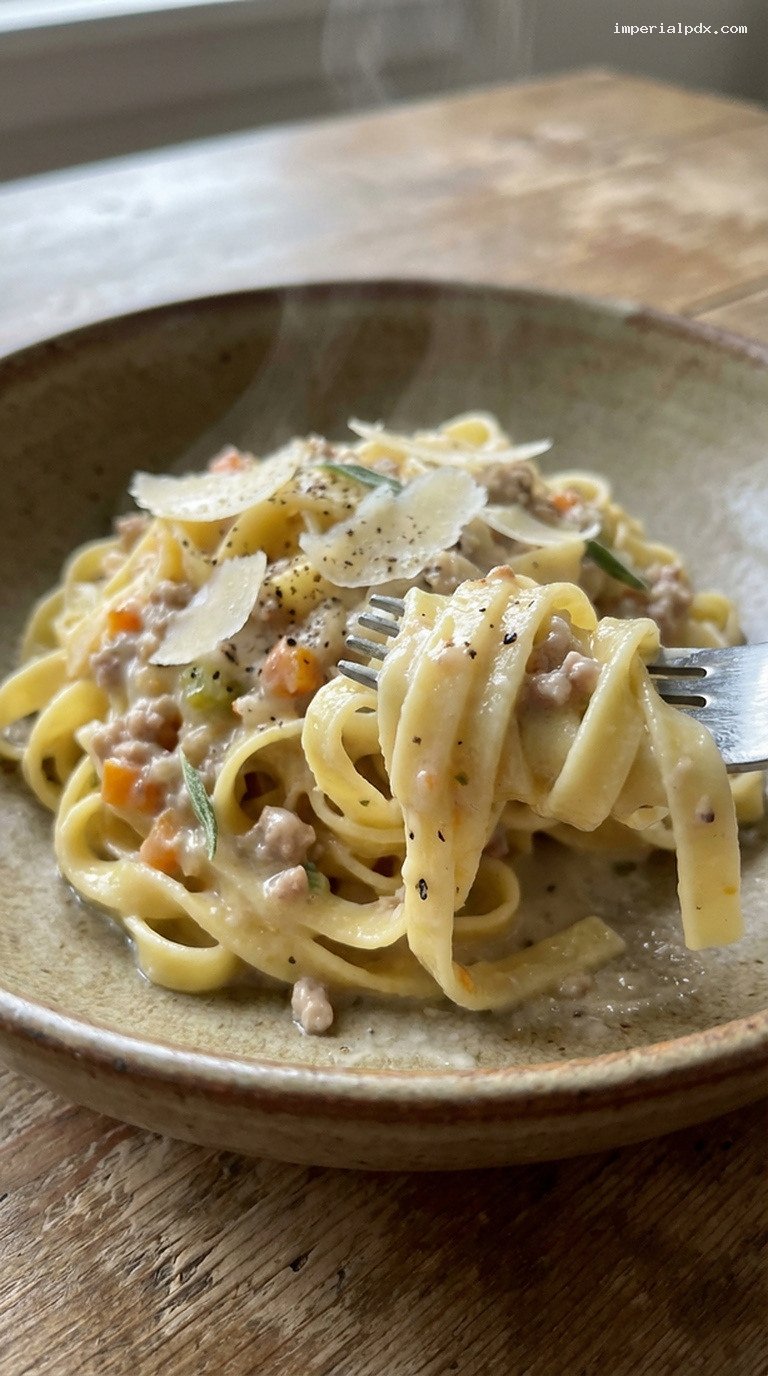
Drain the pasta and add it directly to the pot of warm Bolognese bianco over low heat. Toss gently but thoroughly, adding a splash or two of the reserved pasta water as needed to loosen the sauce and help it cling to the noodles. Sprinkle in ½–¾ cup finely grated Parmigiano-Reggiano and toss again until the cheese melts and the pasta is glossy and well coated.
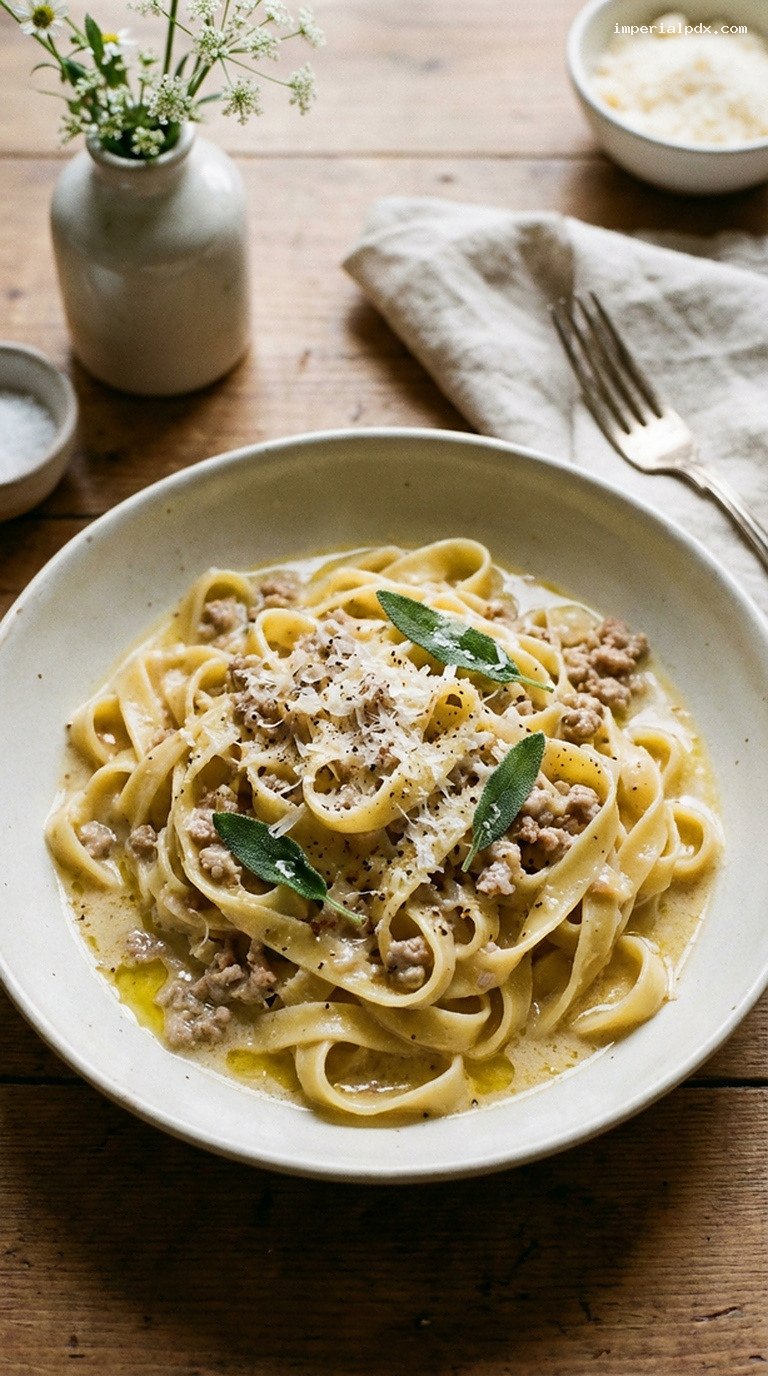
Serve immediately in warm bowls or shallow plates, topped with a little extra sauce from the pot, a shower of more Parmigiano-Reggiano, a grind of black pepper, and a few thinly sliced fresh sage leaves if you like.
Pro Tips
- Chop the soffritto very finely. Small, even pieces of onion, carrot, and celery melt into the sauce instead of standing out as chunks. A food processor can help, just pulse carefully.
- Keep the simmer gentle. A slow, low simmer keeps the meat tender and the sauce pale and creamy. If it is bubbling vigorously, reduce the heat.
- Use a dry, not sweet, white wine. A crisp Pinot Grigio, Sauvignon Blanc, or Soave works well and will not make the sauce taste sugary.
- Season in layers. Adding a bit of salt with the vegetables, then the meat, and again at the end gives better, deeper flavor than dumping it all in at once.
- Finish with pasta water. The starchy pasta water helps the sauce emulsify and cling perfectly to every strand of pasta, giving that glossy restaurant-style finish.
Variations
- Mushroom boost: Add 8 oz (225 g) finely chopped cremini or porcini mushrooms with the soffritto for extra earthiness and a slightly deeper color.
- No-veal version: Use 1 lb (450 g) ground pork and 1 lb (450 g) ground chicken or turkey thighs instead of veal. Keep the cooking times the same and watch the seasoning.
- Crispy sage topping: Fry whole sage leaves in a little butter until crisp and use them as a delicate, aromatic garnish on top of the finished plates.
Storage & Make-Ahead
This sauce is ideal for making ahead. Let the Bolognese bianco cool completely, then transfer it to an airtight container. Refrigerate for up to 4 days. The flavors actually deepen and improve after a night in the fridge. Reheat gently on the stovetop over low heat, adding a splash of water, stock, or milk if it seems too thick.
For longer storage, freeze the cooled sauce (without the pasta) in airtight containers or heavy-duty freezer bags for up to 3 months. Thaw overnight in the refrigerator before reheating. Cook fresh pasta just before serving and toss with the warmed sauce and some reserved pasta water. Leftover sauced pasta will keep in the fridge for up to 2 days, though the texture is best right after cooking; reheat gently with a splash of water or cream.
Nutrition (per serving)
Approximate values for 1 of 6 servings (including sauce, pasta, and a modest amount of cheese): about 880 calories; 45 g fat; 24 g saturated fat; 60 g carbohydrates; 3 g fiber; 7 g sugar; 52 g protein; approximately 950 mg sodium. Actual values will vary based on specific ingredients and portion sizes.