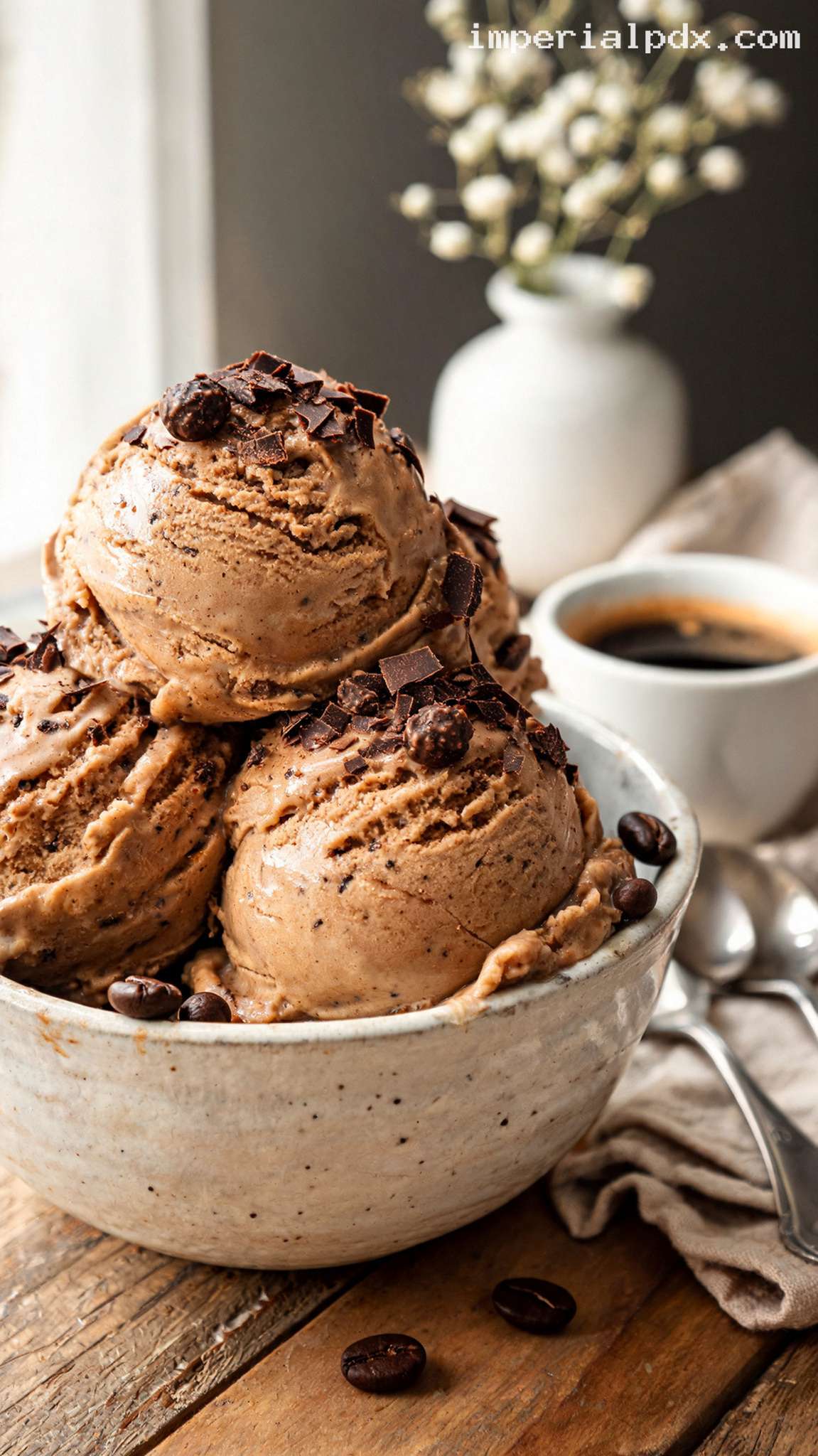
Quick Recipe Version (TL;DR)
Quick Ingredients
- 2 cups heavy cream
- 1 1/4 cups whole milk, divided
- 1/2 cup coarsely crushed premium whole coffee beans
- 3/4 cup granulated sugar, divided
- 2 tablespoons light corn syrup or glucose syrup
- 1/4 teaspoon fine sea salt
- 6 large egg yolks
- 1/2 cup freshly brewed espresso
- 1 teaspoon pure vanilla extract
- Optional garnish: 2 tablespoons crushed chocolate-covered espresso beans or shaved dark chocolate
Do This
- 1. Freeze your ice cream maker bowl for at least 24 hours if your machine requires it.
- 2. Heat cream, 1 cup milk, crushed coffee beans, 1/4 cup sugar, corn syrup, and salt to 170 degrees F, then steep covered for 45 minutes.
- 3. Strain the coffee-infused dairy, add the remaining 1/4 cup milk, and rewarm to 160 degrees F.
- 4. Whisk egg yolks with the remaining 1/2 cup sugar, temper with hot dairy, then cook the custard to 170 to 175 degrees F.
- 5. Strain, stir in freshly brewed espresso and vanilla, then chill in an ice bath and refrigerate for at least 4 hours.
- 6. Churn for 20 to 25 minutes, transfer to a container, and freeze for at least 4 hours before scooping.
Why You’ll Love This Recipe
- Deep, true coffee flavor: Coarsely crushed premium coffee beans steep directly into the dairy, while freshly brewed espresso adds a bold aromatic finish.
- Silky custard texture: Egg yolks, cream, and a small amount of corn syrup create a smooth, scoopable ice cream with a luxurious mouthfeel.
- Balanced sweetness: The sugar level is just enough to soften coffee’s natural bitterness without making the ice cream taste overly sweet.
- Great make-ahead dessert: Prepare it a day in advance and keep it ready for dinner parties, affogatos, or cozy late-night scoops.
Grocery List
- Produce: None required.
- Dairy: Heavy cream, whole milk, large eggs.
- Pantry: Premium whole coffee beans, espresso beans or freshly brewed espresso, granulated sugar, light corn syrup or glucose syrup, fine sea salt, pure vanilla extract, optional chocolate-covered espresso beans or dark chocolate.
Full Ingredients
Coffee-Infused Custard Base
- 2 cups (480 ml) heavy cream
- 1 1/4 cups (300 ml) whole milk, divided
- 1/2 cup (45 g) premium whole coffee beans, coarsely crushed
- 3/4 cup (150 g) granulated sugar, divided
- 2 tablespoons (40 g) light corn syrup or glucose syrup
- 1/4 teaspoon fine sea salt
- 6 large egg yolks, about 108 g total
- 1/2 cup (120 ml) freshly brewed espresso
- 1 teaspoon pure vanilla extract
Optional Garnish
- 2 tablespoons crushed chocolate-covered espresso beans
- 2 tablespoons shaved dark chocolate
- A few whole coffee beans for styling, not for eating
Step-by-Step Instructions
Step 1: Prepare your equipment
If your ice cream maker uses a freezer bowl, freeze it for at least 24 hours before churning. The bowl should be completely solid and should not slosh when shaken. Place a fine-mesh strainer over a medium heatproof bowl, and set out a second larger bowl filled with ice and cold water for chilling the custard later.
For the smoothest finished texture, chill your storage container in the freezer while you make the base. A shallow 1-quart freezer-safe container works well because it helps the ice cream firm up evenly.
Step 2: Steep the coffee beans in the dairy
Place the whole coffee beans in a zip-top bag and crush them coarsely with a rolling pin or the bottom of a heavy pan. You want cracked beans, not finely ground coffee. Finely ground coffee can make the custard gritty and overly bitter.
In a medium heavy-bottomed saucepan, combine the heavy cream, 1 cup (240 ml) of the whole milk, the crushed coffee beans, 1/4 cup (50 g) of the granulated sugar, the corn syrup, and the salt. Warm over medium heat, stirring occasionally, until the mixture reaches 170 degrees F and is steaming with tiny bubbles around the edges. Do not let it boil.
Remove the pan from the heat, cover, and let the coffee beans steep for 45 minutes. This gives the dairy a bold roasted coffee flavor without pulling out too much bitterness.
Step 3: Strain and rewarm the coffee cream
Pour the steeped mixture through the fine-mesh strainer into a clean bowl or large measuring cup. Press gently on the coffee beans with a spatula to extract the flavorful dairy, but do not mash aggressively, which can push sediment through the strainer.
Discard the steeped beans. Return the strained coffee-infused dairy to the saucepan and stir in the remaining 1/4 cup (60 ml) whole milk. Warm over medium-low heat until it reaches 160 degrees F. Stir often so the dairy heats evenly and does not scorch on the bottom.
Step 4: Whisk the egg yolks and sugar
While the coffee cream is warming, place the egg yolks in a medium heatproof bowl. Add the remaining 1/2 cup (100 g) granulated sugar and whisk for 60 to 90 seconds, until the mixture looks slightly lighter, thicker, and glossy.
This step helps the sugar begin dissolving and gives the custard a smoother texture. Set the bowl on a damp kitchen towel to keep it steady while you temper the eggs.
Step 5: Temper and cook the custard
Slowly ladle about 1 cup of the hot coffee cream into the yolk mixture while whisking constantly. Add it gradually so the yolks warm gently instead of scrambling. Once combined, pour the warmed yolk mixture back into the saucepan with the remaining coffee cream.
Cook over medium-low heat, stirring constantly with a heatproof spatula and scraping the bottom and corners of the pan. Cook until the custard reaches 170 to 175 degrees F, about 6 to 9 minutes. The custard should lightly coat the back of the spatula, and a line drawn through it with your finger should hold for a moment.
Do not let the custard exceed 180 degrees F. If it gets too hot, the eggs can curdle and the texture may become grainy.
Step 6: Add espresso and chill the base
Immediately strain the cooked custard through the fine-mesh strainer into a clean heatproof bowl. Stir in the freshly brewed espresso and vanilla extract. The espresso should be fresh and aromatic; if it is piping hot, let it cool for 5 minutes before adding it to the custard.
Place the bowl of custard into the prepared ice bath. Stir for about 15 to 20 minutes, until the mixture cools to below 70 degrees F. Cover the surface directly with parchment paper or plastic wrap, then refrigerate for at least 4 hours or up to 24 hours. The base should be very cold, ideally 39 degrees F or colder, before churning.
Step 7: Churn the ice cream
Pour the chilled custard into your ice cream maker and churn according to the manufacturer’s instructions, usually 20 to 25 minutes. The ice cream is ready when it looks thick, creamy, and similar to soft serve, with a temperature around 21 to 24 degrees F.
If using the optional crushed chocolate-covered espresso beans or shaved dark chocolate, add them during the final 1 minute of churning so they distribute without sinking.
Step 8: Harden and serve
Transfer the churned ice cream to the chilled freezer-safe container. Press parchment paper directly onto the surface to reduce ice crystals, then cover with a tight-fitting lid. Freeze for at least 4 hours, or until firm enough to scoop.
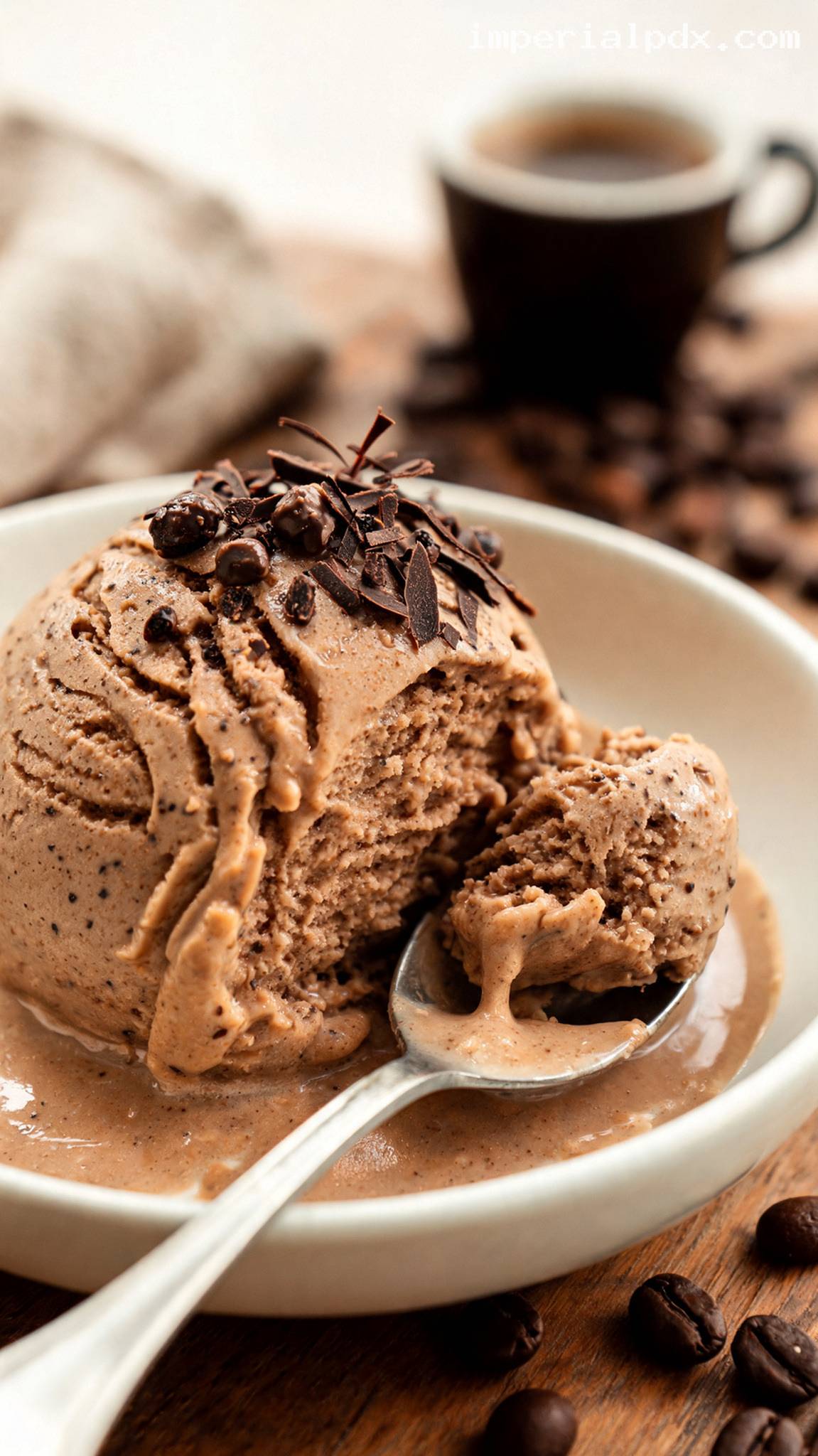
For the creamiest texture, let the ice cream sit at room temperature for 5 to 10 minutes before serving. Scoop into chilled bowls and garnish with a small sprinkle of crushed chocolate-covered espresso beans or shaved dark chocolate if you like.
Pro Tips
- Use coarsely crushed beans: Cracked coffee beans give rich flavor while keeping the custard smooth. Avoid fine grounds unless you plan to filter through several layers of cheesecloth.
- Do not skip the thermometer: Custard can go from silky to scrambled quickly. Aim for 170 to 175 degrees F and pull it from the heat right away.
- Chill thoroughly before churning: A very cold base churns faster, traps smaller ice crystals, and gives the ice cream a smoother finish.
- Use fresh espresso: Brew the espresso shortly before adding it. Fresh espresso brings aromatic, roasty flavor that bottled coffee cannot match.
- Corn syrup helps texture: The small amount used here does not make the ice cream taste syrupy; it helps prevent iciness and keeps the finished scoop plush.
Variations
- Mocha Espresso Ice Cream: After cooking and straining the custard, whisk in 3 ounces (85 g) finely chopped bittersweet chocolate until melted, then stir in the espresso and vanilla.
- Cardamom Coffee Ice Cream: Add 4 lightly crushed green cardamom pods to the saucepan with the coffee beans while steeping, then strain them out with the beans.
- Coffee Liqueur Espresso Ice Cream: Stir 1 tablespoon coffee liqueur into the chilled base just before churning. Do not add more than 1 tablespoon, or the ice cream may freeze too softly.
Storage & Make-Ahead
Store the ice cream in an airtight freezer-safe container with parchment paper pressed directly against the surface. Keep it at 0 degrees F or colder for the best texture. It is at its creamiest within 2 weeks, though it can be stored for up to 1 month. For make-ahead planning, prepare and chill the custard base up to 24 hours before churning. Once churned and hardened, let the ice cream rest at room temperature for 5 to 10 minutes before scooping. Do not refreeze ice cream that has fully melted.
Nutrition (per serving)
Calories: 350 kcal | Carbs: 26g | Protein: 4g | Fat: 26g | Saturated Fat: 16g | Fiber: 0g | Sugar: 23g | Sodium: 35mg | Cholesterol: 209mg