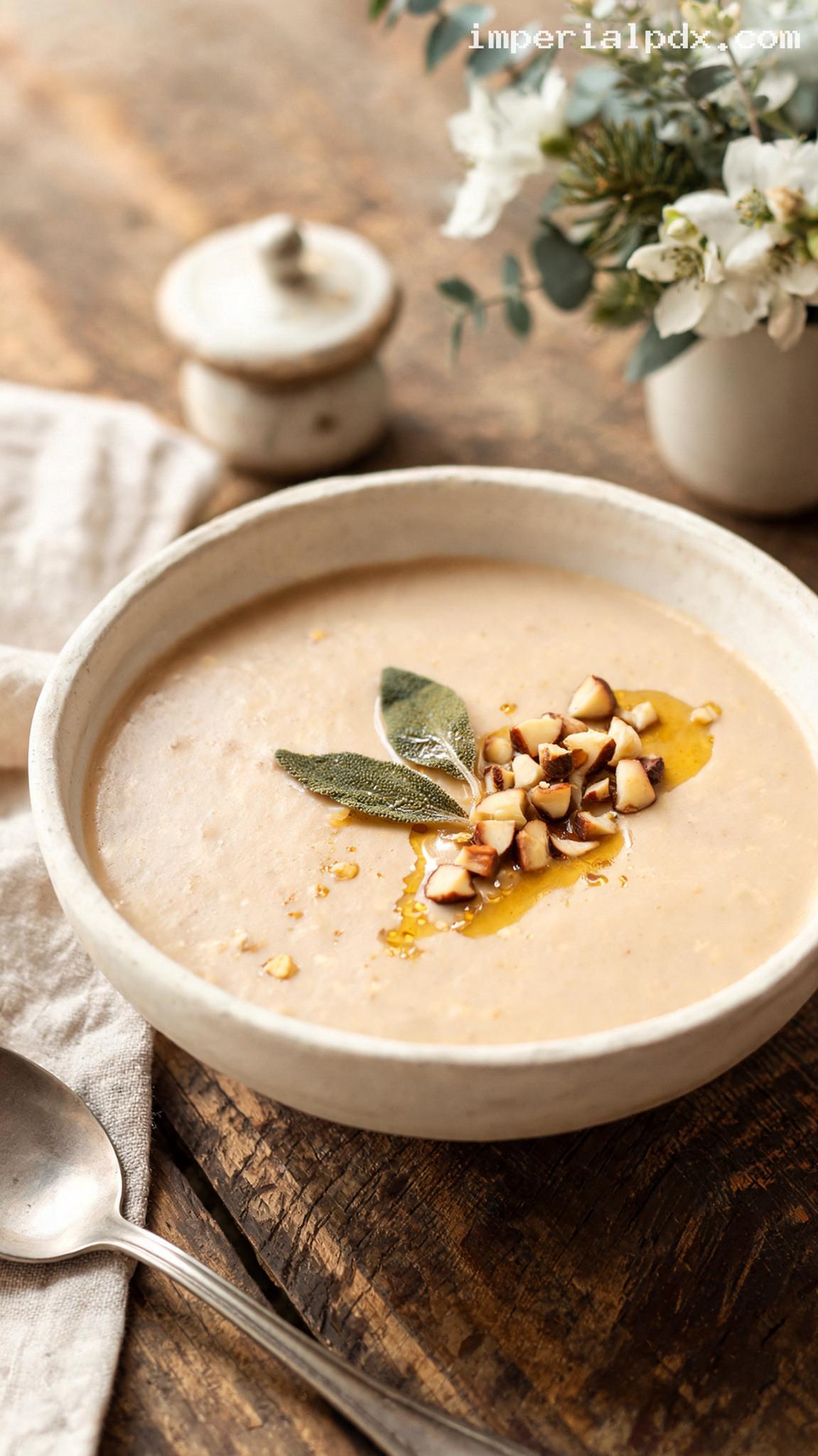
Quick Recipe Version (TL;DR)
Creamy Chestnut and Roasted Celery Root Soup is a luxurious Christmas starter with a silky texture, gentle sweetness, and earthy winter flavor. Crispy sage, toasted hazelnuts, and browned butter make every bowl feel special.
Quick Ingredients
- 750 g (1 lb 10 oz) peeled celery root, cut into 2 cm (¾-inch) cubes
- 2 tablespoons (30 ml) olive oil
- ¾ teaspoon fine sea salt, divided, plus more to taste
- ¼ teaspoon freshly ground black pepper
- 4 tablespoons (56 g) unsalted butter, divided
- 3 medium shallots (150 g), thinly sliced
- 3 garlic cloves, finely chopped
- 300 g (10½ oz) cooked, peeled roasted chestnuts, roughly chopped
- 4 cups (960 ml) low-sodium vegetable stock
- 4 fresh thyme sprigs
- ¾ cup (180 ml) heavy cream
- Up to ½ cup (120 ml) hot water, if needed for thinning
- ¼ cup (30 g) hazelnuts, roughly chopped
- 12 fresh sage leaves, washed and thoroughly dried
Do This
- 1. Heat the oven to 425°F (220°C; 200°C fan). Toss celery root with olive oil, ½ teaspoon salt, and pepper. Roast for 35 minutes, turning after 20 minutes.
- 2. Meanwhile, toast hazelnuts in a dry skillet over medium heat for 4 minutes. Set aside. Begin cooking the shallots during the final 15 minutes of roasting.
- 3. Melt 1 tablespoon butter in a large pot. Cook shallots over medium-low heat for 8 minutes, then add garlic and cook for 1 minute.
- 4. Add chestnuts, stock, thyme, roasted celery root, and the remaining ¼ teaspoon salt. Bring to a simmer and cook gently, partially covered, for 15 minutes.
- 5. Remove thyme stems and blend until completely smooth. Stir in cream and warm gently for 3 minutes. Add up to ½ cup hot water if needed.
- 6. Melt the remaining 3 tablespoons butter in a small skillet. Fry sage for 30–45 seconds, remove, and continue cooking the butter until golden brown and nutty. Serve the soup topped with sage, hazelnuts, and browned butter.
Why You’ll Love This Recipe
- Beautifully balanced: Sweet roasted chestnuts soften celery root’s earthy flavor without making the soup taste sugary.
- Silky and satisfying: Blended chestnuts give the soup body, so you do not need flour or potatoes.
- Made for Christmas entertaining: Prepare the soup ahead, then add the crisp, buttery toppings just before serving.
- Elegant but approachable: Familiar techniques and ready-cooked chestnuts keep this special starter manageable.
Grocery List
- Produce: 1 large celery root, approximately 1–1.2 kg before peeling; 3 medium shallots; 1 garlic bulb; fresh thyme; fresh sage.
- Dairy: Unsalted butter; heavy cream.
- Pantry: 300 g cooked, peeled roasted chestnuts; low-sodium vegetable stock; hazelnuts; olive oil; fine sea salt; black pepper.
Full Ingredients
For the Roasted Celery Root
- 750 g (1 lb 10 oz) celery root, weighed after peeling and trimming, cut into 2 cm (¾-inch) cubes
- 2 tablespoons (30 ml) olive oil
- ½ teaspoon fine sea salt
- ¼ teaspoon freshly ground black pepper
For the Soup
- 1 tablespoon (14 g) unsalted butter
- 3 medium shallots (150 g), peeled and thinly sliced
- 3 garlic cloves, finely chopped
- 300 g (10½ oz) cooked, peeled roasted chestnuts, roughly chopped
- 4 cups (960 ml) low-sodium vegetable stock
- 4 fresh thyme sprigs
- ¼ teaspoon fine sea salt, plus more to taste after blending
- ¾ cup (180 ml) heavy cream, preferably 35–36% milk fat
- Up to ½ cup (120 ml) hot water, optional, to adjust consistency
For the Crispy Sage, Hazelnuts, and Browned Butter
- ¼ cup (30 g) hazelnuts, roughly chopped
- 3 tablespoons (42 g) unsalted butter, cut into pieces
- 12 fresh sage leaves, washed and thoroughly dried
Step-by-Step Instructions
Step 1: Prepare and roast the celery root
Heat the oven to 425°F (220°C; 200°C fan). Set out a large rimmed baking sheet. Cut a thin slice from the top and bottom of the celery root so it sits securely on your cutting board. Use a sharp knife to cut away the knobbly skin and any dirt-filled crevices. Rinse briefly, pat dry, and weigh out 750 g of trimmed flesh.
Cut into 2 cm (¾-inch) cubes. Toss with the olive oil, ½ teaspoon salt, and black pepper. Spread in a single layer with a little space between the pieces. Roast for 35 minutes, turning after 20 minutes, until tender when pierced and lightly golden around the edges. Check at 30 minutes if your oven runs hot.
Step 2: Toast the hazelnuts
While the celery root roasts, place the chopped hazelnuts in a dry small skillet over medium heat. Toast for 4 minutes, stirring frequently, until fragrant and lightly golden. Transfer immediately to a small bowl so they do not keep cooking in the hot pan. Reserve the skillet for the sage and browned butter.
Step 3: Soften the shallots and garlic
During the final 15 minutes of roasting, melt 1 tablespoon butter in a large, heavy-bottomed saucepan or Dutch oven over medium-low heat. Add the shallots and cook for 8 minutes, stirring occasionally, until soft and translucent rather than browned.
Add the garlic and cook for 1 minute. Stir in the chopped chestnuts, vegetable stock, thyme sprigs, and remaining ¼ teaspoon salt. Bring just to a simmer while the celery root finishes roasting.
Step 4: Simmer until everything is tender
Add the roasted celery root to the pot, including any lightly golden bits from the baking sheet. Return to a gentle simmer over medium heat, then reduce the heat to low and partially cover.
Simmer for 15 minutes, stirring once or twice. The celery root should crush easily against the side of the pot, and the chestnuts should be soft enough to blend smoothly. If either is still firm, simmer for another 5 minutes before blending.
Step 5: Blend until silky and add the cream
Remove the pot from the heat. Fish out the thyme stems; any leaves that have fallen into the soup can stay. Blend with an immersion blender for 3–4 minutes, moving it around the pot until no grainy pieces remain.
For an especially smooth finish, use a countertop blender in batches. Follow its instructions for hot liquids, fill the jar no more than halfway, and vent the lid as directed so steam can escape. Never blend hot soup in a sealed personal blender. For a restaurant-style texture, pass the blended soup through a fine-mesh sieve.
Return the soup to the pot if necessary. Stir in the cream and warm over low heat for 3 minutes, without boiling. The soup should pour easily while still lightly coating a spoon. If it is too thick, stir in hot water 2 tablespoons (30 ml) at a time, using up to ½ cup (120 ml). Taste and adjust the salt.
Step 6: Crisp the sage and brown the butter
Melt the remaining 3 tablespoons butter in the reserved small skillet over medium heat. When it begins to foam, carefully add the completely dry sage leaves in a single layer. Fry for 30–45 seconds, turning once, until the leaves darken slightly and become crisp. Lift them onto a paper towel with a slotted spoon or tongs.
Continue cooking the butter for approximately 2–3 minutes, swirling frequently, until the milk solids at the bottom turn golden brown and smell nutty. Use the color and aroma as your guide; the butter may brown sooner if the pan is very hot. Immediately pour it into a heatproof bowl to stop the cooking, scraping in the golden brown flecks but leaving behind any blackened bits.
Step 7: Garnish and serve
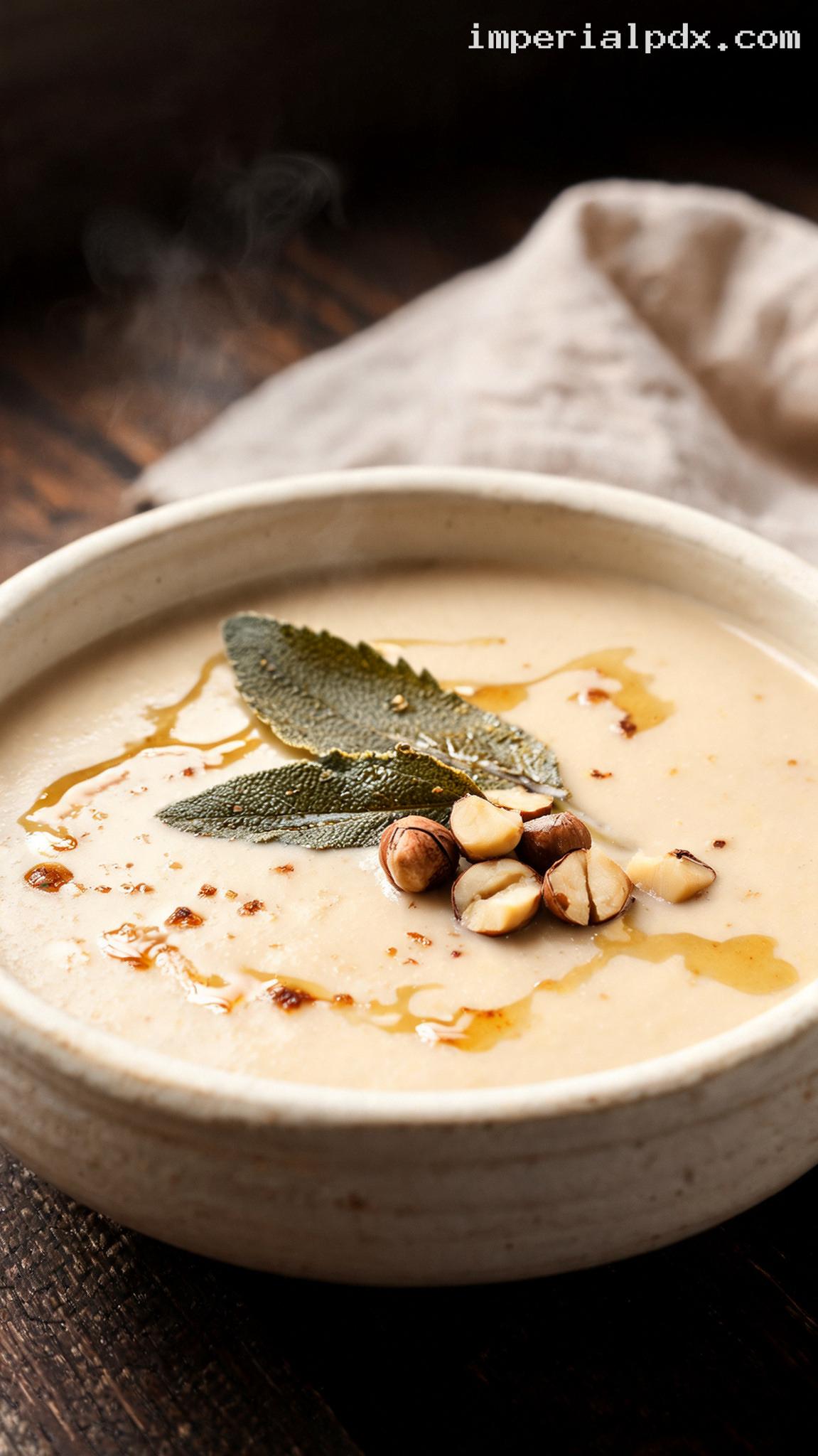
Ladle the hot soup into six warmed shallow bowls. Divide the toasted hazelnuts evenly among them, add two crispy sage leaves to each bowl, and spoon over the browned butter, including a few of its golden milk solids.
Serve immediately, while the sage is crisp and the butter forms glossy amber ribbons across the pale soup. For Christmas dinner, keep the accompaniments simple: a small slice of warm sourdough or a crisp breadstick is plenty.
Pro Tips
- Choose the right chestnuts: Look for ready-to-eat, cooked and peeled roasted chestnuts in a vacuum pack or jar. Do not use water chestnuts, sweetened chestnut purée, or chestnut flour. If roasting fresh chestnuts yourself, weigh out 300 g after roasting and peeling; that preparation time is additional.
- Leave room on the roasting tray: Crowded celery root steams instead of browning. Use two trays if necessary, swapping their positions when you turn the vegetables.
- Blend longer than you think: Chestnuts can leave a slightly grainy texture if under-blended. Make sure everything is very tender, then blend thoroughly before deciding whether to strain.
- Dry the sage completely: Water makes hot butter splutter and prevents the leaves from crisping neatly.
- Balance the final consistency: The soup thickens as it stands. Loosen it just before serving rather than adding all the optional water at once.
Variations
- Dairy-free and vegan: Replace the soup’s 1 tablespoon butter with 1 tablespoon olive oil and the heavy cream with ¾ cup (180 ml) unsweetened oat cooking cream. For the topping, fry the sage in 2 tablespoons olive oil and drizzle that fragrant oil over the bowls instead of browned butter.
- A lighter bowl: Replace the ¾ cup heavy cream with ½ cup (120 ml) heavy cream plus ¼ cup (60 ml) water. The chestnuts will still give the soup a creamy body.
- An extra festive note: Add ⅛ teaspoon freshly grated nutmeg when stirring in the cream. Keep the quantity small so the chestnuts and thyme remain the main flavors.
Storage & Make-Ahead
Make ahead: Prepare the soup through blending up to 2 days before serving, leaving out the cream and garnishes. Cool promptly in shallow containers and refrigerate within 2 hours at 40°F (4°C) or below. Reheat gently, stir in the cream, and adjust the consistency with hot water. Toast the hazelnuts up to 1 week ahead and keep them in an airtight container at room temperature. Prepare the sage and browned butter just before serving for the best texture.
Leftovers: Refrigerate the soup in an airtight container for up to 4 days from the day it was cooked, keeping garnishes separate. Reheat over low heat, stirring frequently, until it reaches 165°F (74°C); avoid a rolling boil. Add a little water if it has thickened.
Freezing: For the smoothest result, freeze the blended soup before adding cream for up to 3 months. Thaw overnight in the refrigerator, reheat thoroughly, and add the cream before serving. Soup already containing cream can be frozen, but it may need a brief blend after reheating to restore its texture.
Nutrition (per serving)
Estimated for one-sixth of the recipe, including all garnishes. Values vary with the chestnuts, cream, stock, and any extra salt used.
Calories: 460 kcal | Carbs: 46g | Protein: 6g | Fat: 28g | Saturated Fat: 13g | Fiber: 6g | Sugar: 11g | Sodium: 530mg | Cholesterol: 55mg