Quick Recipe Version (TL;DR)
Quick Ingredients
- 1.1 kg (2.5 lb) very fresh whole sardines, scaled and filleted
- 1 L (4 cups) cold water
- 60 g fine sea salt (about 1/4 cup), plus flaky salt for serving
- 30 g sugar (2 tbsp)
- 1 lemon (zest strips and 2 tbsp juice), plus extra lemon wedges to serve
- 3 garlic cloves, lightly crushed
- 2 bay leaves, 4 parsley stems, 4 thyme sprigs (optional)
- 1 tsp black peppercorns, 1 tsp red pepper flakes (optional)
- 2 cups (about 200 g) mild wood chips (apple, alder, or beech)
- 2–3 tbsp extra-virgin olive oil, chopped fresh parsley or dill for garnish
Do This
- 1. Fillet, rinse, and thoroughly chill the sardines; keep them very cold at all times.
- 2. Make a cold brine with water, salt, sugar, lemon zest and juice, garlic, bay, herbs, and spices.
- 3. Submerge fillets in brine and refrigerate for 30–45 minutes, then drain and pat very dry.
- 4. Arrange fillets skin-side down on a rack and air-dry in the fridge for 1 hour until the surface feels slightly tacky.
- 5. Set up your smoker or grill for cold smoking at 60–80°F (16–27°C) with mild wood chips; add the sardines and smoke for about 2 1/2 hours.
- 6. Cool 30 minutes, then drizzle with olive oil, sprinkle with flaky salt and herbs, add lemon wedges, and serve on a charcuterie board.
Why You’ll Love This Recipe
- Delicate, silky sardine fillets with a gentle smokiness that never overpowers their natural flavor.
- Simple, flexible brine that you can easily tweak with your favorite herbs and spices.
- Makes a standout centerpiece for charcuterie boards, tapas spreads, or mezze platters.
- Most of the time is hands-off: brining, drying, and cold-smoking while you prep the rest of your menu.
Grocery List
- Produce: Lemons, garlic, fresh parsley and/or dill, fresh thyme (optional).
- Dairy: None required.
- Pantry: Very fresh whole sardines (fish counter), fine sea salt, sugar, black peppercorns, red pepper flakes, bay leaves, extra-virgin olive oil, mild wood chips (apple, alder, or beech).
Full Ingredients
For the Sardines
- 1.1 kg (2.5 lb) very fresh whole sardines, scaled and gutted (about 18–24 small sardines)
- Ice, for keeping the fish chilled while you work
For the Lemon-Herb Brine
- 1 L (4 cups) cold water
- 60 g fine sea salt (about 1/4 cup), or 75 g kosher salt (about 1/3 cup), not iodized
- 30 g white sugar (2 tbsp)
- 1 medium lemon:
- Peel the zest in wide strips (no white pith if possible)
- 2 tbsp freshly squeezed lemon juice
- 3 garlic cloves, lightly crushed
- 2 dried bay leaves
- 1 tsp whole black peppercorns
- 1 tsp red pepper flakes (optional, for gentle heat)
- 4 fresh parsley stems (you can use the stalks from your garnish bunch)
- 4 fresh thyme sprigs (optional, for an earthy note)
For Smoking
- 2 cups (about 200 g) mild wood chips such as apple, alder, or beech
- Ice or a small tray of ice cubes (helpful for keeping the smoke chamber cool, if needed)
To Finish and Serve
- 2–3 tbsp extra-virgin olive oil
- Flaky sea salt, to taste
- Freshly ground black pepper, to taste
- 1 small lemon, cut into wedges
- 2 tbsp finely chopped fresh parsley and/or dill
- Optional for your charcuterie board:
- Crusty bread or toasted baguette slices
- Crackers
- Pickled red onions or thinly sliced shallots
- Capers, cornichons, or mixed olives
- Soft cheese (like fresh goat cheese) and hard cheese, if desired
Step-by-Step Instructions
Step 1: Prep and Chill the Sardines
Start with the freshest sardines you can find; they should smell clean and briny, not “fishy.” Ask your fishmonger to scale and gut them for you if possible. Keep the fish on a bed of ice while you work so they stay very cold.
At home, rinse each sardine under cold running water to remove any loose scales or blood. Pat dry thoroughly with paper towels. If you are comfortable filleting, lay a sardine on its side and use a sharp, flexible knife to run along the backbone from head to tail, opening the fish like a book. Slide the knife carefully under the backbone and rib bones, working from head to tail to remove them in one piece, leaving a neat fillet attached at the belly. Trim off any ragged bits or remaining bones. Alternatively, you can carefully butterfly the sardines and leave them joined at the belly. Return fillets to the fridge, covered, while you prepare the brine.
Step 2: Make the Lemon-Herb Brine
In a medium non-reactive bowl or jug, combine 1 L (4 cups) cold water, 60 g salt, and 30 g sugar. Stir until the salt and sugar are completely dissolved; the liquid should be clear, with no grains at the bottom. Add the lemon zest strips, 2 tbsp lemon juice, crushed garlic cloves, bay leaves, peppercorns, red pepper flakes (if using), parsley stems, and thyme sprigs.
Give everything a brief stir, then cover and refrigerate the brine for 10–15 minutes to chill it fully. It is important that the brine is very cold before it touches the fish so that the sardines stay at a safe temperature and remain firm and delicate.
Step 3: Brine the Fillets
Place the sardine fillets in a shallow glass or ceramic dish, or a non-reactive container large enough to lay them mostly in a single layer. Pour the chilled brine over the fish, making sure every fillet is submerged. If necessary, place a small plate or a piece of parchment with a light weight on top to keep them under the surface.
Cover and refrigerate for 30–45 minutes. Thinner, more delicate fillets need closer to 30 minutes; thicker fillets can handle up to 45 minutes. This brine seasons the flesh throughout, gently firms it, and helps it hold together during smoking without becoming too salty.
When the time is up, lift the fillets out of the brine and discard the brine. Rinse each fillet briefly under cold water to remove excess surface salt, then pat them very dry with plenty of paper towels. Take your time here; excess moisture will prevent a good smoke-adhering surface from forming.
Step 4: Dry the Fillets to Form a Pellicle
Line a baking tray with paper towels or a clean kitchen towel and set a wire rack on top. Arrange the sardine fillets skin-side down on the rack, leaving a little space between each so air can circulate. Blot the tops once more with paper towels if they still look shiny-wet.
Place the tray, uncovered, in the refrigerator for about 1 hour. During this time, the surface of the fish will dry slightly and become just a bit tacky to the touch. This thin, slightly sticky layer is called a pellicle, and it is crucial for getting that beautiful, even, delicate smoke flavor and sheen.
If your fridge is very full or humid, you can set a small fan to blow gently across the tray (on the lowest setting) to speed drying, as long as the air is clean and cool. Do not leave the fish at room temperature for this step; always keep it chilled.
Step 5: Set Up for Cold Smoking
While the fish is drying, prepare your smoker or grill for cold smoking. The key is thin, clean smoke at a low temperature: 60–80°F (16–27°C). You want smoke, not heat, so the sardines stay tender and almost raw-textured, not cooked or flaky.
Soak 2 cups (about 200 g) of mild wood chips (apple, alder, or beech) in cold water for 30 minutes, then drain well. Set up your smoker or grill with a cold-smoking attachment, smoke generator, or a separate tray for the chips so that the smoke can pass over the fish while most of the heat is kept away. Open vents or adjust burners so the chamber temperature stays consistently below 80°F (27°C). If it starts to creep higher, place a small pan of ice inside and open vents slightly to release heat.
Arrange your wire rack of sardine fillets in the smoker or grill, skin-side down, away from any direct heat source. The fillets should be in a single layer without overlapping, so the smoke can surround each piece evenly.
Step 6: Cold-Smoke the Sardines
Begin smoking the sardines with a gentle, steady stream of pale blue smoke. Avoid thick, billowing white smoke, which can make the fish taste harsh or bitter. Maintain the chamber temperature at 60–80°F (16–27°C), checking every 20–30 minutes. Add more wood chips as needed to keep light smoke going, and adjust vents or ice to control the temperature.
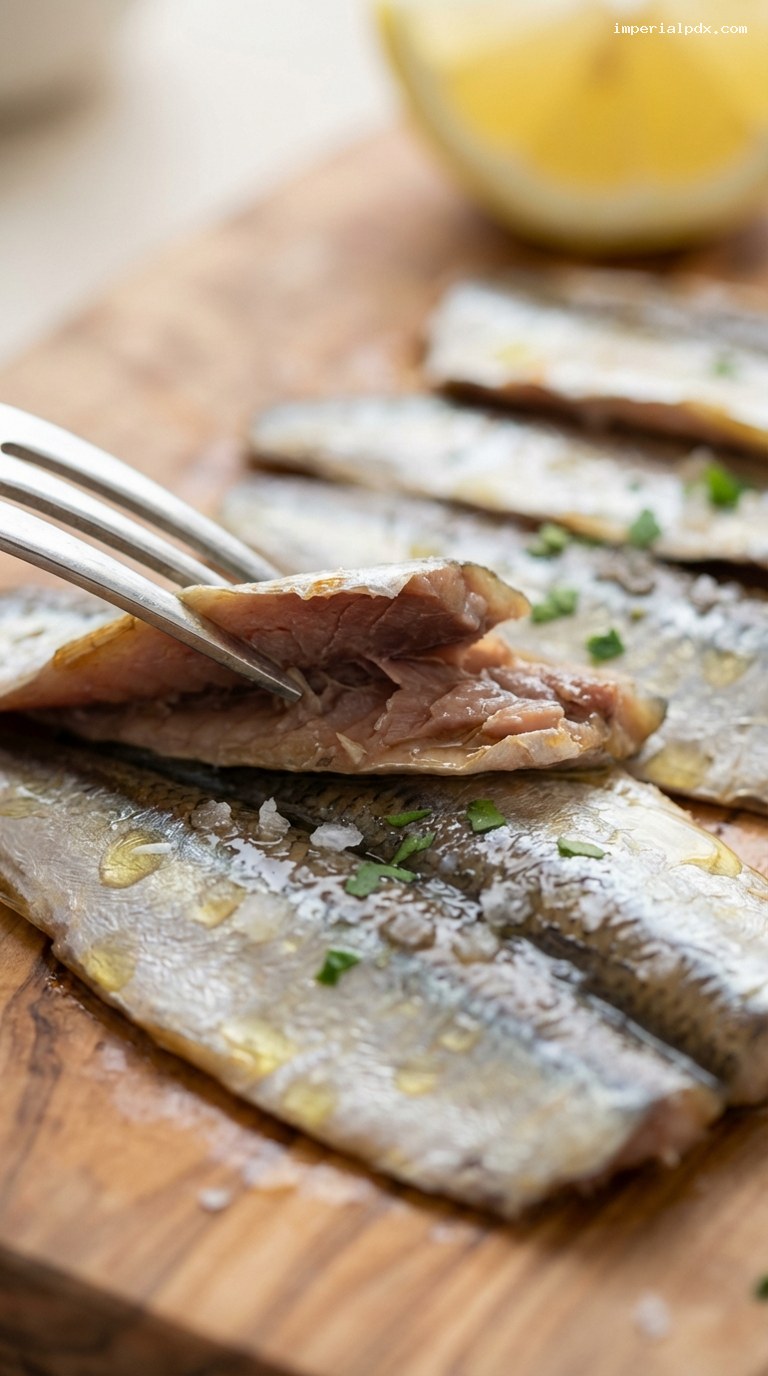
Cold-smoke the sardines for about 2 1/2 hours. After roughly 2 hours, check one fillet: it should look slightly deepened in color, with a light golden sheen, and feel supple but a bit firmer than when raw. Taste a small piece if you like; if you want a slightly stronger smoke flavor or a firmer texture, continue smoking for another 30–45 minutes, still keeping the temperature below 80°F (27°C).
Once they reach your desired smokiness, carefully remove the rack from the smoker. The fillets will be delicate, so handle them gently with a thin spatula or your fingers to avoid tearing.
Step 7: Cool, Finish, and Serve
Let the smoked sardines cool to room temperature for about 15 minutes, then transfer the rack to the refrigerator and chill for another 15–30 minutes. This brief resting time mellows and “settles” the smoke flavor and helps the fillets firm up just enough for easy handling.
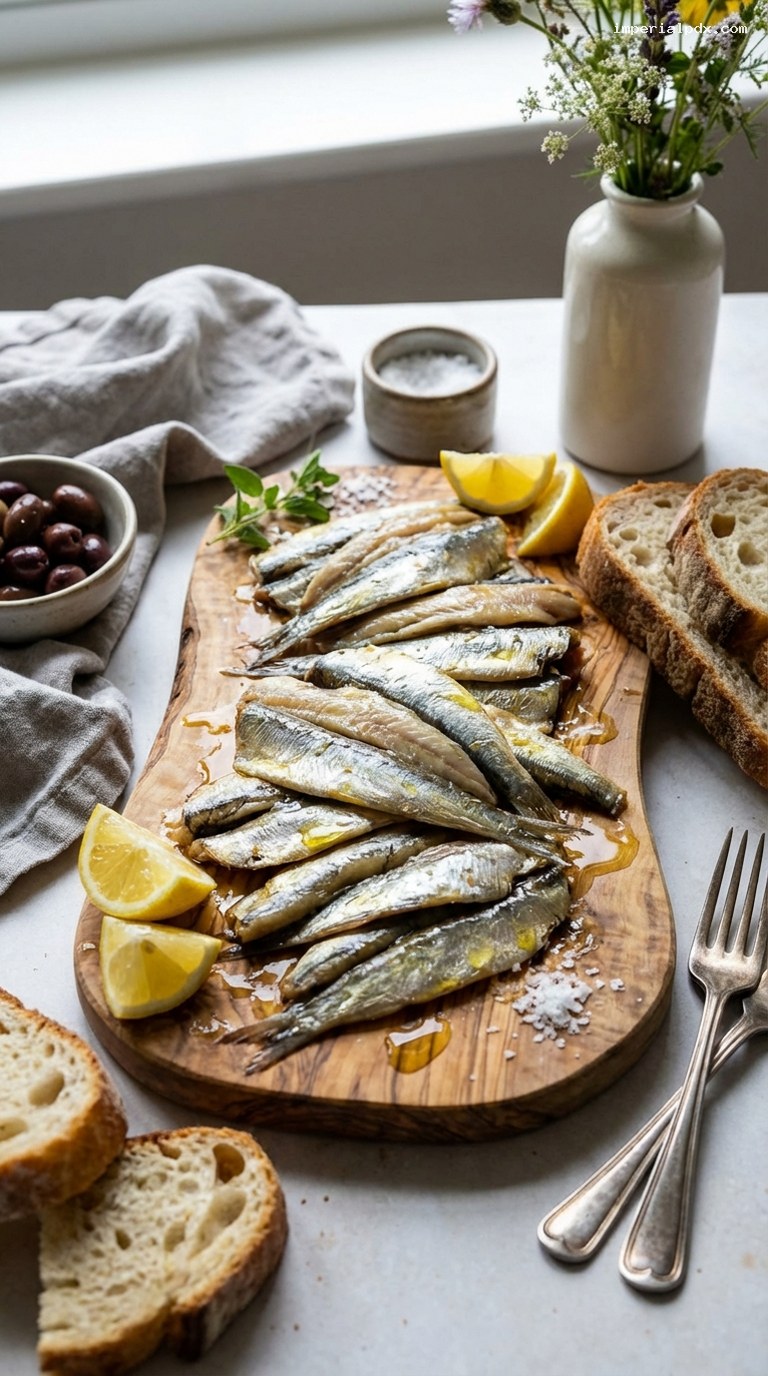
To finish, carefully lift the fillets from the rack and arrange them on a serving board or platter, such as an olive-wood or slate board for a charcuterie-style presentation. Drizzle 2–3 tbsp of extra-virgin olive oil lightly over the fillets. Sprinkle with a pinch or two of flaky sea salt and a little freshly ground black pepper. Scatter finely chopped fresh parsley and/or dill over the top and tuck lemon wedges around the edges for squeezing at the table.
Serve the cold-smoked sardines as part of a charcuterie or tapas spread: offer crusty bread or crackers, pickled onions, capers, olives, and a few cheeses. Encourage guests to layer a piece of sardine with a squeeze of lemon, a drizzle of the olive oil from the platter, and a crunchy bite of bread.
Pro Tips
- Let your fishmonger help. Ask them to scale, gut, and even fillet the sardines for you. The cleaner the starting fillets, the easier the brining and smoking.
- Keep everything very cold. From brining to smoking, temperature is key. Use thoroughly chilled brine, keep the fish on ice when you can, and do not let the smoker climb above 80°F (27°C).
- Dry the fillets well. Take the time to pat the fish dry and let the pellicle form in the fridge. This one step makes the biggest difference in how evenly the smoke adheres.
- Use mild wood. Strong woods like hickory can overwhelm delicate sardines. Apple, alder, or beech give a subtle, sweet smoke that complements rather than dominates.
- Taste as you go. Cold-smoking is gentle and gradual. Start tasting a small piece after about 2 hours so you can stop when the flavor and texture are exactly where you want them.
Variations
- Mediterranean Herb Sardines: Add 1 tsp crushed fennel seeds and a few strips of orange zest to the brine. After smoking, top the fillets with a mixture of chopped parsley, dill, and a little grated garlic, plus a generous drizzle of fruity olive oil.
- Spicy Smoked Sardines: Increase the red pepper flakes in the brine to 2 tsp and add 1 tsp smoked paprika. Finish with olive oil infused with a sliced fresh chili for extra heat.
- More Cured, Firmer Texture: For a saltier, more gravlax-like result, extend the brine time to 1–1 1/2 hours, then smoke slightly shorter (about 2 hours) to keep the texture supple but more firmly cured.
Storage & Make-Ahead
Cold-smoked sardines are best within 1–3 days. Once cooled, transfer the fillets to a shallow glass or ceramic container. Cover them with a thin layer of olive oil, seal tightly, and refrigerate. For serving, let them sit at room temperature for about 10 minutes so the oil loosens and flavors bloom, then garnish with fresh herbs and lemon. Do not leave the sardines at room temperature for extended periods. For advance prep, you can brine and dry the fillets up to 12 hours ahead (keep them on a rack in the fridge), then smoke them on the day you plan to serve. For food safety, always keep the fish cold when not actively smoking, and consult local guidelines if planning to store smoked fish longer than a few days.
Nutrition (per serving)
Approximate values per appetizer serving (about 1/6 of the batch, including some olive oil but not bread or accompaniments): 220 calories; 20 g protein; 15 g fat; 2 g carbohydrates; 0 g fiber; about 600–700 mg sodium. Actual values will vary based on the size of the sardines, exact brine uptake, and how much olive oil you use for finishing.