Quick Recipe Version (TL;DR)
Quick Ingredients
- Sweet crust: 1 1/3 cups (160 g) all-purpose flour, 1/2 cup (115 g) cold unsalted butter, 3/4 cup (90 g) powdered sugar, 1/4 tsp fine salt, 1 large egg yolk, 1–2 tbsp ice water.
- Lemon filling: 4 large eggs + 2 large yolks, 1 cup (200 g) sugar, 2/3 cup (160 ml) fresh lemon juice, 1 1/2 tbsp finely grated lemon zest, 1/2 cup (120 ml) heavy cream, pinch salt.
- Meringue: 3 large egg whites, 3/4 cup (150 g) sugar, 1/4 tsp cream of tartar or 1/2 tsp lemon juice, pinch salt, 1/2 tsp vanilla extract.
- To finish: Extra lemon zest or thin lemon slices; kitchen torch.
Do This
- 1. Rub or pulse flour, powdered sugar, salt and cold butter to fine crumbs. Mix in egg yolk and just enough ice water to form a soft dough. Flatten, wrap, and chill 30 minutes.
- 2. Roll dough to about 1/8 inch (3 mm) thick, line a 9-inch tart pan, trim edges, prick base, and freeze 15 minutes. Blind-bake at 375°F (190°C) for 18 minutes with weights, then 7 minutes without, until golden.
- 3. Lower oven to 300°F (150°C). Whisk eggs, yolks, sugar, zest, lemon juice, cream, and salt until smooth. Strain into a jug.
- 4. Pour filling into warm crust and bake 20–22 minutes, until just set with a slight jiggle in the center. Cool 1 hour at room temperature, then chill 1–2 hours until fully set.
- 5. For Swiss meringue, gently heat egg whites, sugar, salt, and cream of tartar over simmering water to 160°F (71°C), then whip with vanilla to stiff glossy peaks.
- 6. Spoon or pipe meringue onto the cold tart, creating peaks. Torch until golden-brown. Garnish with extra zest. Serve right away or chill up to 4 hours.
Why You’ll Love This Recipe
- A true French-style tarte au citron: crisp, buttery crust with a silky, tangy lemon filling.
- Balanced sweetness and brightness so it tastes refreshing, not heavy.
- Swiss meringue on top is marshmallowy, stable, and easy to brown with a torch.
- Perfect make-ahead dessert for dinner parties, holidays, and special occasions.
Grocery List
- Produce: 4–5 large lemons (for juice and zest; plus extra for garnish if desired).
- Dairy: Unsalted butter, heavy cream.
- Pantry: All-purpose flour, powdered sugar, granulated sugar, fine sea salt, vanilla extract, cream of tartar (or extra lemon juice).
Full Ingredients
For the Sweet Pastry Crust (Pâte Sucrée)
- 1 1/3 cups (160 g) all-purpose flour
- 3/4 cup (90 g) powdered sugar
- 1/4 teaspoon fine sea salt
- 1/2 cup (115 g) unsalted butter, very cold, cut into small cubes
- 1 large egg yolk
- 1–2 tablespoons ice-cold water, as needed
For the Lemon Filling
- 4 large eggs
- 2 large egg yolks
- 1 cup (200 g) granulated sugar
- 2/3 cup (160 ml) freshly squeezed lemon juice (from about 4 large lemons)
- 1 1/2 tablespoons finely grated lemon zest (about 2–3 lemons)
- 1/2 cup (120 ml) heavy cream
- 1/8 teaspoon fine sea salt
For the Swiss Meringue Topping
- 3 large egg whites (about 90 g), at room temperature
- 3/4 cup (150 g) granulated sugar
- 1/4 teaspoon cream of tartar or 1/2 teaspoon lemon juice
- Pinch fine sea salt
- 1/2 teaspoon pure vanilla extract
To Finish
- Extra finely grated lemon zest or very thin lemon slices (for garnish, optional)
- Fresh berries or small mint leaves (optional)
- Kitchen torch, for toasting the meringue
Step-by-Step Instructions
Step 1: Make the sweet pastry dough
In a medium bowl, whisk together the flour, powdered sugar, and salt. Add the cold, cubed butter. Using your fingertips or a pastry cutter, rub or cut the butter into the dry ingredients until the mixture looks like coarse, sandy crumbs with a few pea-sized pieces of butter remaining. (Alternatively, pulse the dry ingredients and butter in a food processor.)
Add the egg yolk and 1 tablespoon of ice water. Mix with a fork until the dough starts to clump together. If it still looks very dry and crumbly, add up to 1 more tablespoon of ice water, a teaspoon at a time, just until it holds together when pressed. Avoid overworking; you want a tender, short crust.
Turn the dough out onto a lightly floured surface, gently bring it together into a disk, and flatten it to about 1 inch (2.5 cm) thick. Wrap tightly in plastic wrap and refrigerate for at least 30 minutes (and up to 24 hours).
Step 2: Roll, line the pan, and chill the crust
Remove the chilled dough from the refrigerator and let it sit at room temperature for 5–10 minutes so it is pliable but still cool. On a lightly floured surface, roll it out into a circle about 11–12 inches (28–30 cm) in diameter and roughly 1/8 inch (3 mm) thick.
Carefully transfer the dough to a 9-inch (23 cm) tart pan with a removable bottom. Gently press it into the bottom and up the sides, making sure it fits snugly into the corners. Trim any excess dough by running a knife or rolling pin along the top edge of the pan. If the dough cracks, patch it with trimmings and press gently to seal.
Use a fork to prick the base of the crust all over (this helps prevent bubbling). Place the pan in the freezer for 15 minutes to firm up while you preheat the oven.
Step 3: Blind-bake the crust until crisp
Preheat your oven to 375°F (190°C) with a rack in the middle position. Cut a square of parchment paper large enough to cover the crust and overhang the sides. Press the parchment into the chilled crust and fill it with pie weights, dried beans, or uncooked rice, making sure they reach up the sides to support them.
Bake the crust for 18 minutes. Carefully lift out the parchment and weights. Return the bare crust to the oven and bake for another 7–10 minutes, until it is light golden all over and feels dry to the touch. If the edges are browning too quickly, shield them with a strip of foil. Set the blind-baked crust on a wire rack to cool slightly while you make the filling. Reduce the oven temperature to 300°F (150°C).
Step 4: Prepare the silky lemon filling
In a large mixing bowl, whisk together the eggs, egg yolks, and sugar until well combined and slightly thickened, but not foamy. Whisk in the lemon zest, lemon juice, heavy cream, and salt until the mixture is perfectly smooth and homogenous.
For an extra-silky texture, pour the mixture through a fine-mesh sieve into a large jug or bowl, pressing gently on any remaining zest to extract flavor. Discard any solids caught in the sieve. Let the filling rest for a couple of minutes to allow any big bubbles to rise and pop. Meanwhile, make sure your oven is steady at 300°F (150°C).
Step 5: Bake the lemon tart until just set
Place the tart pan with the baked crust onto a rimmed baking sheet (this makes it easier to move). Carefully pour the lemon filling into the warm crust, filling almost to the top.
Transfer to the oven and bake at 300°F (150°C) for 20–22 minutes. The edges should look set, but the very center should still have a slight, gentle wobble when you nudge the pan. Do not overbake, or the filling can become grainy and lose its silky texture.
Remove the tart to a wire rack and cool at room temperature for about 1 hour, then refrigerate for 1–2 hours, until thoroughly chilled and the filling is fully set. The tart should be cold before you add the meringue.
Step 6: Make the Swiss meringue
Once the tart is chilled, prepare the meringue. Place the egg whites, sugar, cream of tartar (or lemon juice), and a pinch of salt in a clean, heatproof bowl (metal works best). Set the bowl over a saucepan with a few inches of simmering water, making sure the bottom of the bowl does not touch the water.
Whisk constantly for 4–6 minutes, until the sugar has fully dissolved and the mixture feels very warm to the touch. If you have a thermometer, it should reach 160°F (71°C), which makes the egg whites safe and helps stabilize the meringue.
Carefully transfer the warm mixture to a stand mixer fitted with the whisk attachment (or use a hand mixer). Whip on medium-high speed for 5–7 minutes, until the meringue is thick, glossy, and holds stiff peaks that stand up straight. Add the vanilla extract in the last minute of whipping. Use the meringue right away for best volume.
Step 7: Top with meringue, torch, and serve
Remove the chilled tart from the refrigerator and, if desired, carefully release it from the pan ring, leaving the tart on the removable base or transferring to a serving plate.
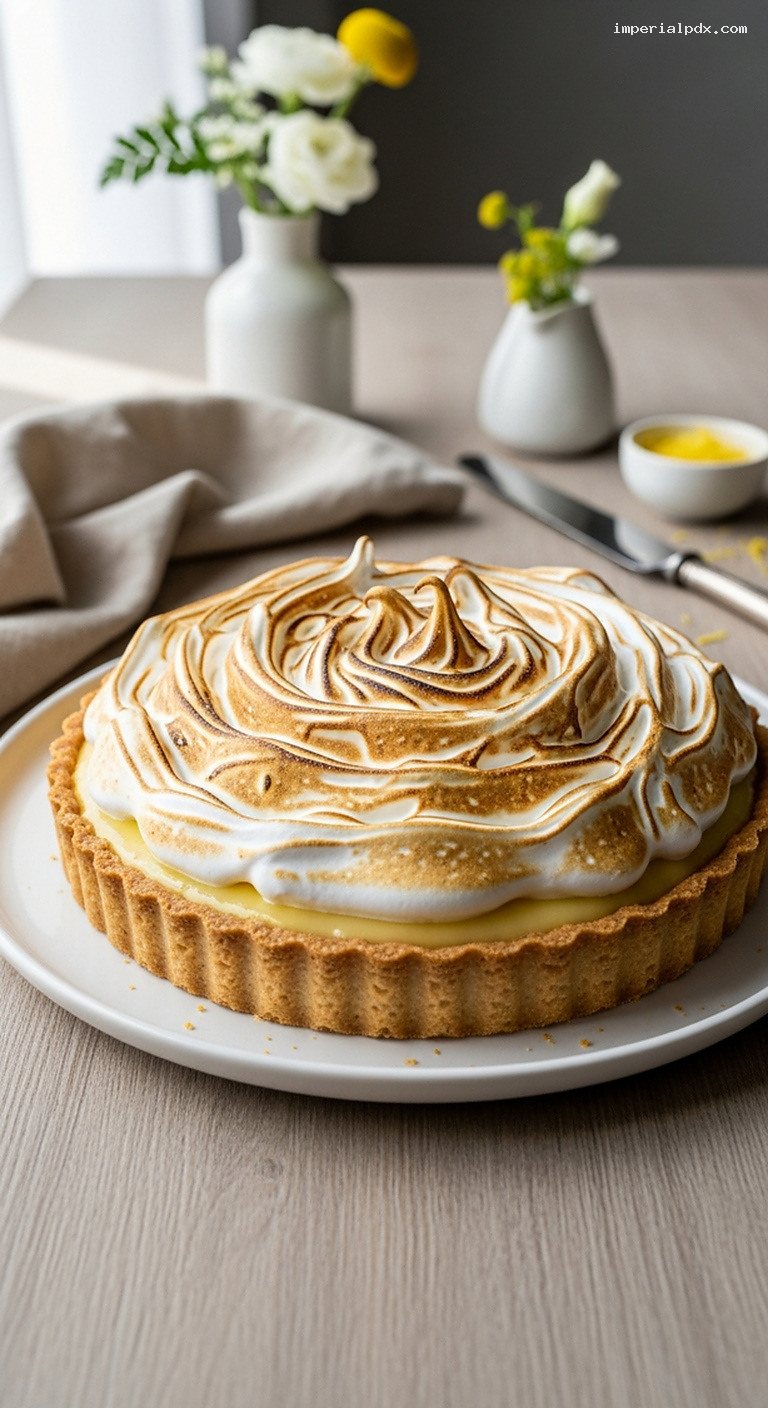
Spoon generous swirls of meringue over the lemon filling, or pipe it using a large star tip for a neater look. Leave a narrow border of lemon filling visible around the edge if you like the contrast, or cover the tart completely for a dramatic cloud of meringue. Use the back of a spoon to create peaks and waves.
Using a kitchen torch, gently toast the meringue until it is lightly to deeply golden in places, moving the flame continuously to avoid burning. Garnish with extra lemon zest, very thin lemon slices, or a few berries if desired.
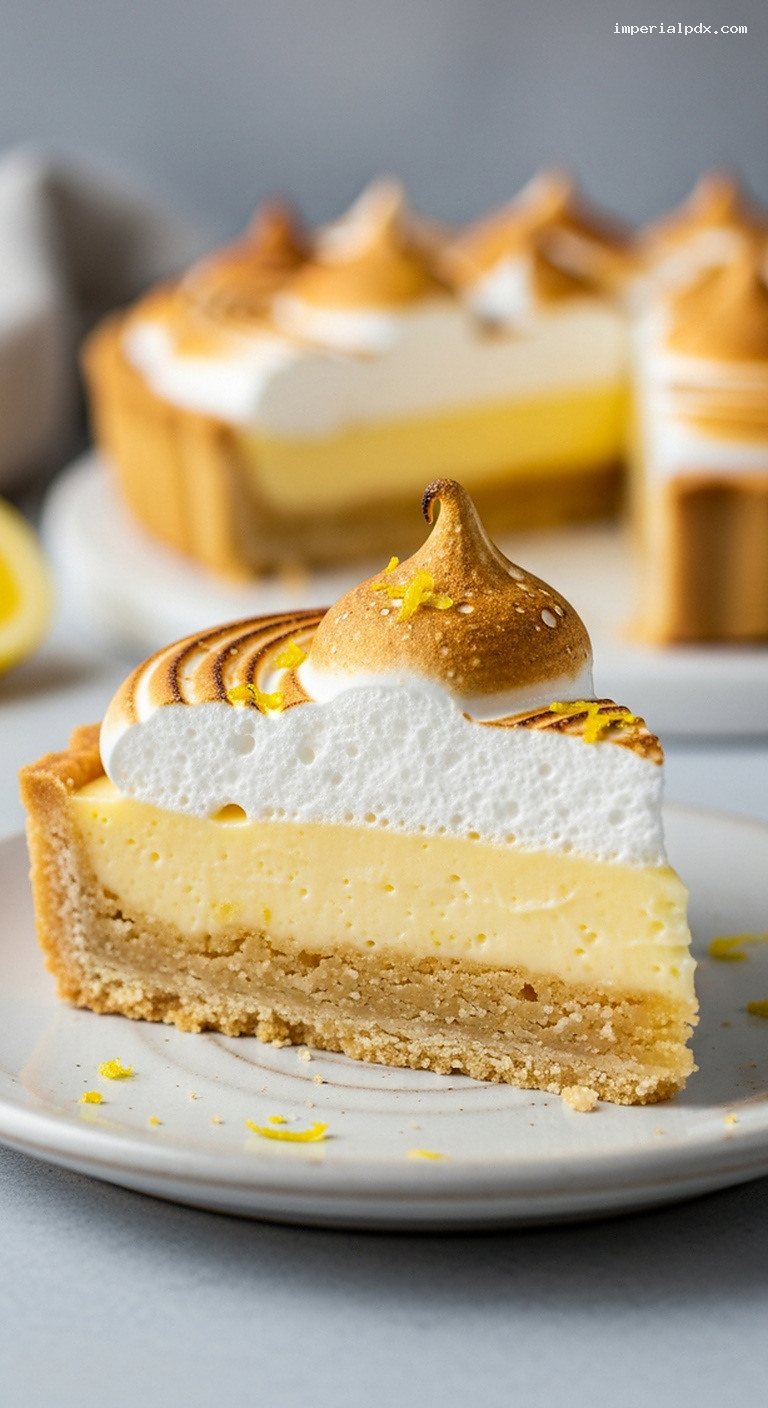
Serve immediately for the most dramatic presentation, or refrigerate up to 4 hours before serving. Slice with a sharp knife wiped clean between cuts for the neatest slices.
Pro Tips
- Use fresh lemons. Bottled juice will not give the same bright, fragrant flavor. Fresh zest is a big part of what makes this tart shine.
- Do not overbake the filling. Pull the tart from the oven while the center still has a gentle wobble; it will finish setting as it cools and stay smooth and creamy.
- Strain the custard. Pouring the lemon mixture through a fine-mesh sieve removes any bits of cooked egg and ensures a perfectly silky texture.
- Start with a clean, grease-free bowl for meringue. Any fat will prevent your whites from whipping up properly; wipe your bowl and whisk with a little vinegar or lemon juice if needed.
- Chill before slicing. A well-chilled tart cuts much more cleanly. Run a sharp knife under hot water, wipe it dry, and slice for perfect wedges.
Variations
- Classic, no-meringue tarte au citron: Skip the meringue entirely. Once the tart is chilled and set, simply dust the surface lightly with powdered sugar and garnish with thin lemon slices.
- Brûléed lemon tart: Omit the meringue. After the lemon filling is set and chilled, sprinkle an even layer of granulated sugar over the surface and caramelize it with a torch (or briefly under a hot broiler) for a crackly, crème brûlée-style top.
- Citrus twist: Replace 2–3 tablespoons of the lemon juice with lime, blood orange, or grapefruit juice, and use mixed zest for a more complex citrus flavor while keeping the same method.
Storage & Make-Ahead
The sweet pastry crust can be made and pressed into the tart pan up to 2 days in advance; keep it well wrapped in the refrigerator, then blind-bake just before filling. The fully baked lemon tart (without meringue) keeps well, covered and refrigerated, for up to 2 days. Add the meringue and torch it on the day you plan to serve for the best texture and appearance.
Once topped with meringue, the tart is best within 4–6 hours. You can refrigerate leftovers, loosely covered, for up to 1 day, but the meringue may soften and weep slightly. Always store the tart in the refrigerator due to the eggs and cream, and avoid leaving it at room temperature for more than 2 hours.
Nutrition (per serving)
Approximate values for 1 of 10 slices: about 420 calories, 6 g protein, 25 g fat, 44 g carbohydrates, 1 g fiber, 32 g sugars, and 170 mg sodium. These numbers are estimates and will vary based on exact ingredients and portion sizes.
