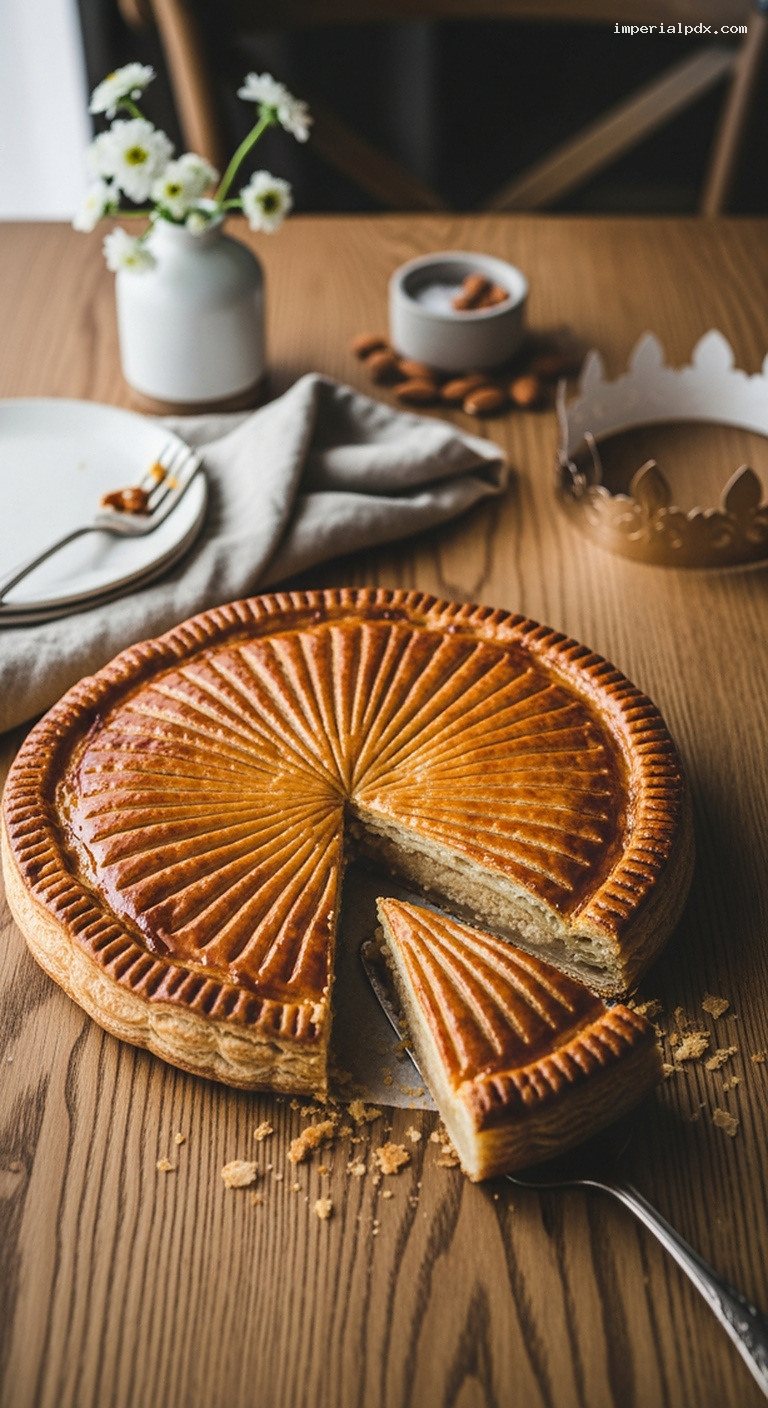
Quick Recipe Version (TL;DR)
Quick Ingredients
- 2 sheets all-butter puff pastry (about 250 g each), chilled
- 90 g (6 tbsp) unsalted butter, softened
- 100 g (1/2 cup) granulated sugar
- 125 g (1 1/4 cups) finely ground almond flour (almond meal)
- 2 large eggs (1 for filling, 1 for egg wash)
- 1 large egg yolk (for richer egg wash)
- 1 tsp vanilla extract
- 1/2 tsp almond extract (optional)
- 1 tbsp dark rum (optional)
- 1/4 tsp fine salt
- 1 tsp finely grated orange zest (optional)
- 2 tbsp apricot jam or simple syrup (for glaze)
- 1 fève (tiny charm) or 1 whole almond (optional, for tradition)
Do This
- 1. Make frangipane: cream butter and sugar; mix in almond flour, 1 egg, extracts, rum, salt, and orange zest until smooth.
- 2. Roll each puff pastry sheet to about 3 mm (1/8 in) thick; cut two 23–25 cm (9–10 in) circles.
- 3. Place one circle on a parchment-lined tray, dock center with a fork, spread frangipane leaving a 2.5 cm (1 in) border, and hide the fève in the filling.
- 4. Brush border with egg wash (1 egg beaten with 1 tbsp water), top with second pastry circle, seal edges well, and chill 30–45 minutes.
- 5. Heat oven to 200°C / 400°F. Score decorative lines on top without cutting through, vent the center, and brush with egg + yolk wash.
- 6. Bake 15 minutes at 200°C / 400°F, then 20–25 minutes at 190°C / 375°F until deeply golden and puffed.
- 7. Brush hot galette with warmed apricot jam or syrup, cool 15–20 minutes, then slice and serve warm.
Why You’ll Love This Recipe
- Buttery, flaky layers of puff pastry wrapped around a rich, soft almond frangipane filling.
- Looks impressively bakery-quality, yet uses store-bought puff pastry and simple mixing.
- Festive French Epiphany tradition built in: hide a tiny fève and crown the lucky winner.
- Great make-ahead options: prepare the filling and even assemble the galette in advance.
Grocery List
- Produce: 1 orange (optional, for finely grated zest)
- Dairy: Unsalted butter, large eggs, large egg yolk
- Pantry: All-butter puff pastry sheets, almond flour, granulated sugar, vanilla extract, almond extract (optional), dark rum (optional), fine salt, apricot jam or simple syrup, fève or whole almond (optional)
Full Ingredients
For the Almond Frangipane Filling
- 90 g unsalted butter (6 tbsp), softened to room temperature
- 100 g granulated sugar (1/2 cup)
- 125 g finely ground almond flour (1 1/4 cups), also labeled almond meal
- 1 large egg, at room temperature
- 1 tsp vanilla extract
- 1/2 tsp almond extract (optional, but classic)
- 1 tbsp dark rum (optional, traditional in many French recipes)
- 1/4 tsp fine sea salt
- 1 tsp finely grated orange zest (optional, adds brightness)
- 1 fève (tiny heatproof charm) or 1 whole almond, for tradition (optional, see note in instructions)
For the Pastry and Assembly
- 2 sheets all-butter puff pastry (about 250 g / 9 oz each), kept cold but pliable
- 1–2 tbsp all-purpose flour, for dusting the work surface (if needed)
- 1 large egg, beaten with 1 tbsp water (for sealing and first egg wash)
- 1 large egg yolk, beaten with 1 tsp water or milk (for final shiny egg wash)
For the Glaze
- 2 tbsp apricot jam or jelly (or honey), warmed and strained if chunky
- 1–2 tsp hot water, to thin the jam if needed
Optional for Serving
- Paper crown, for crowning the person who finds the fève
- Extra powdered sugar for a light dusting (optional; not traditional, but pretty)
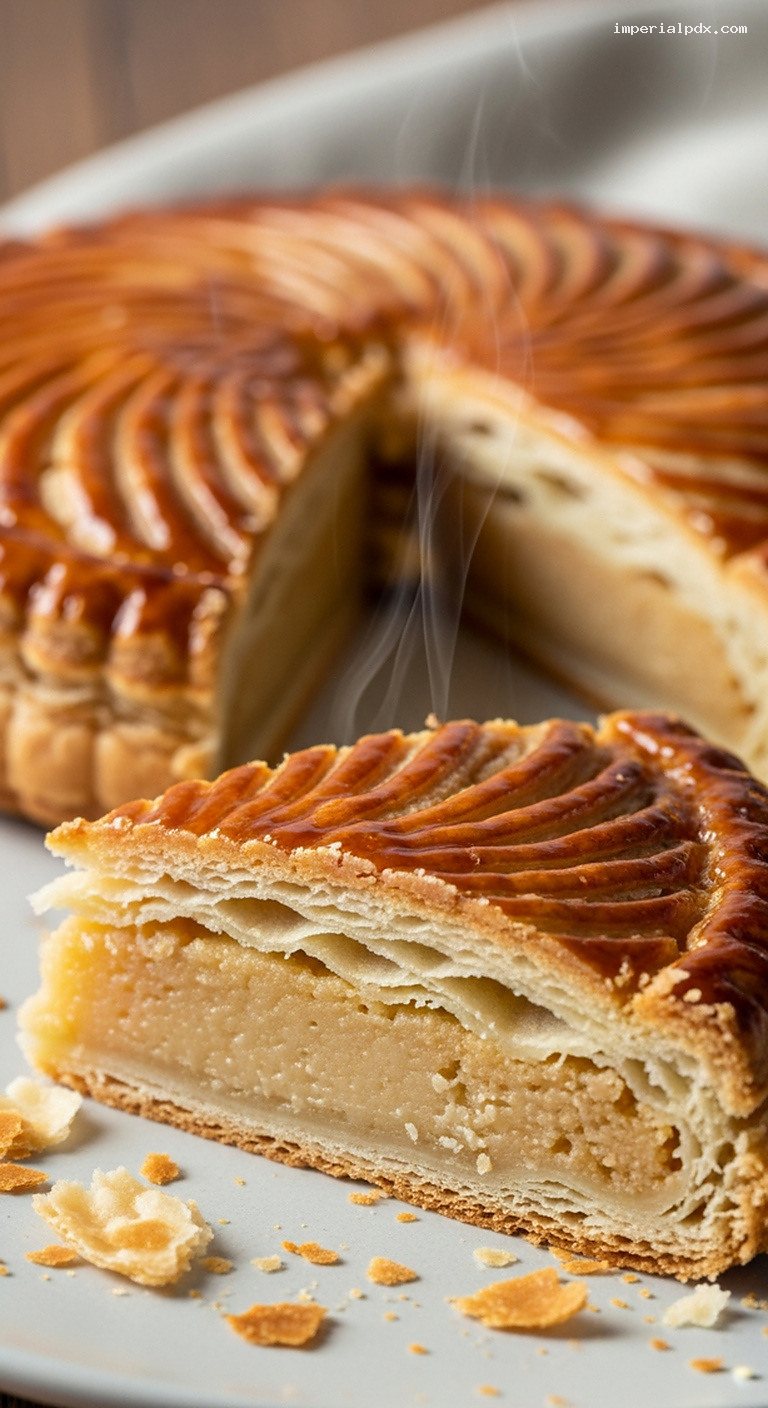
Step-by-Step Instructions
Step 1: Make the Almond Frangipane Filling
In a medium mixing bowl, combine the softened butter and granulated sugar. Using a hand mixer or a sturdy spatula, beat until the mixture looks pale and creamy, about 2–3 minutes. Scrape down the sides of the bowl as needed so everything incorporates evenly.
Add the almond flour, egg, vanilla extract, almond extract (if using), dark rum (if using), salt, and orange zest. Mix until you have a smooth, spreadable paste with no streaks of egg or dry almond flour. The filling should be thick but not stiff; it should hold its shape when spooned. If it seems runny, chill it for 10–15 minutes to firm up slightly. Cover and refrigerate while you prepare the pastry so the frangipane stays cool.
Step 2: Prepare the Puff Pastry Circles
Work with the puff pastry while it is still cold but flexible. If it is frozen, thaw according to package directions until just pliable. Lightly flour your work surface if the pastry is sticky. Roll each sheet of puff pastry to about 3 mm (1/8 inch) thickness, aiming for a square or rectangle large enough to cut a 23–25 cm (9–10 inch) circle.
Use a dinner plate, cake pan, or round template (23–25 cm / 9–10 in) as a guide. Place it on the pastry and cut around it with a sharp knife or pizza wheel. Repeat with the second sheet so you have two circles of equal size. Transfer one circle to a parchment-lined baking sheet. Slide the other circle onto a separate piece of parchment and keep both in the refrigerator for 10 minutes if they have warmed up; cold pastry puffs better and is easier to handle.
Step 3: Fill, Hide the Fève, and Seal the Galette
Take the baking sheet with the first pastry circle out of the fridge. Using a fork, gently prick (dock) the center area of the pastry, leaving a 2.5 cm (1 inch) border around the edge. This helps prevent the bottom from puffing too much under the filling.
Give the frangipane a quick stir to loosen it. Spread it evenly over the docked area, stopping at the 2.5 cm (1 inch) border. Use an offset spatula or the back of a spoon to smooth the top. If you are using a fève or whole almond, press it gently into the frangipane, ideally nearer to the edge rather than the center so it is easier to find when slicing. Be sure to warn guests about the charm and avoid serving it to very young children.
In a small bowl, beat 1 egg with 1 tbsp water to make your sealing egg wash. Brush this lightly around the exposed pastry border. Carefully place the second pastry circle over the top, aligning the edges. Press gently around the filling to remove any air pockets, then press the edges firmly together to seal. You can leave the edge plain, crimp it with a fork, or pinch it decoratively all around for a scalloped look.
Step 4: Chill the Assembled Galette
Once sealed, transfer the baking sheet with the assembled galette to the refrigerator and chill for 30–45 minutes. This step is important: it helps the butter in the pastry firm up again so the galette bakes up tall and flaky instead of spreading.
While the galette chills, preheat your oven to 200°C / 400°F with a rack in the middle position. This ensures the oven is fully hot when the pastry goes in, giving maximum puff. In a small bowl, whisk together the egg yolk with 1 tsp water or milk for the final glossy egg wash and set aside.
Step 5: Score the Design and Egg Wash
Remove the chilled galette from the refrigerator. Using a small sharp knife, trim the edge very slightly if needed to neaten the circle. Now, create the classic Galette des Rois pattern: without cutting all the way through the top layer, lightly score curved lines radiating out from the center to the edge in a sunburst or spiral pattern. Alternatively, draw gently arched lines in a scalloped spiral. Take your time; the design will show beautifully once baked.
With the tip of the knife, poke a small hole in the very center of the galette to act as a steam vent. Make 3–4 additional tiny vents spaced around the top if you like, being careful not to cut into the filling layer. Brush the entire top (not the sides) with a thin, even layer of the egg yolk wash. Avoid letting egg drip over the cut edge, as this can glue the layers together and prevent proper puffing.
Step 6: Bake Until Deeply Golden and Flaky
Place the galette in the hot oven and bake at 200°C / 400°F for 15 minutes. Then, without opening the oven for too long, reduce the temperature to 190°C / 375°F and continue baking for another 20–25 minutes, until the pastry is deeply golden, puffed, and crisp. Total baking time should be about 35–40 minutes, but ovens vary.
If the top is browning too quickly near the end, lightly tent with foil. The bottom should be well baked and not doughy; you can gently lift an edge with a spatula to check. Rotate the pan halfway through if your oven has hot spots to ensure even coloring.
Step 7: Glaze, Cool Slightly, and Serve
While the galette bakes, warm the apricot jam (or honey) with 1–2 tsp of water in a small saucepan or microwave until fluid. If the jam has chunks of fruit, strain it for a smooth glaze.
When the galette comes out of the oven, immediately brush the top lightly with the warm jam glaze. This gives a beautiful sheen and a hint of fruity sweetness. Let the galette cool on the baking sheet for at least 15–20 minutes so the frangipane can set slightly; it will still be deliciously warm inside.
Transfer to a serving platter. If you are using a paper crown, place it beside or on top of the galette for the traditional presentation. Slice into 8 wedges. In France, the youngest person typically sits under the table and calls out who gets each slice to keep the placement of the fève random. Whoever finds the fève becomes king or queen for the day.
Pro Tips
- Keep the pastry cold. Warm puff pastry melts and shrinks. Chill the dough whenever it feels soft or greasy to the touch.
- Do not overfill. If your frangipane layer is too thick or reaches the very edge, it may leak during baking. Keep a clean 2.5 cm (1 inch) border.
- Score gently. Cut only through the top layer when making the pattern. If you cut too deeply, the filling can bubble out.
- Use all-butter puff pastry. The flavor and flakiness are noticeably better than pastry made with other fats.
- Cool slightly before slicing. Giving the galette at least 15 minutes to rest makes for cleaner slices and a custardy, not runny, filling.
Variations
- Pear and Almond Galette des Rois: Arrange very thin slices of ripe pear over the frangipane before sealing the pastry. Keep the layer of fruit light to avoid excess moisture.
- Chocolate–Almond Frangipane: Fold 50 g (about 1/3 cup) melted and cooled dark chocolate into the frangipane for a richer, chocolatier version.
- Pistachio Twist: Replace half of the almond flour with finely ground pistachios. Top the baked galette with a sprinkling of chopped pistachios over the glaze.
Storage & Make-Ahead
Leftover galette keeps well, though the pastry is crispiest on the first day. Store cooled slices in an airtight container at room temperature for up to 1 day, or in the refrigerator for up to 3 days. Reheat on a baking sheet in a 160°C / 325°F oven for 8–10 minutes to re-crisp the pastry before serving.
For make-ahead prep, the frangipane filling can be made up to 2 days in advance and stored covered in the refrigerator. Bring it to a spreadable consistency before using. You can also assemble the whole galette (through sealing and scoring) and refrigerate it, well covered, for up to 24 hours before baking. For longer storage, freeze the unbaked, assembled galette on a tray until firm, then wrap tightly. Bake from frozen at 190–200°C / 375–400°F, adding 5–10 extra minutes and watching the color closely.
Nutrition (per serving)
Approximate values for 1 of 8 slices (will vary with brand of puff pastry and exact ingredients): about 560 calories; 41 g fat; 39 g carbohydrates; 9 g protein; 3 g fiber; 16 g sugar; 380 mg sodium. This is a rich, celebratory dessert – perfect for sharing on special occasions.
