Quick Recipe Version (TL;DR)
Quick Ingredients
- Génoise sponge: 4 large eggs, 120 g sugar, 120 g all-purpose flour, 45 g melted butter, 1 tsp vanilla, pinch salt
- Soaking syrup: 80 ml water, 65 g sugar, 1 tbsp kirsch or vanilla
- Crème mousseline: 500 ml whole milk, 120 g sugar, 40 g cornstarch, 5 egg yolks, 1 tsp vanilla, pinch salt, 250 g unsalted butter (soft)
- Strawberries: 700 g fresh strawberries (about 1.5 lb)
- Marzipan & glaze: 200 g white marzipan, 60 g apricot jam, 1 tbsp water, optional food coloring
Do This
- 1) Bake génoise in an 8 inch (20 cm) round pan at 350°F / 175°C for about 25 minutes. Cool completely, then slice into 2 layers.
- 2) Boil water and sugar for 1 minute to make syrup; cool and stir in kirsch or vanilla.
- 3) Cook milk, sugar, egg yolks, and cornstarch into a thick pastry cream; cool, then beat in soft butter to make light crème mousseline.
- 4) Line an 8 inch ring or springform pan with acetate. Place one sponge layer inside and soak lightly with syrup.
- 5) Halve neat strawberries and stand them cut-side out around the edge. Pipe or spoon mousseline to hold them in place and fill the center with more cream and chopped berries.
- 6) Top with second sponge, soak with syrup, and cover with a thin layer of mousseline. Chill at least 4 hours.
- 7) Cover with a rolled marzipan disc (or apricot glaze alone). Chill briefly, then unmold, slice, and serve.
Why You’ll Love This Recipe
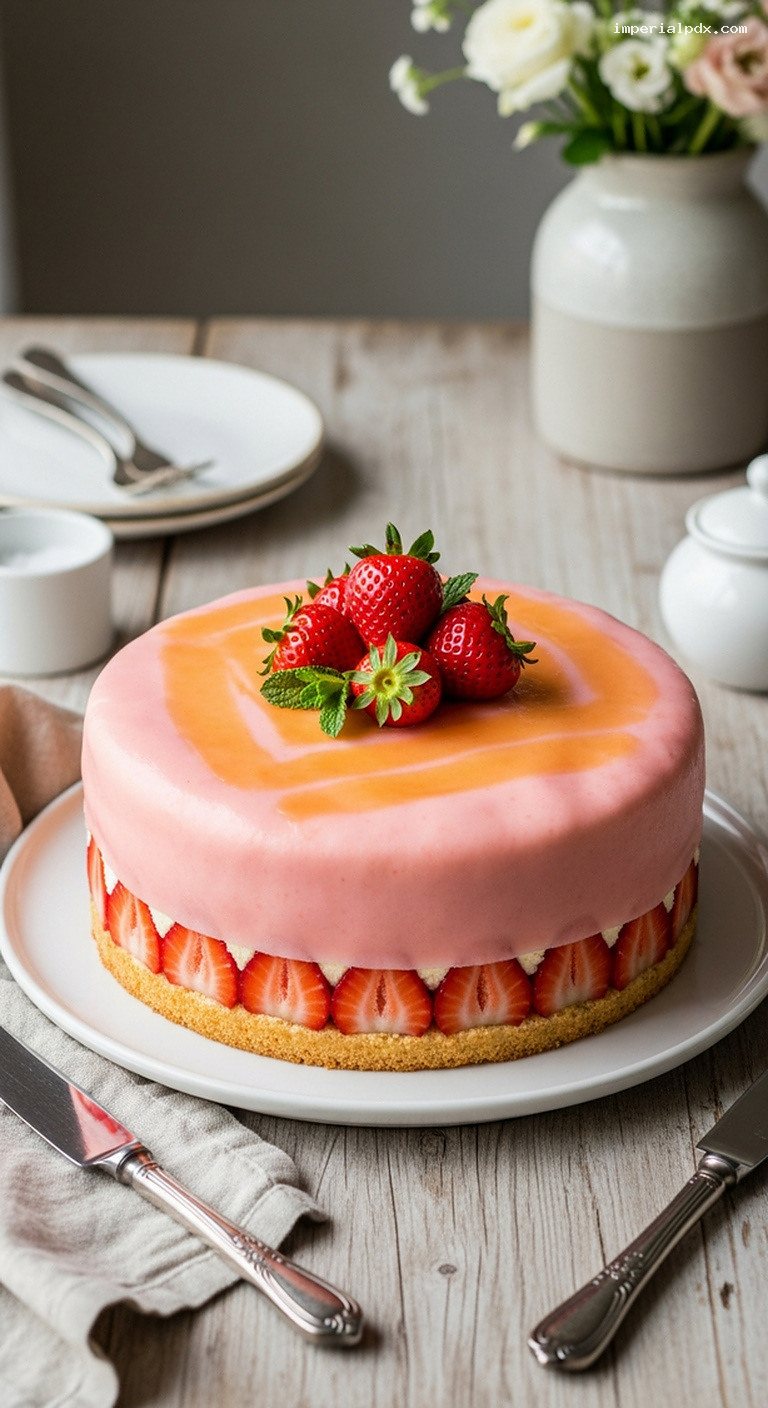
- Classic French bakery look with a ring of fresh strawberries and a smooth, elegant top.
- Light vanilla génoise and silky crème mousseline feel luxurious but not overly heavy.
- Surprisingly doable at home with simple equipment and clear, step-by-step instructions.
- Perfect make-ahead centerpiece dessert for birthdays, holidays, and spring or summer gatherings.
Grocery List
- Produce: Fresh strawberries (about 700 g / 1.5 lb)
- Dairy: Whole milk, unsalted butter, large eggs, egg yolks
- Pantry: Granulated sugar, all-purpose flour, cornstarch, marzipan, apricot jam, vanilla extract or vanilla bean paste, kirsch (optional), salt
Full Ingredients
For the Génoise Sponge (8 inch / 20 cm round)
- 4 large eggs, room temperature
- 120 g granulated sugar (about 1/2 cup plus 1 tbsp)
- 120 g all-purpose flour, sifted (about 1 cup, spooned and leveled)
- 45 g unsalted butter, melted and cooled slightly (about 3 tbsp)
- 1 tsp pure vanilla extract
- 1 small pinch fine salt
For the Soaking Syrup
- 80 ml water (1/3 cup)
- 65 g granulated sugar (about 1/3 cup)
- 1 tbsp kirsch (cherry brandy), optional but traditional
- or 1 tsp vanilla extract (if not using kirsch)
For the Crème Mousseline (Vanilla Butter-Enriched Pastry Cream)
- 500 ml whole milk (2 cups)
- 120 g granulated sugar (about 1/2 cup plus 1 tbsp), divided
- 40 g cornstarch (about 5 tbsp, leveled)
- 5 large egg yolks
- 1 tsp vanilla bean paste or 2 tsp pure vanilla extract (or seeds from 1 vanilla bean)
- 1 small pinch fine salt
- 250 g unsalted butter, very soft but cool (about 1 cup plus 2 tbsp), cut into cubes
For the Strawberries and Assembly
- 700 g fresh strawberries (about 1.5 lb)
- A few extra strawberries for decorating the top, optional
- Acetate cake strip (about 3 inches / 7–8 cm tall) or baking parchment for lining the ring
- 8 inch (20 cm) cake ring or springform pan
For the Marzipan or Glaze Top
- 200 g white marzipan (about 7 oz)
- 1–2 drops pink, red, or green gel food coloring, optional
- 60 g apricot jam (about 3 tbsp)
- 1 tbsp water
- Powdered sugar, for dusting the work surface when rolling marzipan
Step-by-Step Instructions
Step 1: Make and Bake the Génoise Sponge
Preheat your oven to 350°F (175°C). Grease the bottom (not the sides) of an 8 inch (20 cm) round cake pan, line the base with parchment, and lightly grease the parchment.
In a large heatproof bowl, whisk together the eggs and sugar. Place the bowl over a saucepan of gently simmering water (do not let the base touch the water). Whisk constantly until the mixture is warm to the touch and the sugar has dissolved, about 3–5 minutes.
Remove from the heat and, using a hand mixer or stand mixer with a whisk attachment, beat on high speed until the mixture is very thick, pale, and tripled in volume, 6–8 minutes. The batter should fall in a thick ribbon that briefly sits on the surface before dissolving.
Sift the flour and salt together. Sprinkle one-third over the egg foam and gently fold with a spatula, reaching to the bottom of the bowl. Repeat with the remaining flour in two additions, folding just until no streaks remain.
In a small bowl, mix the melted butter with the vanilla and a spoonful of batter. Fold this enriched mixture back into the main batter very gently to avoid deflating.
Pour into the prepared pan and smooth the top. Bake for 22–25 minutes, until golden, the top springs back when lightly pressed, and a toothpick comes out clean. Cool 10 minutes, run a thin knife around the edge, and turn out onto a rack to cool completely. Remove the parchment.
Step 2: Prepare the Soaking Syrup
While the sponge cools, make the syrup. In a small saucepan, combine the water and sugar. Bring to a gentle boil over medium heat, stirring to dissolve the sugar. Let it bubble for 1 minute, then remove from heat.
Let the syrup cool to room temperature, then stir in the kirsch (if using) or vanilla. Set aside. The syrup should be fully cool before you brush it on the sponge, so it does not make the cake gummy.
Step 3: Cook the Vanilla Pastry Cream
In a medium saucepan, heat the milk with half of the sugar (about 60 g) and the vanilla over medium heat until steaming and just starting to bubble around the edges. Do not let it fully boil.
Meanwhile, in a separate bowl, whisk together the egg yolks, remaining sugar, cornstarch, and salt until smooth and slightly thickened.
Slowly pour about one-third of the hot milk into the yolk mixture, whisking constantly to temper the eggs. Then pour the tempered mixture back into the saucepan with the remaining milk, whisking well.
Cook over medium heat, whisking continuously, until the pastry cream comes to a gentle boil and thickens, 1–3 minutes after it starts to bubble. Keep cooking and whisking for another 1 minute to cook out the starch taste.
Remove from the heat. If you used vanilla bean, remove it now. For extra smoothness, strain the hot pastry cream through a fine sieve into a clean bowl. Cover the surface directly with plastic wrap (to prevent a skin) and let cool to room temperature, then chill until just cool but not icy, about 30–45 minutes. It should be cool but still pliable when you turn it into mousseline.
Step 4: Whip the Crème Mousseline
When the pastry cream is cool and the butter is soft, make the crème mousseline. Using a mixer, beat the softened butter on medium-high speed until very light and fluffy, 3–4 minutes.
Whisk the pastry cream to loosen it. Add it to the butter in 3 additions, beating well after each. Start on low speed to combine, then increase to medium-high and beat until the mixture is smooth, thick, and silky, 2–3 minutes. Scrape down the bowl as needed.
The crème mousseline should hold its shape but still be pipeable or spreadable, like a firm custard frosting. If it looks curdled, keep beating; if it is too soft, chill it for 10–15 minutes and beat again. Set aside at cool room temperature if assembling right away, or refrigerate briefly and rebeat before use.
Step 5: Prepare the Strawberries and Pan for Assembly
Trim the tops off the strawberries. Choose 12–18 strawberries of similar size for the decorative ring. Cut these in half lengthwise. For the remaining berries, chop them into small pieces (about 1 cm dice). Pat off any excess moisture with paper towels so they do not water down the cream.
Place an 8 inch (20 cm) cake ring or the cleaned rim of your springform pan on a flat serving board or cake cardboard. Line the inside with an acetate cake strip or a strip of baking parchment to get very clean sides.
Using a long serrated knife, slice the cooled génoise horizontally into 2 even layers. If the top is very domed, level it slightly before cutting. Place one layer into the bottom of the ring. If it is a little smaller than the ring, center it as best you can.
Generously brush this first layer with about half of the soaking syrup, letting it absorb but not soak through completely.
Step 6: Build the Strawberry Ring and Fill with Mousseline
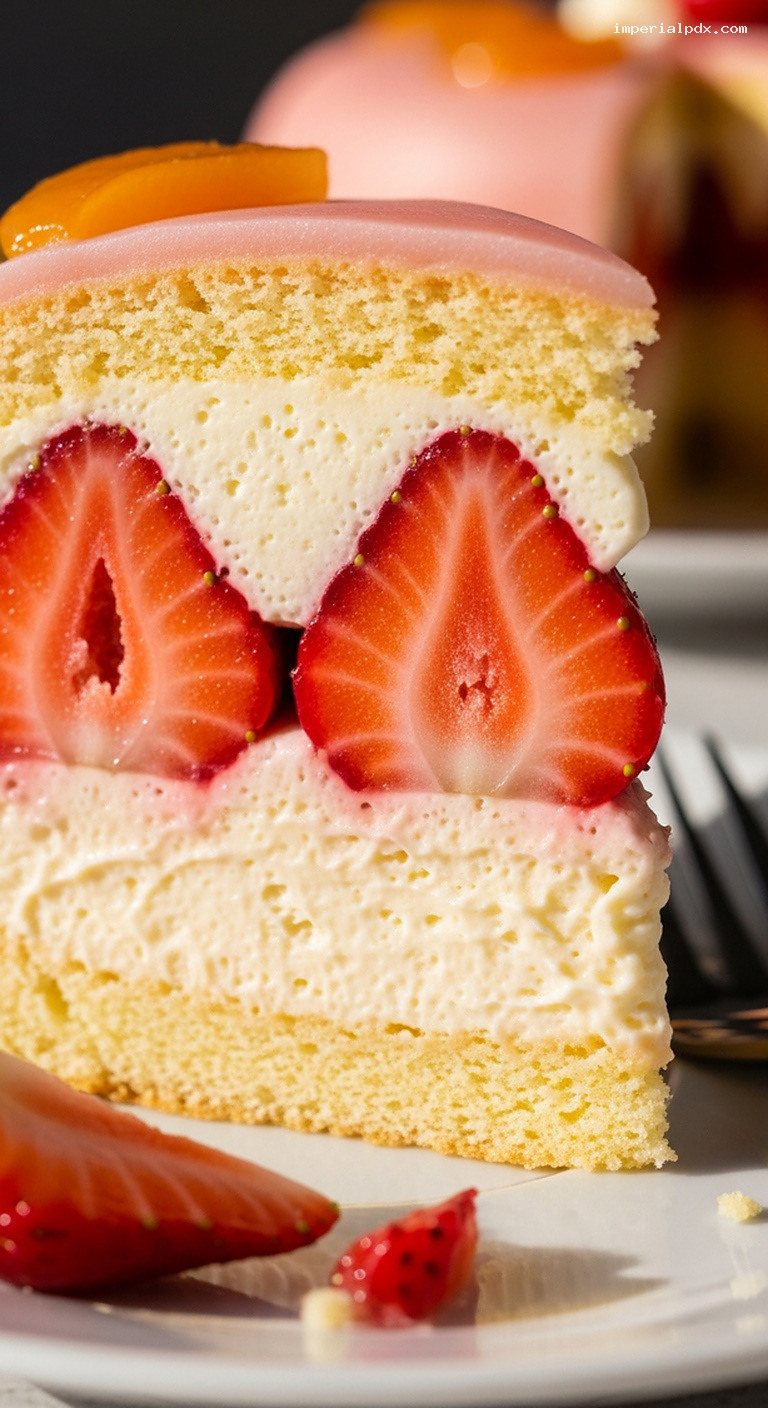
Arrange the halved strawberries, cut-side facing outwards and pointed tips upwards, all around the inside edge of the ring on top of the sponge. Pack them snugly together; these will give the classic Fraisier look.
Spoon some crème mousseline into a piping bag fitted with a plain round tip (or just use a spoon). Pipe or dollop cream carefully between the strawberries and over the top of the sponge, making sure to fill any gaps so the berries are anchored in place and no air pockets remain. Use an offset spatula to gently smooth the cream level with the tops of the berry halves.
Scatter the chopped strawberries over the center, leaving the ring of neat halves visible at the edge. Cover the chopped berries with more mousseline, spreading it into an even layer that comes just below the top of the ring. Tap the board gently to help the cream settle, and smooth the surface.
Step 7: Add the Second Sponge Layer and Chill
Place the second génoise layer on top of the cream, cut-side down, pressing very gently so it makes good contact. If needed, trim to fit inside the ring without squashing the strawberries.
Brush the top sponge with the remaining soaking syrup, using as much as it will comfortably absorb without going soggy.
Spread a very thin, smooth layer of crème mousseline over the top sponge. This layer will help the marzipan or glaze sit neatly and catch any crumbs. Cover the cake (still in its ring) and chill in the refrigerator for at least 4 hours, preferably overnight. This firms up the cream and makes unmolding easy.
Step 8: Finish with Marzipan or Glaze and Serve
For a marzipan top, lightly dust a work surface with powdered sugar. Knead the marzipan with a drop or two of food coloring if you like, then roll it out to a circle just slightly larger than 8 inches (20 cm), about 2–3 mm thick. Use the base of your pan or a plate as a template to cut a clean circle.
In a small saucepan, warm the apricot jam with the water until melted and fluid. Strain if you want a perfectly smooth glaze. Let cool until just lukewarm.
Remove the chilled cake from the fridge. Brush the top lightly with some of the apricot glaze. Carefully lay the marzipan disc on top and gently smooth it with your hands. Brush a very thin layer of glaze on top of the marzipan if you want extra shine, or leave it matte and just glaze lightly.
To unmold, run a thin knife around the inside of the ring if needed, then gently loosen the ring and peel away the acetate. Decorate the top with halved or sliced strawberries if desired. Slice with a sharp knife dipped in hot water and wiped dry between cuts to show off the clean layers. Serve chilled or slightly cool.
Pro Tips
- Temperature is everything: For a stable crème mousseline, the butter and pastry cream should be at a similar, cool room temperature when combined. Too cold or too warm can make it look curdled.
- Do not over-soak the sponge: The génoise should be moist but still springy. Brush the syrup on in layers and stop if it begins to look soggy.
- Choose firm, ripe strawberries: Very soft or overripe berries can bleed juice into the cream. Firm, fragrant berries give the cleanest look and best flavor.
- Use acetate if possible: It gives the neatest, bakery-style sides and makes unmolding much easier than using bare metal or parchment.
- Chill thoroughly before cutting: The cake needs at least 4 hours to firm up so you get clean, defined slices that show the strawberry ring and layers.
Variations
- All-glaze top (no marzipan): Skip the marzipan and simply glaze the chilled top sponge with warm apricot jam, then decorate with fanned strawberry slices.
- Lemon Fraisier: Add 1–2 tsp finely grated lemon zest to the pastry cream and use a lemon-flavored syrup (add lemon juice and zest) instead of kirsch.
- Mixed berry version: Replace some of the strawberries with raspberries or thinly sliced peaches in the center, but keep strawberries for the neat outer ring.
Storage & Make-Ahead
The finished Fraisier cake keeps well, covered, in the refrigerator for up to 2 days. Because of the fresh fruit and cream, it should not be kept at room temperature for long; limit room-temperature display to 1–2 hours.
You can make the génoise sponge up to 2 days ahead, wrap it tightly in plastic, and store at room temperature. The soaking syrup can be made up to 1 week in advance and kept in the fridge. The pastry cream can be prepared 1 day ahead; store it chilled with plastic wrap pressed directly on the surface, then bring to cool room temperature and beat with the butter to make mousseline on the day of assembly.
Leftover slices can be stored in an airtight container in the refrigerator for 1–2 days. The texture of the berries will soften over time, so the cake is best enjoyed within 24 hours of finishing.
Nutrition (per serving)
Approximate values for 1 of 12 slices: about 520 calories; 33 g fat; 24 g saturated fat; 50 g carbohydrates; 3 g fiber; 32 g sugars; 8 g protein; 180 mg sodium. These numbers are estimates and will vary based on exact ingredients and portion sizes.