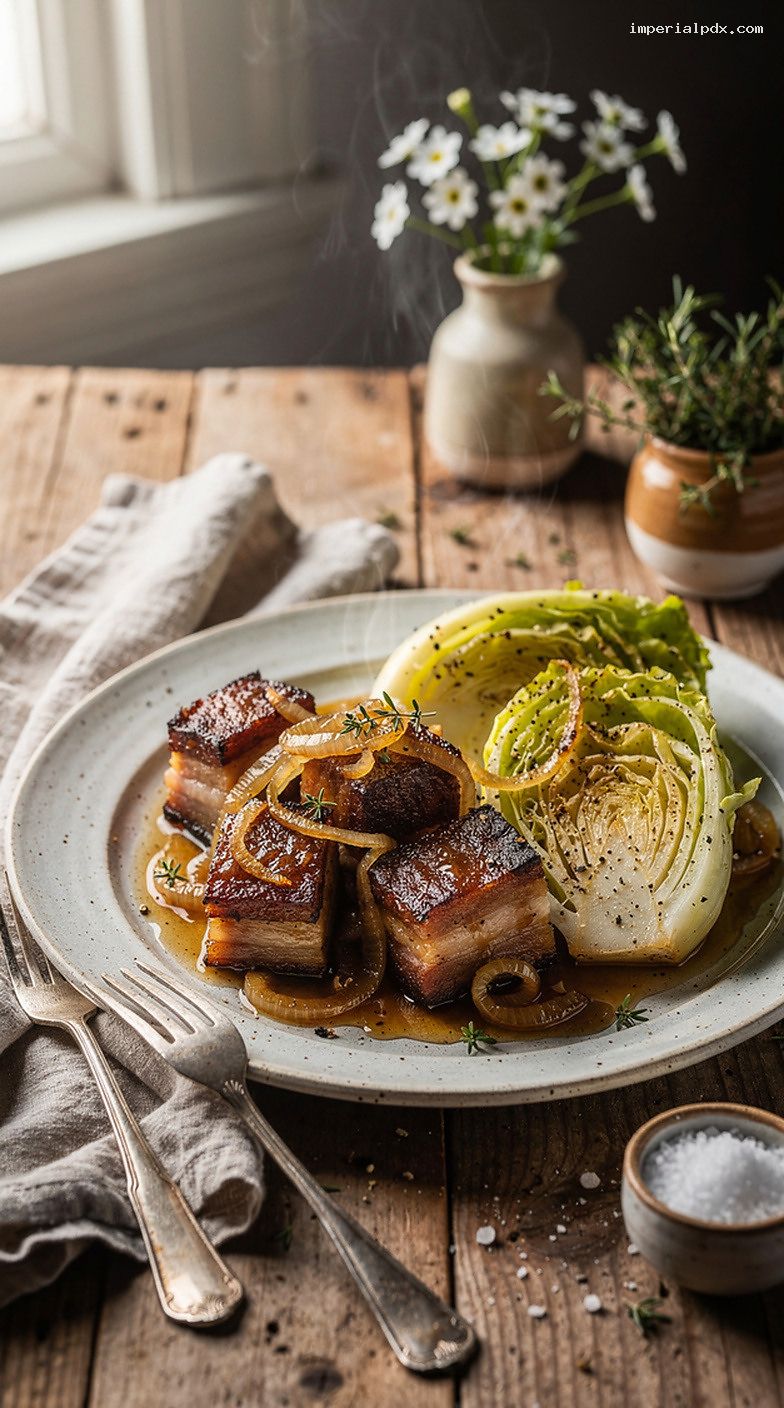
Quick Recipe Version (TL;DR)
Quick Ingredients
- 2 1/2 lb skinless pork belly, cut into 2-inch chunks (or 2 lb thick-cut bacon, cut into 3-inch pieces)
- 1 1/2 tsp kosher salt, plus more to taste
- 1 tsp black pepper
- 2 tbsp olive oil
- 2 large yellow onions, thinly sliced
- 4 garlic cloves, minced
- 2 tbsp tomato paste
- 2 cups dry apple cider
- 1 cup low-sodium chicken stock
- 1 tbsp Dijon mustard
- 1 tbsp apple cider vinegar
- 2 bay leaves
- 6 sprigs fresh thyme
- 1 sprig fresh rosemary
- 1 medium green cabbage (about 2 1/2 lb), cut into 6 wedges
- 2 tbsp unsalted butter
- 2 tbsp chopped parsley (for serving)
Do This
- 1) Heat oven to 325°F. Season pork with salt and pepper.
- 2) Sear pork in a Dutch oven until deeply browned, 10–14 minutes total; remove.
- 3) Sauté onions, then garlic and tomato paste; deglaze with cider and stock. Stir in mustard, vinegar, herbs.
- 4) Return pork, cover, and braise in oven until very tender, 2 hours.
- 5) Add cabbage wedges to the pot, cover, and braise 25–30 minutes more until tender.
- 6) Optional: Broil pork 3–5 minutes to crisp, then spoon cider-onion sauce over everything.
- 7) Finish with parsley and serve hot.
Why You’ll Love This Recipe
- Deeply comforting: apple cider and onions cook down into a glossy, sweet-savory sauce.
- Low effort for big payoff: most of the cooking is hands-off while the oven does the work.
- One-pot friendly: pork and cabbage finish together, perfect for a farmhouse-style plate.
- Flexible: make it with pork belly for richness or thick-cut bacon for extra smokiness.
Grocery List
- Produce: 2 large yellow onions, garlic, 1 medium green cabbage, fresh thyme, fresh rosemary, fresh parsley
- Dairy: unsalted butter
- Pantry: dry apple cider, low-sodium chicken stock, olive oil, tomato paste, Dijon mustard, apple cider vinegar, bay leaves, kosher salt, black pepper
Full Ingredients
Pork and Braising Base
- Pork belly option: 2 1/2 lb skinless pork belly, cut into 2-inch chunks
- Thick-cut bacon option: 2 lb thick-cut bacon, cut into 3-inch pieces (see notes in Step 1 about salt)
- 1 1/2 tsp kosher salt (use 1/2 tsp if using bacon), plus more to taste
- 1 tsp freshly ground black pepper
- 2 tbsp olive oil (reduce to 1 tbsp if using bacon and it renders heavily)
- 2 large yellow onions, thinly sliced
- 4 garlic cloves, minced
- 2 tbsp tomato paste
- 2 cups dry apple cider
- 1 cup low-sodium chicken stock
- 1 tbsp Dijon mustard
- 1 tbsp apple cider vinegar
- 2 bay leaves
- 6 sprigs fresh thyme
- 1 sprig fresh rosemary
Cabbage
- 1 medium green cabbage (about 2 1/2 lb)
- 2 tbsp unsalted butter
- 1/4 tsp kosher salt, plus more to taste
- 2 tbsp chopped parsley, for serving
Optional (Nice-to-Have Finishes)
- 1 tsp brown sugar (if your cider is very dry and you want a slightly rounder sweetness)
- 1 tsp caraway seeds (classic with cabbage)
- 1 tbsp chopped chives, for serving
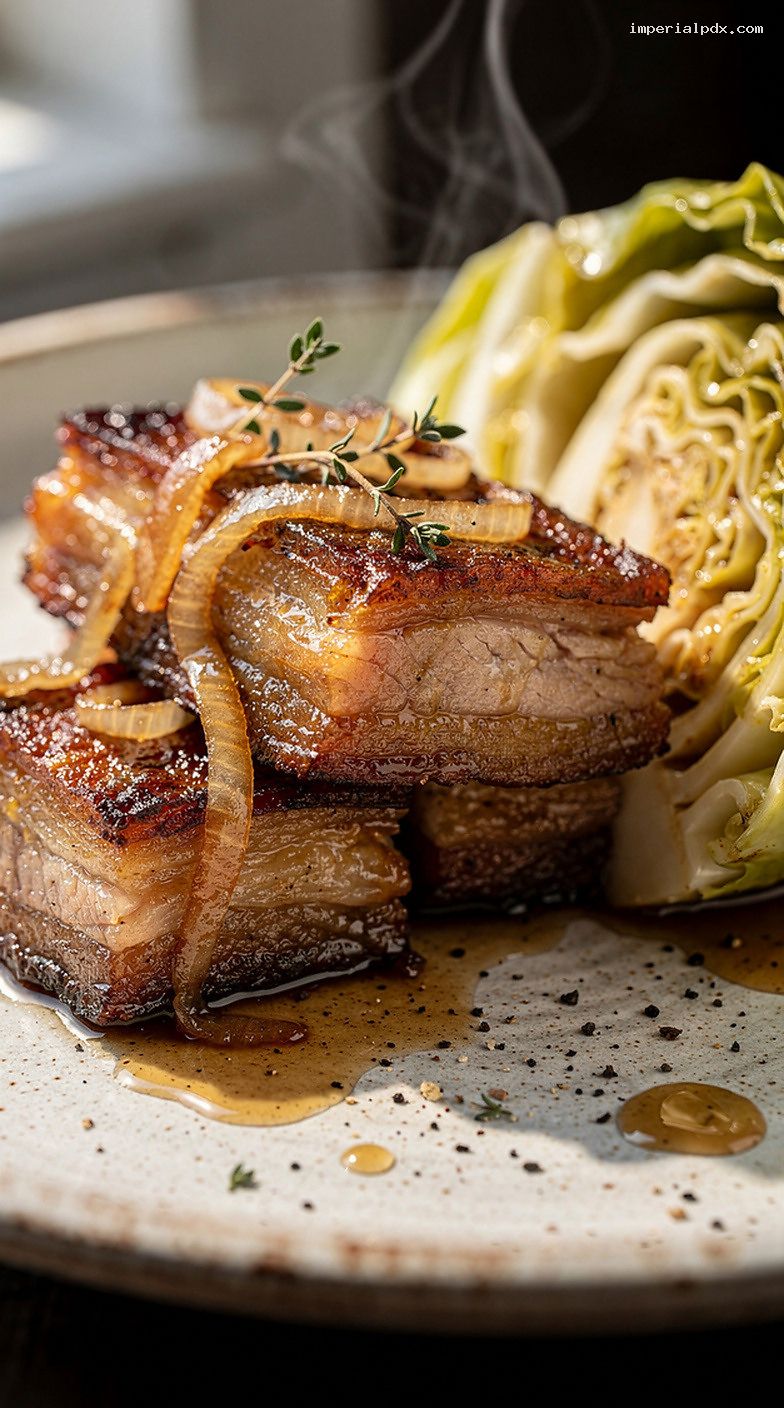
Step-by-Step Instructions
Step 1: Heat the oven and season the pork
Preheat the oven to 325°F.
Pat the pork belly dry with paper towels (this helps it brown). Season with 1 1/2 tsp kosher salt and 1 tsp black pepper. If you’re using thick-cut bacon, it’s already salty, so season with only 1/2 tsp kosher salt (or skip the salt entirely if your bacon is very salty).
Step 2: Sear until deeply browned
Set a large Dutch oven over medium-high heat and add 2 tbsp olive oil. When the oil shimmers, add the pork in a single layer (work in 2 batches if needed so it browns instead of steaming).
Sear, turning occasionally, until the pieces are deeply browned on multiple sides, about 10–14 minutes total. Transfer the pork to a plate. Carefully pour off excess fat, leaving about 2 tbsp in the pot (a little more is fine for flavor; you just don’t want the braise greasy).
Step 3: Build the cider-onion braising base
Add the sliced onions to the pot and cook over medium heat, scraping up any browned bits, until the onions soften and start to turn golden, about 8–10 minutes.
Add the minced garlic and cook until fragrant, about 30 seconds. Stir in 2 tbsp tomato paste and cook for 1 minute to take the raw edge off and deepen the flavor.
Step 4: Deglaze and assemble the braise
Pour in 2 cups dry apple cider and stir well, scraping the bottom of the pot to dissolve the flavorful browned bits. Add 1 cup chicken stock, 1 tbsp Dijon mustard, and 1 tbsp apple cider vinegar.
Add the 2 bay leaves, thyme sprigs, and rosemary sprig. If you want a slightly sweeter, rounder sauce, stir in 1 tsp brown sugar (optional).
Step 5: Braise the pork until tender
Return the pork (and any juices from the plate) to the Dutch oven, nestling pieces into the liquid. The pork should be mostly submerged; it’s fine if the tops peek out a bit.
Bring the liquid to a gentle simmer on the stovetop, then cover with a tight-fitting lid and transfer to the oven. Braise at 325°F for 2 hours, until the pork is very tender when pierced with a fork.
Step 6: Add the cabbage and finish cooking
While the pork braises, cut the cabbage into 6 wedges, keeping a bit of core intact on each wedge so they hold together.
After the pork has braised for 2 hours, carefully remove the pot from the oven. Nestle the cabbage wedges into the braising liquid around (and slightly on top of) the pork. Dot the cabbage with 2 tbsp butter and sprinkle with 1/4 tsp kosher salt. If using, add 1 tsp caraway seeds now.
Cover and return to the oven for 25–30 minutes, until the cabbage is tender and silky but not falling apart.
Step 7: Optional crisping and serving
If you’d like crispier edges on the pork (highly recommended for pork belly), use tongs to transfer pork pieces to a rimmed baking sheet. Broil 4–6 inches from the heat for 3–5 minutes, watching closely, until the edges sizzle and caramelize.
Meanwhile, discard the bay leaves and herb stems from the pot. Taste the cider-onion sauce and adjust with salt and pepper as needed. If the sauce seems thin, simmer it on the stovetop over medium heat for 5–8 minutes to reduce slightly.
To serve, spoon cabbage onto plates, pile on the pork, and ladle the cider-onion sauce over top. Finish with chopped parsley (and chives, if using). Serve hot with crusty bread, mashed potatoes, or buttered noodles to catch the sauce.
Pro Tips
- Choose “dry” cider if possible: Fresh-pressed apple cider labeled “not from concentrate” is great. Avoid heavily spiced or very sweet cider, which can turn the sauce cloying.
- Brown well for a richer sauce: Don’t rush the sear. That deep color is where the final braise gets its savory backbone.
- Mind the salt if using bacon: Start with less salt, then adjust the sauce at the end after it reduces.
- Keep cabbage wedges intact: Leaving a bit of core helps them stay together so you can plate them neatly.
- For an extra-silky finish: Whisk 1 tbsp cold butter into the hot sauce right before serving (optional).
Variations
- Beer-braised twist: Replace 1 cup of the cider with 1 cup amber ale for a toastier, malty edge.
- Apple-forward: Add 2 firm apples (like Honeycrisp), sliced into wedges, during the last 30 minutes with the cabbage.
- Spice it up: Add 1/2 tsp crushed red pepper flakes with the garlic, or finish with prepared horseradish at the table.
Storage & Make-Ahead
Cool leftovers to room temperature (within 2 hours), then refrigerate in an airtight container for up to 4 days. This dish reheats beautifully and often tastes even better the next day.
To reheat: warm gently in a covered pot over medium-low heat until hot throughout, about 10–15 minutes, adding a splash of stock or water if the sauce has thickened too much. For crisp edges, re-crisp pork pieces under the broiler for 2–4 minutes after reheating.
To make ahead: braise the pork (without cabbage) up to 2 days ahead. Refrigerate. Reheat in a 325°F oven until bubbling, then add cabbage and finish as written.
Nutrition (per serving)
Approximate, based on pork belly: 860 calories, 52 g fat, 30 g protein, 32 g carbohydrates, 6 g fiber, 12 g sugar, 980 mg sodium. Values vary by exact cut of pork/bacon and how much sauce is served.