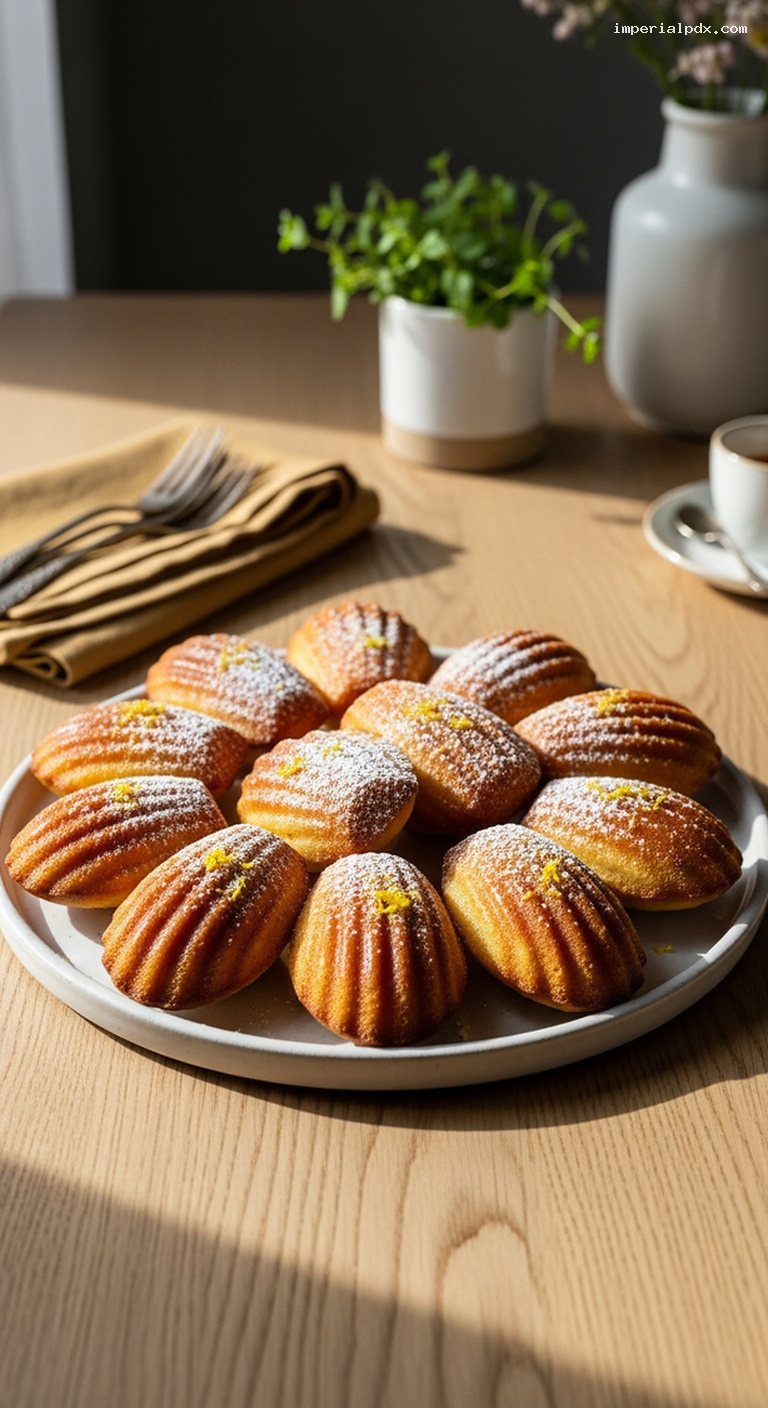
Quick Recipe Version (TL;DR)
Quick Ingredients
- 1/2 cup (113 g) unsalted butter, melted and cooled, plus extra for pan
- 1 cup (120 g) all-purpose flour
- 1 tsp baking powder
- 1/4 tsp fine sea salt
- 3 large eggs, at room temperature
- 2/3 cup (130 g) granulated sugar
- 1 tsp pure vanilla extract
- 1 tbsp finely grated lemon zest or 1 tsp orange blossom water
- 2 tbsp whole milk, at room temperature
- Powdered sugar, for dusting (optional)
Do This
- 1. Generously butter and lightly flour your madeleine pan; tap out excess and chill the pan. Melt the butter and let it cool until just warm.
- 2. Whisk flour, baking powder, and salt together in a small bowl.
- 3. In a separate bowl, beat eggs and sugar until thick, pale, and foamy (about 5 minutes). Beat in vanilla and lemon zest or orange blossom water.
- 4. Gently fold dry ingredients into the egg mixture, then fold in milk and finally the melted butter until just combined. Cover and chill batter for 45 minutes.
- 5. Preheat oven to 375°F (190°C). Spoon 1 heaping tablespoon of batter into each mold (about 2/3 full).
- 6. Bake 8–10 minutes until the edges are golden and the centers are puffed with a springy hump.
- 7. Immediately loosen madeleines with a small offset spatula, invert onto a rack, and serve warm; dust with powdered sugar just before serving.
Why You’ll Love This Recipe
- Classic French madeleines with a buttery, tender crumb and the signature little hump.
- Delicately flavored with either bright lemon zest or floral orange blossom, perfect alongside tea or espresso.
- Simple pantry ingredients and clear directions make these very doable for home bakers.
- Make-ahead friendly: the batter chills nicely, so you can bake fresh, warm batches on demand.
Grocery List
- Produce: 1 lemon (for zest; optional orange for zest, if desired)
- Dairy: Unsalted butter, eggs, whole milk
- Pantry: All-purpose flour, granulated sugar, powdered sugar, baking powder, fine salt, vanilla extract, orange blossom water (optional)
Full Ingredients
For the Madeleines
- 1/2 cup (113 g) unsalted butter, melted and cooled to just warm
- 1 cup (120 g) all-purpose flour, spooned and leveled
- 1 tsp baking powder
- 1/4 tsp fine sea salt
- 3 large eggs, at room temperature
- 2/3 cup (130 g) granulated sugar
- 1 tsp pure vanilla extract
- 1 tbsp finely grated lemon zest or 1 tsp orange blossom water
- 2 tbsp whole milk, at room temperature
For Preparing the Pan
- 2–3 tbsp softened unsalted butter (for greasing molds)
- 1–2 tbsp all-purpose flour (for dusting molds)
Optional Finishing
- Powdered sugar, for dusting just before serving
- Very thin strips of lemon zest or a few orange blossom petals, for garnish (optional, decorative)
Step-by-Step Instructions
Step 1: Prepare the pan and melt the butter
Generously grease each cavity of your madeleine pan with softened butter, getting into all the ridges. A pastry brush or clean fingers work well. Dust lightly with flour, then tap the pan upside down over the sink or trash to remove excess flour. This combination of butter and flour prevents sticking and helps define the shell pattern. Place the prepared pan in the refrigerator or freezer to chill while you make the batter; a cold pan helps the madeleines rise nicely.
Melt 1/2 cup (113 g) unsalted butter in a small saucepan over low heat or in the microwave in short bursts. Once fully melted, set aside to cool until just warm, not hot. If the butter is too hot, it can deflate the batter later.
Step 2: Mix the dry ingredients
In a small bowl, whisk together the flour, baking powder, and salt until well combined and lump-free. This ensures the leavening is evenly distributed, giving you evenly risen, tender cakes. Set this bowl aside for a moment.
Step 3: Whip the eggs and sugar until thick and pale
In a large mixing bowl, add the eggs and granulated sugar. Using a hand mixer or stand mixer fitted with the whisk attachment, beat on medium-high speed for 4–5 minutes, until the mixture becomes thick, pale, and foamy. When you lift the beaters, the mixture should fall back in a thick ribbon that slowly dissolves into the bowl. This step traps air into the batter and is key to getting the classic light, sponge-like texture and the little “hump” on the back of each madeleine.
Beat in the vanilla extract and either the lemon zest or orange blossom water, mixing just until incorporated.
Step 4: Fold in the dry ingredients, milk, and butter
Using a flexible spatula, sift or sprinkle about one-third of the dry ingredients over the egg mixture. Gently fold by scooping from the bottom and lifting over the top, turning the bowl as you go. Repeat with the remaining dry ingredients in two additions, folding just until no visible flour remains. Be careful not to stir aggressively or over-mix; you want to keep as much of that whipped air as possible.
Pour in the milk and fold again briefly until just combined. Finally, slowly drizzle in the cooled melted butter along the side of the bowl while folding, working in two or three additions. Continue folding gently until the mixture is smooth and shiny with no streaks of butter. The batter will be thick but pourable.
Step 5: Chill the batter
Cover the bowl tightly with plastic wrap or a reusable cover and refrigerate for at least 45 minutes, and up to 24 hours. This rest allows the flour to hydrate and the batter to thicken, which encourages the madeleines to form their classic hump during baking. If chilling for longer than 1 hour, let the batter sit at room temperature for about 10 minutes before scooping so it is not rock-hard.
Step 6: Fill the molds and bake
When you are ready to bake, preheat your oven to 375°F (190°C) with a rack in the center. Remove the chilled madeleine pan from the fridge or freezer. Give the batter a very gentle stir once or twice to loosen it slightly without deflating it.
Using a tablespoon or small cookie scoop, portion about 1 heaping tablespoon of batter into the center of each mold, filling each cavity about two-thirds full. The batter will spread as it bakes, so no need to smooth it perfectly.
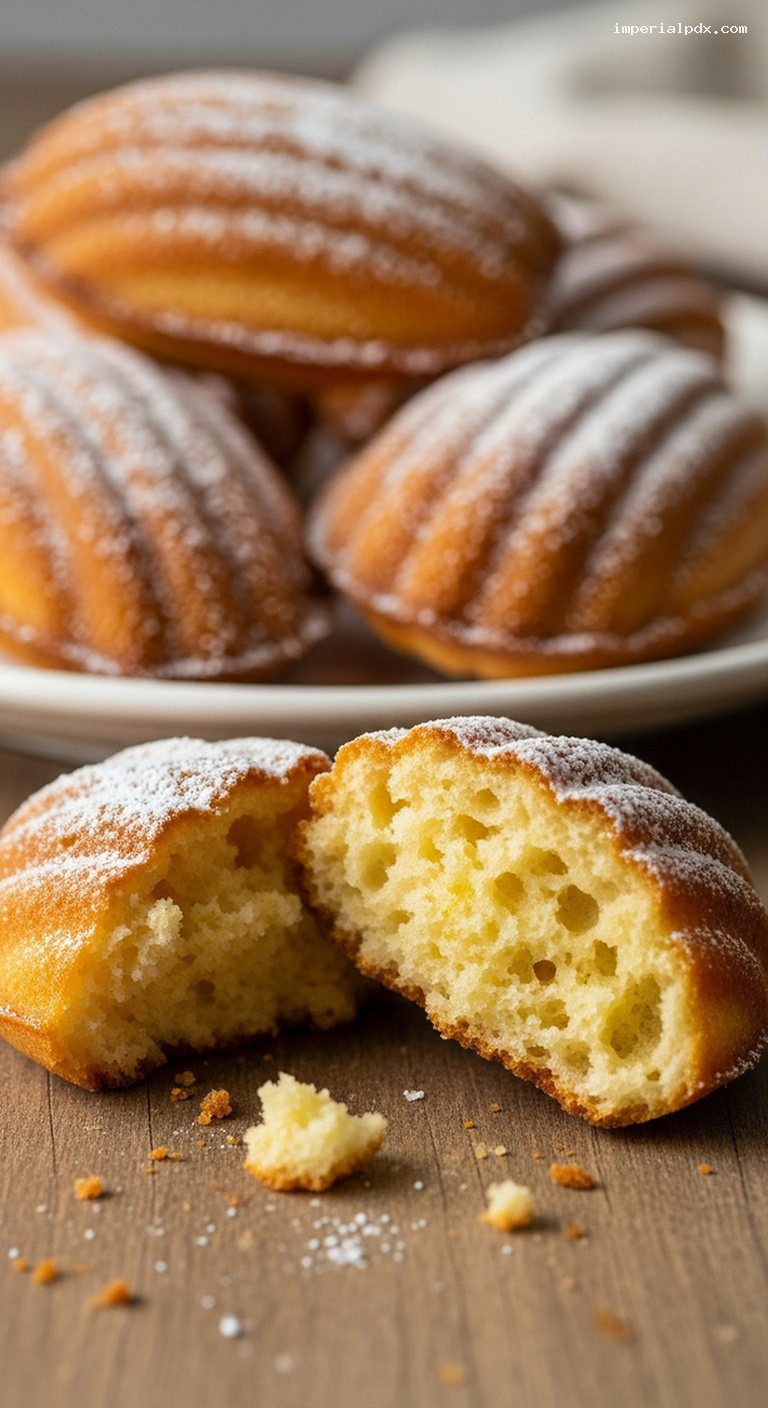
Bake for 8–10 minutes, rotating the pan halfway through if your oven bakes unevenly. The madeleines are done when the edges are golden brown, the centers are puffed with a little hump, and a toothpick inserted into the thickest part comes out clean or with a few moist crumbs.
Step 7: Release, cool briefly, and serve
As soon as the madeleines are done, remove the pan from the oven. Immediately loosen the edges of each cake with a small offset spatula, knife, or the tip of a butter knife. Invert the pan over a wire rack and gently tap to release the madeleines. If any stick, coax them out carefully with the spatula.
Let them cool on the rack for 5–10 minutes. Dust lightly with powdered sugar right before serving. Madeleines are at their very best still slightly warm from the oven, with crisp edges and a tender, buttery interior. Serve alongside tea, coffee, or espresso.
Pro Tips
- Do not skip the chilling step. Resting the batter is the secret to getting that charming little hump and a fine, even crumb.
- Use room-temperature eggs and milk. Cold ingredients will not whip or incorporate as well, and can make the batter dense.
- Prep the pan thoroughly. A well-buttered and floured, chilled pan gives crisp, defined shell ridges and prevents sticking.
- Watch the bake time closely. Madeleines go from perfect to dry quickly. Pull them as soon as the edges are golden and centers spring back lightly.
- Flavor gently. Lemon zest or orange blossom water are both delicate; start with the suggested amounts, then adjust slightly next time to your taste.
Variations
- Lemon Poppy Seed Madeleines: Add 1–2 tsp poppy seeds along with the flour and increase the lemon zest to 1 1/2 tbsp for extra brightness and a subtle crunch.
- Orange Blossom and Honey Madeleines: Replace 2 tbsp of the granulated sugar with 2 tbsp mild honey and flavor the batter with 1 tsp orange blossom water plus 1 tsp finely grated orange zest.
- Chocolate-Dipped Madeleines: After cooling, dip the shell side of each madeleine halfway into melted dark or milk chocolate. Let set on parchment. Sprinkle with a few grains of flaky sea salt or finely grated citrus zest before the chocolate hardens.
Storage & Make-Ahead
Madeleines are best enjoyed fresh, within a few hours of baking, when the edges are still delicately crisp. Store any leftovers in an airtight container at room temperature for up to 2 days; they will soften but remain tasty. To refresh them, warm on a baking sheet in a 300°F (150°C) oven for 3–4 minutes.
The batter can be prepared up to 24 hours in advance and kept covered in the refrigerator. This makes it easy to bake off small, fresh batches as needed. You can also freeze baked and cooled madeleines in a single layer, then transfer to an airtight container or freezer bag for up to 1 month. Thaw at room temperature, then re-crisp briefly in a low oven before serving.
Nutrition (per serving)
Approximate values per madeleine (based on 18 madeleines): about 115 calories, 7 g fat, 12 g carbohydrates, 2 g protein, 0.5 g fiber, and 7 g sugar. These numbers are estimates and will vary slightly depending on exact size and any added toppings or variations.