Quick Recipe Version (TL;DR)
Quick Ingredients
- 400 g bread flour (about 3 1/4 cups)
- 50 g sugar (1/4 cup), 8 g fine salt (1 1/2 tsp)
- 7 g instant yeast (2 1/4 tsp)
- 120 ml whole milk, lukewarm (1/2 cup)
- 3 large eggs, room temperature
- 150 g unsalted butter, soft (about 2/3 cup)
- 1 tsp vanilla extract, optional citrus zest
- 250–300 g pralines roses, roughly chopped (1 3/4–2 cups)
- 1 egg + 1 tbsp milk for egg wash
Do This
- 1. Warm milk to lukewarm. In a large bowl, combine flour, sugar, salt, and yeast. Add milk, eggs, and vanilla; mix to a shaggy dough.
- 2. Knead 3–4 minutes, then work in soft butter a little at a time until smooth, elastic, and slightly tacky, 8–10 minutes total.
- 3. Form a ball, place in a greased bowl, cover, and let rise until doubled, about 1 1/2 hours at warm room temperature (or chill overnight after 45 minutes).
- 4. Gently deflate, flatten into a rectangle, and scatter chopped pralines roses over the surface. Roll up and shape into a snug log or spiral.
- 5. Place in a greased 9×5 in (23×12 cm) loaf pan or round tin. Cover and let rise until well puffed, 60–90 minutes.
- 6. Brush with egg wash, sprinkle with extra pralines, and bake at 180°C / 350°F for 25–30 minutes until deep golden and set.
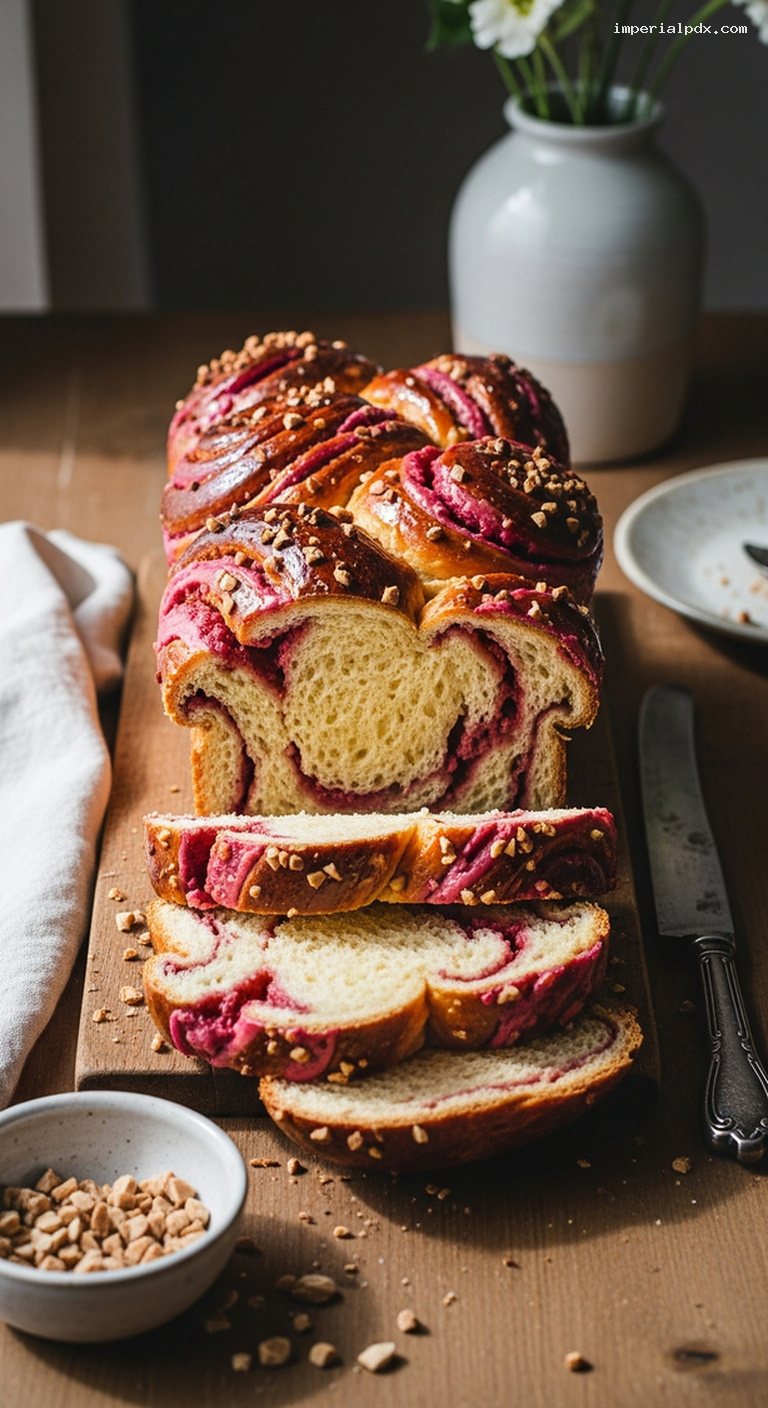
- 7. Cool 20–30 minutes before slicing to reveal the rosy caramel swirls.
Why You’ll Love This Recipe
- Classic French bakery vibes at home: soft, buttery brioche with a delicate golden crust.
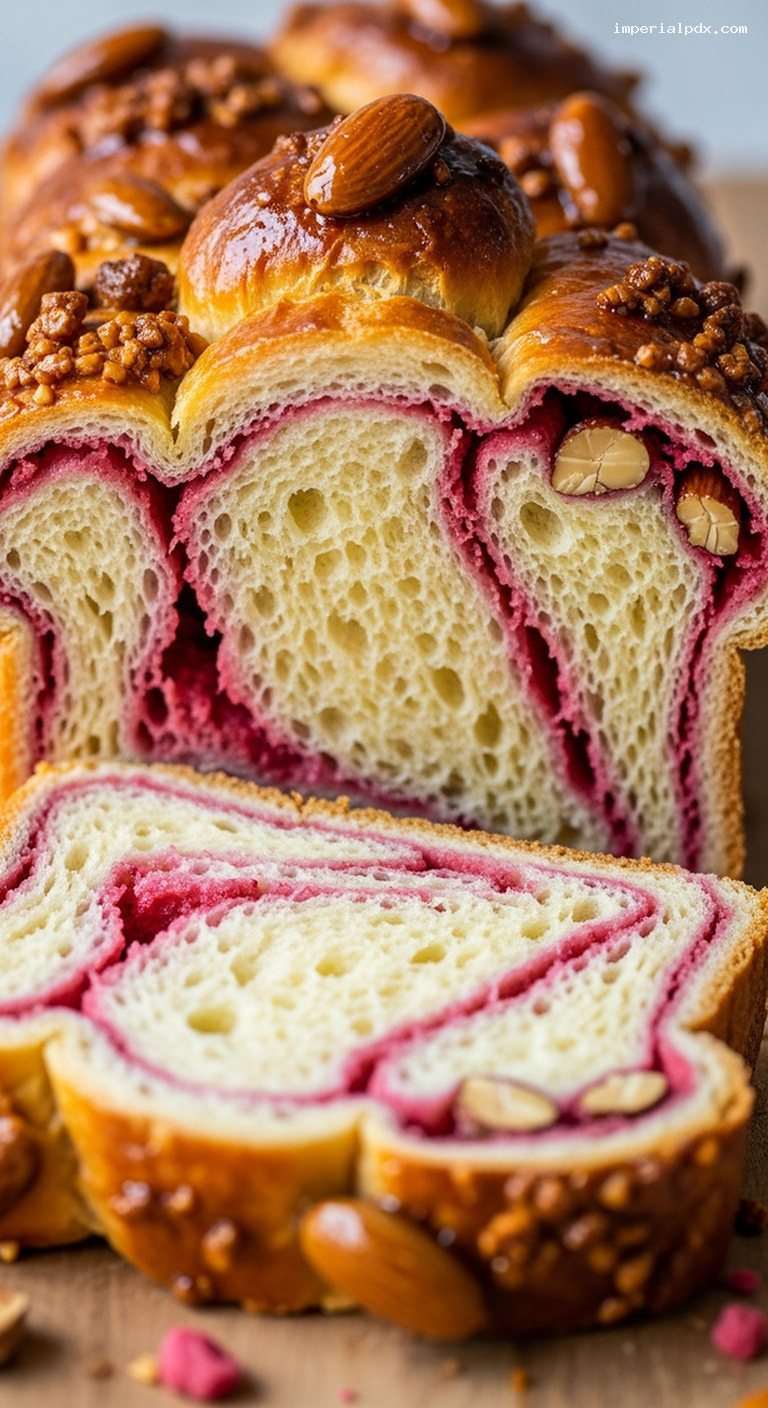
- Striking pink swirls of melted pralines roses that caramelize into sweet, crunchy pockets.
- Perfect for brunch, festive breakfasts, or as an edible gift that looks as special as it tastes.
- Step-by-step instructions and make-ahead options make enriched dough very approachable for home bakers.
Grocery List
- Produce: 1 untreated orange or lemon (for optional zest)
- Dairy: Whole milk, unsalted butter, large eggs
- Pantry: Bread flour (or strong white flour), sugar, fine sea salt, instant or active dry yeast, vanilla extract, pralines roses (pink sugared almonds)
Full Ingredients
For the Brioche Dough
- 400 g bread flour (about 3 1/4 cups), plus a little extra for dusting
- 50 g caster or granulated sugar (1/4 cup)
- 8 g fine sea salt (1 1/2 teaspoons)
- 7 g instant yeast (2 1/4 teaspoons)
- 120 ml whole milk, lukewarm (1/2 cup; about 35–40°C / 95–104°F)
- 3 large eggs, at room temperature (about 150 g without shells)
- 1 teaspoon vanilla extract
- Optional: Finely grated zest of 1/2 orange or 1/2 lemon
- 150 g unsalted butter, very soft but not melted (about 2/3 cup), cut into small cubes
For the Pralines Roses Filling and Topping
- 250–300 g pralines roses (pink sugar-coated almonds), roughly chopped (about 1 3/4–2 cups)
- 30–40 g whole pralines roses (about 1/4 cup) reserved for the top, optional but beautiful
For the Egg Wash
- 1 large egg
- 1 tablespoon milk or cream
- Pinch of salt (helps break up the egg)
Step-by-Step Instructions
Step 1: Prepare the wet and dry ingredients
Measure out all of your ingredients before you start. This dough comes together more smoothly if everything is ready.
In a small saucepan or microwave-safe jug, gently warm the milk until it is just lukewarm, about 35–40°C / 95–104°F. It should feel warm but not hot to the touch.
In the bowl of a stand mixer fitted with the dough hook (or a large mixing bowl if working by hand), combine the bread flour, sugar, and salt. If using instant yeast, add it directly to the dry ingredients. If using active dry yeast, dissolve it in the lukewarm milk and let sit for 5–10 minutes until lightly foamy before proceeding.
Step 2: Bring the dough together
Make a well in the center of the dry ingredients. Add the eggs, lukewarm milk (with dissolved yeast if using active dry), vanilla extract, and optional citrus zest.
Start mixing on low speed (or with a wooden spoon) until the ingredients come together into a shaggy, sticky dough with no visible dry flour. This should take 2–3 minutes. Scrape down the sides of the bowl as needed so all the flour is incorporated. At this stage the dough will look rough and quite sticky; that is normal for enriched dough.
Step 3: Knead and incorporate the butter
Increase the mixer speed to medium-low and knead for about 3–4 minutes to develop some gluten before adding the butter. The dough should begin to look smoother and more elastic.
With the mixer running on low, add the very soft butter, a few cubes at a time. Let each addition fully incorporate before adding more. The dough will look greasy and may come apart slightly, then gradually come back together. Once all the butter is in, increase the speed slightly and knead for 6–8 more minutes, until the dough is silky, elastic, and pulls away from the sides of the bowl. It should be soft and slightly tacky but not runny. If kneading by hand, this will take longer (about 12–15 minutes).
To test, stretch a small piece between your fingers: it should stretch into a thin, almost transparent window without tearing easily (the “windowpane” test).
Step 4: First rise (and optional chill for easier handling)
Shape the dough into a smooth ball and place it in a lightly greased bowl. Cover well with plastic wrap or a clean, damp kitchen towel. Let it rise at warm room temperature (about 24–26°C / 75–79°F) until doubled in size, about 1–1 1/2 hours.
For the best flavor and easier shaping, you can partially chill the dough: after 45–60 minutes at room temperature, when it has puffed but not fully doubled, deflate it gently, re-cover, and refrigerate for at least 1 hour and up to overnight. Cold dough is much easier to roll and will slow the fermentation, deepening the flavor of the brioche.
Step 5: Prepare the pralines and shape the brioche
While the dough is finishing its first rise, chop the pralines roses. Aim for a mix of sizes: some larger chunks for crunch and some smaller, almost powdery pieces that will melt into caramel streaks. Reserve 30–40 g (a small handful) of whole pralines for decorating the top if you like.
Lightly grease a 9×5 inch (23×12 cm) loaf pan or a 22–24 cm (9–9.5 inch) round cake tin and, if you want very easy unmolding, line it with a parchment sling.
Turn the risen dough out onto a very lightly floured surface. Gently press out the air and pat or roll it into a rectangle about 30×40 cm (12×16 inches). Scatter the chopped pralines roses evenly over the surface, leaving a 1–2 cm (1/2 inch) border on one long side. Starting from the opposite long side, roll the dough up tightly into a log, jelly-roll style, trapping as many pralines as possible inside.
You can leave the log whole for a simple swirl loaf, or to show off more pink caramel, slice the log lengthwise with a sharp knife to expose the layers, then twist the two strands together with the cut sides facing up before fitting the twisted loaf into the pan.
Step 6: Second rise
Place your shaped brioche into the prepared pan. Cover loosely with lightly greased plastic wrap or a clean kitchen towel. Let it rise again at warm room temperature until well puffed and risen to about 1–2 cm (1/2–3/4 inch) above the rim of the pan. This usually takes 60–90 minutes, depending on the temperature of your kitchen and how cold the dough was.
Near the end of the rise, preheat your oven to 180°C / 350°F (conventional, not fan-forced). Position a rack in the lower-middle of the oven to prevent the top from over-browning.
Step 7: Egg wash, decorate, and bake
Make the egg wash by whisking together 1 egg, 1 tablespoon milk or cream, and a pinch of salt until very smooth. Gently brush the surface of the risen brioche with a thin, even layer of egg wash, taking care not to deflate it. Sprinkle the reserved whole or coarsely chopped pralines roses on top for extra color and crunch.
Bake at 180°C / 350°F for 25–30 minutes. The brioche should be a deep, glossy golden brown, and any exposed pralines will be melted into vivid pink caramel streaks. If you have an instant-read thermometer, the internal temperature at the center should reach about 93°C / 200°F. If the top is browning too quickly before the center is done, tent it loosely with foil for the last 5–10 minutes.
Step 8: Cool, slice, and serve
Remove the brioche from the oven and let it cool in the pan for about 10–15 minutes. The pralines form hot caramel, so be careful: it will be very hot and sticky at first. Then gently lift or turn the brioche out onto a wire rack to cool further.
Allow the brioche to cool at least 20–30 minutes before slicing so the crumb can set and the pink caramel streaks do not run. Serve slightly warm or at room temperature, on its own or with a little butter or crème fraîche. The interior should be soft, tender, and buttery, dotted and streaked with glossy, rosy caramel from the pralines roses.
Pro Tips
- Use very soft butter: It should easily indent when pressed but still hold its shape. Too cold and it will not incorporate; too melted and the dough can become greasy and loose.
- Do not rush the kneading: Well-developed gluten is key to a light, airy brioche that can hold all the pralines without collapsing. Look for a smooth, elastic dough that passes the windowpane test.
- Chill for easier shaping: Even a 1-hour chill makes enriched dough much easier to roll and twist, and helps keep the pralines from tearing through the dough.
- Contain the caramel: Try to keep most of the chopped pralines away from the very edges of the dough so the melted sugar does not leak excessively and burn on the pan.
- Adjust for your oven: Every oven is different. If your breads tend to brown quickly, bake slightly lower (170°C / 340°F) and add a few minutes, checking for doneness with a thermometer.
Variations
- Round crown brioche: Instead of a loaf, coil the filled log into a spiral and bake it in a round tin or springform pan for a festive crown-style brioche.
- Citrus and vanilla twist: Add the zest of a whole orange and an extra teaspoon of vanilla for a more aromatic brioche that pairs beautifully with the almond pralines.
- Mini brioches: Divide the filled dough into 8–10 pieces, shape into small swirls or knots, and bake in a muffin tin. Reduce baking time to about 15–18 minutes.
Storage & Make-Ahead
Brioche aux pralines roses is best the day it is baked, when the crumb is at its lightest and the caramel pockets are slightly chewy. Store leftovers, completely cooled, in an airtight container or well-wrapped at room temperature for up to 2 days. Rewarm slices gently in a low oven (about 150°C / 300°F) for 5–8 minutes to refresh the texture.
For longer storage, wrap slices tightly and freeze for up to 1 month. Thaw at room temperature, then warm briefly in the oven.
To make ahead, you can prepare the dough the day before: complete the first rise, then refrigerate the dough (well covered) overnight. The next day, shape with pralines, let rise until puffy, and bake as directed. You can also fully shape the brioche, cover it, and refrigerate overnight for the second rise; in the morning, let it sit at room temperature just until fully puffed, then bake.
Nutrition (per serving)
Approximate values per slice (1 of 12): 360 kcal; 15 g fat; 8 g saturated fat; 47 g carbohydrates; 16 g sugar; 9 g protein; 1 g fiber; 260 mg sodium. Values will vary based on exact ingredients and portion size.