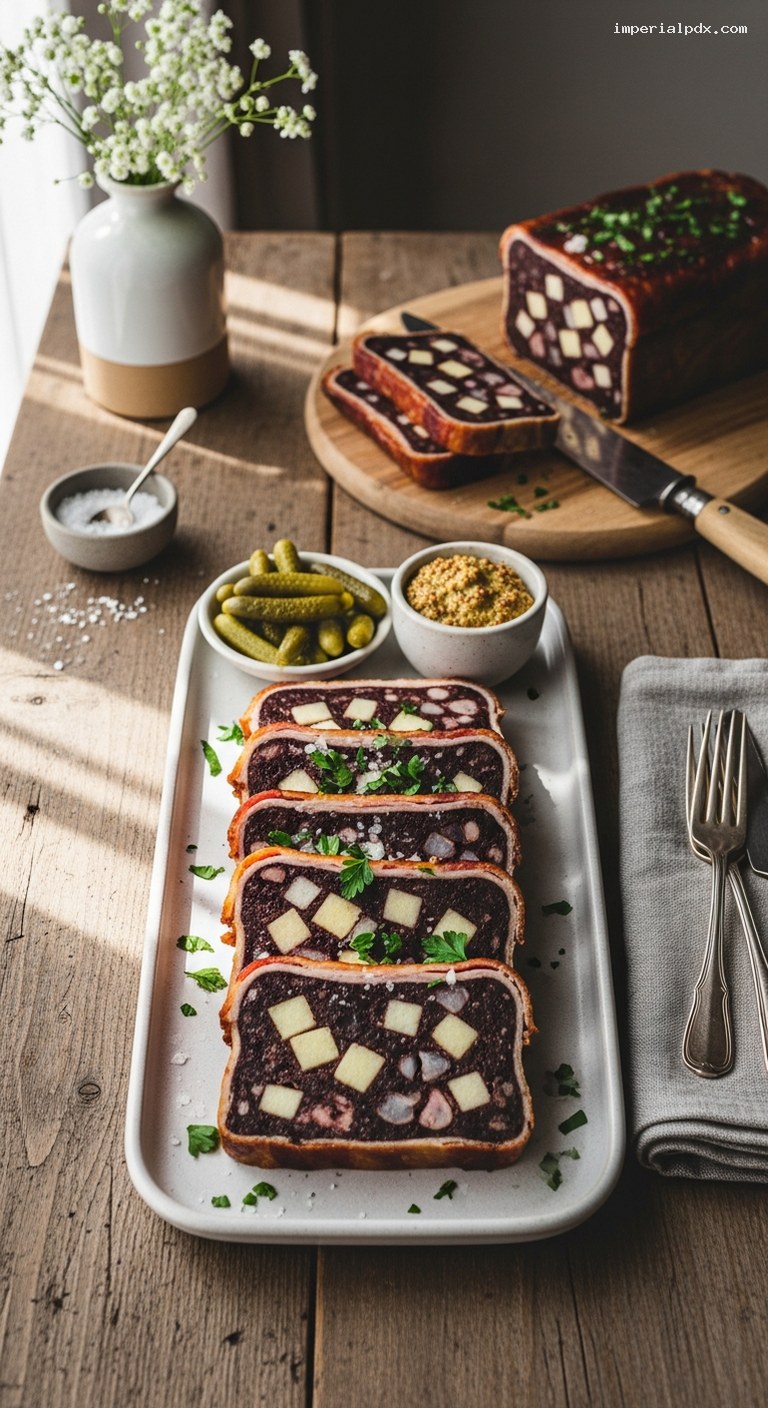
Quick Recipe Version (TL;DR)
Quick Ingredients
- 500 g (about 1.1 lb) boudin noir / blood sausage, casings removed
- 2 medium tart apples, peeled and diced
- 2 medium yellow onions, thinly sliced
- 3 tbsp unsalted butter + 1 tbsp olive oil
- 1/4 cup (60 ml) Calvados or brandy (optional)
- 1/4 cup (60 ml) heavy cream
- 2 large eggs, lightly beaten
- 1/2 cup (40 g) fresh breadcrumbs
- 1–1 1/4 tsp fine sea salt, 1/2 tsp black pepper
- Pinch ground nutmeg and allspice, 1 tsp fresh thyme
- 4–6 thin slices bacon or pancetta (for lining pan, optional)
Do This
- 1. Preheat oven to 160°C / 325°F. Butter a 9×5 in (23×13 cm) loaf pan and line with bacon or parchment; wrap the outside in foil.
- 2. Slowly cook onions in butter and oil with thyme until soft and lightly golden. Add diced apples; cook until just tender. Deglaze with Calvados, reduce, then cool.
- 3. Crumble boudin noir into a large bowl. Add cream, eggs, breadcrumbs, salt, pepper, nutmeg, and allspice; mix gently.
- 4. Fold in cooled onion-apple mixture. Taste a small fried spoonful and adjust seasoning if needed.
- 5. Pack mixture into prepared pan, level the top, cover with parchment and foil. Place in a roasting pan and pour in hot water to halfway up the sides.
- 6. Bake 45–60 minutes until just set and 72°C / 160°F in the center. Cool, then chill tightly covered for at least 8 hours.
- 7. Unmold, slice cold, and serve with crusty bread, mustard, and cornichons.
Why You’ll Love This Recipe
- Classic French boudin noir flavors in an elegant, sliceable terrine that feels straight out of an old-world charcuterie counter.
- The sweetness of apples and slowly caramelized onions balances the richness of the blood sausage beautifully.
- Make-ahead friendly: prepare a day or two in advance and simply slice and serve when guests arrive.
- Perfect on a board with cheeses, cured meats, pickles, and rustic bread for a cozy, bistro-style spread at home.
Grocery List
- Produce: 2 medium yellow onions, 2 medium tart apples (such as Granny Smith or Braeburn), fresh thyme, fresh parsley or chives (for garnish, optional), lemon (optional, for brushing apples or serving)
- Dairy: Unsalted butter, heavy cream (whipping cream, 35%), eggs
- Pantry: Boudin noir (blood sausage), thin-sliced bacon or pancetta, olive oil, fresh breadcrumbs, Calvados or brandy (optional), fine sea salt, black pepper, ground nutmeg, ground allspice, bay leaf, Dijon or whole-grain mustard, cornichons or other small pickles, crusty bread or toasts
Full Ingredients
For the Onion & Apple Base
- 2 tbsp (30 g) unsalted butter
- 1 tbsp (15 ml) olive oil
- 2 medium yellow onions (about 250 g), halved and thinly sliced
- 1 bay leaf
- 1 tsp fresh thyme leaves (or 1/2 tsp dried thyme)
- 2 medium tart apples (about 300 g), peeled, cored, and cut into 1 cm (1/2 in) dice
- 2 tbsp (30 g) unsalted butter (additional, for the apples)
- 1/4 cup (60 ml) Calvados or brandy (optional but traditional and delicious)
- Pinch of fine sea salt (to season the onions and apples)
For the Blood Sausage Terrine
- 500 g (about 1.1 lb) boudin noir / blood sausage, casings removed
- 1/4 cup (60 ml) heavy cream
- 2 large eggs, lightly beaten
- 1/2 cup (40 g) fresh breadcrumbs (preferably from a rustic white or country loaf)
- 1–1 1/4 tsp fine sea salt (start with 1 tsp; adjust to taste, as blood sausage can be salty)
- 1/2 tsp freshly ground black pepper
- 1/8 tsp ground nutmeg
- 1/8 tsp ground allspice
For the Pan & Water Bath
- 4–6 thin slices bacon or pancetta (optional, for lining the mold; 60–80 g)
- Soft butter, for greasing the pan
- Boiling water, enough to come halfway up the sides of the loaf pan
- 1 piece parchment paper cut to fit the top of the terrine
- Aluminum foil, for wrapping the pan and covering the top
To Serve (Optional but Recommended)
- Cornichons or other small pickles
- Dijon or whole-grain mustard
- Crusty country bread or toasted baguette slices
- Fresh parsley or chives, finely chopped, for garnish
- Flaky sea salt and freshly ground black pepper, for finishing
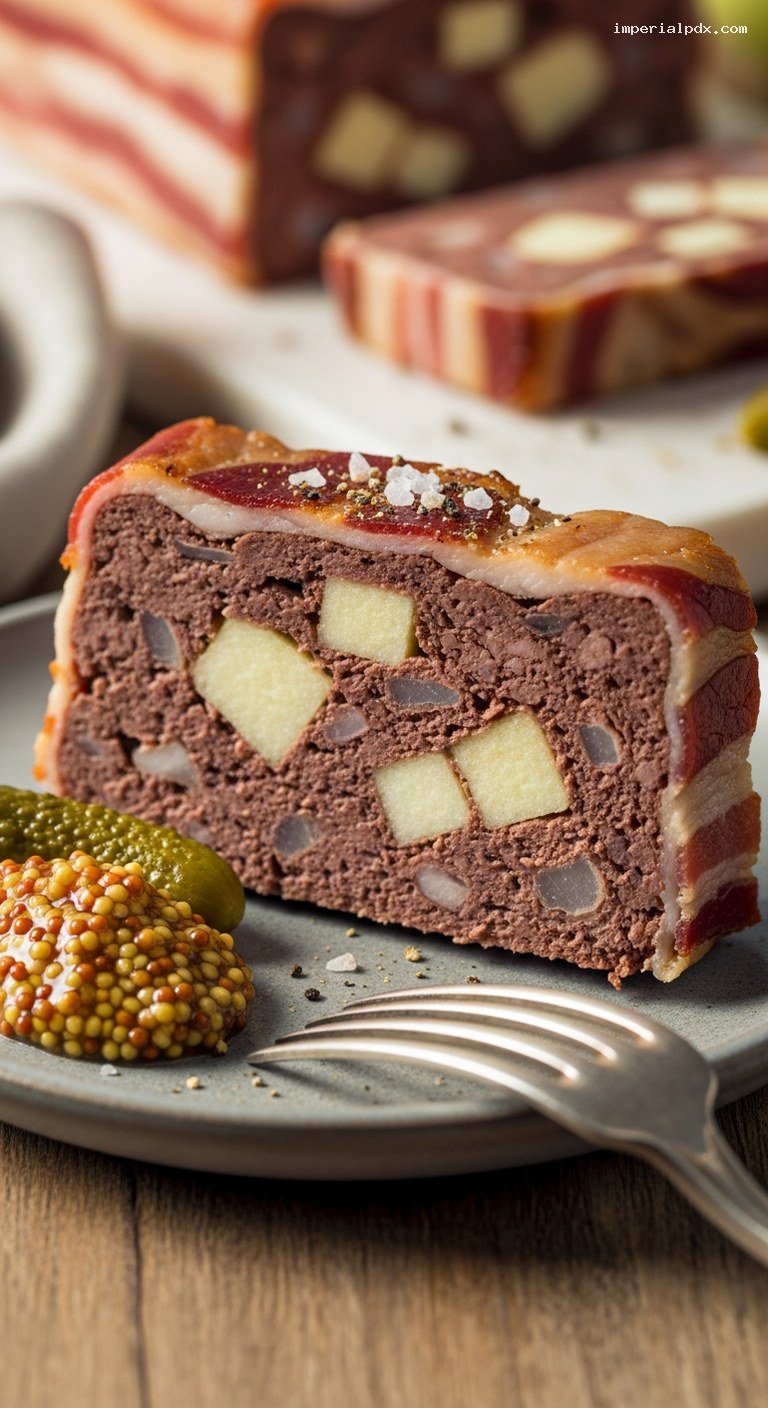
Step-by-Step Instructions
Step 1: Prepare the Pan and Preheat the Oven
Preheat your oven to 160°C / 325°F with a rack in the middle. Lightly grease a 9×5 in (23×13 cm) loaf pan with soft butter.
If using bacon or pancetta, line the bottom and long sides of the pan with the slices, slightly overlapping them so they form a continuous “blanket.” Let the ends hang over the edges if they are longer than the pan; you can fold them over the top later. This adds flavor and a beautiful stripy edge to each slice.
Wrap the outside bottom and sides of the loaf pan in a double layer of aluminum foil to help keep water from the bain-marie out of the terrine. Set the prepared loaf pan inside a deep roasting pan that is large enough to hold it with at least 2–3 cm (1 in) of space all around. Set aside.
Step 2: Gently Cook the Onions
In a large skillet or sauté pan, melt 2 tbsp (30 g) butter with 1 tbsp (15 ml) olive oil over medium-low heat. Add the sliced onions, bay leaf, thyme, and a small pinch of salt. Cook slowly, stirring occasionally, for 15–20 minutes, until the onions are very soft and lightly golden but not deeply browned. Adjust the heat as needed so they do not scorch; you want sweet, mellow onions, not crispy ones.
When the onions are tender and fragrant, remove and discard the bay leaf. Transfer the onions to a bowl and set aside. Do not wash the pan; you will use it for the apples so they pick up the onion flavor.
Step 3: Cook the Apples and Deglaze
In the same pan, add the remaining 2 tbsp (30 g) butter and melt over medium heat. Add the diced apples and a small pinch of salt. Cook, stirring occasionally, for 5–7 minutes, until the apples soften slightly and take on a hint of color but still hold their shape. You want them tender but not mushy; they will cook a little more in the oven.
If using Calvados or brandy, carefully pour it into the pan. It may sizzle. Let it bubble for 1–2 minutes, scraping up any browned bits from the bottom of the pan with a wooden spoon, until most of the liquid has reduced and the apples look glossy. Remove from the heat.
Add the warm apples to the bowl with the onions and gently mix to combine. Let the mixture cool until just barely warm or room temperature before adding to the eggs and sausage (so you do not scramble the eggs later).
Step 4: Mix the Blood Sausage Base
Place the boudin noir in a large mixing bowl. Using clean hands or a fork, remove and discard any casings and gently crumble the sausage into small pieces. Aim for a coarse, even texture; do not mash it into a paste.
In a separate small bowl, whisk together the heavy cream and eggs. Stir in the breadcrumbs, salt (starting with 1 tsp), black pepper, nutmeg, and allspice. Pour this mixture over the crumbled boudin noir.
Using a spatula or your hands, gently fold everything together until combined. The mixture should be thick but moist, with no large dry patches of breadcrumbs. Fold in the cooled onion-and-apple mixture until evenly distributed. Avoid overworking; a light hand keeps the texture pleasant rather than dense.
If you like, cook a teaspoon of the mixture in a small skillet over medium heat and taste. Adjust salt and pepper as needed, remembering that flavors will deepen as the terrine chills.
Step 5: Fill the Mold and Bake in a Water Bath
Spoon the mixture into the prepared loaf pan, pressing it into the corners and smoothing the top with a spatula. Tap the pan a few times firmly on the counter to help release any air pockets. If you lined the pan with bacon and have overhanging ends, fold them neatly over the surface.
Cover the surface of the terrine with a piece of parchment paper cut to fit, then wrap the top of the pan tightly with aluminum foil.
Place the roasting pan with the loaf pan on an oven rack. Carefully pour in boiling water around the loaf pan until it reaches about halfway up the sides, creating a gentle water bath (bain-marie). Slide the pan into the oven.
Bake for 45–60 minutes, checking after 45 minutes. The terrine is done when the center feels just set, a thin knife inserted in the middle comes out hot and mostly clean, and an instant-read thermometer in the center registers about 72°C / 160°F. It will firm up further as it cools.
Step 6: Cool, Weight, and Chill
Carefully remove the roasting pan from the oven and lift out the loaf pan. Take off the foil and parchment. Let the terrine cool at room temperature for about 30–45 minutes, until just warm.
For a traditional, compact texture, place a clean piece of parchment on top of the terrine, then set a small cutting board or another loaf pan on top and weigh it down with a couple of cans or jars. This gentle pressure will compress the terrine slightly and give beautiful, even slices. If you prefer a looser, more rustic feel, you can skip the weighting step.
Once cooled to room temperature, cover the pan tightly (with fresh foil or a lid) and refrigerate for at least 8 hours, preferably overnight. This resting time is essential for the flavors to marry and for the terrine to slice cleanly.
Step 7: Unmold, Slice, and Serve
When you are ready to serve, run a thin knife around the inside edges of the loaf pan to loosen the terrine. Invert onto a cutting board or serving platter; if needed, briefly dip the bottom of the pan in hot water to help it release. Peel away any parchment and tidy up any loose bacon edges.
Use a very sharp knife (preferably not serrated) to cut neat slices about 1–1.5 cm (1/2 in) thick. Wipe the blade between cuts for the cleanest slices.
Arrange slices on a platter or individual plates. Garnish with chopped parsley or chives and a sprinkle of flaky sea salt and pepper. Serve chilled or just slightly cool, with cornichons, mustard, and plenty of crusty bread or toasts alongside. This terrine is ideal as part of a charcuterie board or as a starter with a simple green salad dressed in a tangy vinaigrette.
Pro Tips
- Season with a test bite: Because boudin noir varies in saltiness, always fry a teaspoon of the mixture and taste before baking so you can adjust seasoning confidently.
- Low and slow baking: Keep the oven moderate and use the water bath; gentle heat prevents the terrine from curdling or becoming grainy.
- Do not skip the chilling: The flavor and texture are dramatically better after an overnight rest. The terrine firms up and slices much more cleanly.
- Sharp knife, clean cuts: Chill the terrine well and use a very sharp, thin-bladed knife, wiping between slices for professional-looking portions.
- Serve slightly cool, not icy cold: Take the terrine out of the fridge 15–20 minutes before serving so the flavors open up.
Variations
- Pear & spice version: Replace the apples with firm pears and increase the nutmeg and allspice slightly for a warmer, more aromatic terrine.
- Country-style with pork: Fold in 100–150 g (3.5–5 oz) finely diced cooked pork shoulder or sautéed lardons for a more rustic, meaty texture and extra savory depth.
- Individual ramekins: Instead of a loaf pan, bake the mixture in 6–8 buttered ramekins placed in a water bath. Reduce baking time to about 30–35 minutes and serve each guest their own mini terrine.
Storage & Make-Ahead
This blood sausage terrine is perfect for making in advance. Once completely chilled and set, keep it tightly wrapped in the loaf pan or well wrapped as an unmolded loaf. It will keep in the refrigerator for 4–5 days. For best flavor and texture, slice only what you plan to serve, rather than slicing the whole terrine at once.
To freeze, wrap the whole terrine or individual slices tightly in plastic wrap, then in foil, and freeze for up to 2 months. Thaw overnight in the refrigerator before serving. The texture may be slightly softer after freezing, but it will still be delicious, especially served with pickles and mustard.
Leftover slices are lovely pan-fried briefly in a little butter and served warm with a fried egg and sautéed greens for a very indulgent brunch.
Nutrition (per serving)
Approximate values per serving (1/8 of the terrine, without accompaniments): about 370–390 calories; 29–32 g fat; 9–11 g protein; 12–14 g carbohydrates; 1–2 g fiber; sodium will be relatively high due to the blood sausage and bacon. Values will vary based on specific brands and exact ingredients used.