Quick Recipe Version (TL;DR)
Quick Ingredients
- 2 cups (400 g) long-grain rice, rinsed and soaked
- 600 g fresh anchovies, cleaned and butterflied
- 3 tbsp olive oil, plus extra for greasing
- 3 tbsp unsalted butter, divided
- 1 large onion, finely chopped
- 3 green onions, sliced
- 2 tbsp pine nuts
- 2 tbsp currants (or raisins)
- 2 tbsp chopped fresh dill
- 2 tbsp chopped fresh flat-leaf parsley
- 1 tbsp chopped fresh mint (optional but traditional)
- 1 tsp ground allspice
- 1/4 tsp ground cinnamon
- 1 1/2 tsp fine sea salt, plus more to taste
- 1/2 tsp freshly ground black pepper
- 2 1/4 cups (540 ml) hot water or fish/vegetable stock
- 1 lemon, cut into wedges (for serving)
Do This
- 1. Rinse rice until water runs mostly clear, then soak in warm water 15–20 minutes; drain well.
- 2. Sauté onion in olive oil and 1 tbsp butter until soft; add pine nuts to lightly toast, then stir in currants and spices.
- 3. Add drained rice; stir 2–3 minutes to coat. Pour in hot water/stock, salt, and pepper. Simmer covered on low until liquid is mostly absorbed and rice is just shy of tender, about 10–12 minutes. Cool slightly, then mix in herbs.
- 4. Preheat oven to 200°C / 400°F. Grease a 22–24 cm (9–10 inch) ovenproof pan. Pat anchovies dry, season lightly, and line the base and sides in overlapping layers, skin-side down.
- 5. Spoon rice pilaf into the anchovy-lined pan, pressing gently. Cover the top with another neat layer of anchovies, skin-side up. Dot with remaining butter.
- 6. Bake 20–25 minutes until anchovies are sizzling, edges golden, and rice heated through. Rest 10 minutes, then invert onto a serving plate.
- 7. Garnish with extra herbs, slice into wedges, and serve warm with lemon wedges.
Why You’ll Love This Recipe
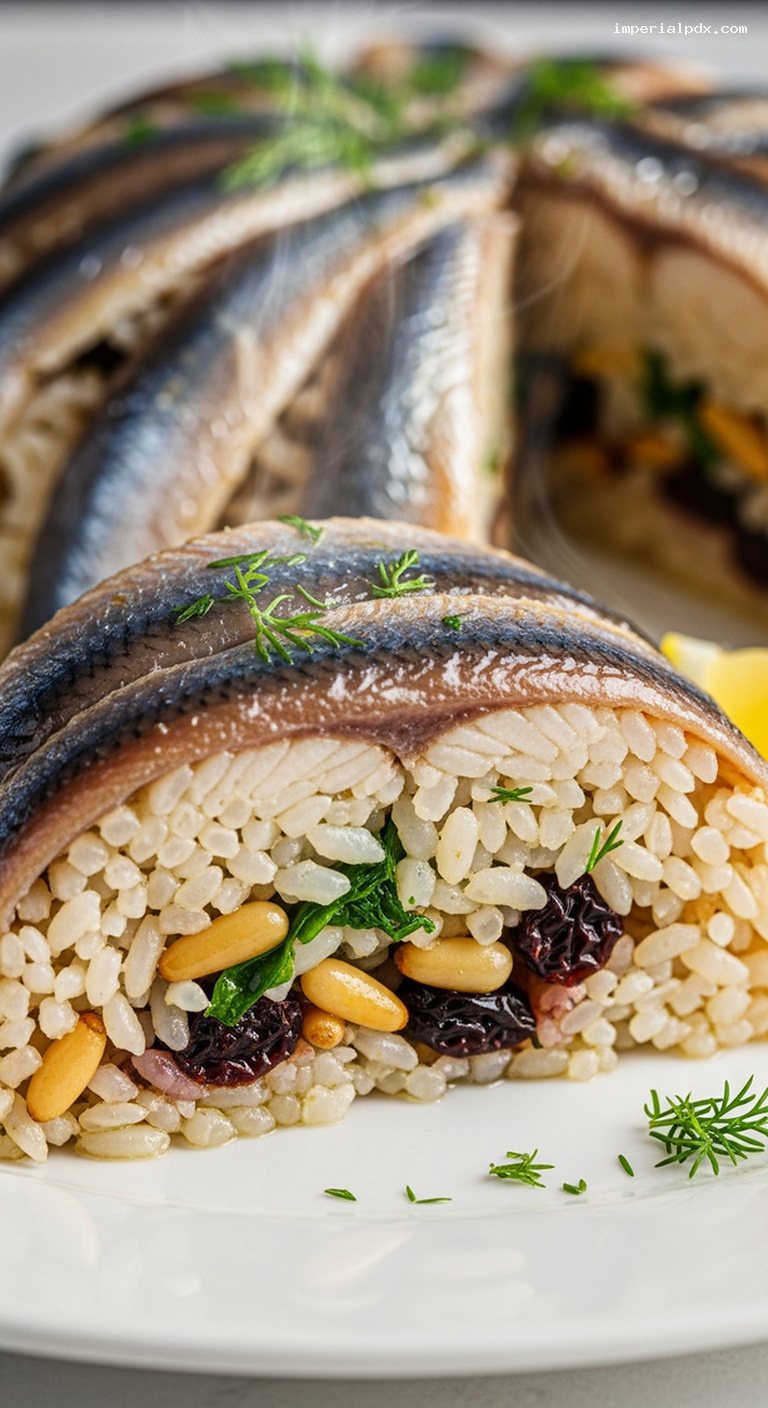
- A beautiful showstopper: shimmering layers of anchovies wrapped around fragrant, jeweled rice.
- Classic Black Sea Turkish flavors made completely doable in a home kitchen.
- Perfect make-ahead centerpiece for a special dinner or mezze-style spread.
- Balanced: rich yet bright, with herbs, lemon, and gentle warm spices.
Grocery List
- Produce: 1 large onion, 3 green onions, fresh dill, fresh flat-leaf parsley, fresh mint (optional), 1 lemon
- Dairy: Unsalted butter
- Pantry: Long-grain rice, olive oil, pine nuts, currants or raisins, ground allspice, ground cinnamon, salt, black pepper, water or vegetable/fish stock, fresh anchovies (from fish counter)
Full Ingredients
For the Anchovy Wrap
- 600 g fresh anchovies, cleaned and butterflied (heads, central bones, and tails removed)
- 1 tbsp olive oil (for greasing the pan)
- 1/2 tsp fine sea salt (for lightly seasoning the fish)
- 1/4 tsp freshly ground black pepper
- 1 tbsp unsalted butter, cut into small dots (for the top before baking)
For the Herbed Pilaf Filling
- 2 cups (400 g) long-grain rice (ideally Baldo, Calrose, or another medium/long-grain rice)
- 3 tbsp olive oil
- 2 tbsp unsalted butter
- 1 large onion, finely chopped
- 3 green onions, thinly sliced (white and light green parts)
- 2 tbsp pine nuts
- 2 tbsp currants (or finely chopped raisins)
- 2 tbsp finely chopped fresh dill
- 2 tbsp finely chopped fresh flat-leaf parsley
- 1 tbsp finely chopped fresh mint (optional but traditional and highly recommended)
- 1 tsp ground allspice
- 1/4 tsp ground cinnamon
- 1 1/2 tsp fine sea salt (or to taste)
- 1/2 tsp freshly ground black pepper
- 2 1/4 cups (540 ml) hot water or unsalted fish/vegetable stock
To Serve
- Extra chopped fresh dill and parsley, for garnish (optional)
- 1 lemon, cut into wedges
Step-by-Step Instructions
Step 1: Rinse and Soak the Rice
Place the rice in a fine-mesh sieve and rinse under cold running water, gently rubbing the grains with your fingers, until the water runs mostly clear. This removes excess starch and helps keep the pilaf fluffy instead of sticky.
Transfer the rinsed rice to a bowl and cover with warm water. Let it soak for 15–20 minutes while you prepare the other ingredients. Soaking gives you plump, separate grains. After soaking, drain the rice very well and set aside.
Step 2: Make the Aromatic Pilaf Base
In a medium saucepan, heat 3 tbsp olive oil and 2 tbsp butter over medium heat until the butter foams. Add the finely chopped onion and a pinch of salt. Cook, stirring occasionally, for 6–8 minutes until the onion turns soft and translucent but not browned.
Add the pine nuts and cook for 2–3 minutes, stirring often, until they take on a light golden color and smell toasty. Stir in the currants and sliced green onions, cooking for 1 more minute.
Sprinkle in the ground allspice, ground cinnamon, 1 1/2 tsp salt, and 1/2 tsp black pepper. Stir well to coat everything in the spices; let them bloom for about 30 seconds so they release their fragrance.
Step 3: Par-Cook the Rice with Spices and Broth
Add the well-drained rice to the saucepan. Stir gently but thoroughly for 2–3 minutes so each grain is coated in the buttery, aromatic mixture. This light toasting helps the rice stay separate and absorb flavor.
Pour in the hot water or stock. Stir once, bring to a gentle boil, then immediately reduce the heat to low. Cover with a tight-fitting lid and cook for 10–12 minutes, until most of the liquid is absorbed and the rice is just shy of fully tender (it will finish in the oven). The surface should look steamy and there should be small steam holes in the rice.
Remove from the heat. Uncover, quickly fluff the rice with a fork, then re-cover and let it sit off the heat for 5 minutes. This resting step finishes the cooking gently.
Uncover again and stir in the chopped dill, parsley, and mint (if using). Taste and adjust seasoning with a little more salt or pepper if needed. Let the pilaf cool until just warm; this makes it easier to pack into the pan without breaking the anchovies later.
Step 4: Prepare the Anchovies
If your anchovies are not already cleaned and butterflied, rinse them under cold water and gently remove the head. Slide your thumb along the belly to open, remove the central bone and tail, then spread the fish open like a small book. Rinse away any remaining innards, then lay them flat, skin-side down, on paper towels. Pat very dry. Repeat with all anchovies. (You can also ask your fishmonger to do this.)
Place the cleaned anchovies in a bowl, sprinkle with 1/2 tsp salt and 1/4 tsp black pepper, and toss very gently to season. Set aside while you prepare the pan.
Step 5: Line the Pan with Anchovies
Preheat your oven to 200°C / 400°F. Lightly grease a 22–24 cm (9–10 inch) round ovenproof dish, baking pan, or deep skillet with 1 tbsp olive oil. For easy unmolding, you can also line the base with a circle of parchment paper and oil it lightly.
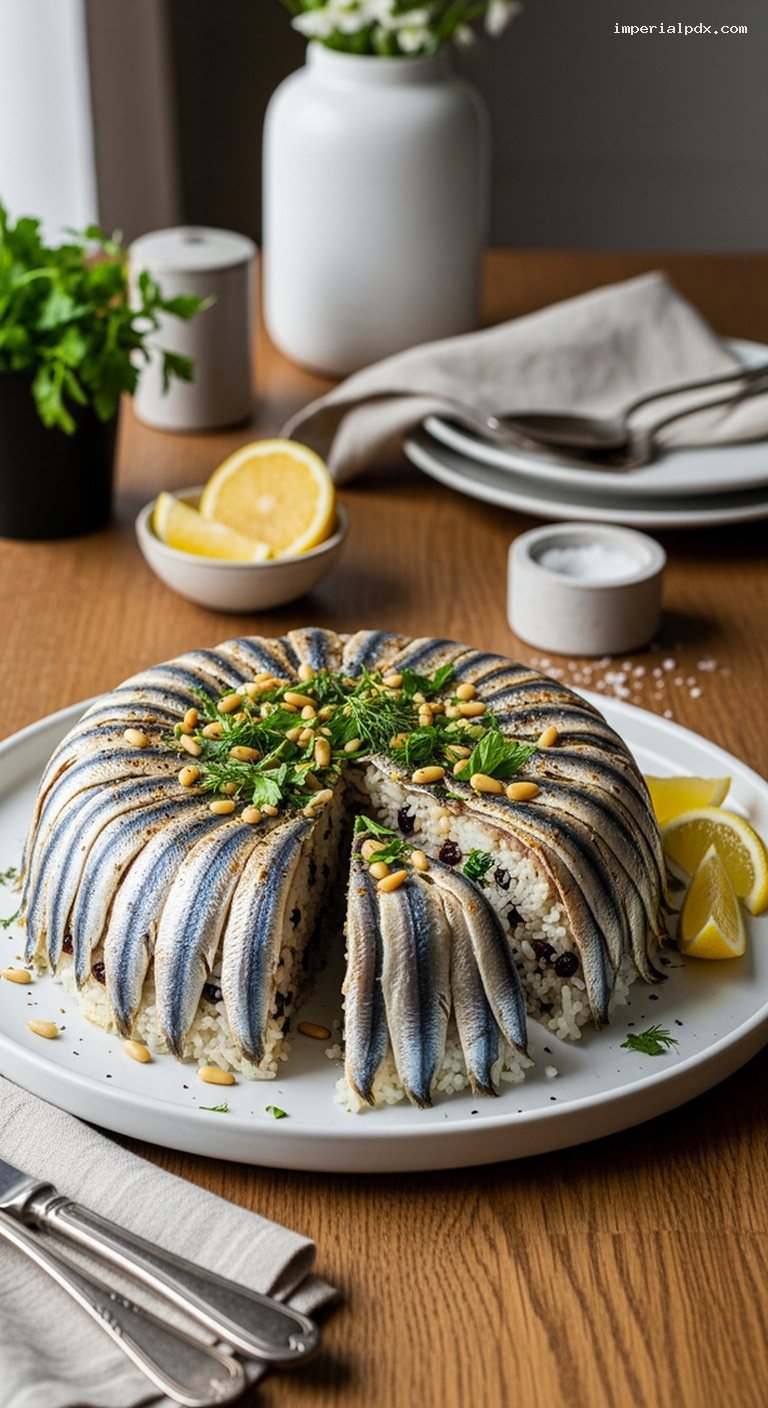
Choose the neatest, most even anchovies for the outermost layer. Starting from the center of the pan, arrange anchovies skin-side down and tails pointing toward the center, so the thin belly edges climb up the sides slightly. Overlap them like roof tiles to fully cover the base and sides, leaving no gaps. Continue working outward in concentric circles until the entire bottom and sides of the pan are lined with an even, shingled pattern of anchovies.
Step 6: Fill with Pilaf, Top with Anchovies, and Bake
Spoon the warm herbed pilaf into the anchovy-lined pan. Gently press it down with the back of a spoon to eliminate air pockets and create a compact, even layer. Leave a small lip of anchovy around the edge if possible.
Use the remaining anchovies to cover the top: this time, arrange them skin-side up in slightly overlapping rows or a circular pattern, again like fish scales. Try to create a neat, decorative surface because this will be the top when you invert the dish.
Dot the top with 1 tbsp of butter. Place the pan on a baking sheet (in case of any drips) and bake for 20–25 minutes, until the anchovies are sizzling, the edges are lightly golden, and you can see a little steam escaping from the sides. The pilaf inside will be hot and fully cooked.
Step 7: Rest, Unmold, and Serve
Remove the pan from the oven and let the hamsili pilav rest for at least 10 minutes. Resting helps the rice settle and makes unmolding much easier.
To unmold, place a large, flat serving plate over the pan. Using oven mitts, carefully but confidently flip the pan and plate together, then lift off the pan. Peel away any parchment if used. You should see a beautiful, glistening mosaic of anchovies encasing the pilaf.
Garnish with a little extra chopped dill and parsley if you like. Cut into wedges with a sharp knife. Serve warm with lemon wedges on the side so each person can squeeze fresh lemon juice over their portion, which brightens the rich, savory flavors.
Pro Tips
- Dry fish is key: Pat the anchovies very dry before lining the pan. Excess moisture can cause them to steam instead of bake and brown.
- Do not overcook the rice on the stove: Stop when it is just shy of tender; it will finish cooking in the oven. Overcooked rice before baking can turn mushy.
- Pack the rice firmly but gently: Press it just enough to hold together when sliced, without crushing the grains.
- Use a pan with a removable base if nervous: A springform pan lined with parchment makes flipping and unmolding less intimidating.
- Serve with something fresh: A simple salad of tomatoes, cucumbers, and onions with lemon and olive oil pairs beautifully and balances the richness.
Variations
- Spicier version: Add 1/4–1/2 tsp red pepper flakes (pul biber or Aleppo pepper) to the pilaf along with the other spices for gentle heat.
- No-pine-nut option: If you need to avoid nuts, omit the pine nuts and add 2 extra tbsp currants or a small handful of finely diced dried apricots for texture.
- Herb-forward twist: Increase dill and parsley to 3 tbsp each and mint to 2 tbsp for a more intensely herbal, green flavor profile.
Storage & Make-Ahead
Hamsili pilav is best enjoyed freshly baked, when the anchovies are still slightly crisp at the edges and the pilaf is fragrant and fluffy. However, you can prepare components ahead:
Make-ahead: The pilaf can be cooked (through Step 3), cooled, and refrigerated in an airtight container for up to 2 days. Bring to room temperature before assembling. Anchovies can be cleaned, patted dry, and refrigerated for up to 1 day; keep them tightly covered and very cold.
Leftovers: Store any cooled leftovers in an airtight container in the refrigerator for up to 2 days. Reheat gently in a covered ovenproof dish at 170°C / 340°F for 10–15 minutes, or in a covered skillet over low heat with a splash of water to keep the rice from drying out. The anchovies will soften, but the flavors remain delicious.
Freezing is not recommended, as the texture of both the fish and the rice suffers after thawing.
Nutrition (per serving)
Approximate values for 1 of 6 servings: 520 calories; 25 g protein; 18 g fat; 60 g carbohydrates; 3 g fiber; 3 g saturated fat; 780 mg sodium (will vary based on salt level, stock, and exact size of anchovies).