Quick Recipe Version (TL;DR)
Quick Ingredients
- 12 ounces spaghetti, linguine, or bucatini
- 8 ounces thick-cut bacon, cut into 1/2-inch pieces
- 4 large eggs, divided
- 2 large egg yolks
- 1 cup finely grated Parmesan cheese, plus more for serving
- 2 tablespoons unsalted butter
- 2 cloves garlic, finely minced
- 1/2 teaspoon kosher salt, plus 1 tablespoon for pasta water
- 3/4 teaspoon freshly ground black pepper
- 1/4 teaspoon crushed red pepper flakes, optional
- 1/4 cup chopped fresh parsley
- 2 tablespoons chopped fresh chives
- 1 to 1 1/4 cups reserved pasta water
Do This
- 1. Bring 4 quarts water to a boil, salt it with 1 tablespoon kosher salt, and cook pasta until al dente, about 8 to 10 minutes.
- 2. Whisk 2 whole eggs, 2 egg yolks, Parmesan, 1/2 teaspoon salt, black pepper, and red pepper flakes in a bowl.
- 3. Cook bacon in a large skillet over medium heat for 8 to 10 minutes until crisp; transfer bacon to a plate and keep 2 tablespoons bacon fat in the pan.
- 4. Sauté garlic in the bacon fat for 30 seconds, then add butter and remove the pan from the heat.
- 5. Toss hot drained pasta in the skillet, then stir in the egg-Parmesan mixture with 1 cup hot pasta water until glossy and creamy.
- 6. Fry 4 eggs over medium-low heat for 3 to 4 minutes until whites are set and yolks are soft.
- 7. Serve pasta topped with crispy bacon, herbs, extra Parmesan, and one soft egg per bowl.
Why You’ll Love This Recipe
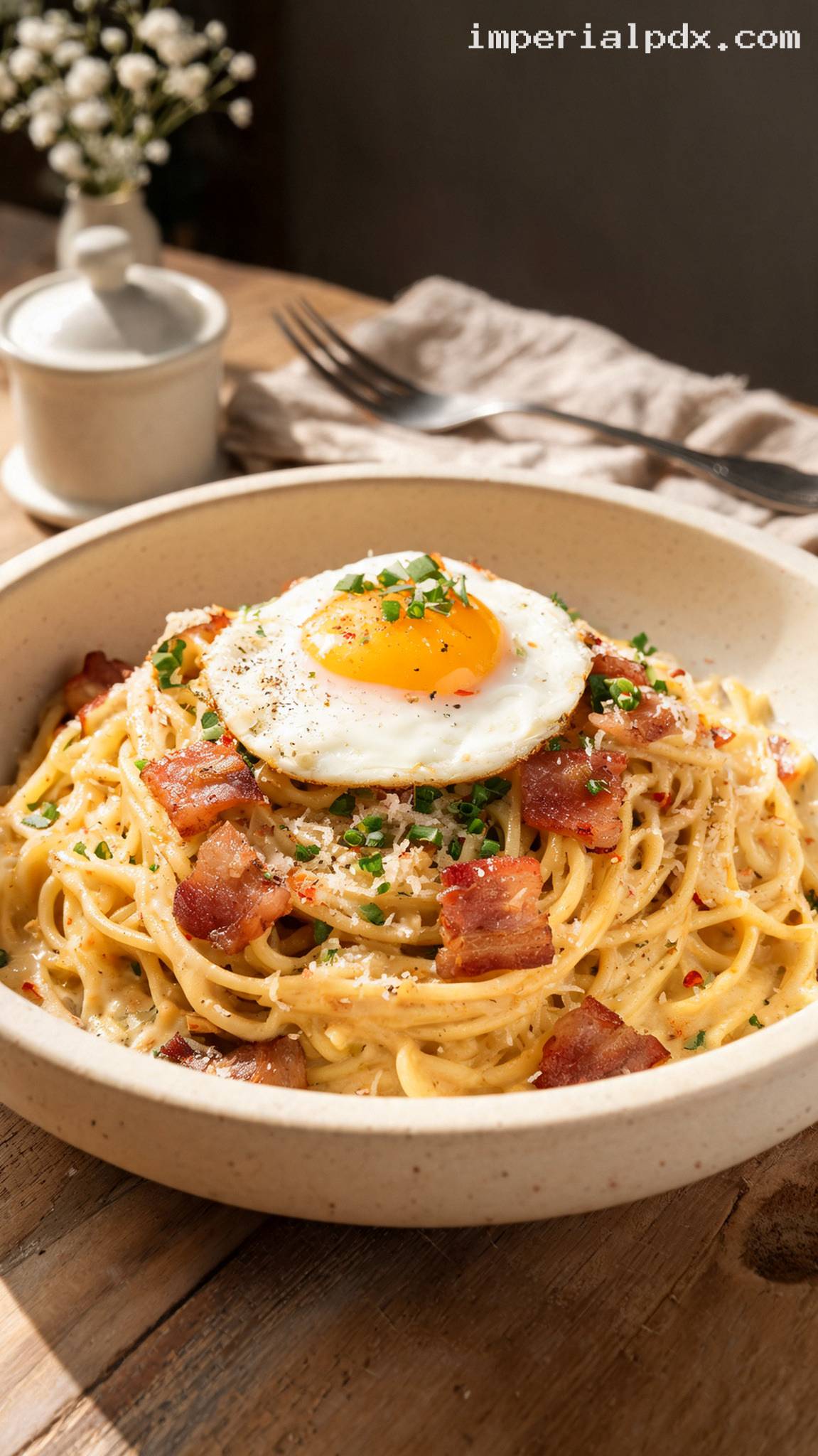
- Breakfast comfort in pasta form: Crispy bacon, a soft egg, Parmesan, and herbs make this feel indulgent but still familiar.
- Creamy without heavy cream: Eggs, Parmesan, bacon drippings, butter, and pasta water create a silky sauce that clings beautifully to every strand.
- Fast enough for a lazy weekend morning: It comes together in about 30 minutes with simple ingredients.
- Flexible and satisfying: Serve it for breakfast, brunch, or a cozy breakfast-for-dinner meal.
Grocery List
- Produce: Fresh parsley, fresh chives, garlic
- Dairy: Parmesan cheese, unsalted butter, large eggs
- Pantry: Spaghetti, linguine, or bucatini; kosher salt; freshly ground black pepper; crushed red pepper flakes, optional
- Meat: Thick-cut bacon
Full Ingredients
For the Pasta
- 12 ounces spaghetti, linguine, or bucatini
- 4 quarts water, for boiling pasta
- 1 tablespoon kosher salt, for the pasta water
- 8 ounces thick-cut bacon, cut crosswise into 1/2-inch pieces
- 2 tablespoons unsalted butter
- 2 cloves garlic, finely minced
For the Creamy Egg-Parmesan Sauce
- 2 large whole eggs, preferably pasteurized if you prefer a softly heated sauce
- 2 large egg yolks
- 1 cup finely grated Parmesan cheese, about 3 ounces, plus more for serving
- 1/2 teaspoon kosher salt
- 3/4 teaspoon freshly ground black pepper
- 1/4 teaspoon crushed red pepper flakes, optional
- 1 to 1 1/4 cups hot reserved pasta water, added as needed
For the Soft Breakfast Eggs and Finish
- 4 large eggs
- 1/4 cup chopped fresh parsley
- 2 tablespoons chopped fresh chives
- Extra freshly ground black pepper, for serving
- Extra finely grated Parmesan cheese, for serving
Step-by-Step Instructions
Step 1: Bring the pasta water to a boil
Fill a large pot with 4 quarts water and bring it to a full rolling boil over high heat, about 212 degrees Fahrenheit at sea level. Add 1 tablespoon kosher salt. The water should taste pleasantly seasoned, not overly salty. Keep the pot at a lively boil while you prepare the bacon and sauce base.
Step 2: Mix the creamy egg-Parmesan sauce
In a medium mixing bowl, whisk together 2 whole eggs, 2 egg yolks, 1 cup finely grated Parmesan cheese, 1/2 teaspoon kosher salt, 3/4 teaspoon black pepper, and 1/4 teaspoon crushed red pepper flakes, if using. Whisk until thick, smooth, and slightly paste-like. Set the bowl near the stove so it is ready when the hot pasta is done.
The key to this sauce is gentle heat. The eggs should become creamy and glossy when tossed with hot pasta and hot pasta water, not scrambled over direct heat.
Step 3: Cook the bacon until crisp
Place the chopped bacon in a large, deep skillet or sauté pan while the pan is still cool. Set the pan over medium heat and cook for 8 to 10 minutes, stirring often, until the bacon is browned and crisp and the fat has rendered. If the bacon begins to darken too quickly, reduce the heat to medium-low.
Use a slotted spoon to transfer the bacon to a paper towel-lined plate. Carefully pour off excess bacon fat, leaving 2 tablespoons in the skillet. If your bacon did not render quite enough fat, add a little butter to make up the difference.
Step 4: Cook the pasta until al dente
Add the pasta to the boiling salted water and cook according to the package directions until al dente, usually 8 to 10 minutes for spaghetti or linguine and 9 to 11 minutes for bucatini. Stir during the first minute to prevent sticking.
Just before draining, scoop out at least 1 1/4 cups of the starchy pasta water. This hot, cloudy water is essential for loosening the sauce and helping the cheese emulsify into a creamy coating.
Step 5: Flavor the bacon fat with garlic
While the pasta is finishing, return the skillet with the reserved 2 tablespoons bacon fat to medium-low heat. Add the minced garlic and cook for 30 seconds, stirring constantly, until fragrant but not browned. Add 2 tablespoons unsalted butter and let it melt into the bacon fat.
Remove the skillet from the heat as soon as the butter melts. This step is important because direct heat can scramble the egg sauce once it is added.
Step 6: Toss the pasta into a glossy sauce
Drain the pasta and immediately add it to the warm skillet with the garlic-butter bacon fat. Toss well for 30 seconds so the noodles are coated. Let the pasta cool off direct heat for 30 seconds, then pour the egg-Parmesan mixture over the pasta while tossing constantly with tongs.
Add 1 cup hot reserved pasta water in a slow stream, tossing continuously for 1 to 2 minutes, until the sauce turns creamy, silky, and glossy. If the sauce looks too thick, add more pasta water 1 tablespoon at a time, up to 1/4 cup more. The finished sauce should cling to the pasta but still look loose and luxurious. If using an instant-read thermometer, aim for a sauce temperature of about 145 to 155 degrees Fahrenheit; avoid heating above 165 degrees Fahrenheit or the eggs may curdle.
Step 7: Fold in bacon and fresh herbs
Add about three-quarters of the crispy bacon to the sauced pasta, reserving the rest for topping. Add 2 tablespoons of the chopped parsley and 1 tablespoon of the chopped chives. Toss again. Taste and adjust with a small pinch of kosher salt if needed, keeping in mind that bacon and Parmesan are already salty.
Step 8: Cook the soft breakfast eggs
In a separate nonstick skillet, warm 1 teaspoon of reserved bacon fat, butter, or neutral oil over medium-low heat. Crack in 4 eggs, spacing them apart. Cook for 3 to 4 minutes, until the whites are set and opaque but the yolks are still soft and glossy. For slightly firmer yolks, cover the skillet for the final 30 to 60 seconds. For fully cooked eggs, continue cooking until the yolks reach 160 degrees Fahrenheit.
If you prefer poached eggs, simmer water at 180 to 190 degrees Fahrenheit with 1 tablespoon vinegar and poach each egg for 3 minutes for a soft yolk.
Step 9: Plate and serve
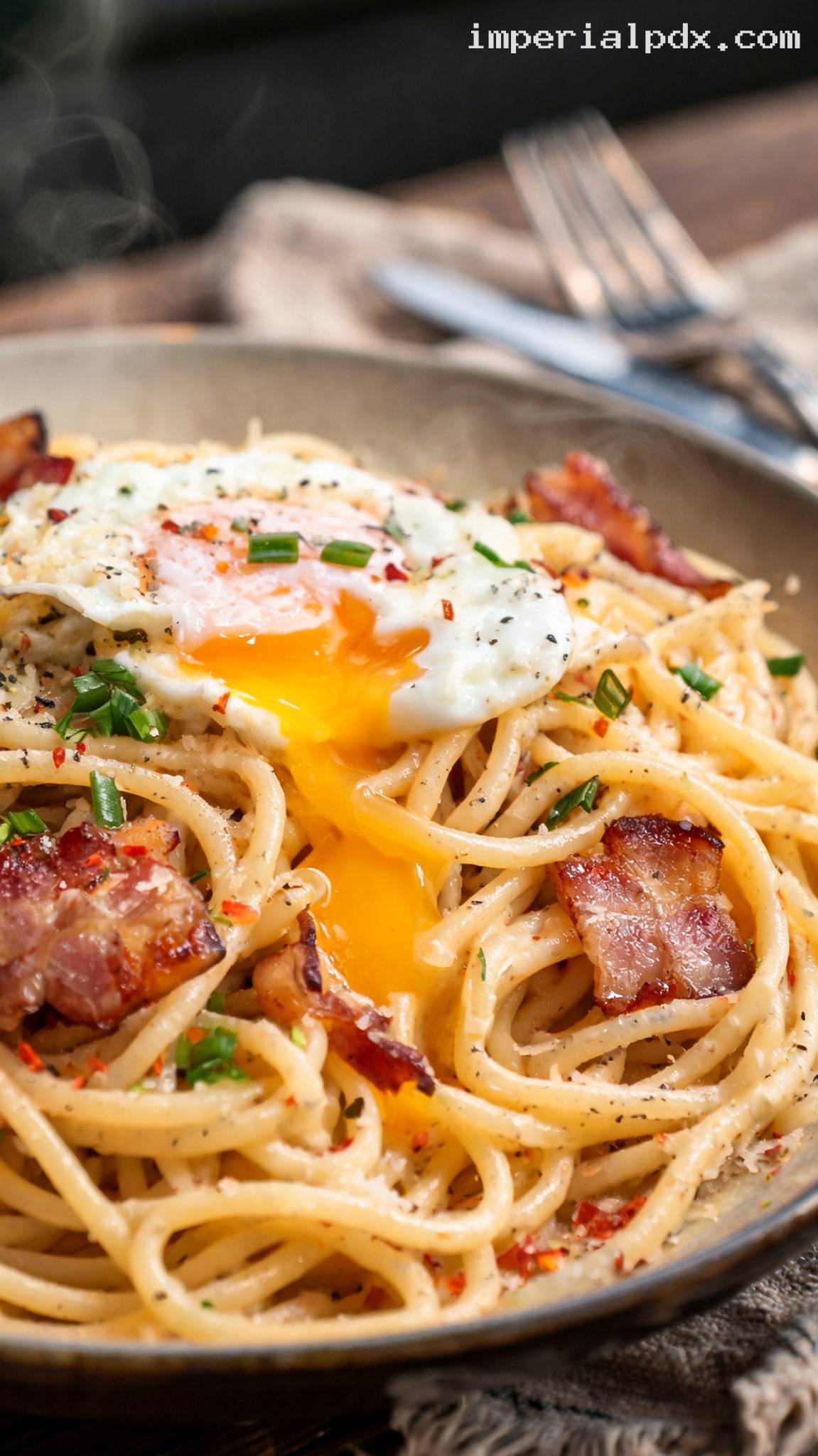
Divide the pasta among 4 warm shallow bowls. Top each serving with one soft egg. Sprinkle with the reserved crispy bacon, remaining parsley, remaining chives, extra Parmesan, and a final crack of black pepper. Serve immediately while the sauce is creamy and the egg yolk can run into the pasta.
Pro Tips
- Take the pan off the heat before adding the egg sauce: This keeps the sauce silky instead of turning it into scrambled eggs.
- Use finely grated Parmesan: A powdery, finely grated texture melts more smoothly than large shavings.
- Save more pasta water than you think you need: Starchy water is the difference between a thick paste and a glossy, restaurant-style sauce.
- Warm the serving bowls: A warm bowl helps the sauce stay loose and creamy while you fry the eggs.
- Use pasteurized eggs if serving to anyone sensitive to undercooked eggs: The sauce is gently heated, and the topping egg can be cooked to your preferred doneness.
Variations
- Breakfast carbonara style: Skip the fried egg on top and add 1 extra egg yolk to the sauce for an even richer, more classic carbonara-inspired finish.
- Green brunch pasta: Toss 2 cups baby spinach or chopped kale into the skillet with the hot pasta before adding the sauce. The residual heat will wilt the greens.
- Spicy bacon and egg pasta: Increase crushed red pepper flakes to 1/2 teaspoon and finish with a small drizzle of chili crisp or Calabrian chile oil.
Storage & Make-Ahead
This pasta is best served immediately, while the sauce is silky and the egg yolk is soft. To store leftovers, remove any fried eggs and refrigerate the pasta in an airtight container for up to 3 days. Reheat gently in a skillet over low heat with 2 to 4 tablespoons water, milk, or broth, tossing until loosened and warm; avoid high heat because the egg-based sauce can separate. Cook fresh eggs for serving.
To prep ahead, chop the bacon, mince the garlic, grate the Parmesan, and chop the herbs up to 24 hours in advance. Store each component separately in the refrigerator. The egg-Parmesan sauce is best whisked just before cooking.
Nutrition (per serving)
Calories: 625 kcal | Carbs: 49g | Protein: 29g | Fat: 35g | Saturated Fat: 15g | Fiber: 3g | Sugar: 2g | Sodium: 980mg | Cholesterol: 330mg