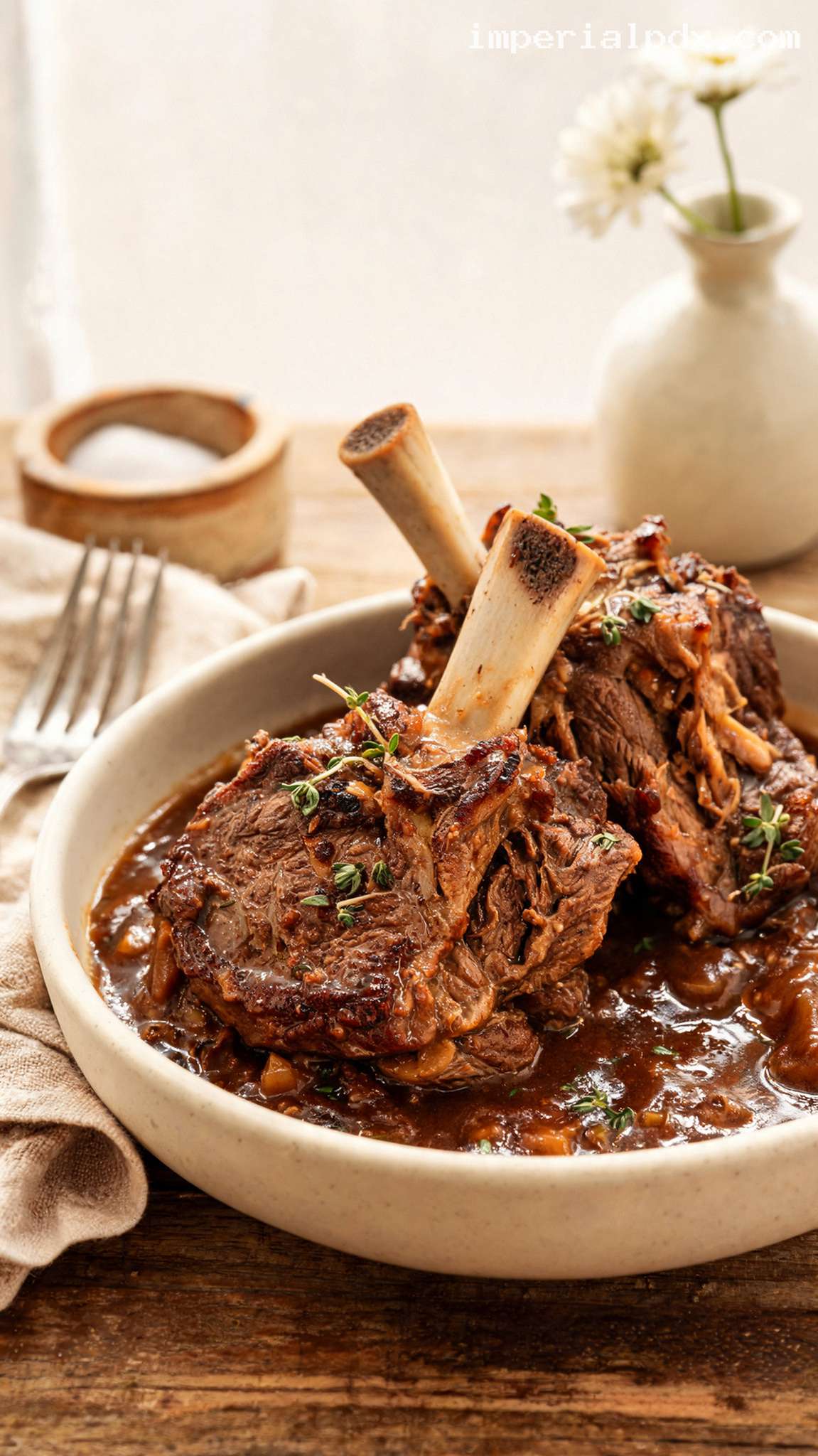
Quick Recipe Version (TL;DR)
Amish-Style Braised Beef Short Ribs with Root Vegetable Gravy is a comforting, farmhouse-inspired Sunday dinner: deeply browned beef, a gentle broth-and-thyme braise, and a rich gravy thickened with the tender cooking vegetables rather than flour.
Timing includes a 3-hour-15-minute braise. Especially thick ribs may need an additional 15–30 minutes to become fork-tender.
Quick Ingredients
- 4 pounds bone-in English-cut beef short ribs, about 4–6 pieces
- 1 1/2 teaspoons fine sea salt and 1 teaspoon black pepper, divided
- 2 tablespoons neutral cooking oil
- 2 medium yellow onions, chopped
- 3 medium carrots, 1 large parsnip, and 2 celery stalks, chopped
- 4 garlic cloves, minced
- 1 tablespoon tomato paste
- 3 cups low-sodium beef broth, plus up to 1 cup more if needed
- 6 fresh thyme sprigs and 1 dried bay leaf
- 1 tablespoon unsalted butter
- 1 teaspoon fresh thyme leaves, for garnish
Do This
- 1. Heat the oven to 325°F (165°C). Pat the ribs dry; season with 1 teaspoon salt and 3/4 teaspoon pepper.
- 2. Heat the oil in a Dutch oven over medium-high heat. Brown the ribs in 2 batches, about 9 minutes per batch. Transfer to a plate.
- 3. Leave 2 tablespoons fat in the pot. Cook the onions, carrots, parsnip, and celery with the remaining salt and pepper for 8 minutes. Stir in the garlic for 1 minute, then the tomato paste for 1 minute.
- 4. Deglaze with 1/2 cup broth for 2 minutes. Add the remaining 2 1/2 cups broth, thyme sprigs, bay leaf, ribs, and accumulated juices; bring to a gentle simmer, about 5 minutes.
- 5. Cover and braise for 3 hours 15 minutes, until a fork slides easily into the meat. Check the liquid after 90 minutes and add extra broth if needed.
- 6. Transfer the ribs to a platter. Discard the thyme stems and bay leaf, skim excess fat, and blend the vegetables into the cooking liquid.
- 7. Simmer the gravy until it coats a spoon, then stir in the butter off the heat. Spoon over the ribs and garnish with thyme leaves.
Why You’ll Love This Recipe
- Deep flavor from simple ingredients: A good sear, sweet root vegetables, and a slow braise do the heavy lifting.
- Exceptionally tender beef: Gentle oven cooking turns a sturdy cut into a fork-tender centerpiece.
- Naturally thickened gravy: Blended carrots, parsnip, and onions give the sauce body without flour or cream.
- Perfect for making ahead: The flavor improves overnight, and chilled fat is easy to remove before reheating.
Grocery List
- Meat: 4 pounds bone-in English-cut beef short ribs.
- Produce: 2 medium yellow onions, 3 medium carrots, 1 large parsnip, 2 celery stalks, 4 garlic cloves, and 1 small bunch fresh thyme.
- Dairy: 1 tablespoon unsalted butter.
- Pantry: Neutral cooking oil, fine sea salt, black pepper, tomato paste, 1 quart low-sodium beef broth, and 1 dried bay leaf.
Full Ingredients
For the Short Ribs
- 4 pounds (1.8 kg) bone-in English-cut beef short ribs, about 4–6 pieces, approximately 2–3 inches thick
- 1 teaspoon (6 g) fine sea salt
- 3/4 teaspoon freshly ground black pepper
- 2 tablespoons (30 ml) neutral cooking oil, such as canola or avocado oil
For the Vegetable Base
- 2 medium yellow onions, about 12 ounces (340 g) total, cut into 1/2-inch pieces
- 3 medium carrots, about 8 ounces (225 g) total, peeled and cut into 1/2-inch pieces
- 1 large parsnip, about 6 ounces (170 g), peeled and cut into 1/2-inch pieces
- 2 celery stalks, about 4 ounces (115 g) total, cut into 1/2-inch pieces
- 1/2 teaspoon (3 g) fine sea salt
- 1/4 teaspoon freshly ground black pepper
- 4 garlic cloves, minced
- 1 tablespoon (16 g) tomato paste
For the Braise and Gravy
- 3 cups (720 ml) low-sodium beef broth, divided, plus up to 1 cup (240 ml) more as needed
- 6 fresh thyme sprigs
- 1 dried bay leaf
- 1 tablespoon (14 g) cold unsalted butter
- 1 teaspoon fresh thyme leaves, for garnish
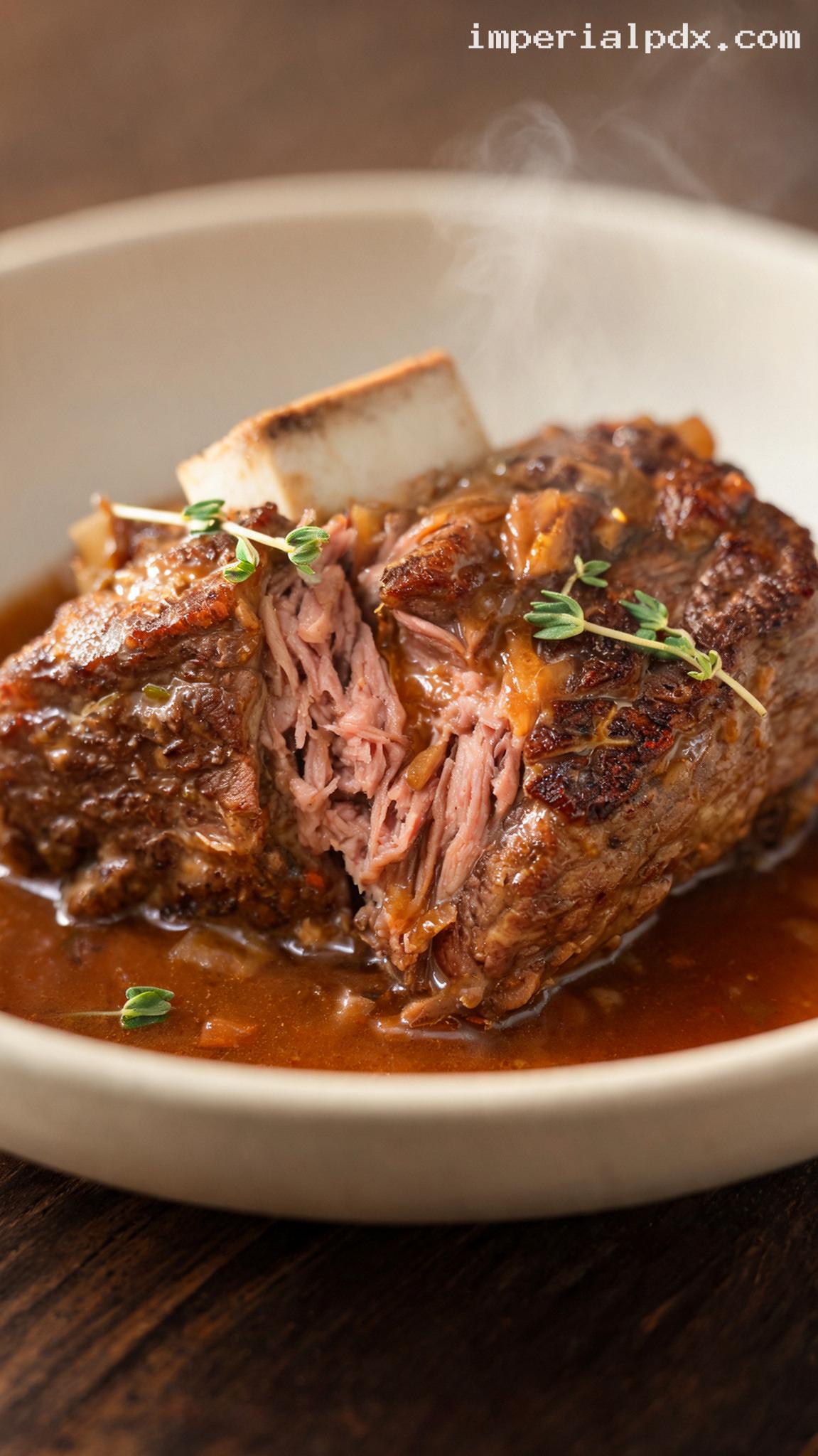
Step-by-Step Instructions
Step 1: Prepare the ribs and heat the oven
Heat the oven to 325°F (165°C) with a rack in the lower-middle position. Set out a heavy, oven-safe 6- to 7-quart Dutch oven with a tight-fitting lid. Chop the vegetables before you begin cooking so they are ready when the ribs come out of the pot.
Trim away any thick, hard pieces of exterior fat, but leave the marbling within the meat. Pat the ribs thoroughly dry with paper towels. Season all sides with 1 teaspoon fine sea salt and 3/4 teaspoon black pepper.
Step 2: Sear until deeply browned
Heat the oil in the Dutch oven over medium-high heat until shimmering. Add half the ribs, leaving space between them. Sear for approximately 3 minutes on each broad meaty side, then spend another 3 minutes browning the remaining meaty edges. Transfer to a plate and repeat with the second batch, for about 18 minutes total.
Look for a deep chestnut-brown crust rather than a pale gray surface. Let each side sit undisturbed before turning; properly browned meat usually releases more easily from the pot. Reduce the heat slightly if the browned bits begin to blacken.
Step 3: Build the vegetable base
Carefully pour off excess fat, leaving 2 tablespoons in the Dutch oven. Reduce the heat to medium. Add the onions, carrots, parsnip, celery, remaining 1/2 teaspoon salt, and remaining 1/4 teaspoon pepper.
Cook for 8 minutes, stirring occasionally, until the onions soften and the vegetables begin to pick up color. Stir in the garlic and cook for 1 minute. Add the tomato paste and cook, stirring, for 1 minute more, until it darkens slightly and coats the vegetables.
Step 4: Deglaze and assemble the braise
Pour in 1/2 cup (120 ml) broth. Scrape the bottom of the pot with a wooden spoon for 2 minutes, loosening the flavorful browned bits. Add the remaining 2 1/2 cups (600 ml) broth, thyme sprigs, and bay leaf.
Return the ribs and any juices from the plate to the pot, arranging the ribs in a snug single layer, bone-side down where practical. The broth should come approximately halfway to two-thirds up the meat, not completely cover it. If necessary, add some of the extra broth in 1/4-cup (60 ml) increments. Bring to a gentle simmer over medium heat, about 5 minutes.
Step 5: Braise gently until fork-tender
Cover tightly and transfer the Dutch oven to the oven. Braise for approximately 3 hours 15 minutes. After 90 minutes, carefully check that the liquid is gently bubbling and has not fallen below halfway up the ribs. Add extra broth in 1/4-cup (60 ml) increments if needed, then replace the lid promptly.
Begin testing the meat after 3 hours. A fork or thin skewer should slide into the thickest part with very little resistance, and the meat should yield easily when twisted with a fork. If it still feels firm or springy, cover and continue cooking in 15-minute increments. Tenderness, rather than the clock alone, determines when the ribs are ready.
Step 6: Remove the ribs and skim the braising liquid
Using a wide spatula and tongs, carefully lift the tender ribs onto a warm platter. Support them from underneath so the meat stays together. Tent loosely with foil while you make the gravy.
Remove the bay leaf and thyme stems; the small thyme leaves may remain. Let the liquid settle for 2 minutes, then use a shallow spoon to skim off the shiny layer of excess fat. Leave the vegetables and cooking juices in the pot.
Step 7: Blend the vegetables into rustic gravy
Take the pot off the heat. Use an immersion blender, keeping its head fully submerged, to blend the vegetables into the broth for 1–2 minutes, until the gravy is thick and mostly smooth. A few tiny vegetable flecks are welcome; they give this farmhouse-style gravy its rustic character.
If using a countertop blender, let the mixture stop steaming vigorously first. Blend in batches with the jar no more than half full, following the manufacturer’s instructions for hot liquids and venting the lid as directed. Never seal hot liquid in a personal or bullet-style blender.
For a strained gravy instead: Press the vegetables and liquid through a fine-mesh sieve with the back of a ladle, extracting as much softened vegetable pulp as possible. Discard the remaining fibers. This version will be smoother and may need a little longer to reduce.
Step 8: Finish the gravy and serve
Return the gravy to medium-low heat and simmer uncovered for 5–7 minutes, stirring frequently, until it coats the back of a spoon. If it becomes too thick, stir in reserved extra broth 2 tablespoons (30 ml) at a time. If it is too thin, continue simmering in 2-minute increments.
Remove from the heat and stir in the 1 tablespoon cold butter until melted. Taste before adding any additional seasoning, since the broth concentrates as it cooks. Spoon the gravy generously over the ribs and scatter with 1 teaspoon fresh thyme leaves. Serve hot, with mashed potatoes, buttered egg noodles, or thick slices of bread alongside to catch the gravy.
Pro Tips
- Choose the right cut: Thick English-cut short ribs are ideal for this braise. Thin, crosscut flanken-style ribs will not cook on the same schedule.
- Do not rush the sear: Dry meat, a hot pot, and uncrowded batches create the browned foundation that gives the gravy its deep flavor.
- Keep the simmer gentle: A covered pot and a low oven help the connective tissue soften without aggressively boiling the meat.
- Skim before blending: Blending excess rendered fat into the sauce can make the gravy greasy. Removing it first gives a cleaner, richer result.
- Think inspired, not definitive: This broth-based, no-wine version draws on hearty farmhouse cooking; Amish family recipes and regional traditions vary.
Variations
- All-carrot gravy: Replace the 6 ounces (170 g) parsnip with an equal weight of additional carrots. The gravy will be slightly sweeter and warmer in color.
- Mushroom finish: Sauté 8 ounces (225 g) sliced cremini mushrooms in 1 tablespoon oil over medium-high heat for 8–10 minutes. Fold them into the finished gravy for extra savory flavor.
- Dairy-free version: Omit the finishing butter. The blended vegetables still give the gravy plenty of body; check that your broth is dairy-free.
Storage & Make-Ahead
Refrigerate: Transfer the ribs and gravy to shallow containers and refrigerate within 2 hours of cooking. Keep covered at 40°F (4°C) or below for 3–4 days.
Make ahead: For especially easy entertaining, braise the ribs one day ahead. Remove the thyme stems and bay leaf, then chill the ribs with the vegetables and cooking liquid in shallow containers. The next day, lift off the solidified fat. Gently warm the mixture until the ribs can be removed without breaking, then blend and finish the gravy as directed.
Reheat: Place the ribs and gravy in a covered baking dish. Add 1/4 cup (60 ml) broth if needed to loosen the sauce. Heat at 300°F (150°C) for approximately 35–45 minutes, or until the meat reaches 165°F (74°C) in the thickest part. Larger or tightly packed portions may take longer.
Freeze: Freeze cooled ribs with their gravy in airtight containers for up to 3 months for best quality. Thaw overnight in the refrigerator before reheating.
Nutrition (per serving)
Calories: 780 kcal | Carbs: 24g | Protein: 52g | Fat: 53g | Saturated Fat: 22g | Fiber: 5g | Sugar: 10g | Sodium: 1020mg | Cholesterol: 180mg
Estimated for one-quarter of the recipe, including gravy and excluding side dishes. Actual values vary with the ribs’ bone weight and fat content, the broth used, and how thoroughly the cooking liquid is skimmed.


