Quick Recipe Version (TL;DR)
Quick Ingredients
- 2 cups uncooked short-grain white rice (or jasmine)
- 1 lb (450 g) ground beef (85–90% lean)
- 2 tbsp soy sauce + 1 tsp sesame oil + 1 tbsp brown sugar (for beef)
- 2 cups baby spinach, packed
- 1 medium zucchini, cut into thin matchsticks
- 2 medium carrots, cut into thin matchsticks
- 1 cup mushrooms, thinly sliced
- 1 cup thinly sliced daikon or red radish
- 3 tbsp rice vinegar + 1 tbsp sugar + 1/2 tsp salt (for quick pickles)
- 4 large eggs
- 3 tbsp gochujang + 1.5 tbsp soy sauce + 1.5 tbsp rice vinegar + 1 tbsp honey + 1 tsp sesame oil + 2–3 tbsp water (for sauce)
- 2 tbsp neutral oil (canola, vegetable) + 2 tsp sesame oil (for cooking)
- 2 green onions, thinly sliced; 1 tbsp toasted sesame seeds (for garnish)
Do This
- 1. Cook 2 cups rice according to package directions (about 15–20 minutes); keep warm.
- 2. Toss 1 cup sliced radish with 3 tbsp rice vinegar, 1 tbsp sugar, and 1/2 tsp salt; let sit at least 15 minutes.
- 3. In a skillet over medium-high, sauté carrots, zucchini, mushrooms, and spinach separately in a little oil and pinch of salt; set aside.
- 4. Brown 1 lb ground beef; add 2 tbsp soy sauce, 1 tbsp brown sugar, 1 tsp sesame oil, and minced garlic; cook until glossy and no pink remains.
- 5. Whisk gochujang, soy sauce, rice vinegar, honey, sesame oil, and water until smooth and drizzleable.
- 6. Fry 4 eggs sunny-side up in a lightly oiled skillet over medium heat until whites are set but yolks are runny, 3–4 minutes.
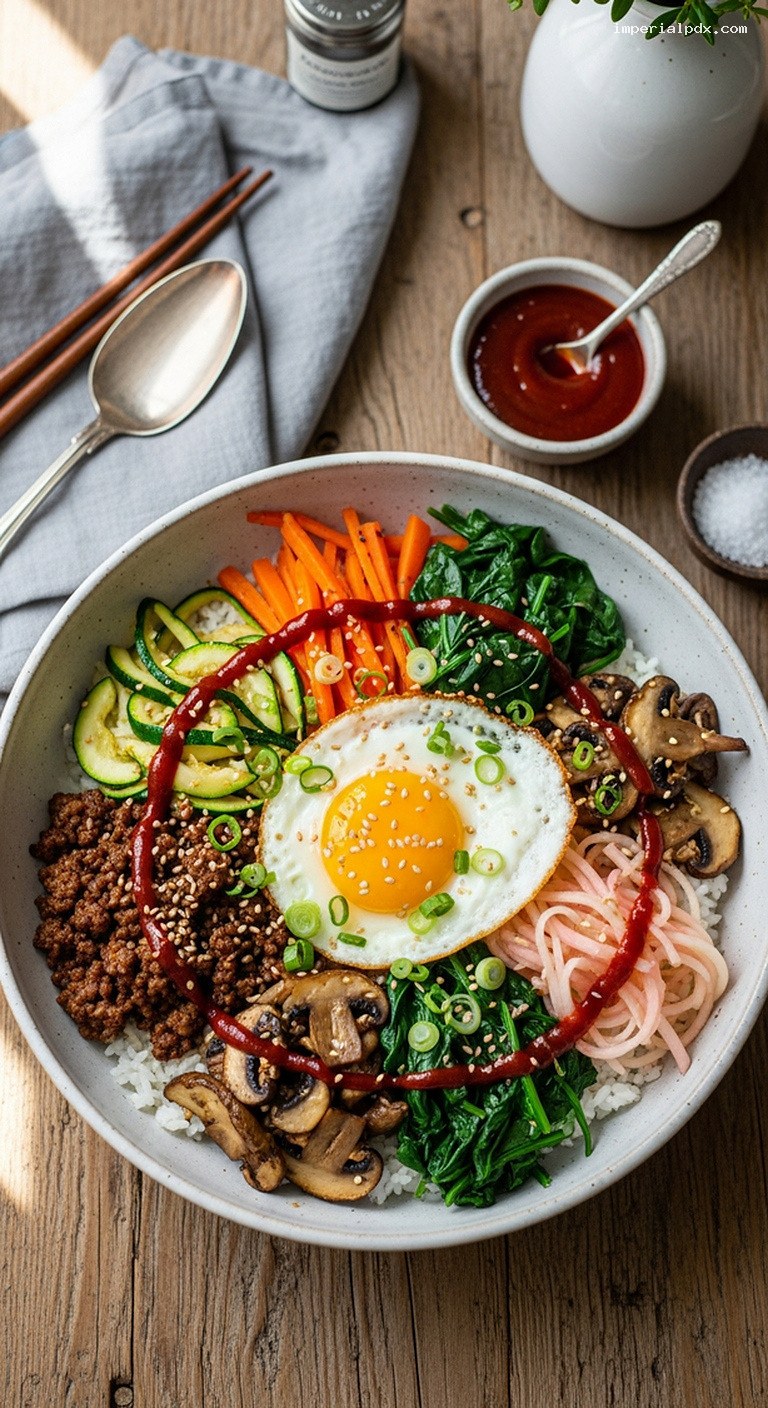
- 7. Build bowls: rice on bottom, arrange beef, veggies, and pickled radish on top, add egg, drizzle with gochujang sauce, and garnish with green onions and sesame seeds.
Why You’ll Love This Recipe
- All the flavors of restaurant bibimbap in a simple, weeknight-friendly bowl.
- Customizable: swap veggies, adjust spice level, and let everyone build their own.
- Great for meal prep: components keep well and reheat beautifully.
- Balanced and satisfying: protein, veggies, carbs, and a punchy, addictive sauce.
Grocery List
- Produce: Garlic, fresh ginger (optional), baby spinach, zucchini, carrots, mushrooms, daikon or red radish, green onions, optional bean sprouts, optional cucumber, optional fresh herbs (cilantro or perilla if accessible).
- Dairy: None (eggs are in the protein category).
- Pantry: Short-grain white rice (or jasmine rice), ground beef, soy sauce, gochujang (Korean chili paste), rice vinegar, brown sugar, honey, toasted sesame oil, neutral cooking oil, kosher salt, black pepper, sesame seeds, optional gochugaru (Korean red pepper flakes).
Full Ingredients
For the Rice
- 2 cups uncooked short-grain white rice (Korean or sushi-style preferred; jasmine works in a pinch)
- 2 1/4 to 2 1/2 cups water (or amount specified on your rice package)
- 1/4 tsp kosher salt (optional)
For the Seasoned Ground Beef
- 1 lb (450 g) ground beef, 85–90% lean
- 2 tbsp soy sauce (regular or low-sodium)
- 1 tbsp brown sugar, packed
- 1 tsp toasted sesame oil
- 3 cloves garlic, minced (about 1 tbsp)
- 1 tsp finely grated fresh ginger (optional but recommended)
- 1/4 tsp freshly ground black pepper
- 1/4 tsp gochugaru (Korean red pepper flakes), optional for a little heat
- 1 tsp neutral oil (if your pan is not nonstick or beef is very lean)
For the Sautéed Vegetables
- 2 medium carrots, peeled and cut into thin matchsticks
- 1 medium zucchini, cut into thin matchsticks
- 1 cup mushrooms, thinly sliced (shiitake, cremini, or button)
- 2 cups baby spinach, packed
- 1 tbsp neutral oil (divided, plus more as needed)
- 1 tsp toasted sesame oil (optional for finishing)
- 1/2 tsp kosher salt, divided (plus more to taste)
For the Quick Pickled Radish
- 1 cup thinly sliced daikon radish or red/pink radishes
- 3 tbsp rice vinegar (unseasoned)
- 1 tbsp granulated sugar
- 1/2 tsp kosher salt
- 2 tbsp water
For the Gochujang Drizzle Sauce
- 3 tbsp gochujang (Korean chili paste)
- 1 1/2 tbsp soy sauce
- 1 1/2 tbsp rice vinegar
- 1 tbsp honey (or sugar)
- 1 tsp toasted sesame oil
- 2–3 tbsp water, or as needed to thin to a drizzle
For the Eggs and Garnish
- 4 large eggs
- 2 tsp neutral oil (for frying eggs)
- 2 green onions, thinly sliced
- 1 tbsp toasted sesame seeds
Step-by-Step Instructions
Step 1: Cook the Rice
Rinse the 2 cups of rice under cold running water, swishing with your hand, until the water runs mostly clear. This removes excess starch and helps the grains stay fluffy. Drain well.
Add the rinsed rice to a pot or rice cooker with 2 1/4 to 2 1/2 cups water and 1/4 teaspoon salt (if using). If using a rice cooker, cook according to the manufacturer’s instructions. If using a pot, bring to a gentle boil over medium-high heat, then reduce heat to low, cover tightly, and simmer for 15–18 minutes, or until water is absorbed and rice is tender.
Turn off the heat and let the rice stand, covered, for 10 minutes to steam. Fluff with a fork or rice paddle just before serving and keep warm, covered.
Step 2: Make the Quick Pickled Radish
While the rice cooks, prepare the quick pickles. Place 1 cup of thinly sliced radish in a small bowl or jar. In another small bowl, whisk together 3 tablespoons rice vinegar, 1 tablespoon sugar, 1/2 teaspoon salt, and 2 tablespoons water until the sugar dissolves.
Pour the brine over the radish, pressing down so all slices are submerged. Let sit at room temperature for at least 15 minutes, stirring once or twice. The longer it sits, the more flavorful it becomes. These can also be made up to 3 days in advance and kept in the refrigerator.
Step 3: Prep and Sauté the Vegetables
Prep your vegetables: peel and cut the carrots into thin matchsticks, cut the zucchini into similar matchsticks, and slice the mushrooms. Rinse and drain the spinach well.
Heat a large nonstick or cast-iron skillet over medium-high heat. Add about 1 teaspoon neutral oil. When hot, add the carrot matchsticks with a small pinch of salt. Cook, stirring often, for 3–4 minutes, until just tender with a slight bite. Transfer to a plate.
Add another 1 teaspoon of oil to the pan. Add the zucchini with a pinch of salt and sauté for 2–3 minutes, until crisp-tender and lightly golden in spots. Transfer to the plate with the carrots.
Add another teaspoon of oil, then the sliced mushrooms and a pinch of salt. Cook for 5–7 minutes, stirring occasionally, until the mushrooms release their liquid and become browned and tender. Transfer to the vegetable plate.
Finally, add the spinach to the pan (no extra oil needed if there is still a light coating; if dry, add 1 teaspoon oil). Sprinkle with a pinch of salt and cook, tossing, for 1–2 minutes, until just wilted and bright green. Turn off the heat and, if you like, drizzle the vegetables with 1 teaspoon sesame oil and toss to coat lightly. Keep the vegetables grouped separately on the plate so you can arrange them beautifully later.
Step 4: Cook and Season the Ground Beef
In a small bowl, mix together 2 tablespoons soy sauce, 1 tablespoon brown sugar, 1 teaspoon sesame oil, minced garlic, grated ginger (if using), black pepper, and gochugaru (if using). Set this seasoning mixture aside.
Heat the same skillet over medium-high heat. If it looks dry, add 1 teaspoon neutral oil. Add the 1 pound of ground beef, breaking it up with a spatula. Cook for 4–5 minutes, stirring occasionally, until most of the pink is gone and the beef is starting to brown in spots. Drain off excess fat if there is a lot.
Pour the soy-garlic mixture over the beef. Stir well and cook for another 2–3 minutes, until the beef is fully cooked, glossy, and the sauce has mostly absorbed and thickened slightly. Taste and adjust seasoning with a splash more soy sauce or a pinch of sugar if desired. Turn off the heat and keep warm.
Step 5: Make the Gochujang Drizzle Sauce
In a small bowl, whisk together 3 tablespoons gochujang, 1 1/2 tablespoons soy sauce, 1 1/2 tablespoons rice vinegar, 1 tablespoon honey, and 1 teaspoon sesame oil until smooth. Gradually whisk in 2–3 tablespoons water, 1 tablespoon at a time, until the sauce is pourable but still thick enough to cling to a spoon.
Taste and adjust: add more honey for sweetness, more vinegar for tang, or more gochujang for heat. Set aside. The sauce will thicken slightly as it sits; you can whisk in a few drops of water just before serving if needed.
Step 6: Fry the Eggs
When the rice, beef, and vegetables are ready, fry the eggs so they are hot and the yolks are runny. Heat 2 teaspoons neutral oil in a clean nonstick skillet over medium heat (about 325–350°F / 165–175°C) until it shimmers.
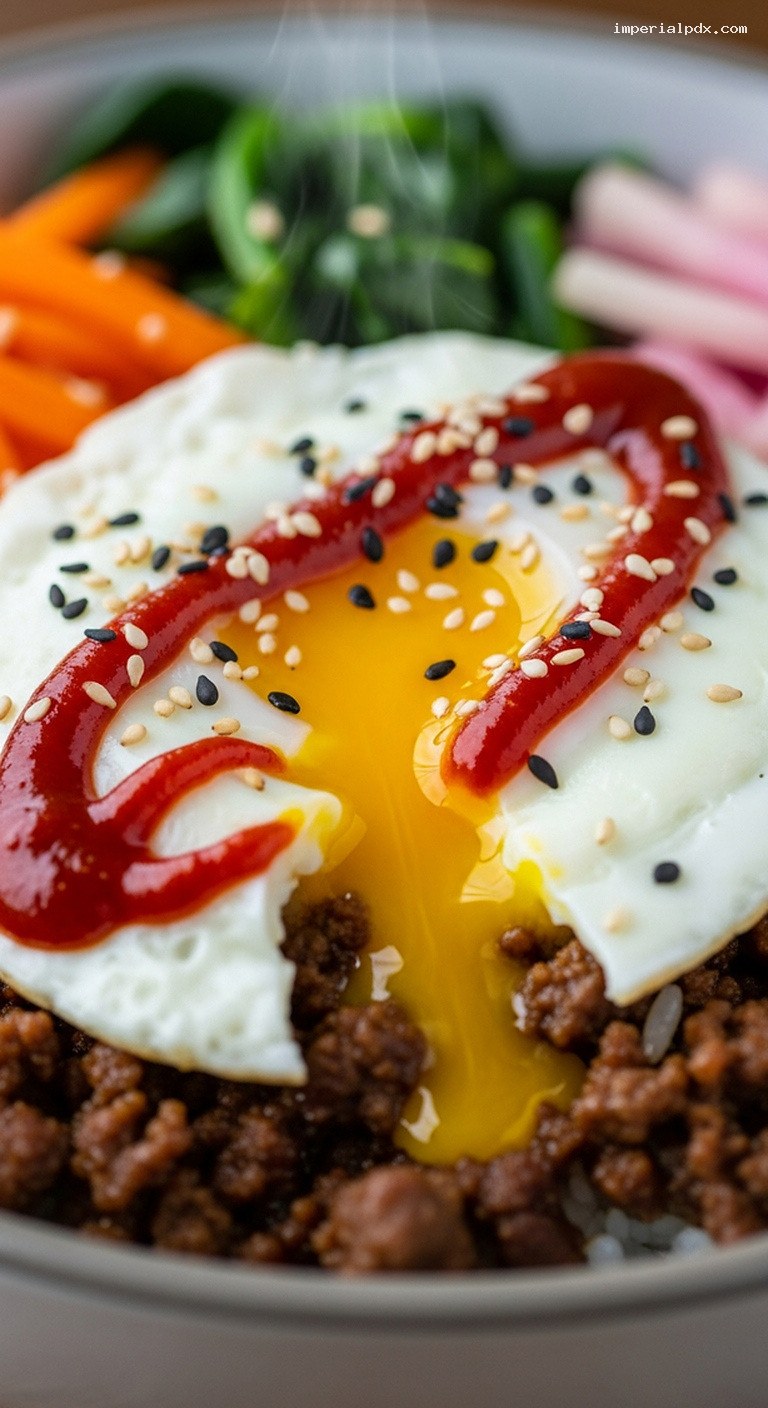
Crack in the 4 eggs, spacing them out. Reduce the heat to medium-low. Cook for 3–4 minutes, until the whites are set and opaque but the yolks are still soft and glossy. For more set yolks, cover the pan for the last 1–2 minutes. Season each egg lightly with a pinch of salt.
Step 7: Assemble the Beef Bibimbap Bowls
Time to build your bowls. Divide the warm rice among 4 wide bowls, forming an even bed. Arrange the seasoned ground beef in a neat mound off to one side of each bowl.
Neatly group the sautéed carrots, zucchini, mushrooms, and spinach around the rice, leaving space in the center. Add a small pile of drained pickled radish to each bowl. Place a fried egg in the center of each bowl on top of the rice and beef.
Drizzle each bowl generously with the gochujang sauce. Sprinkle with sliced green onions and toasted sesame seeds. Serve immediately, with extra gochujang sauce on the side.
To eat, use chopsticks or a spoon to break the egg yolk and mix everything together so the rice, beef, veggies, and sauce are evenly combined.
Pro Tips
- Use hot rice: Bibimbap is best when the rice is hot and steamy so it warms the veggies, beef, and sauce as you mix.
- Prep ahead, cook fast: Slice all veggies and mix sauces before you start cooking; then you can sauté and assemble quickly.
- Season each vegetable lightly: A tiny pinch of salt on each veggie makes the overall bowl taste balanced and not bland.
- Adjust spice level: Add more or less gochujang and gochugaru (if using) to suit your heat preference. You can also thin the sauce with more water for a milder flavor.
- Get those runny yolks: Keep the heat medium-low for the eggs so the whites set gently while the yolks stay rich and saucy.
Variations
- Extra veggie bibimbap: Add or swap in bean sprouts, thinly sliced cucumber, shredded lettuce, or sautéed bell peppers for more color and crunch.
- Different protein: Substitute ground turkey, ground chicken, thinly sliced beef or pork, or even crumbled tofu for the ground beef, seasoning them the same way.
- Crispy rice twist: For a dolsot-style vibe (stone pot bibimbap), press some cooked rice into a lightly oiled hot cast-iron skillet and cook over medium heat for 6–8 minutes until the bottom is golden and crisp, then build your bowl on top.
Storage & Make-Ahead
Store components separately for best texture. Cool leftovers completely, then refrigerate in airtight containers for up to 4 days. The cooked rice can be cooled and stored in a covered container; sprinkle with a teaspoon or two of water and reheat in the microwave, covered, until hot and fluffy. The seasoned beef and sautéed vegetables reheat well in the microwave or in a skillet over medium heat with a splash of water. The quick pickled radish keeps in its brine in the refrigerator for up to 1 week. The gochujang sauce will keep in a sealed jar for up to 1 week; stir before using and thin with a few drops of water if needed. Fry eggs fresh just before serving for the best texture. For meal prep, portion rice, beef, and veggies into containers, leave a space for a fresh egg, and pack sauce and pickles separately; reheat, then top with a freshly fried or soft-boiled egg.
Nutrition (per serving)
Approximate values per bowl (1 of 4): about 780 calories; 37 g protein; 80 g carbohydrates; 32 g fat; 9 g saturated fat; 4 g fiber; 13 g sugar; 1,500 mg sodium (will vary based on soy sauce brand, added salt, and exact portion sizes). To lighten it up, use leaner beef, a smaller portion of rice, and go a bit lighter on the sauce.