Quick Recipe Version (TL;DR)
Quick Ingredients
- 10 oz (280 g) wheat noodles or ramen (dried)
- 1 tbsp neutral oil (canola, vegetable, or grapeseed)
- 1 lb (450 g) ground beef (80–90% lean)
- 1 cup (about 5 oz / 140 g) chopped kimchi + 3 tbsp kimchi juice
- 4 scallions, sliced (white and green parts separated)
- 3 cloves garlic, minced
- 1 tbsp grated fresh ginger (or 1 tsp ground ginger)
- 3 tbsp soy sauce (low-sodium preferred)
- 1–2 tbsp gochujang (Korean chili paste), to taste
- 1 tbsp rice vinegar
- 2 tsp toasted sesame oil
- 1 tsp sugar or honey
- 1–2 tsp toasted sesame seeds, for garnish (optional)
Do This
- 1. Cook noodles in salted boiling water until just al dente; drain and set aside.
- 2. Whisk soy sauce, gochujang, rice vinegar, sesame oil, kimchi juice, and sugar in a small bowl.
- 3. Heat oil in a large skillet; brown ground beef over medium-high heat, breaking it into small crumbles.
- 4. Add garlic, ginger, and scallion whites; cook until fragrant, then stir in chopped kimchi.
- 5. Pour in the sauce and toss to coat beef and kimchi; simmer 1–2 minutes.
- 6. Add cooked noodles; stir-fry until everything is well coated and hot, 2–3 minutes.
- 7. Top with scallion greens and sesame seeds; taste and adjust soy or gochujang, then serve hot.
Why You’ll Love This Recipe
- Big flavor, minimal effort: tangy kimchi, savory beef, and chewy noodles come together in just 30 minutes.
- Flexible heat level: keep it mild or dial up the spice with extra gochujang or kimchi.
- Pantry-friendly: uses mostly shelf-stable staples plus one jar of kimchi.
- Great leftover potential: reheats beautifully for next-day lunch or an easy weeknight dinner.
Grocery List
- Produce: Garlic, fresh ginger, scallions, optional lime (for serving), optional cilantro.
- Dairy: None required (optional: butter for extra richness).
- Pantry: Dried noodles (ramen, udon, or spaghetti), kimchi, ground beef, neutral oil, soy sauce, gochujang, rice vinegar, sesame oil, sugar or honey, toasted sesame seeds, salt, black pepper.
Full Ingredients
Noodles and Beef
- 10 oz (280 g) dried noodles (wheat noodles, ramen, udon, or spaghetti)
- 1 tbsp kosher salt (for pasta water)
- 1 tbsp neutral oil (canola, vegetable, or grapeseed)
- 1 lb (450 g) ground beef, 80–90% lean
- 1/2 tsp kosher salt (for seasoning beef)
- 1/4 tsp freshly ground black pepper
Kimchi and Aromatics
- 1 cup chopped kimchi, drained slightly (about 5 oz / 140 g)
- 3 tbsp kimchi juice from the jar (for extra tang and color)
- 3 cloves garlic, minced
- 1 tbsp finely grated fresh ginger (or 1 tsp ground ginger)
- 4 scallions, thinly sliced; white and green parts separated
Sauce
- 3 tbsp soy sauce (low-sodium recommended)
- 1–2 tbsp gochujang (Korean chili paste), to taste
- 1 tbsp unseasoned rice vinegar
- 2 tsp toasted sesame oil
- 1 tsp sugar or honey (balances the kimchi acidity)
- 2–4 tbsp reserved noodle cooking water (as needed to loosen)
To Finish and Serve
- 1–2 tsp toasted sesame seeds, for garnish (optional)
- Extra sliced scallion greens, for garnish
- Optional: Lime wedges, to squeeze over just before serving
- Optional: Chili flakes or a drizzle of chili oil, for extra heat
Step-by-Step Instructions
Step 1: Prep the ingredients
Start by getting all your components ready so the stir-fry goes smoothly. Mince the garlic and grate the ginger. Slice the scallions, keeping the white and light green parts in one pile and the darker green tops in another. Roughly chop the kimchi into bite-sized pieces if it is in large chunks, and measure out 1 cup. Scoop out 3 tablespoons of the kimchi juice from the jar and set it aside. This juice will add a punch of flavor and color to the sauce.
Set a large pot of water on the stove and bring it to a boil for the noodles. While you wait, measure out the soy sauce, gochujang, rice vinegar, sesame oil, and sugar or honey. Having everything prepped will make the actual cooking very fast and stress-free.
Step 2: Cook the noodles
Once the water is boiling, season it generously with 1 tablespoon of kosher salt. Add the noodles and cook according to the package directions until just al dente (usually 6–8 minutes for most wheat noodles or spaghetti, 3–4 minutes for some ramen). You want them slightly firm, because they will cook a bit more in the skillet.
Before draining, scoop out about 1/2 cup of the starchy cooking water and set it aside. Drain the noodles well. If they are very sticky, you can toss them with a teaspoon of neutral oil to keep them separated while you prepare the beef.
Step 3: Mix the sauce
In a small bowl or measuring cup, whisk together the soy sauce, gochujang, rice vinegar, sesame oil, sugar or honey, and the reserved 3 tablespoons of kimchi juice. Whisk until the gochujang is fully dissolved and the sauce looks smooth and slightly thick. Taste a small dab: it should be salty, tangy, and moderately spicy. If you like more heat, add up to another 1/2 tablespoon of gochujang. Set the sauce aside near the stove.
Step 4: Brown the beef
Heat a large nonstick skillet or wok over medium-high heat. Add 1 tablespoon of neutral oil. When the oil shimmers, crumble in the ground beef. Season with 1/2 teaspoon kosher salt and 1/4 teaspoon black pepper.
Cook, breaking the meat into small bits with a spatula or wooden spoon, until the beef is nicely browned and no pink remains, about 5–7 minutes. If a lot of fat renders and pools in the pan, you can spoon off 1–2 tablespoons, but you do not need to remove all of it; a little fat helps flavor the noodles.
Step 5: Add aromatics and kimchi
Reduce the heat slightly to medium. Add the minced garlic, grated ginger, and the sliced white and light green parts of the scallions to the browned beef. Stir-fry for 30–60 seconds, just until fragrant; be careful not to let the garlic burn.
Add the chopped kimchi to the skillet. Stir everything together and cook for another 2–3 minutes. The kimchi should sizzle, soften slightly, and start to caramelize around the edges. This quick fry deepens its flavor and mellows some of the sharpness, giving the dish a richer, more rounded taste.
Step 6: Add the sauce and noodles
Give the prepared sauce a quick stir and pour it into the skillet over the beef and kimchi. Stir to coat everything evenly and let it bubble for 1–2 minutes, allowing the flavors to mingle.
Add the cooked noodles to the skillet. Use tongs or chopsticks to toss the noodles with the beef, kimchi, and sauce until everything is well combined. If the noodles look dry or the sauce seems too thick, add 2–4 tablespoons of the reserved noodle cooking water, a little at a time, until you reach a glossy, slightly saucy consistency that clings to the noodles without pooling in the pan.
Stir-fry for another 2–3 minutes, until the noodles are hot, evenly coated, and have absorbed some of the sauce.
Step 7: Finish and serve
Turn off the heat and stir in most of the scallion greens, reserving a small handful for garnish. Taste and adjust seasoning: add a splash more soy sauce for saltiness, extra kimchi juice for tang, or a little more gochujang or chili flakes for additional spice.
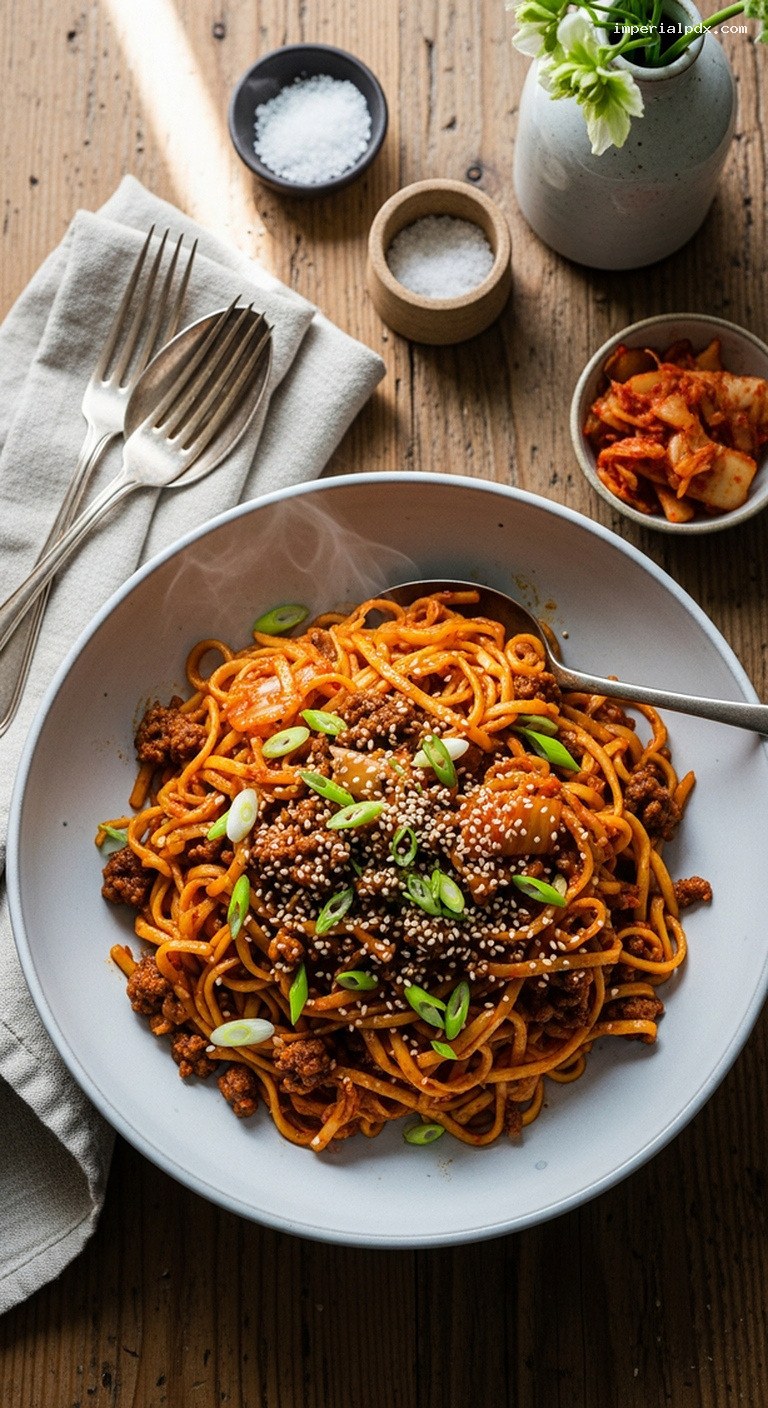
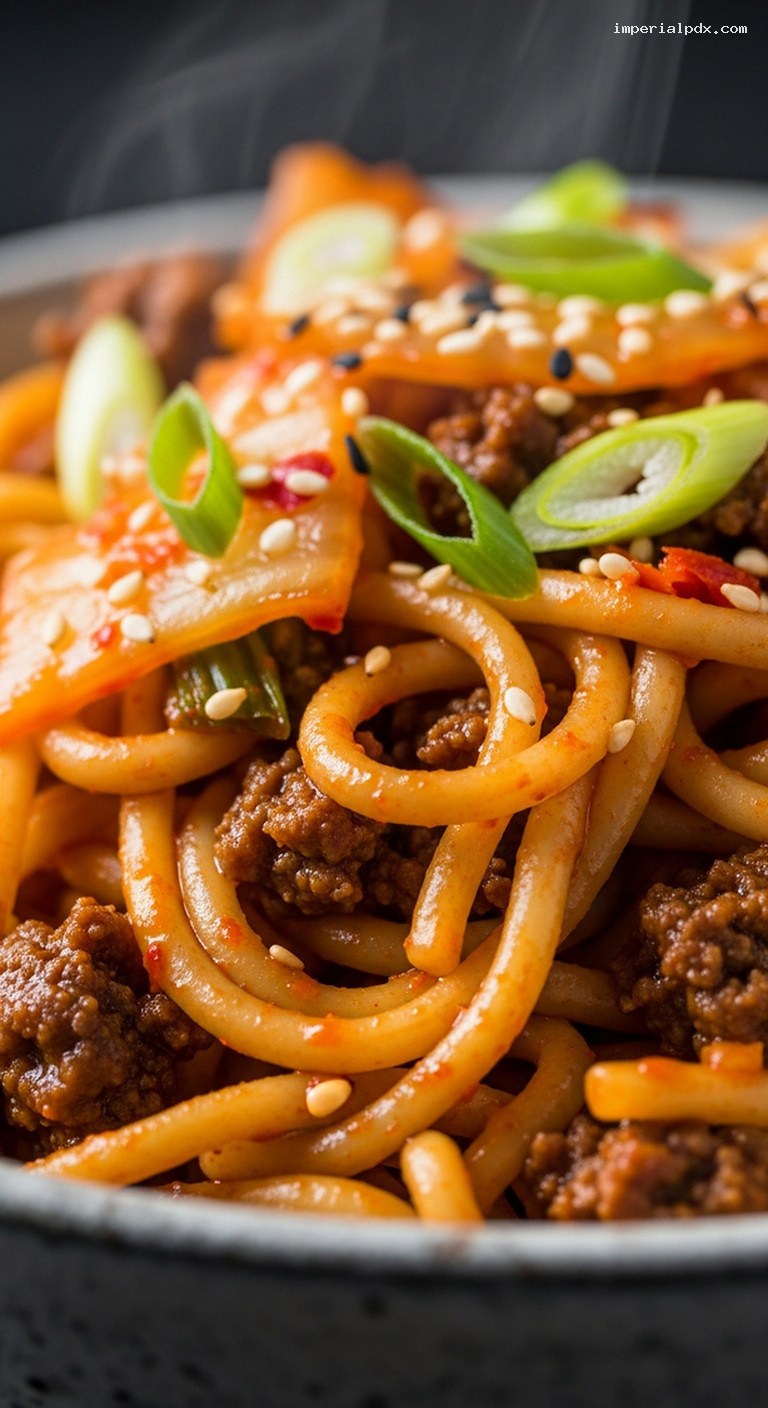
Divide the beef and kimchi fried noodles among warm bowls or plates. Sprinkle with the remaining scallion greens and toasted sesame seeds. If you like a fresh, bright note, squeeze a wedge of lime over each bowl right before eating. Serve immediately while piping hot.
Pro Tips
- Do not overcook the noodles. Pull them from the water while still slightly firm. Overcooked noodles can turn mushy when stir-fried with the sauce.
- Use well-fermented kimchi. Older, more sour kimchi brings deeper flavor and stands up better to high heat than very fresh, mild kimchi.
- Brown the beef properly. Let it sit undisturbed in the pan for a minute or two at a time to develop browned bits, which add a lot of savory flavor.
- Adjust spice gradually. Start with less gochujang, then add more at the end if you want more heat, rather than overdoing it from the start.
- Use noodle water for the perfect texture. A splash or two helps the sauce cling to the noodles and keeps the dish glossy instead of dry.
Variations
- Veggie-packed version: Add thinly sliced bell peppers, shredded carrots, or cabbage when you add the kimchi. Stir-fry until crisp-tender before adding the sauce.
- Pork or turkey swap: Substitute ground pork or ground turkey for the beef. With turkey, add 1 extra teaspoon of sesame oil at the end for richness.
- Cheesy comfort twist: After combining the noodles and sauce, sprinkle 1/2–1 cup shredded mozzarella or mild cheddar over the top, cover the pan for 1–2 minutes, and let the cheese melt before serving.
Storage & Make-Ahead
Store leftover beef and kimchi fried noodles in an airtight container in the refrigerator for up to 3 days. The flavors often deepen overnight, making for an excellent next-day meal. To reheat, warm gently in a nonstick skillet over medium heat with a splash of water or broth, tossing until hot. You can also microwave in 45–60 second bursts, stirring in between, adding a teaspoon of water if the noodles seem dry.
For make-ahead prep, you can chop the kimchi, slice the scallions, and mix the sauce up to 2 days in advance. Store each component in separate containers in the refrigerator. When you are ready to cook, all you need to do is boil the noodles and stir-fry everything together, which takes about 15 minutes.
Nutrition (per serving)
Approximate values per serving (1/4 of recipe): about 650 calories; 32 g protein; 28 g fat; 64 g carbohydrates; 3 g fiber; 7 g sugar; 1450 mg sodium (will vary based on kimchi, soy sauce brand, and noodle type). Using leaner beef and low-sodium soy sauce will reduce the fat and sodium content.